Comparing sizes Normal Worksheets for Ages 6-9
3 filtered results
-
From - To
Our "Comparing Sizes Normal Worksheets" are perfect for children aged 6-9, offering engaging activities to enhance their measurement skills. These fun-filled worksheets help kids compare and analyze different sizes using everyday objects, fostering critical thinking and attention to detail. Each sheet is expertly designed to align with educational standards, ensuring your child masters the concept of size comparison while building a solid mathematical foundation. Ideal for both classroom and home learning, these printable worksheets provide a playful yet effective way to support your child's development in measurement and spatial awareness skills. Lay the groundwork for future success today!
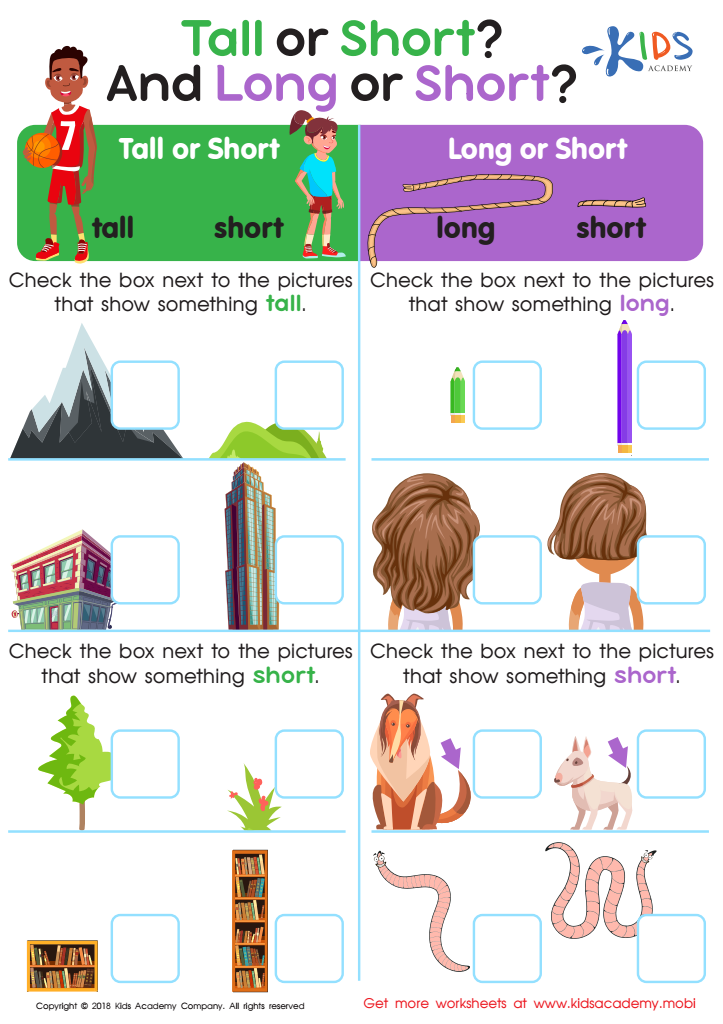
Tall or Short and Long or Short? Worksheet
 Assign to My Students
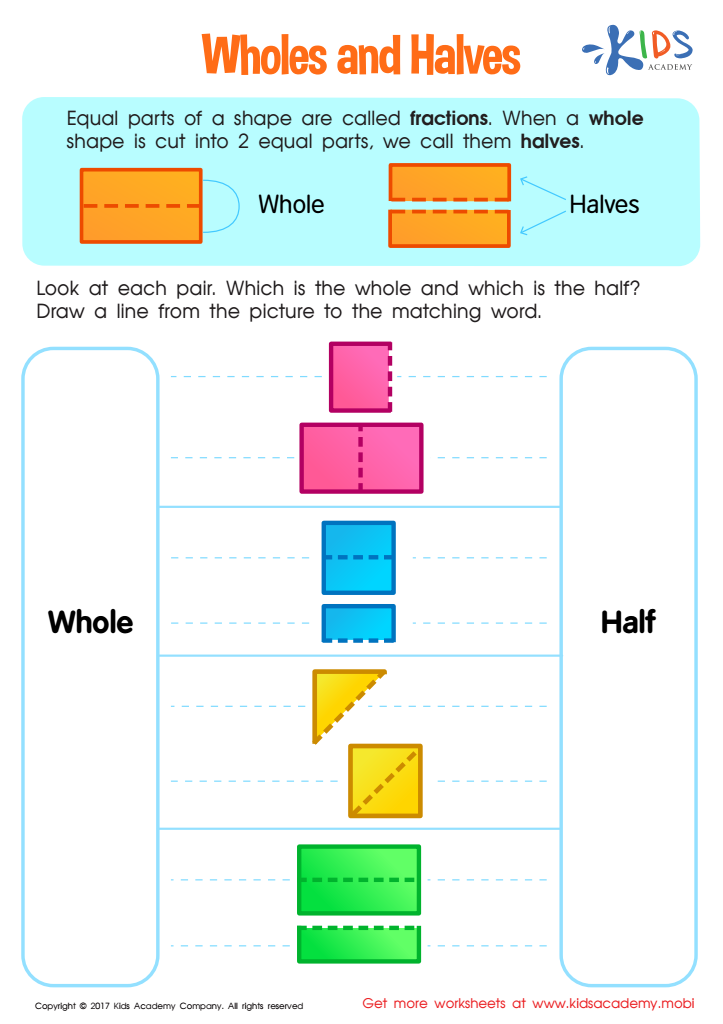
Wholes and Halves Worksheet
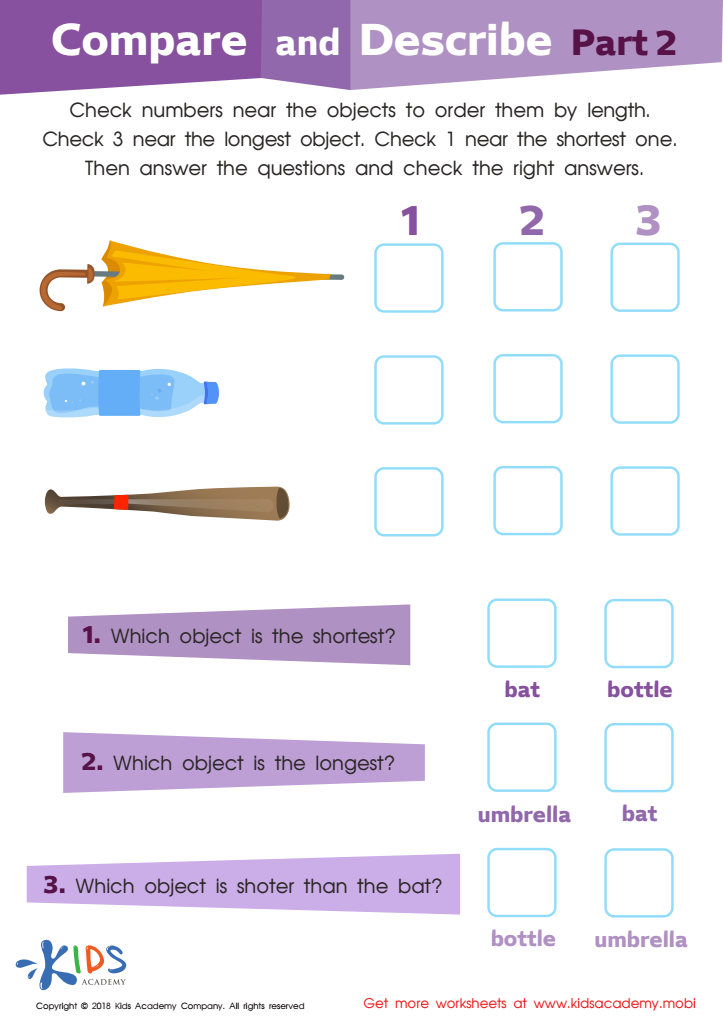
Compare and Describe: Part 2 Worksheet




Comparing sizes is a fundamental concept that helps children ages 6-9 develop critical cognitive and mathematical skills. This stage of development is crucial as children transition from concrete to more abstract thinking. Understanding size helps them make sense of the world by organizing objects based on measurable attributes such as length, height, and volume.
For parents and teachers, focusing on comparing sizes aids in the development of vocabulary and language skills, as children learn to use descriptive terms like "bigger," "smaller," "taller," and "shorter." This not only enhances their ability to communicate effectively but also enriches their descriptive abilities and logical reasoning.
Mathematically, skills in comparing sizes lay the groundwork for more advanced concepts such as measurement, geometry, and spatial awareness. These concepts are foundational; without them, children could struggle with problem-solving tasks in later grades, affecting their overall academic performance. Additionally, engaging children in activities that require comparison promotes fine motor skills, as they manipulate objects to assess their sizes.
Therefore, parents and teachers should prioritize activities involving size comparison to build mental, linguistic, and arithmetic skills, fostering a holistic developmental environment that supports children’s educational journey both inside and outside the classroom.








