Counting skills Normal Geometry Worksheets for Ages 6-9
5 filtered results
-
From - To
Enhance your child’s counting and geometry skills with our Normal Geometry Worksheets for Ages 6-9! These expertly designed worksheets blend fun and education, helping young learners grasp essential math concepts. Through interactive activities, children practice counting shapes, recognizing patterns, and understanding spatial relationships. Our engaging exercises not only bolster their numeracy skills but also lay a strong foundation for future mathematical learning. Perfect for classroom use or at-home practice, these worksheets support developmental milestones in a joyful and effective way. Empower your child to excel in math with our thoughtfully created resources tailored for their growth and enjoyment.
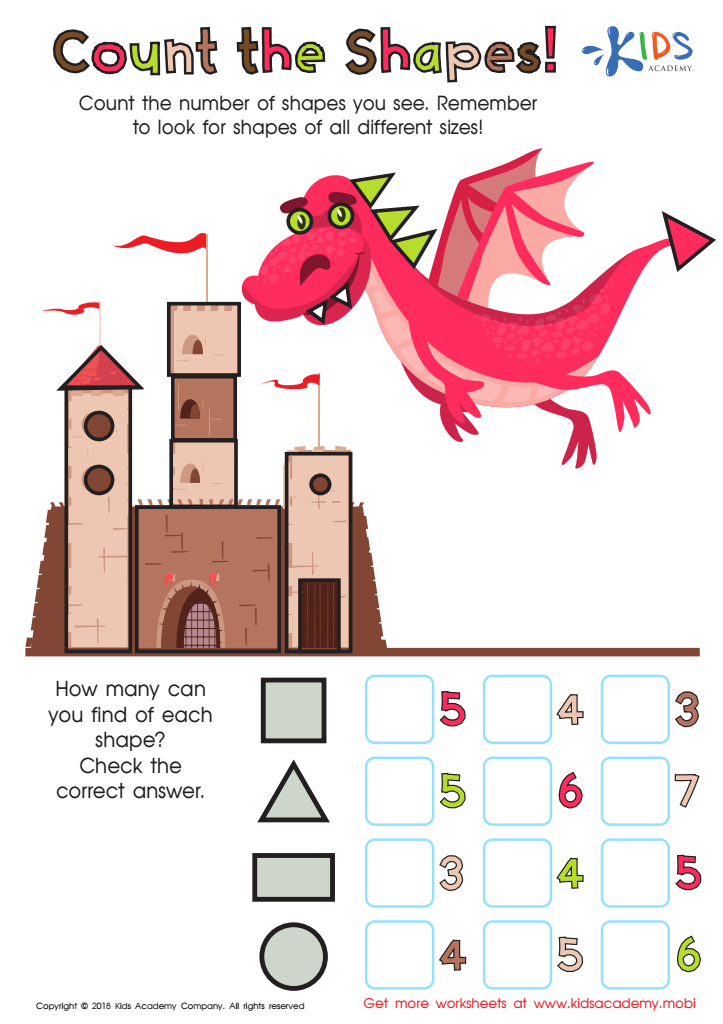
Count the Shapes Worksheet
 Assign to My Students











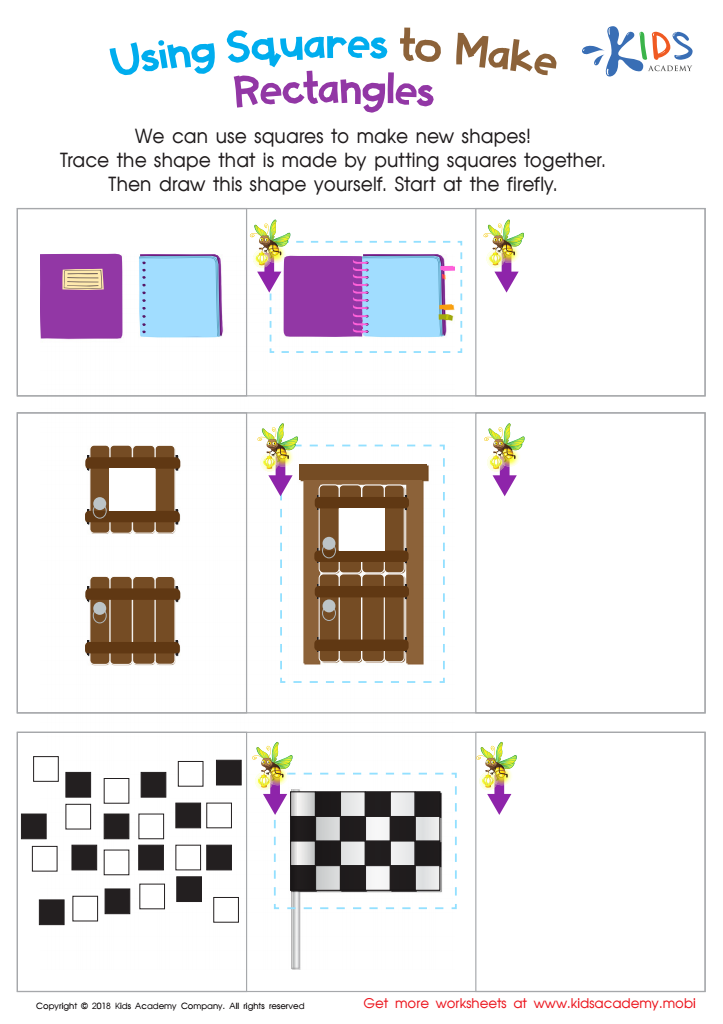
Using Squares to Make Rectangles Worksheet
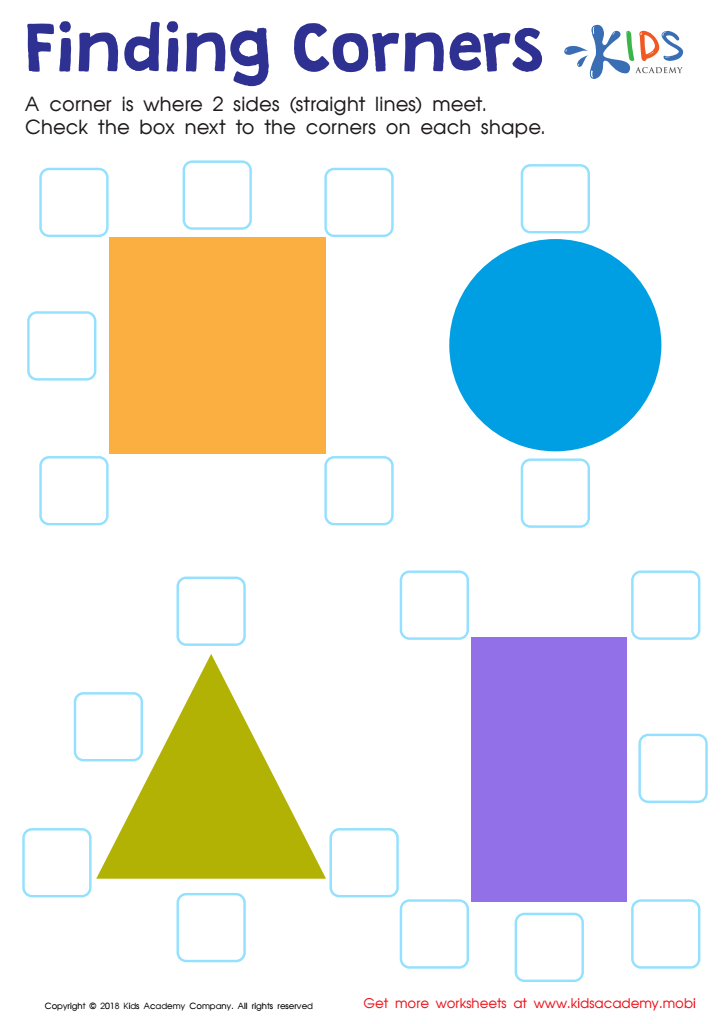
Finding Corners Worksheet
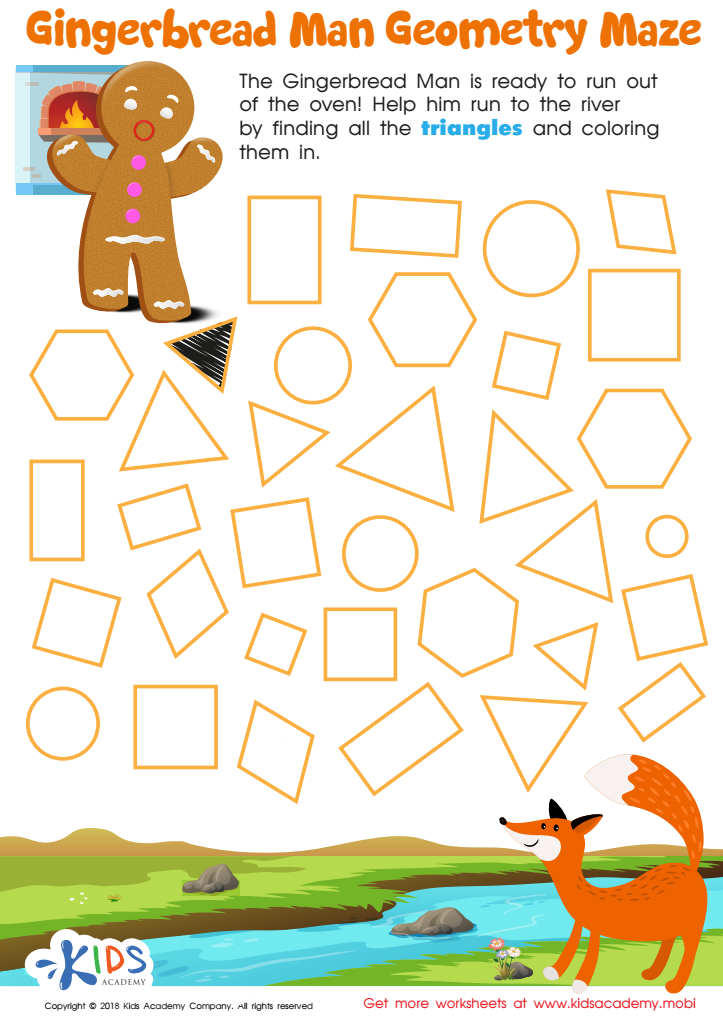
Gingerbread Man Geometry Maze Worksheet








Counting skills and basic geometry are fundamental components of early childhood mathematical education, vital for both parents and teachers to emphasize for children aged 6-9. At this developmental stage, children are naturally curious and capable of grasping basic mathematical concepts, making it an ideal time to build a strong foundation in these areas.
Counting skills go beyond mere rote memorization; they form the bedrock for more complex mathematical operations such as addition, subtraction, multiplication, and division. Mastering counting helps children understand the value and sequence of numbers, fostering their ability to recognize patterns and develop problem-solving skills.
Simultaneously, normal geometry introduces children to shapes, spatial reasoning, and the properties of various objects, skills that are integral for a variety of cognitive tasks. By learning to identify, sort, and categorize shapes, children enhance their visual-spatial awareness, which is crucial for understanding the physical world around them and for performing everyday tasks involving space and size.
In essence, focusing on counting skills and normal geometry not only helps build confidence and proficiency in mathematics, but also influences a child’s overall cognitive development. Engaging children in interactive, playful learning experiences in these areas can set them on a path toward academic success and lifelong learning enthusiasm. Therefore, parents and teachers can play a pivotal role by incorporating these mathematical foundations into daily activities and curricula.








