Understanding fractions Normal Geometry Worksheets for Ages 6-9
6 filtered results
-
From - To
Discover the world of fractions with our engaging Normal Geometry Worksheets designed specifically for children aged 6-9! These worksheets provide a fun and interactive way for young learners to grasp the essential concepts of fractions. Through colorful visuals and diverse problem-solving activities, kids will explore how to identify, compare, and work with fractions effectively. Perfect for classroom use or at-home learning, our resources enhance mathematical understanding while building confidence in geometry skills. Help your child develop a solid foundation in fractions today with our carefully crafted worksheets that make learning enjoyable and effective. Empower their journey into mathematical comprehension!
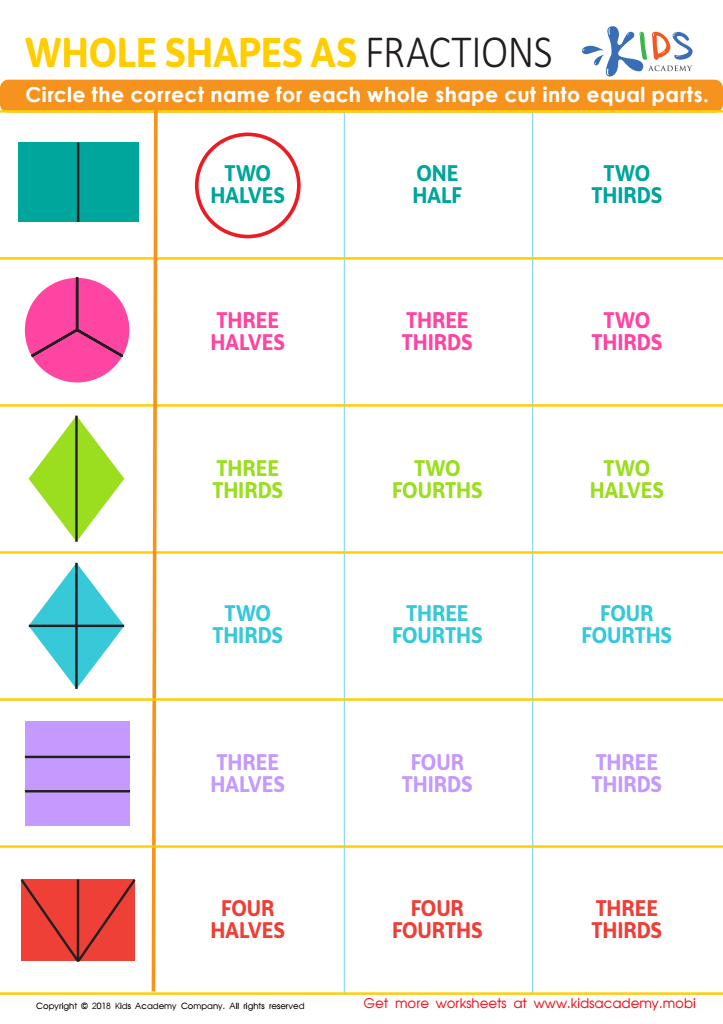
Whole Shapes as Fractions Worksheet
 Assign to My Students











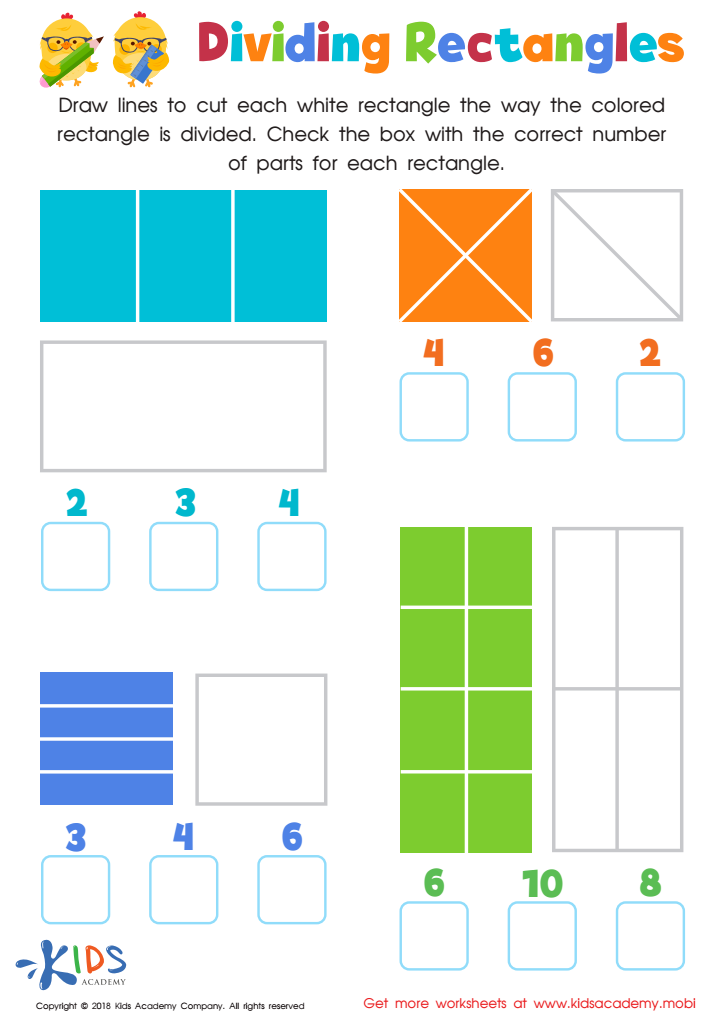
Dividing Rectangles Worksheet
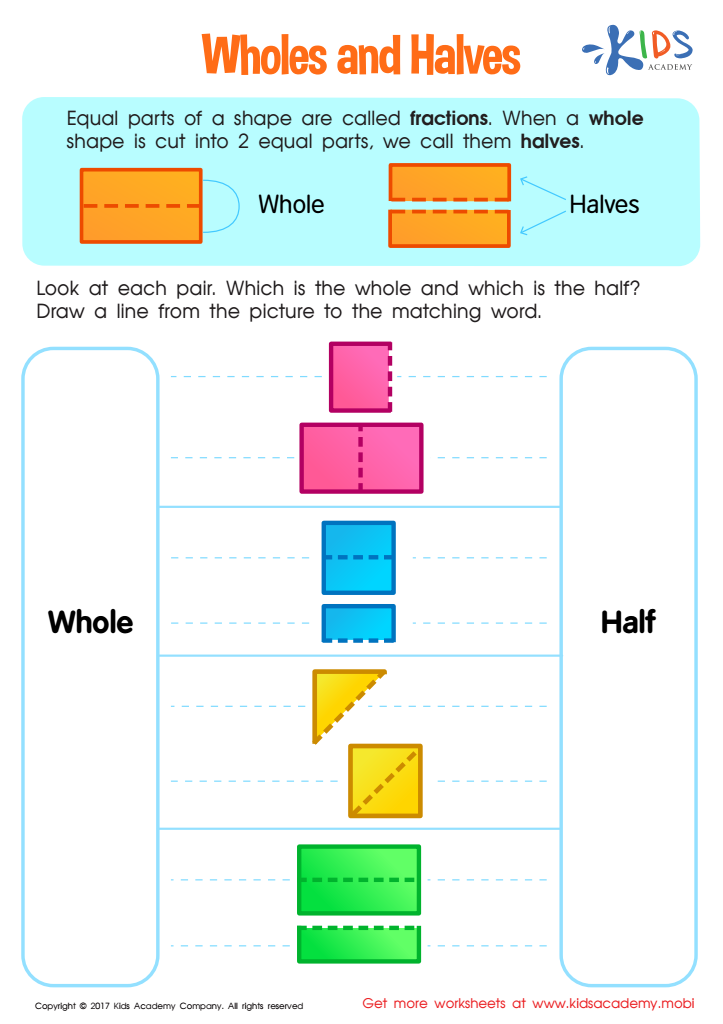
Wholes and Halves Worksheet
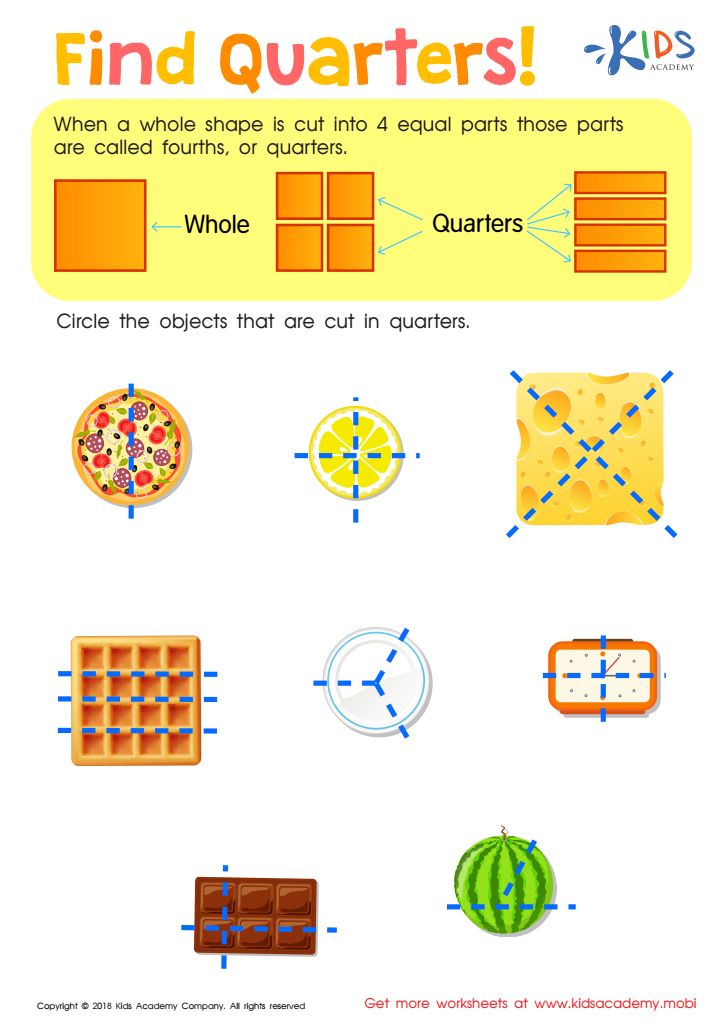
Find Quarters Worksheet
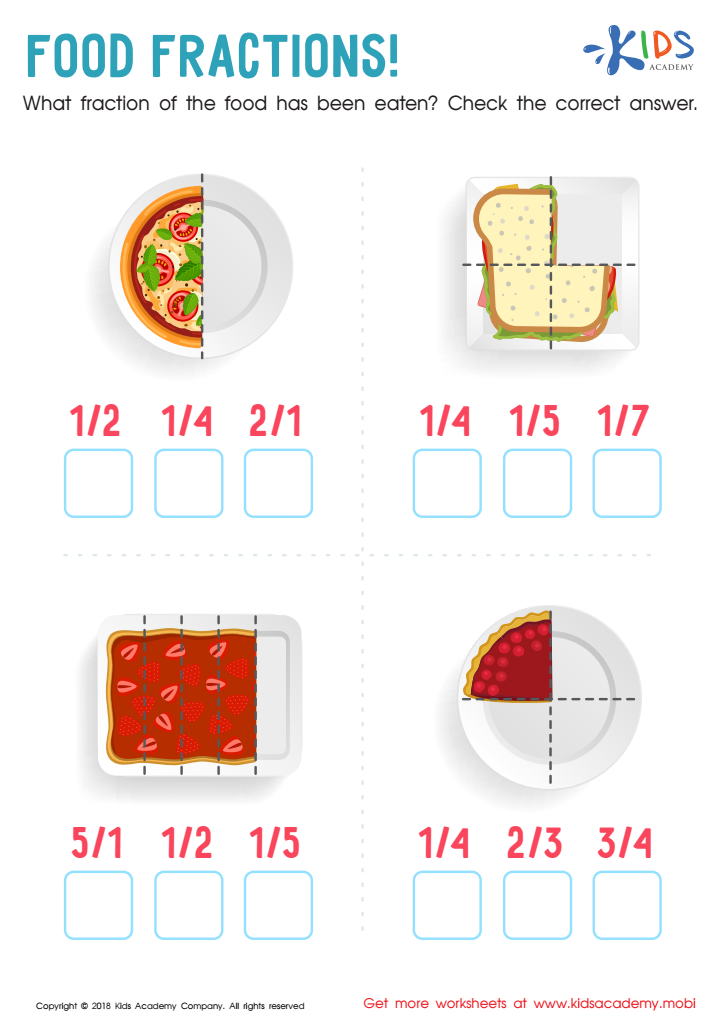
Food Fractions Worksheet
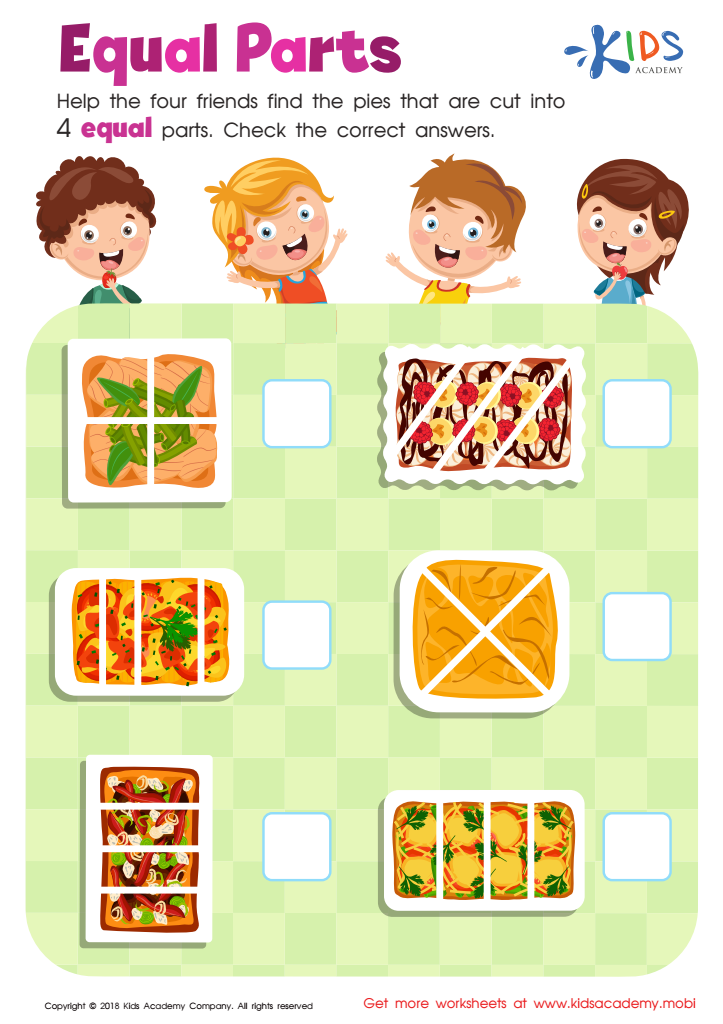
Equal Parts: Food Worksheet








Understanding fractions and basic geometry is crucial for children aged 6-9, as these concepts form the foundation for higher-level math skills. At this age, children are developing critical thinking and problem-solving abilities, making it an ideal time for introducing these mathematical ideas.
For parents and teachers, fostering an understanding of fractions helps children grasp the concept of parts of a whole, which is essential for everyday life, from sharing food to understanding time. Introducing fractions in context—such as using pizza slices or pie charts—makes learning tangible and relevant, promoting engagement.
Geometry, on the other hand, helps children understand shapes, spatial relationships, and measurements. These skills are vital for logical reasoning and can support academic performance in science, engineering, and art as they grow older. Additionally, by identifying patterns and understanding symmetry through geometric concepts, children enhance their analytical skills.
Moreover, competence in fractions and geometry builds confidence in math, which can influence a child's attitude toward learning in general. By providing supportive environments for exploring these subjects, parents and teachers not only facilitate academic success but also help children develop a lifelong appreciation for mathematics.








