Enhancing Counting Skills Normal Numbers Worksheets for Ages 6-9
5 filtered results
-
From - To
Discover our "Enhancing Counting Skills Normal Numbers Worksheets" designed for children ages 6-9! These engaging worksheets provide a fun and interactive way to improve fundamental counting skills. With a variety of activities tailored to different learning styles, your child will master counting through number tracing, matching, and interactive exercises. Our worksheets foster confidence in math and encourage independent learning. These resources help young learners grasp important numerical concepts while promoting critical thinking and problem-solving skills. Perfect for both classroom and home use, these worksheets make counting an enjoyable adventure for your child! Unlock their mathematical potential today!
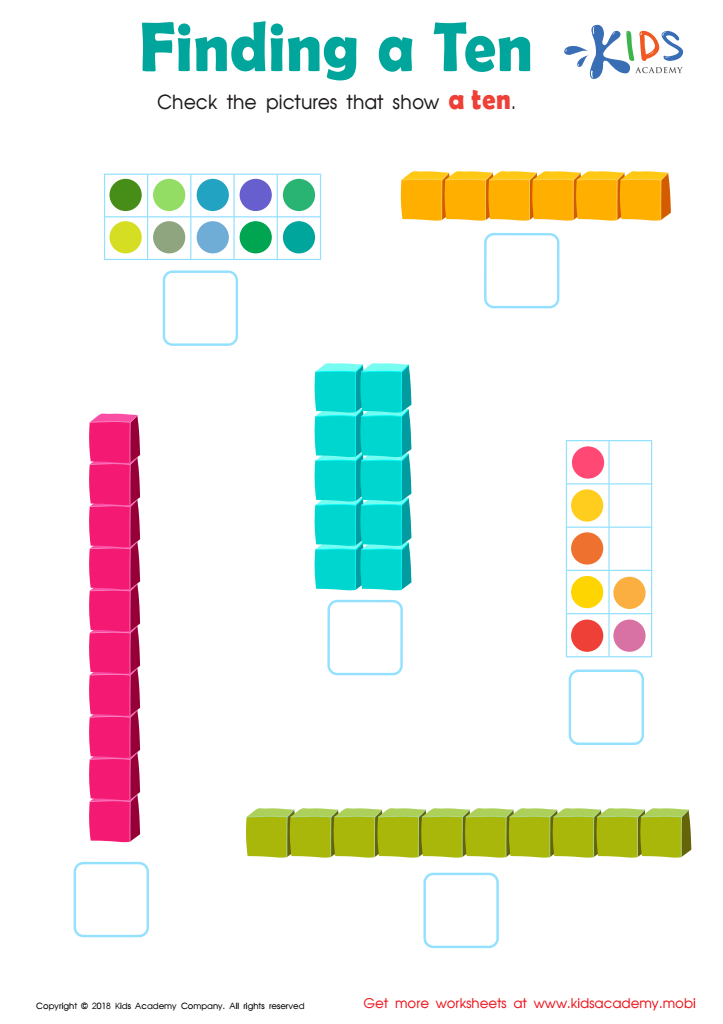
Finding a Ten Worksheet
 Assign to My Students
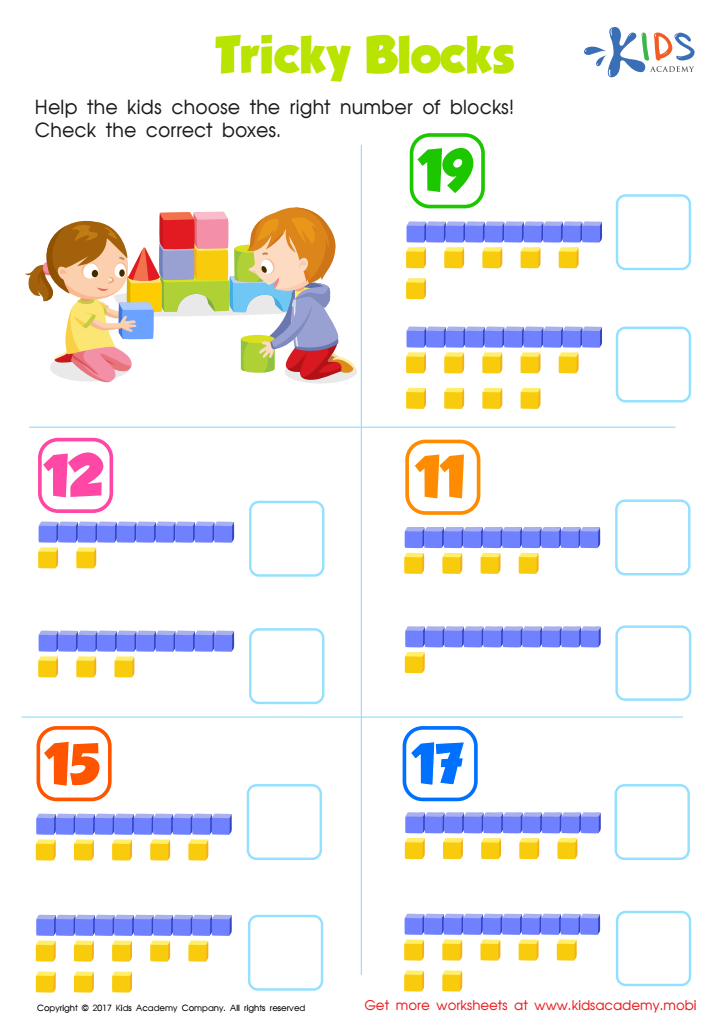
Tricky Blocks Worksheet
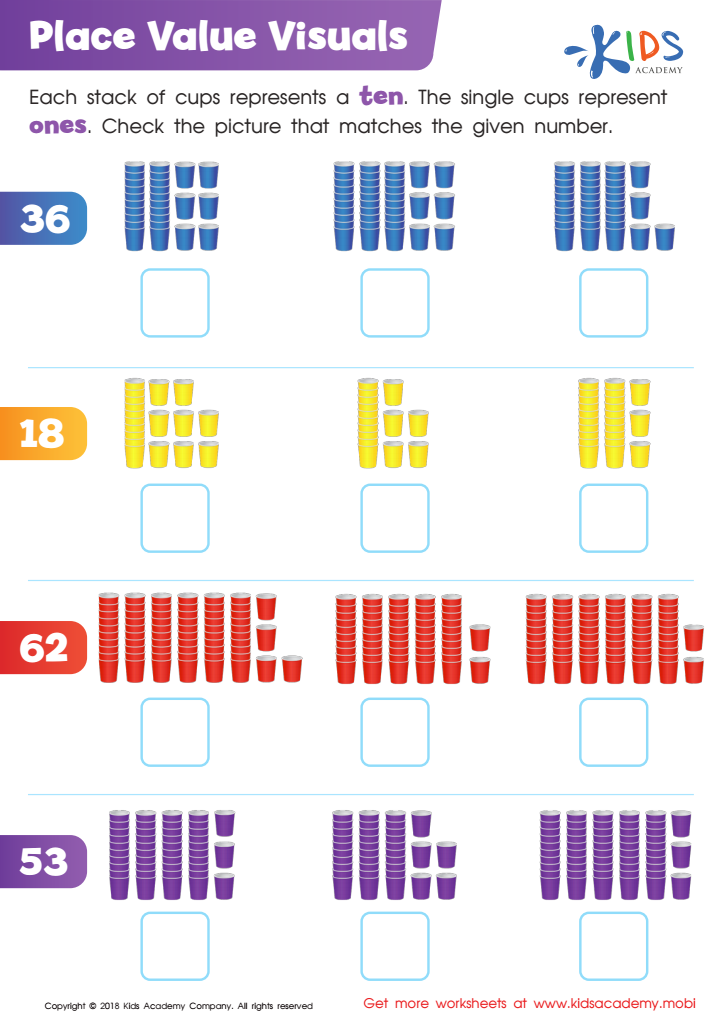
Place Value Visuals Worksheet
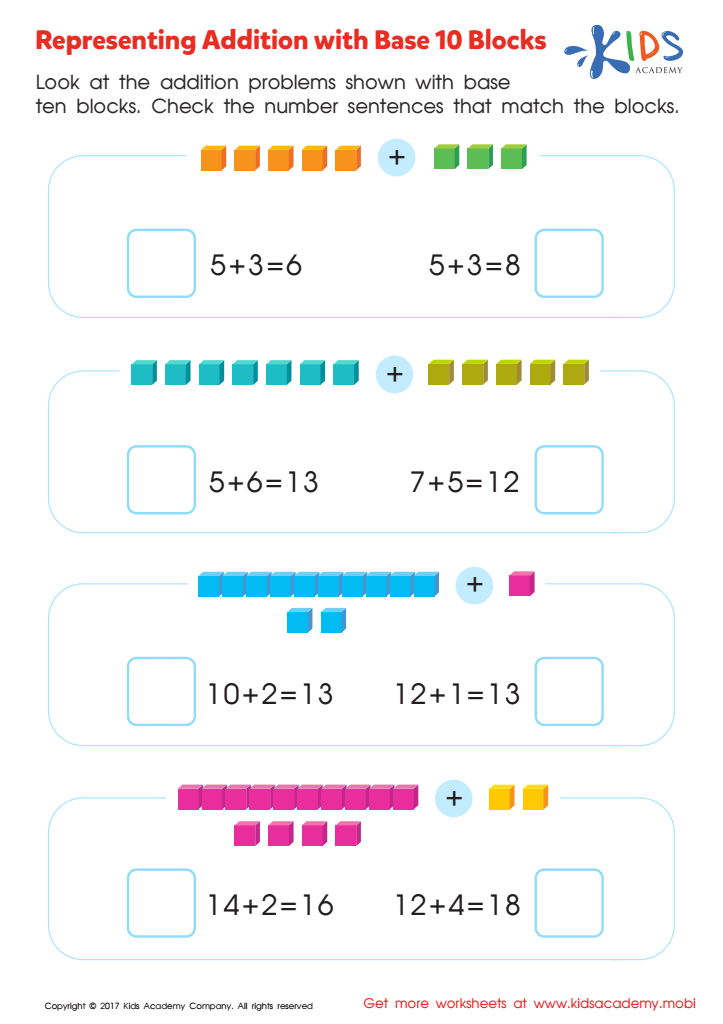
Representing Addition with Base 10 Blocks Worksheet
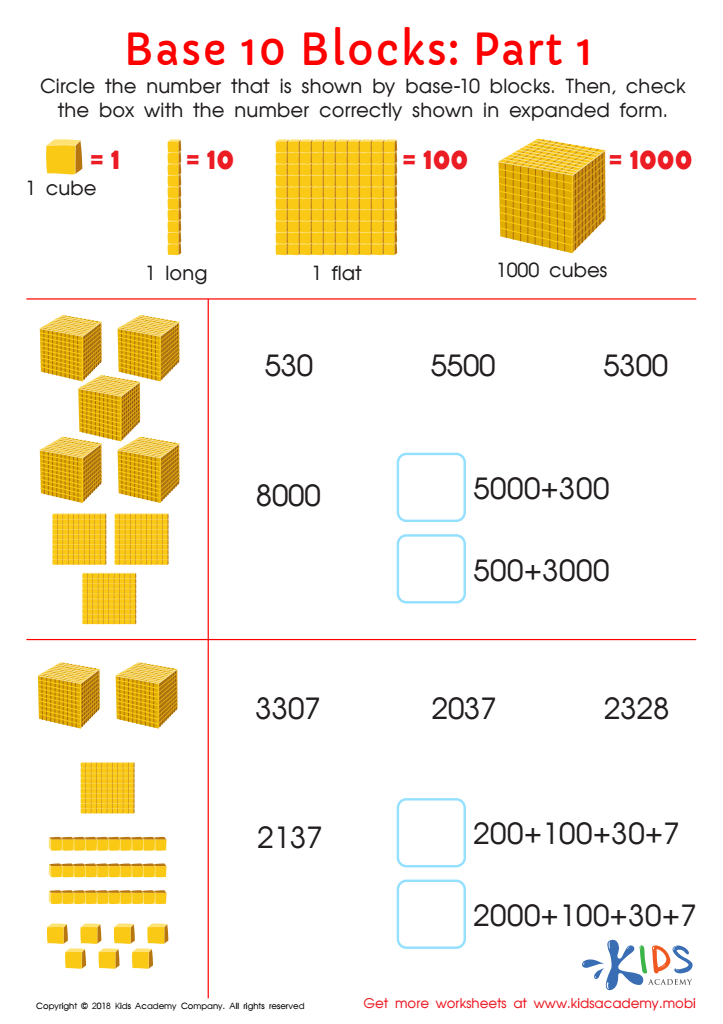
Base 10 Blocks Worksheet: Part 1








Enhancing counting skills in children aged 6-9 is crucial for their cognitive and mathematical development. During these formative years, children solidify their understanding of numbers and fundamental math concepts. A strong foundation in counting not only fosters a sense of numerical fluency but also enhances problem-solving skills, logical reasoning, and critical thinking.
Moreover, counting skills are foundational for a wide array of mathematical concepts, including addition, subtraction, and even more advanced topics like fractions and decimals. As parents and teachers support children in refining these skills, they empower them to approach mathematics with confidence, reducing anxiety around the subject.
Additionally, counting aids in the development of fine motor skills through engaging activities, such as using counters or drawing. Interactive and hands-on counting experiences spark interest and motivation, making learning enjoyable. This enthusiasm can lead to a lifelong positive attitude towards math.
Ultimately, enhancing counting skills equips children not only for academic success but also for real-world applications such as budgeting, time management, and measurement, which are vital life skills. By prioritizing counting skills, parents and teachers set the stage for a robust understanding of mathematics that benefits children throughout their lives.








