
Categorization skills Normal Math Worksheets for Ages 6-9
9 filtered results
Difficulty Level
Grade
Age
-
From - To
Subject
Activity
Standards
Unlock your child's potential with our "Categorization Skills Normal Math Worksheets" designed for ages 6-9. These engaging worksheets help young learners develop critical thinking as they practice grouping numbers, objects, and shapes based on different characteristics. By enhancing categorization abilities, kids not only improve their math skills but also boost cognitive development. Our comprehensive collection features colorful and age-appropriate activities that make learning fun and interactive. Ideal for both classroom and home use, these worksheets will seamlessly integrate into your curriculum, ensuring your child gains confidence and competence in mathematics. Explore our resource to foster essential skills today!
Favorites
With answer key
Interactive
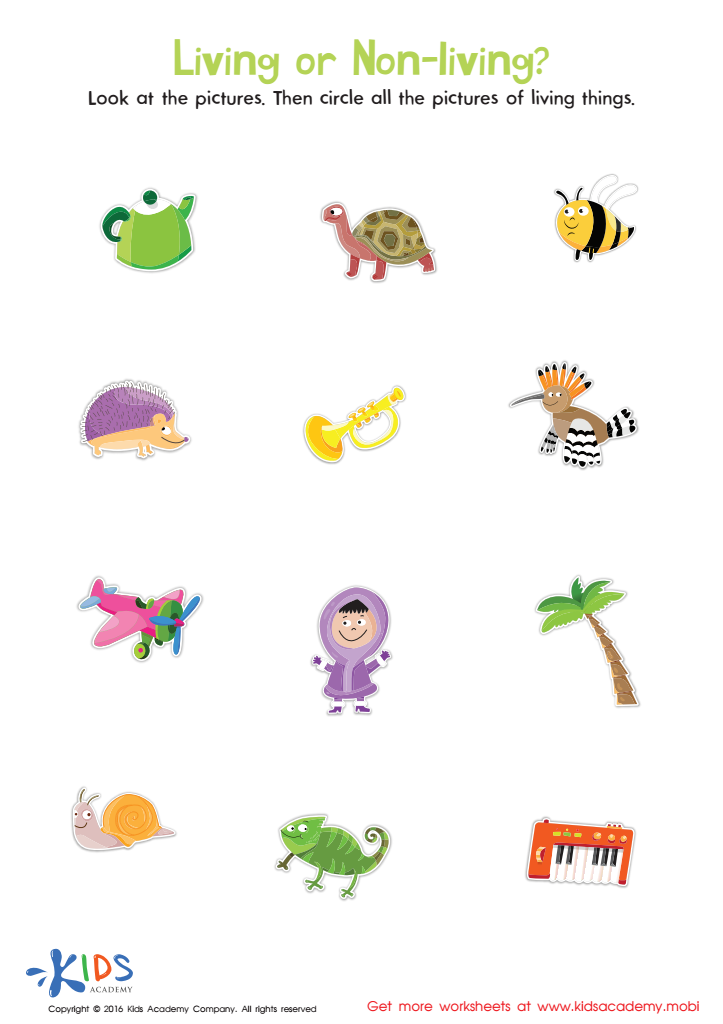
Identifying Living and Non–living Things Sorting Worksheet
Help your child sort living and non-living objects with this cute worksheet. Kids will use problem-solving skills to recognize and categorize the images they see. Matching worksheets available to help their skills soar.
 Assign to My Students
Identifying Living and Non–living Things Sorting Worksheet
Worksheet
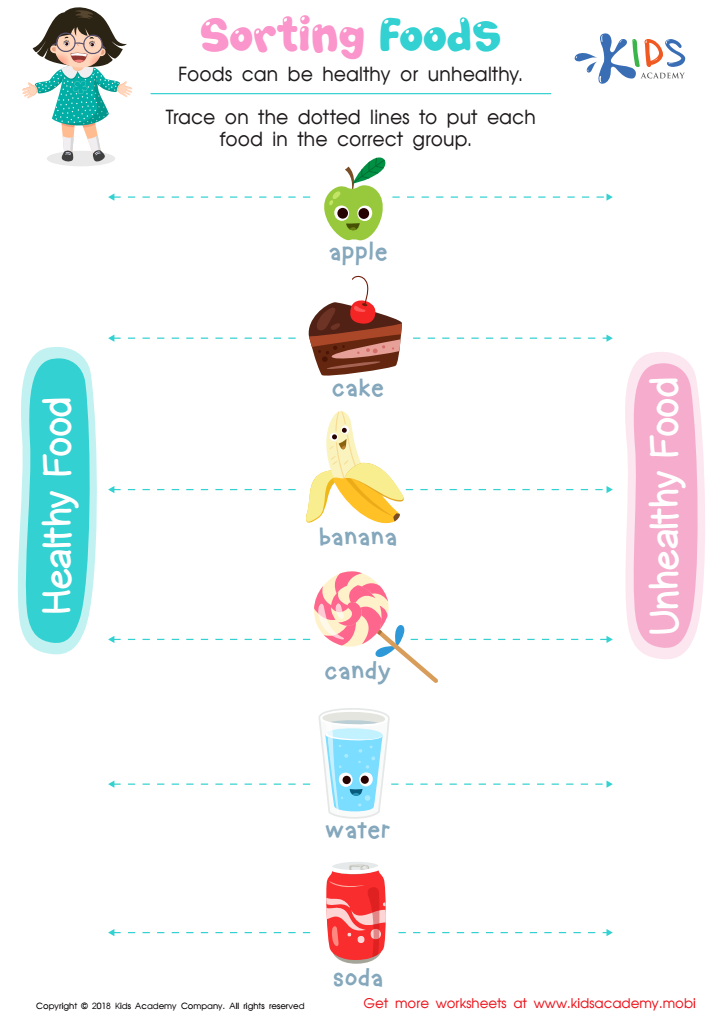
Sorting Food Worksheet
This delightful worksheet boosts critical thinking and fine motor skills. Kids use prior knowledge and pictures to sort foods into healthy and unhealthy groups. Tracing lines support accurate sorting and matching. Enjoy fun and free learning!
Sorting Food Worksheet
Worksheet
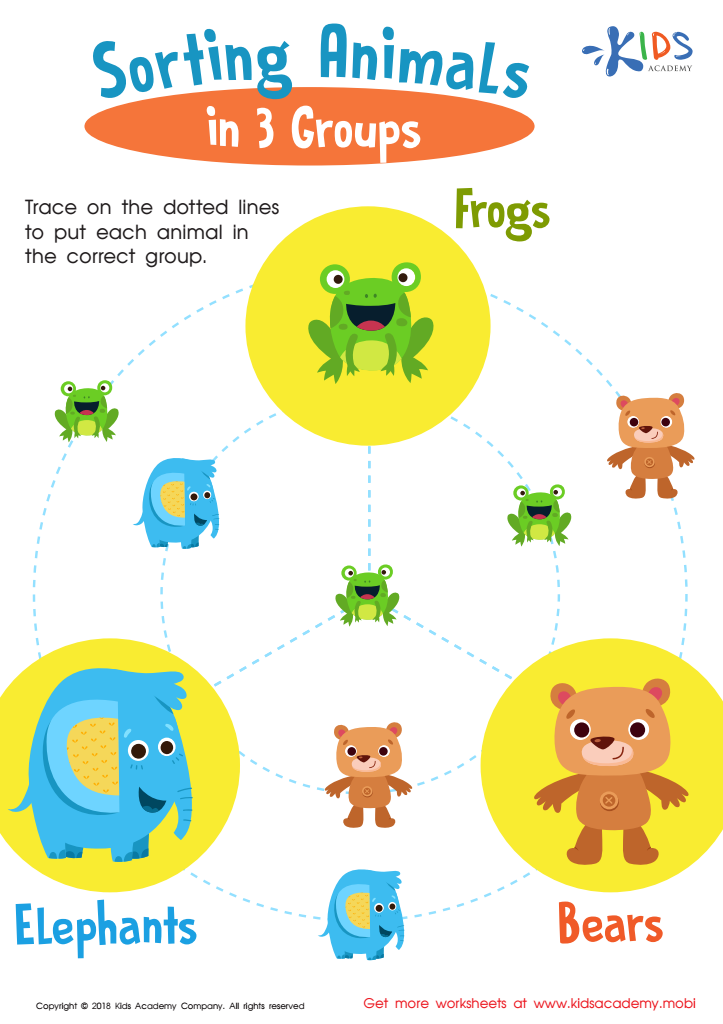
Sorting Animals in 3 Groups Worksheet
Let your kids practice and build skills for future Venn Diagrams with this PDF worksheet. They'll trace lines to match and group animals, and learn the differences and similarities of animals by categorizing with pictures and words. Plus, it's a great way to develop fine motor skills.
Sorting Animals in 3 Groups Worksheet
Worksheet
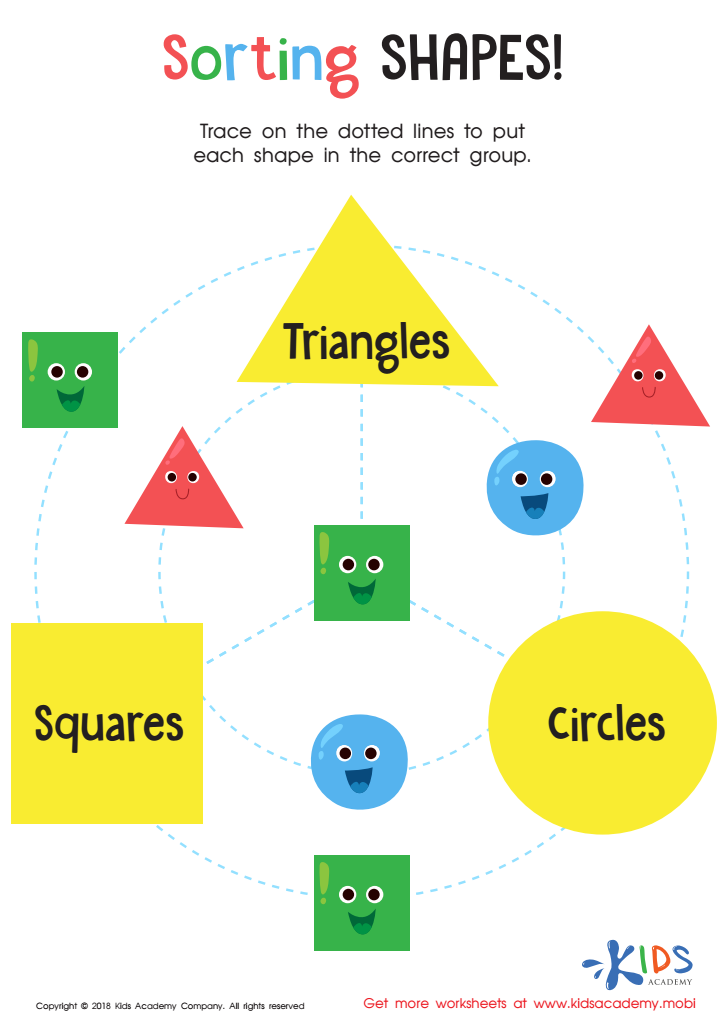
Sorting Shapes - Part 3 Worksheet
Download this fun PDF to help your kiddos recognize basic shapes like circles, squares, and triangles. It'll sharpen their fine motor skills as they trace and sort shapes by color, size, and sides. Your kids won't even realize they're learning with these cheery shapes!
Sorting Shapes - Part 3 Worksheet
Worksheet
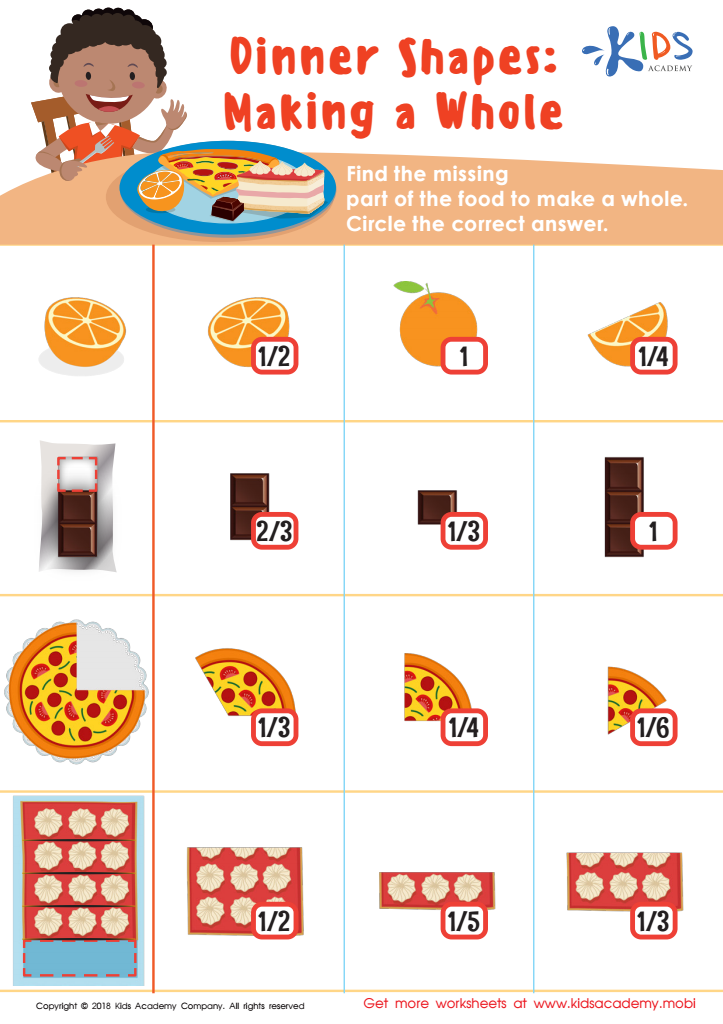
Dinner Shapes: Making a Whole Worksheet
Using food and snacks to stimulate learning and interest in topics is a great strategy. Fractions can prove tricky, but this worksheet can help your child become an expert. Have them look for the missing parts of the food to make a whole, then circle the answer.
Dinner Shapes: Making a Whole Worksheet
Worksheet
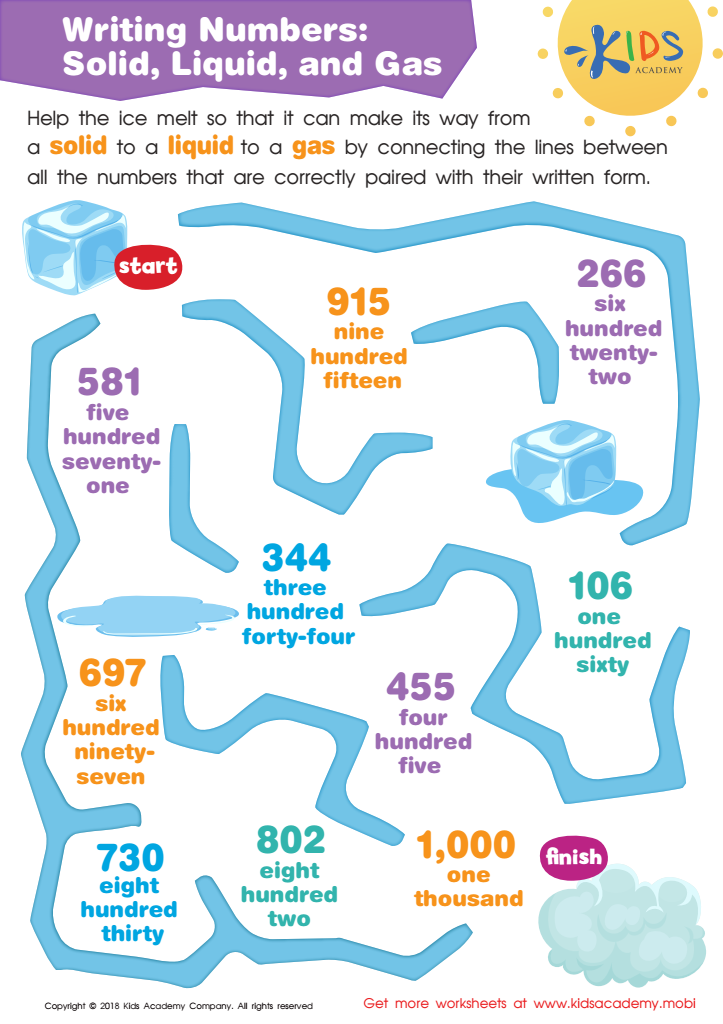
Solid, Liquid, and Gas Writing Numbers Worksheet
Your student can see the math/science connection in this fun maze! Download the PDF and help the ice melt by navigating a maze of number words and numeral representations. To the finish line! Only the paired words and numbers that match get you there.
Solid, Liquid, and Gas Writing Numbers Worksheet
Worksheet
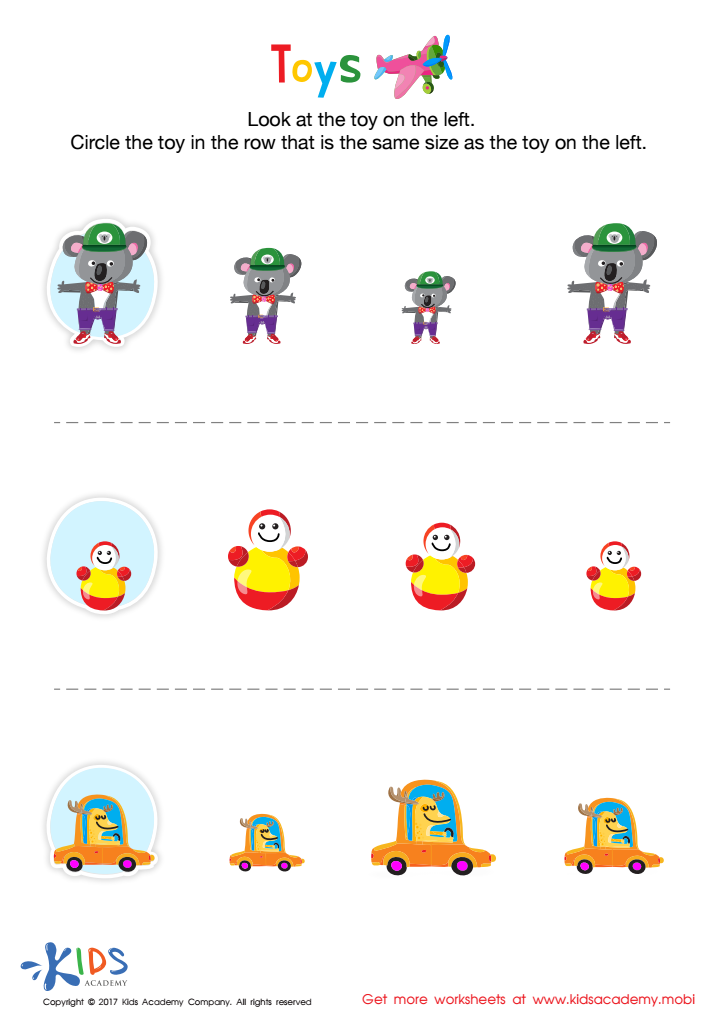
Matching: Classifying Toys by Size Worksheet
Sorting worksheets are an effective way to help your preschooler learn life and educational skills. Spatial awareness, direction recognition, and reading directions all help build a strong foundation for future educational success.
Matching: Classifying Toys by Size Worksheet
Worksheet
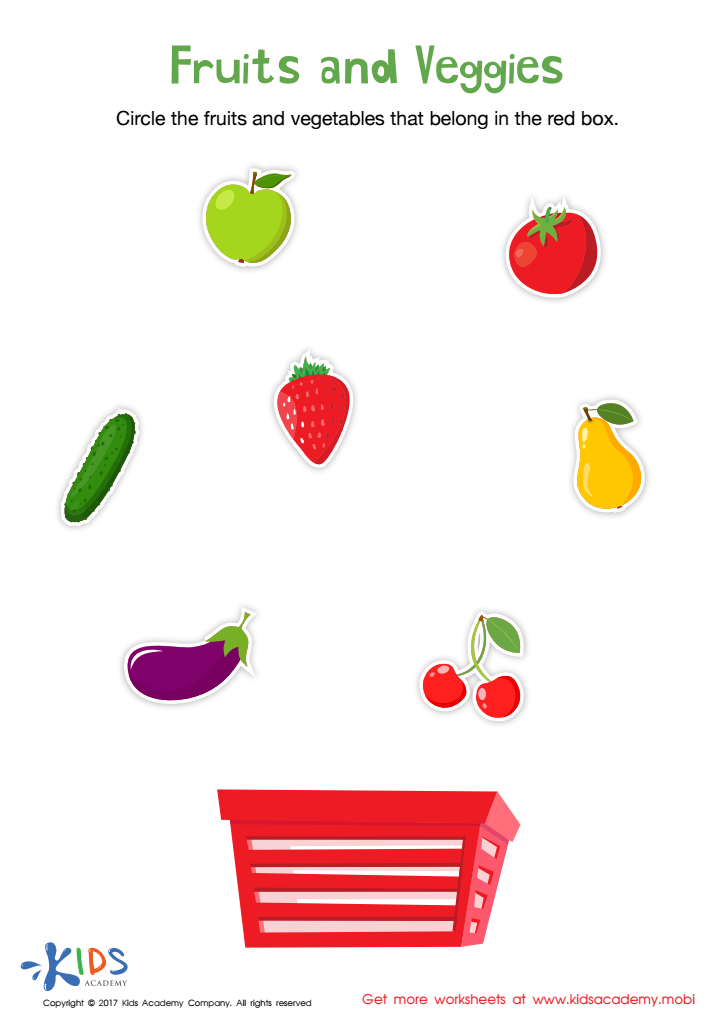
Classifying Fruits and Veggies by Color Sorting Worksheet
Worksheet
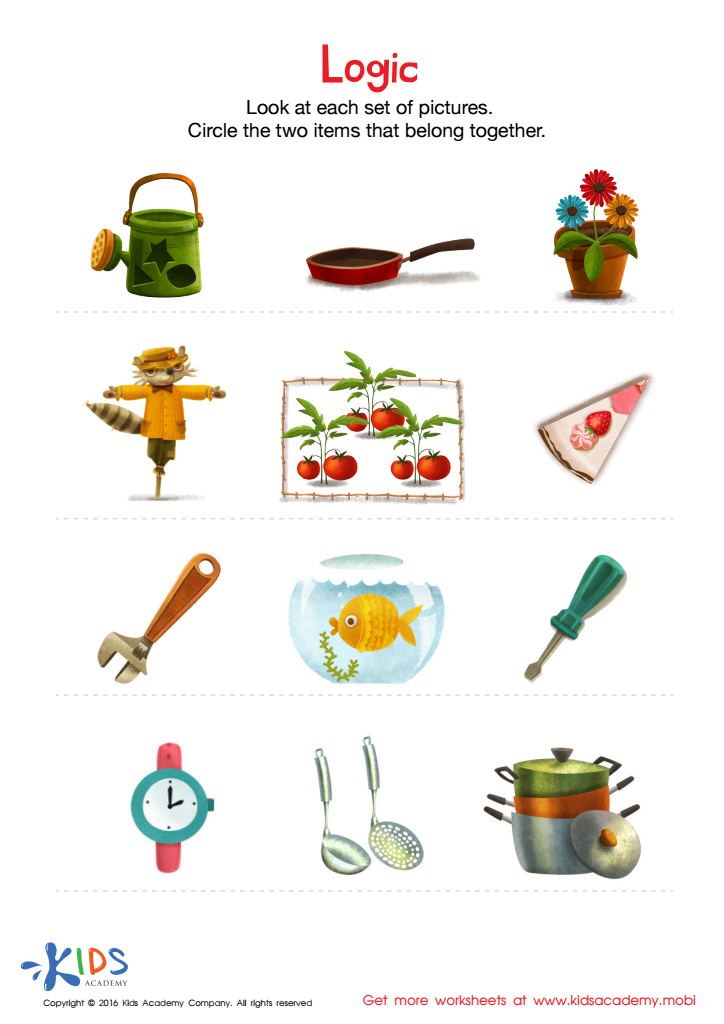
Logic Game Sorting Worksheet
Start your child's logic and reasoning development early with this fun matching worksheet! Through cute images and simple conversations, your little one can learn problem-solving, categorization, and matching skills. Plus, it's a great way for children to explore how items are used in real life. Try it and watch them boost skills with ease and fun!
Logic Game Sorting Worksheet
Worksheet
Join Kids Academy for Free
Who is primarily going to use this learning content?




.jpg)



Categorization skills are crucial for children aged 6-9 as they lay the foundation for mathematical thinking and problem-solving. During this developmental stage, children begin to understand the relationships between different concepts, which is vital in math. When parents and teachers emphasize categorization, they help students organize information based on attributes like size, shape, color, or quantity.
This skill not only aids in the comprehension of basic math concepts such as addition and subtraction but also enhances the ability to tackle more complex topics like multiplication and division later on. Furthermore, categorization fosters critical thinking and helps children develop logical reasoning, enabling them to group numbers, identify patterns, and solve problems more effectively.
Moreover, strong categorization skills improve a child's ability to communicate math concepts. When children can articulate why they grouped certain items together, they express understanding in a more meaningful way. Overall, prioritizing categorization in the early educational experience enriches mathematical knowledge and prepares children for future academic challenges, making them more confident and competent learners. Thus, parents and teachers should actively promote these skills to bolster children's overall cognitive development and lifelong learning capabilities.








