Geography knowledge Normal Math Worksheets for Ages 6-9
6 filtered results
-
From - To
Explore our Geography Knowledge Normal Math Worksheets, specifically designed for ages 6-9. These engaging worksheets blend the excitement of geography with essential math skills, making learning enjoyable and effective. Perfectly suited for young learners, the activities include map reading, counting, and basic arithmetic. By incorporating real-world geography into math practice, kids develop a deeper understanding of both subjects. Ideal for classroom use or at-home reinforcement, our worksheets support holistic learning and nurture curiosity about the world around us. Equip your child with the tools they need to succeed in math while broadening their geographical knowledge. Join us on this exciting educational journey!
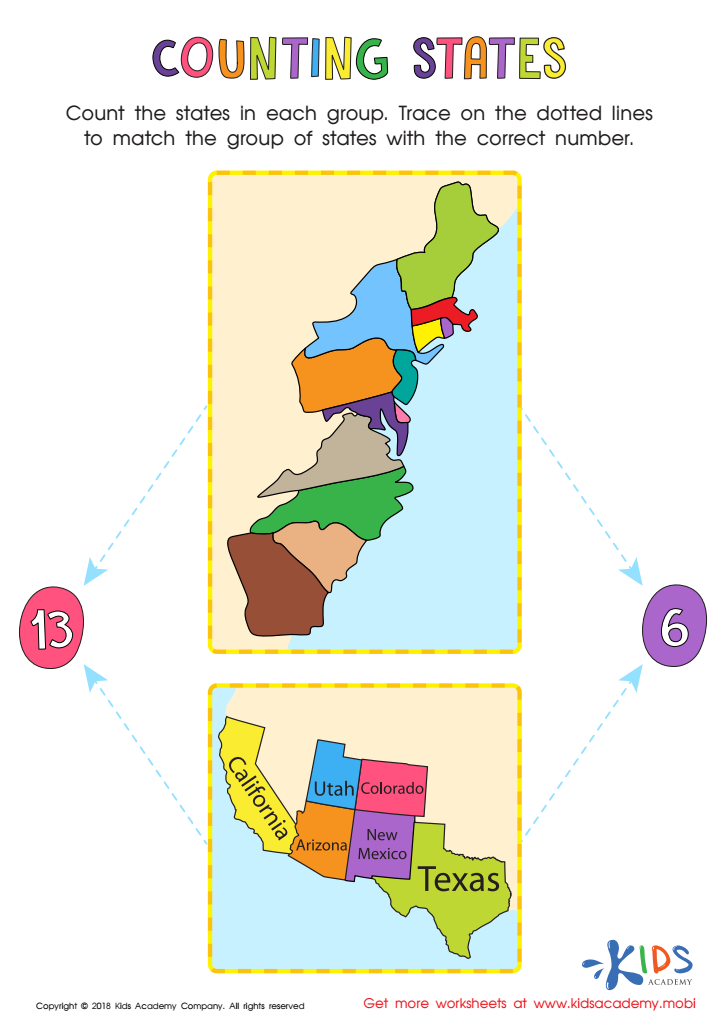
Counting States Worksheet
 Assign to My Students
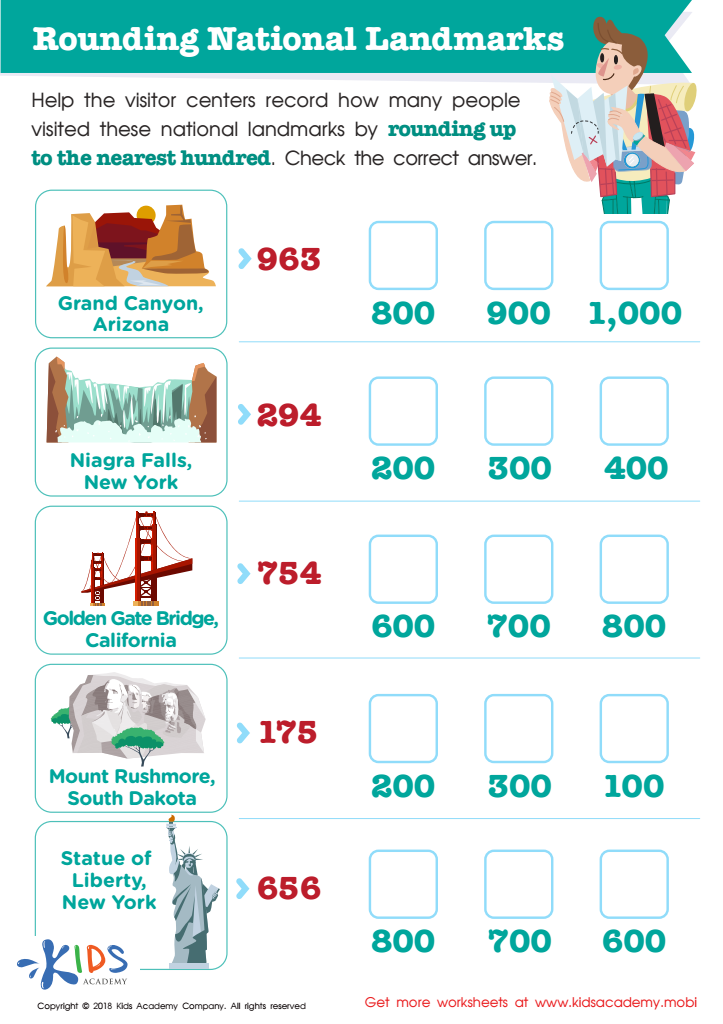
Rounding National Landmarks Worksheet
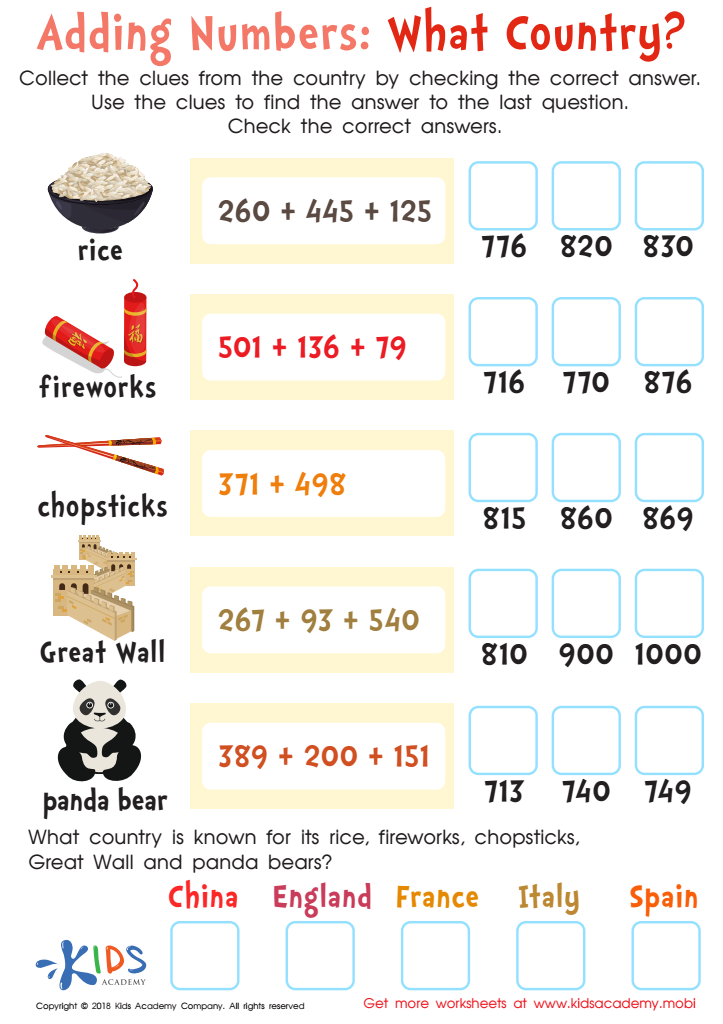
Adding Numbers: What Country Worksheet
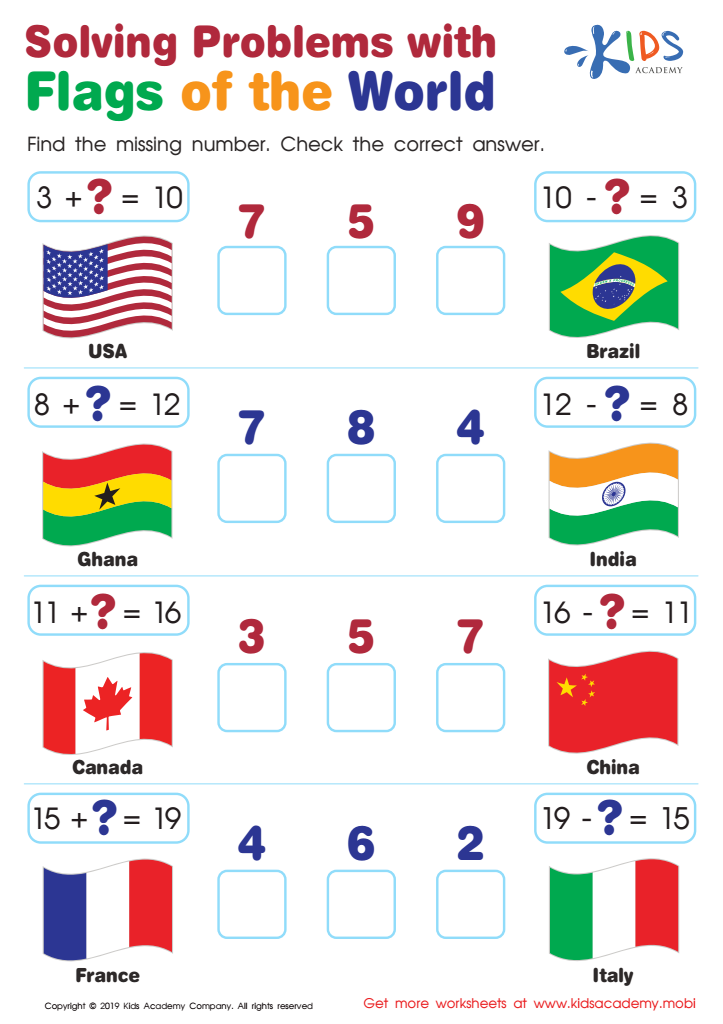
Solving Problems with Flags of the World Worksheet
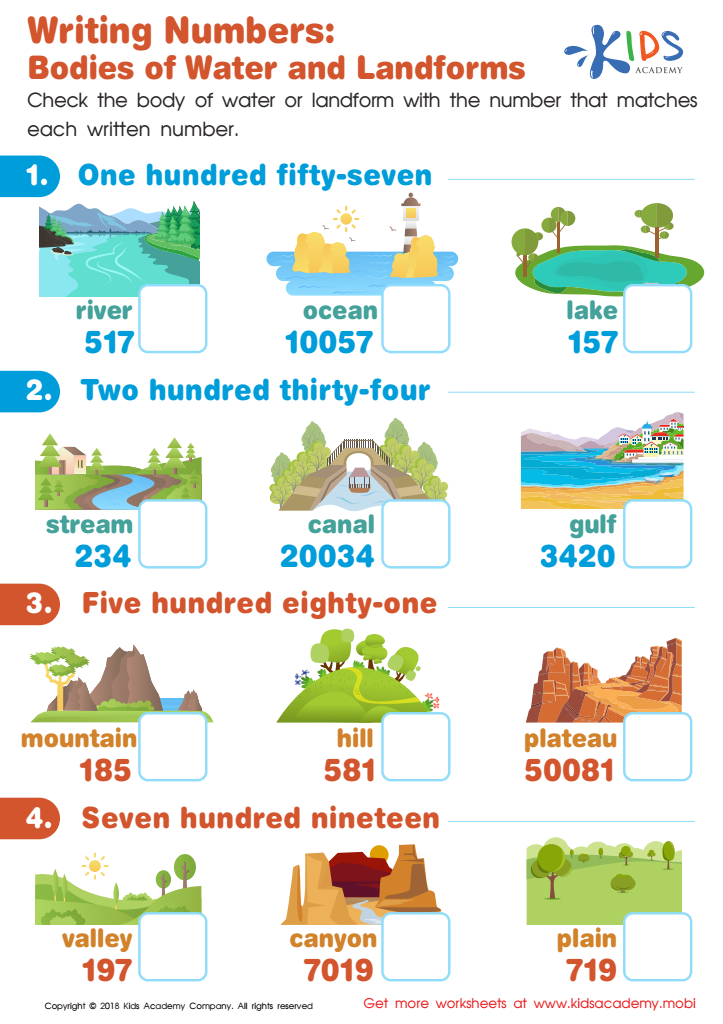
Bodies of Water and Landforms Writing Numbers Worksheet
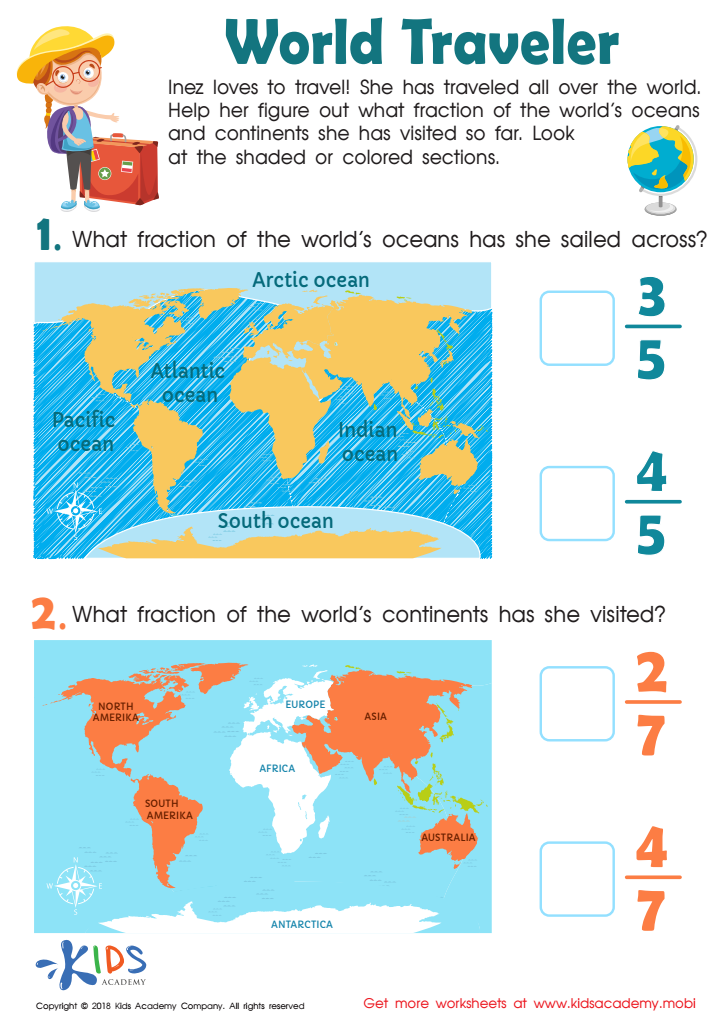
World Traveler Worksheet








A robust understanding of geography for children aged 6-9 is essential for multiple reasons. Firstly, learning geography helps young learners become more aware of the world around them. It introduces them to different cultures, environments, and communities, fostering empathy and a global perspective. Analyzing maps and learning about physical landforms, climates, and countries can spark curiosity and drive a love for lifelong learning.
Secondly, basic math skills are inherently tied to geographic understanding. Concepts like scale and distance influence a child’s numerical fluency as they compare real-world sizes and spaces to representations on maps. Early knowledge in this area lays a strong foundation for subjects involving spatial reasoning such as math, science, and later geography.
Lastly, geographical knowledge promotes critical thinking. Children engage in problem-solving when they answer questions about why certain cities are built near rivers or why certain regions have particular climates. This nurtures observation and reasoning abilities, essential skills both in academics and everyday life.
By incorporating geography into early education, parents and teachers provide tools that encourage an understanding of global connectivity, enhance essential math skills, and develop critical thinking. Cultivating these abilities early will benefit children in their comprehensive development and future academic pursuits.








