Reading comprehension Normal Multiplication Worksheets for Ages 6-9
5 filtered results
-
From - To
Boost your child's learning with our Reading Comprehension Normal Multiplication Worksheets, specially designed for ages 6-9. These worksheets help young learners master multiplication while improving their reading comprehension. Each exercise incorporates engaging stories and relatable scenarios, making math fun and easy to understand. By combining literacy skills with math practice, kids enhance their ability to solve problems and follow written instructions. Perfect for classroom or at-home learning, these worksheets offer a comprehensive approach to education that supports cognitive development. Equip your child with the essential tools for academic success today!
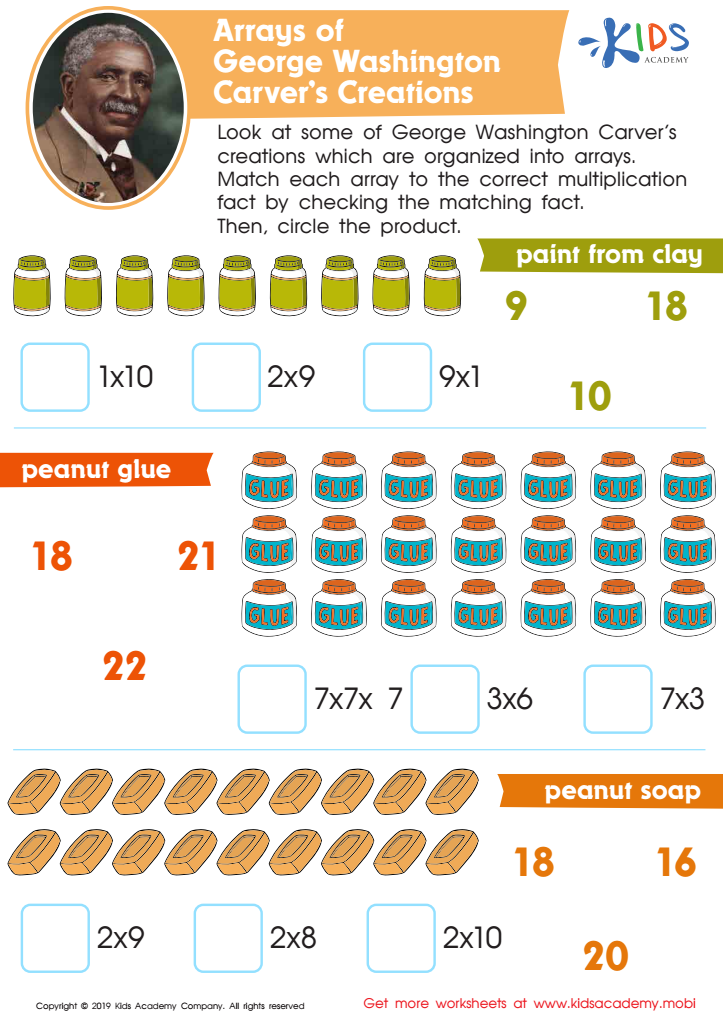
Arrays of George Washington Carver’s Creations Worksheet
 Assign to My Students
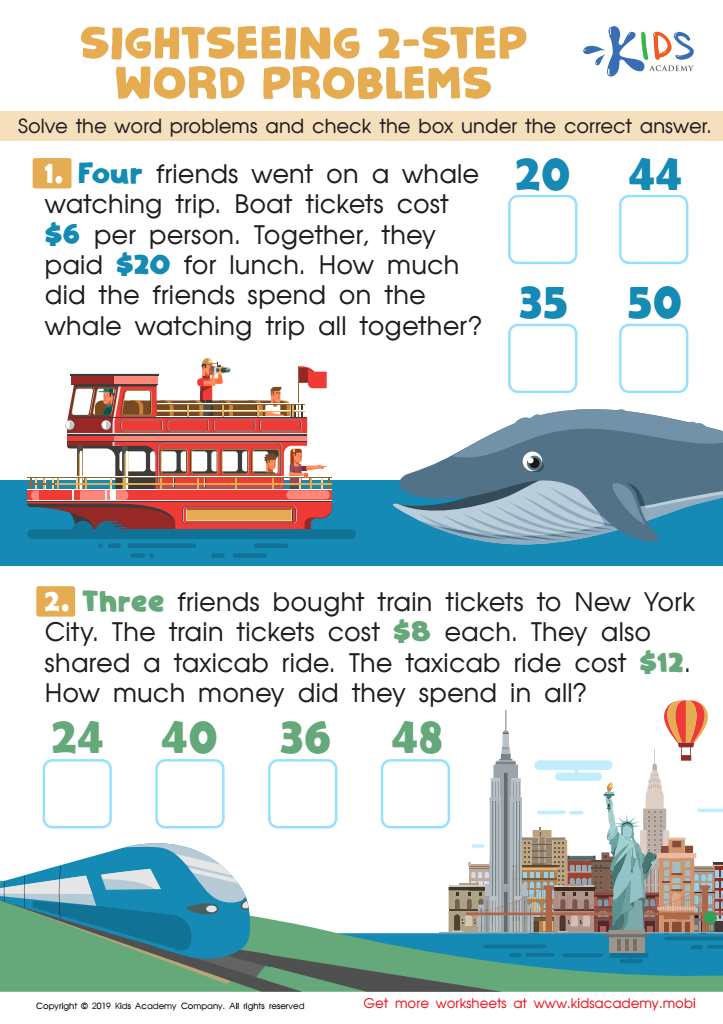
Sightseeing 2-Step Word Problems Worksheet
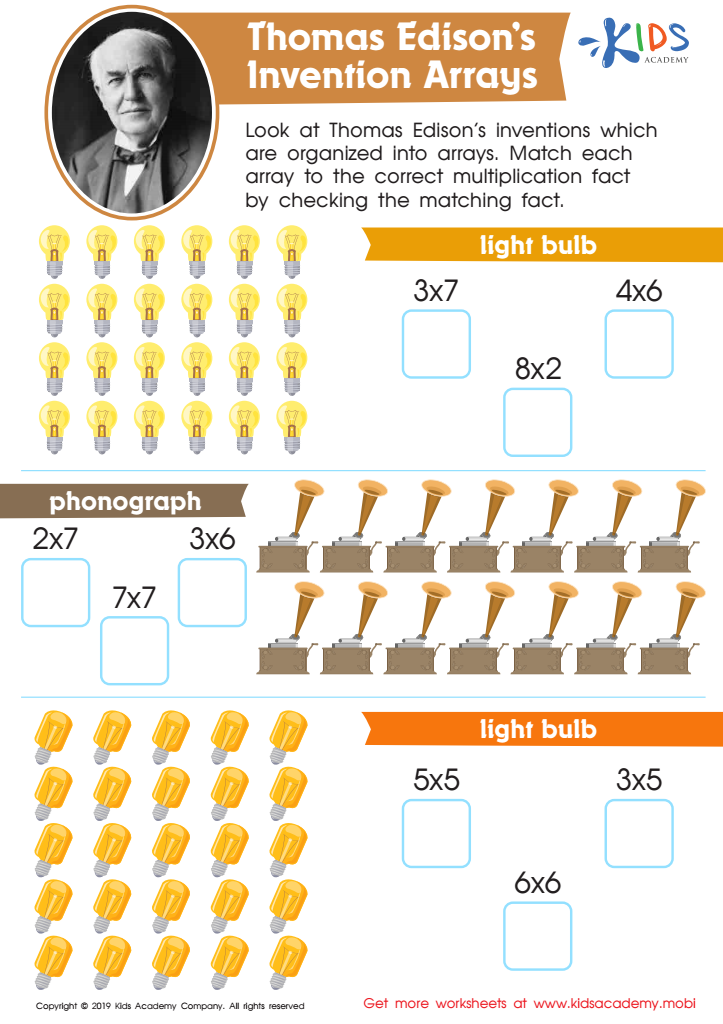
Thomas Edison’s Invention Arrays Worksheet
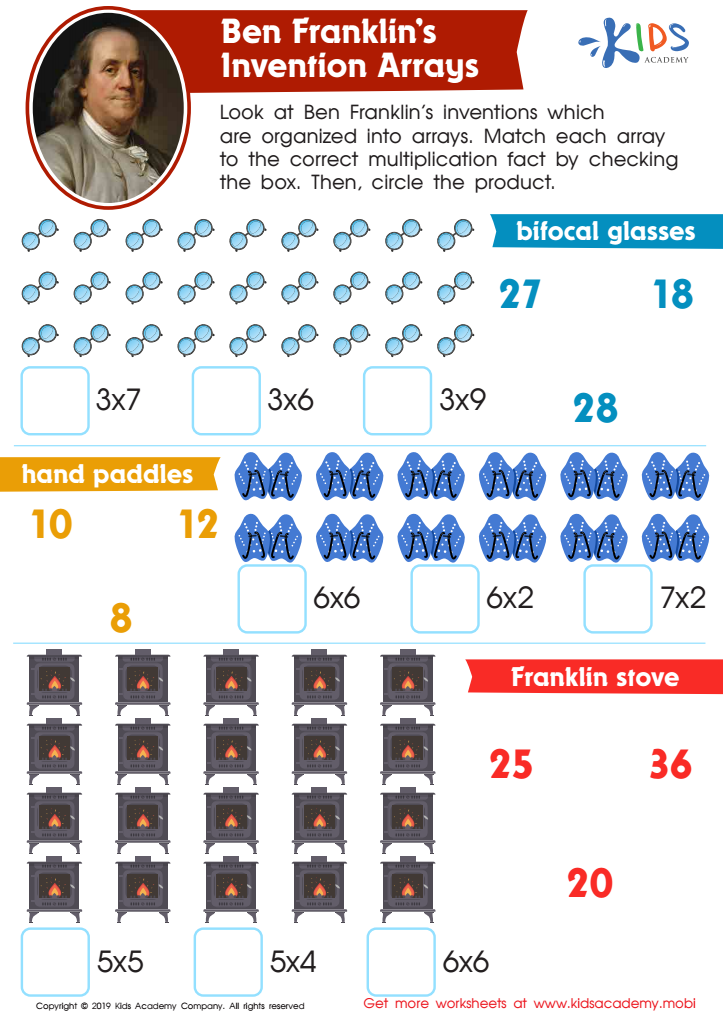
Ben Franklin’s Invention Arrays Worksheet
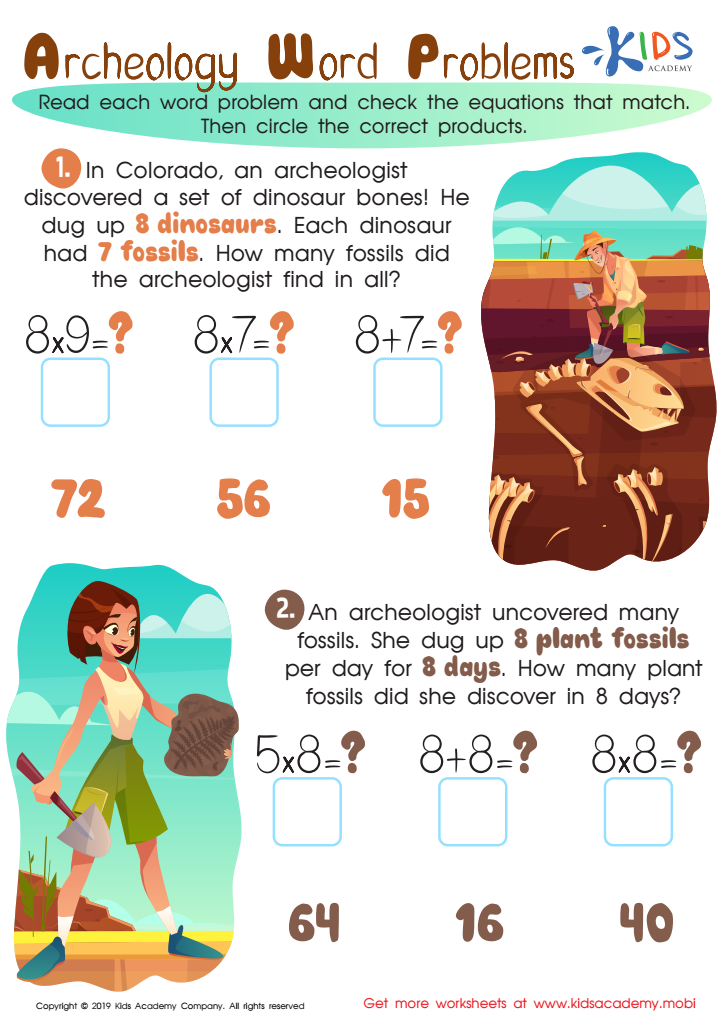
Archeology Word Problems Worksheet








Reading comprehension and multiplication are foundational skills crucial for a child's academic development. When children ages 6-9 understand what they read, they can better grasp complex ideas and build a strong vocabulary, which is vital for success in all school subjects. Good reading comprehension allows students to follow instructions accurately, enhances their problem-solving skills, and fosters a love for learning that can last a lifetime.
Similarly, mastering basic multiplication is fundamental in mathematics, underpinning many other math concepts such as division, fractions, and more advanced operations. At ages 6-9, kids are in a critical period for cognitive development, meaning their abilities to understand and retain these skills are at a high point. Multiplication fluency allows them to perform calculations more quickly and efficiently, boosting their confidence and making math a less daunting subject.
By focusing on both reading comprehension and basic multiplication, parents and teachers provide children with the tools they need for higher-level thinking and problem solving. This dual focus encourages well-rounded intellectual growth, preparing young learners for future academic challenges and everyday life skills. In short, a robust grounding in reading comprehension and multiplication sets children up for lifelong success.








