Cognitive Development Normal Geometry Worksheets for 6-Year-Olds
5 filtered results
-
From - To
Enhance your child's cognitive skills with our "Cognitive Development Normal Geometry Worksheets for 6-Year-Olds." Designed by experts, these engaging worksheets use fun shapes and patterns to boost spatial awareness, critical thinking, and problem-solving abilities. Each activity is thoughtfully structured to align with early math objectives, promoting a solid foundation in geometry while stimulating young minds. Your child will enjoy visual learning through vibrant illustrations, gradually mastering important concepts such as shape recognition, symmetry, and basic geometric properties. Ideal for at-home practice or supplemental classroom materials, our worksheets make learning geometry an exciting and fruitful experience.
Visit our website for more details: [link].
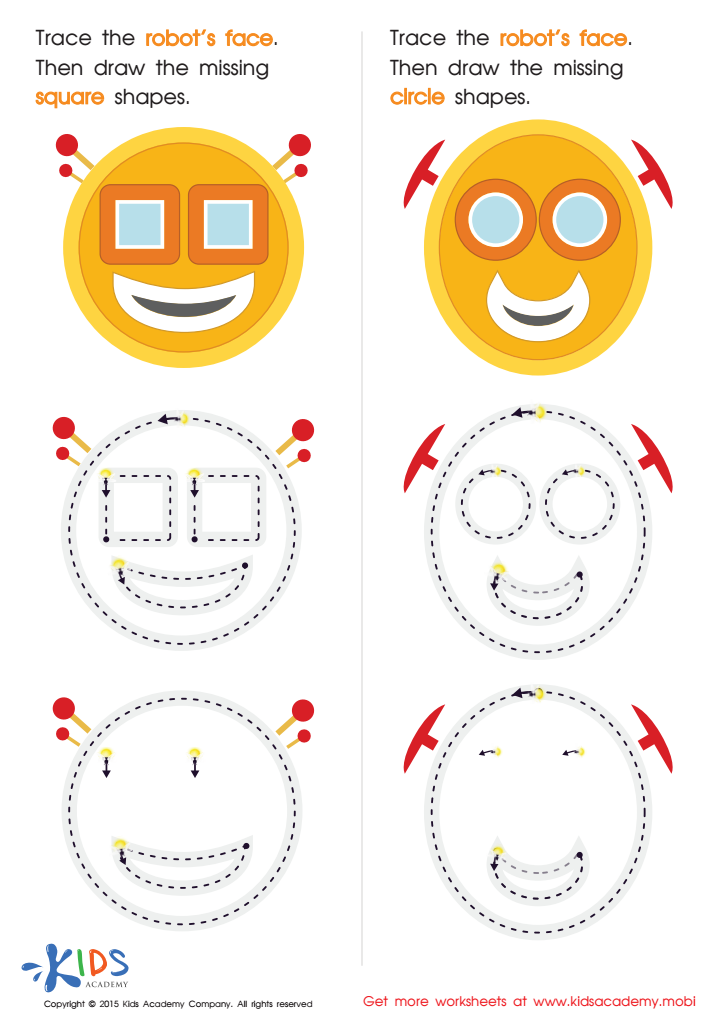
Practicing to Draw Circles And Squares Printable
 Assign to My Students











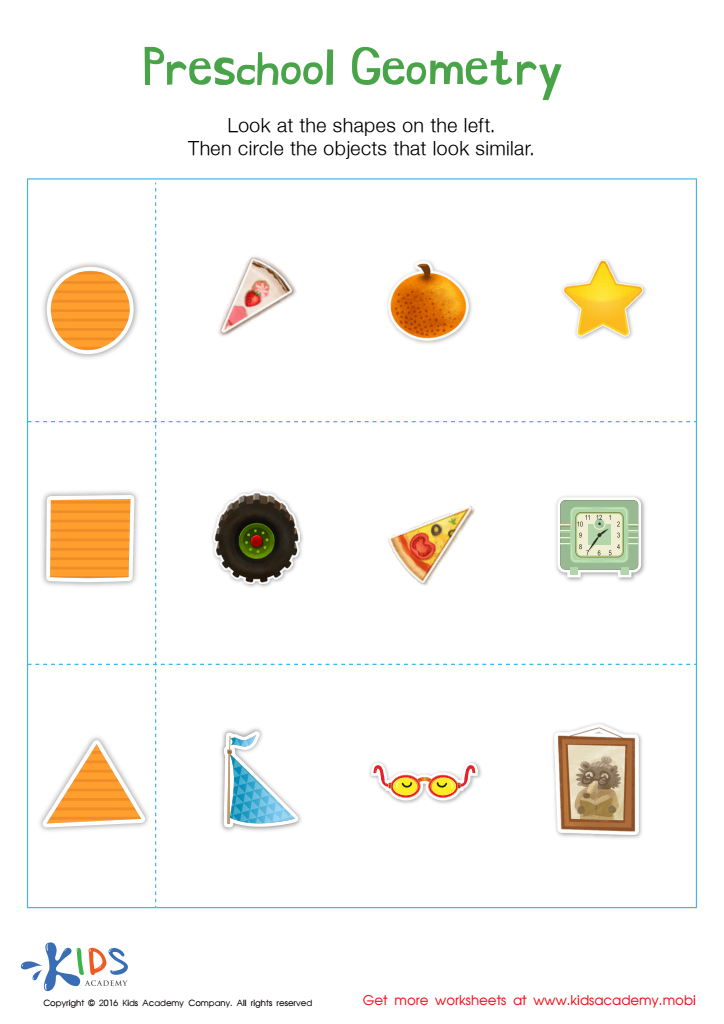
Preschool Geometry Match Up Worksheet
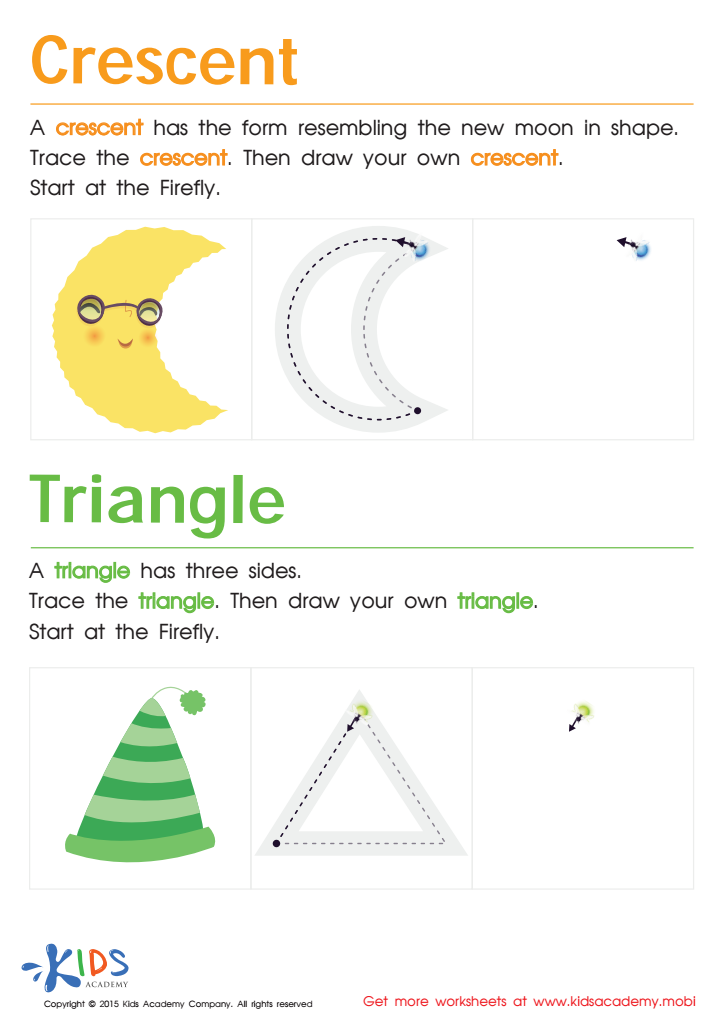
Learning to Draw Crescents And Triangles Worksheet
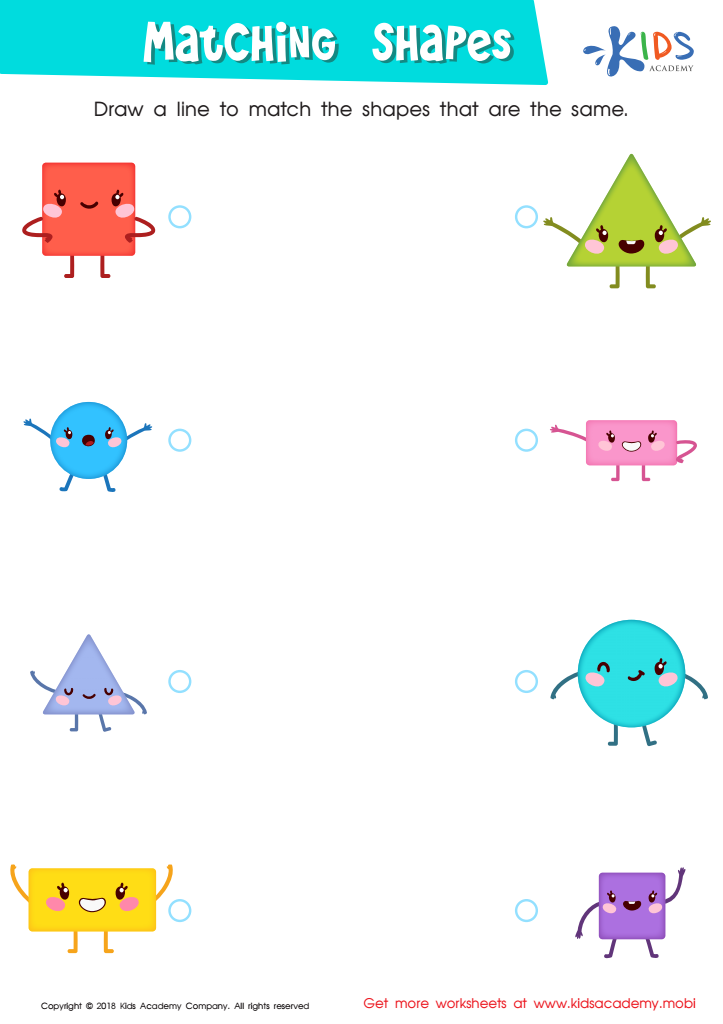
Matching Shapes Worksheet
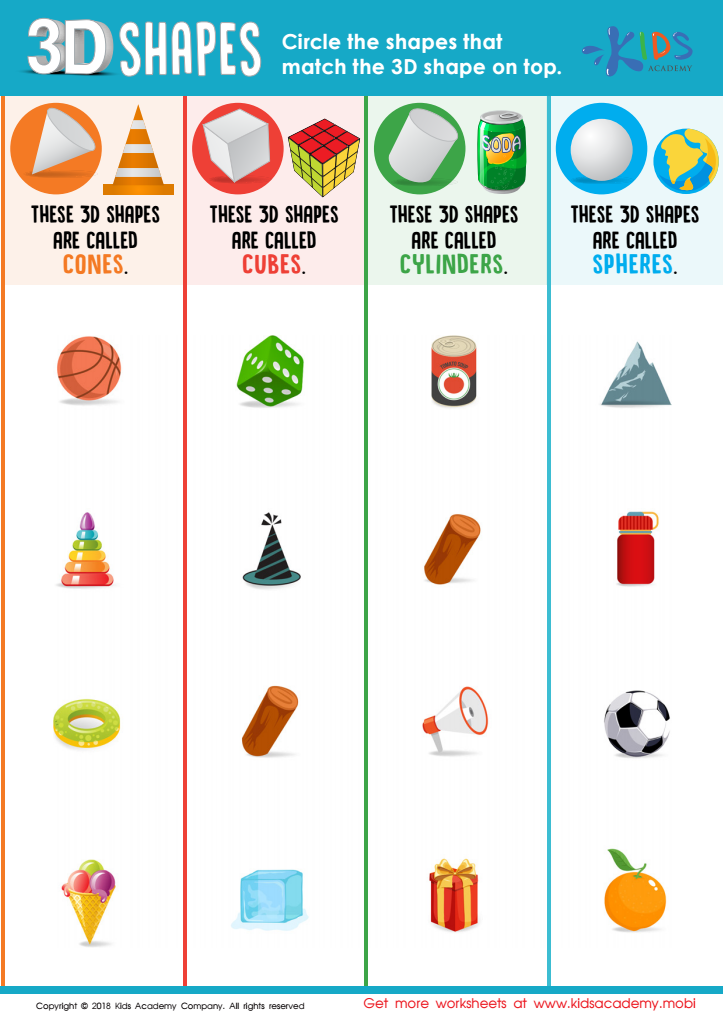
3D Shapes Worksheet








Caring about cognitive development, specifically normal geometry, for 6-year-olds is crucial for several reasons. Firstly, this stage of development involves the ability to recognize and manipulate shapes, which are foundational skills for more advanced math concepts. Understanding basic geometry helps children develop spatial awareness, which is key for problem-solving and logical thinking. These skills extend beyond academic learning and into everyday activities, such as following directions, reading maps, and organizing spaces.
Geometry also enhances visual-motor integration, essential for tasks like writing and drawing. At this developmental stage, engaging in activities that involve shapes and spatial relationships helps strengthen neural connections in the brain, fostering cognitive growth. For instance, puzzles, building blocks, and drawing shapes are practical ways to encourage this kind of learning.
Additionally, fostering an early appreciation and competence in geometry can build confidence and reduce math anxiety. When young children experience success with geometry, they are more likely to approach other challenging subjects with a positive attitude. Thus, parents and teachers should provide a rich environment offering diverse experiences with shapes and spatial relationships. This supportive approach ensures children develop critical thinking skills and a solid foundation for future academic success.








