Understanding measurements Normal Worksheets for Ages 7-8
8 filtered results
-
From - To
Unlock your child's potential in understanding measurements with our engaging "Understanding Measurements Normal Worksheets" designed for ages 7-8. These thoughtfully crafted worksheets aim to introduce young learners to the essential concepts of measuring length, weight, and volume through fun and interactive activities. Your child will build confidence as they practice real-world measurement scenarios, enhancing both their math skills and critical thinking. Ideal for classroom or home use, our worksheets come with clear, age-appropriate instructions to make learning enjoyable. Empower your child today by providing tools that foster learning and curiosity in measurement concepts! Explore our worksheets and watch their skills grow!
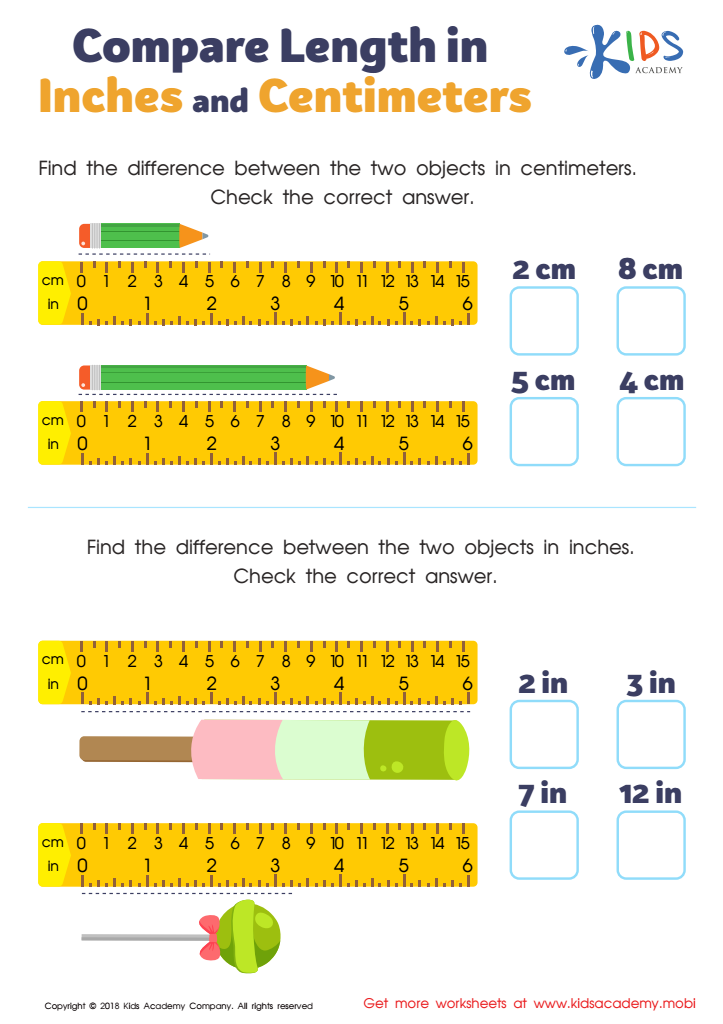
Compare Length in Inches and Centimeters Worksheet
 Assign to My Students
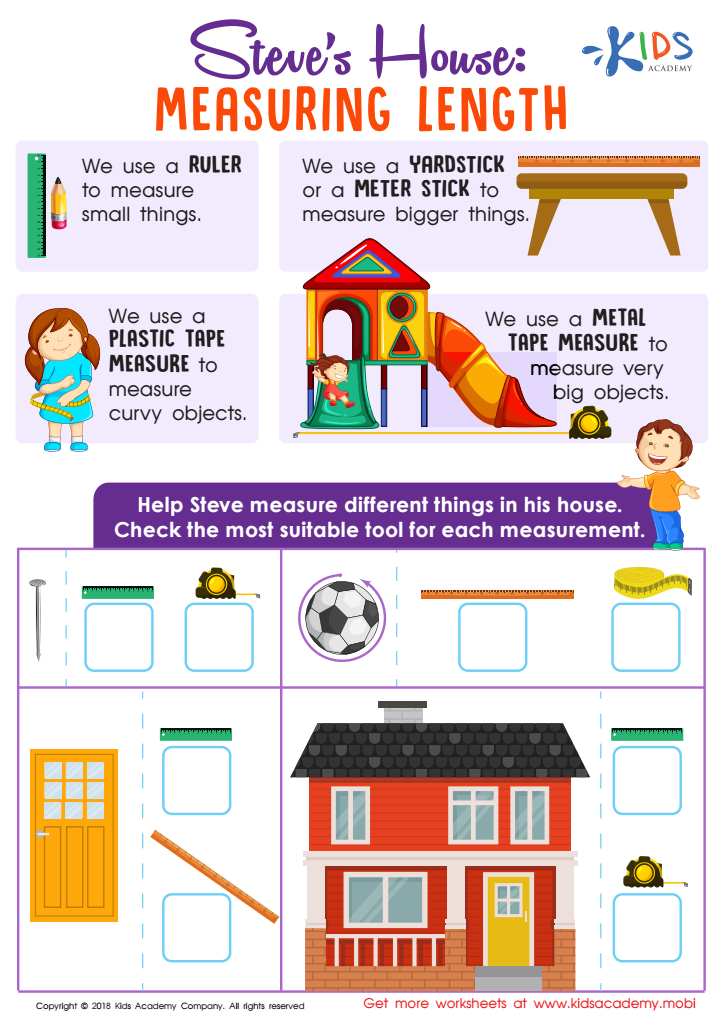
Steve's House: Measuring Length Worksheet
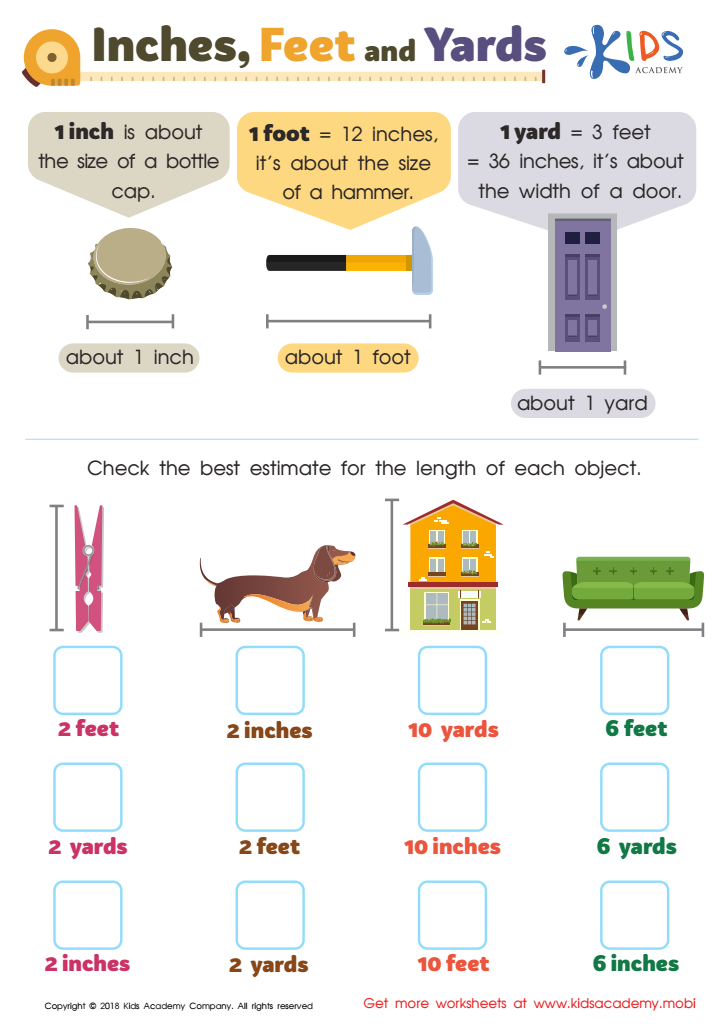
Inches, Feet and Yards Worksheet
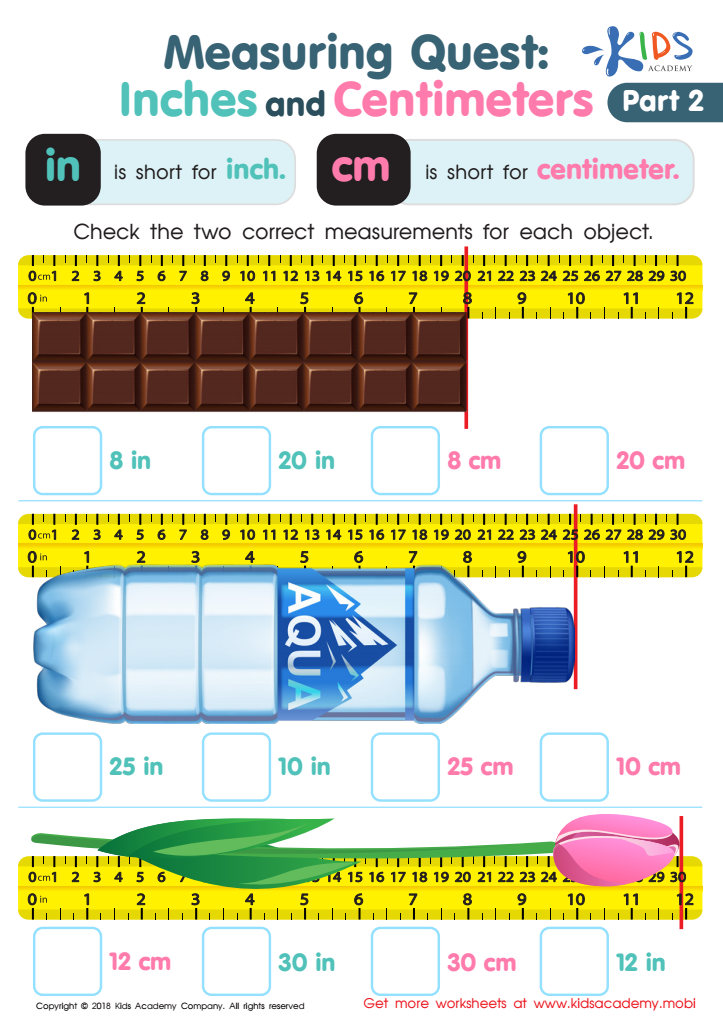
Measuring Quest: Inches and Centimeters - Part 2 Worksheet
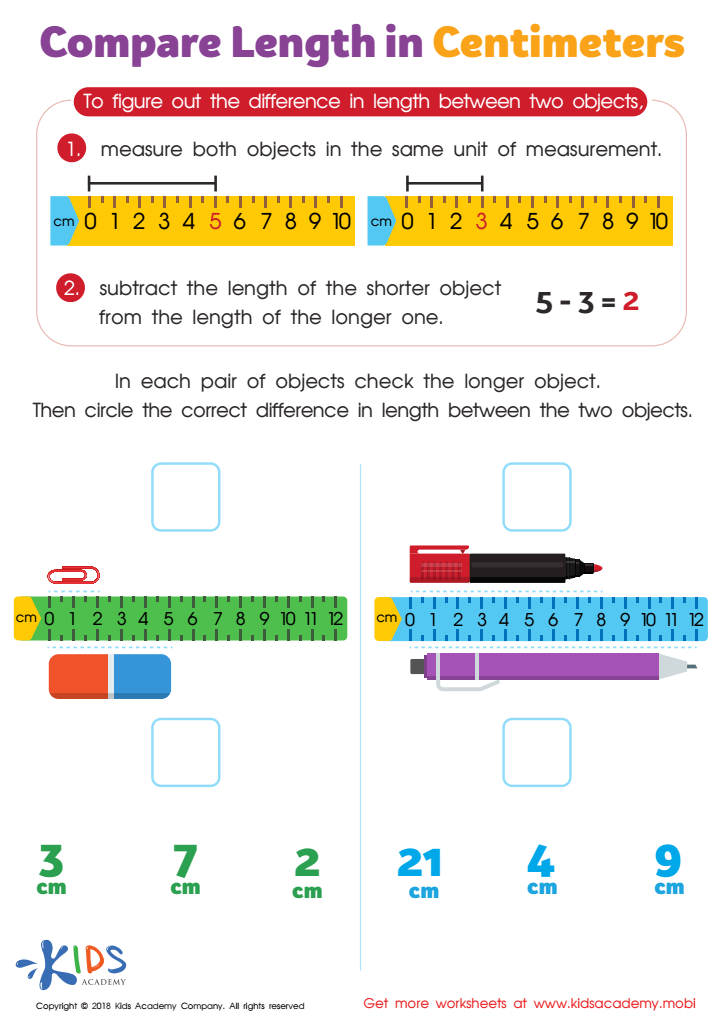
Compare Length in Centimeters Worksheet
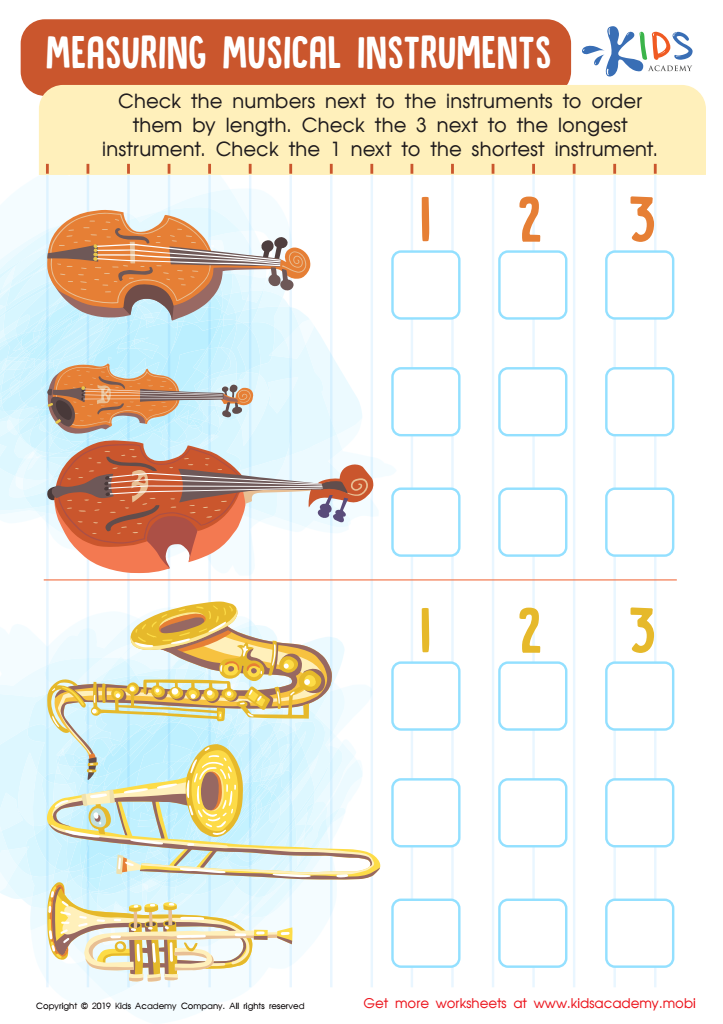
Measuring Musical Instruments Worksheet
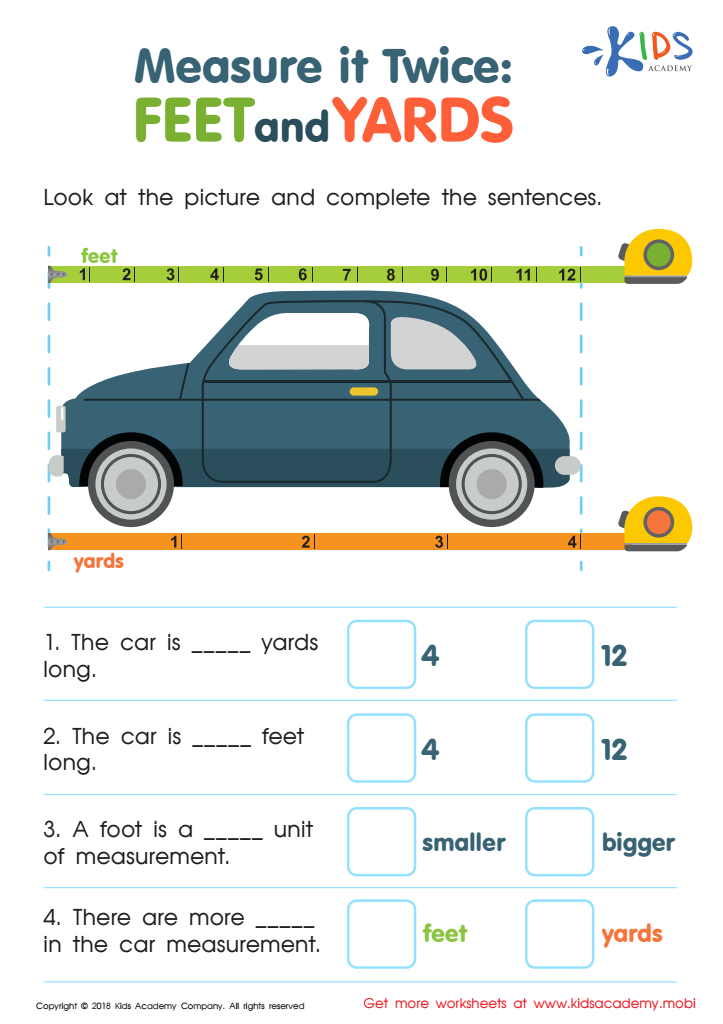
Measure It Twice: Feet and Yards Worksheet
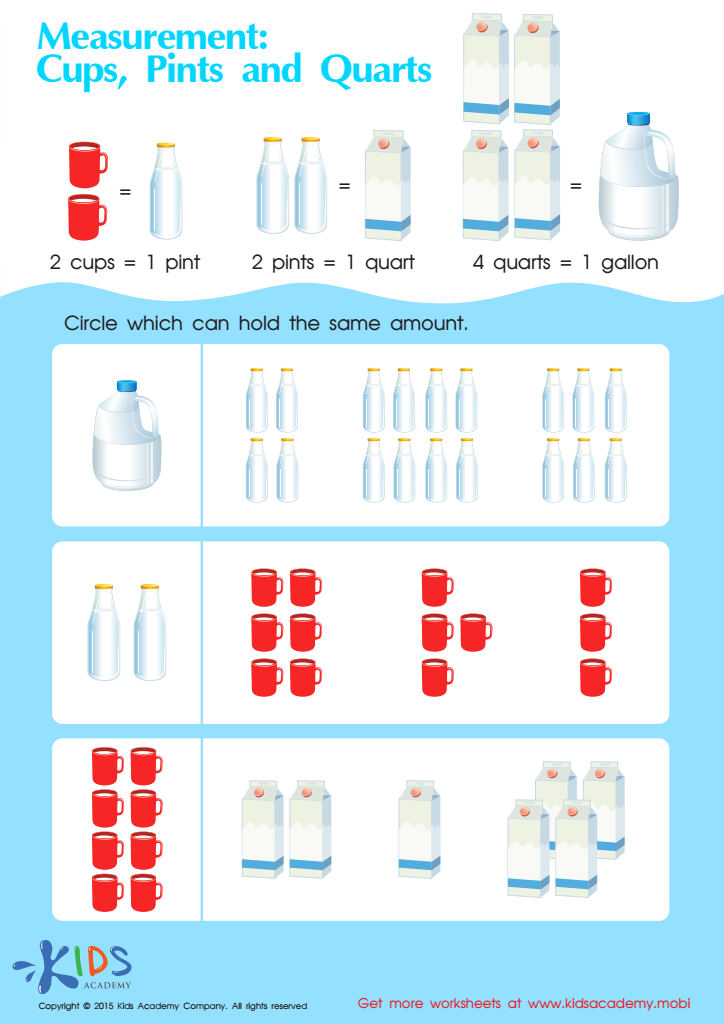
Cups, Pints and Quarts 2 Worksheet






Understanding measurements is crucial for children aged 7-8 as it lays the groundwork for essential life skills and cognitive development. At this age, children are naturally curious and eager to explore the world around them. Learning about measurements enhances their understanding of concepts like length, weight, and volume, which are vital for everyday tasks, from cooking to shopping.
Teachers and parents should prioritize measurement education because it helps children's critical thinking and problem-solving skills. Engaging with measurements involves practical activities, such as measuring ingredients for a recipe or calculating the distance between objects, which makes learning fun and relatable.
Additionally, proficiency in measurements supports later mathematical learning, contributing to a stronger foundation in STEM subjects. By understanding measurements, children develop spatial awareness and insights into geometry, reinforcing their overall mathematical literacy.
Moreover, this knowledge is invaluable for fostering independence. Children become more adept at making informed decisions, whether they're deciding how much of a material they need for a craft project or understanding health metrics like height and weight. For all these reasons, educators and caregivers should recognize the importance of teaching measurements, as it shapes proactive, capable learners prepared for future challenges.








