Normal Chess Worksheets for Ages 7-9 - Page 3
54 filtered results
-
From - To
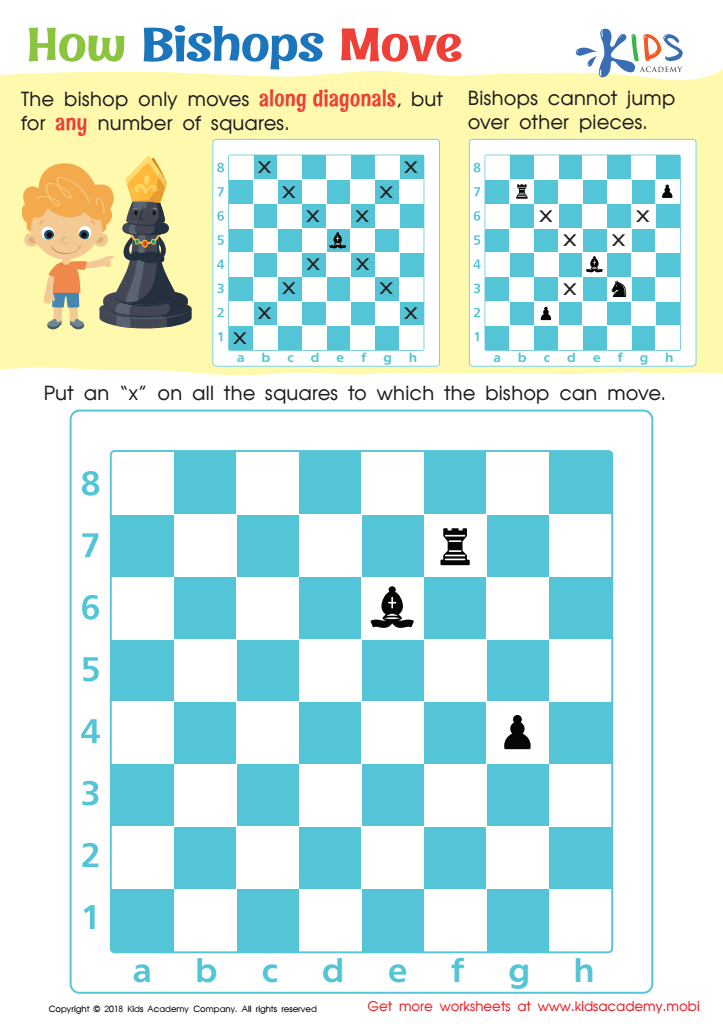
How Bishops Move Worksheet
 Assign to My Students
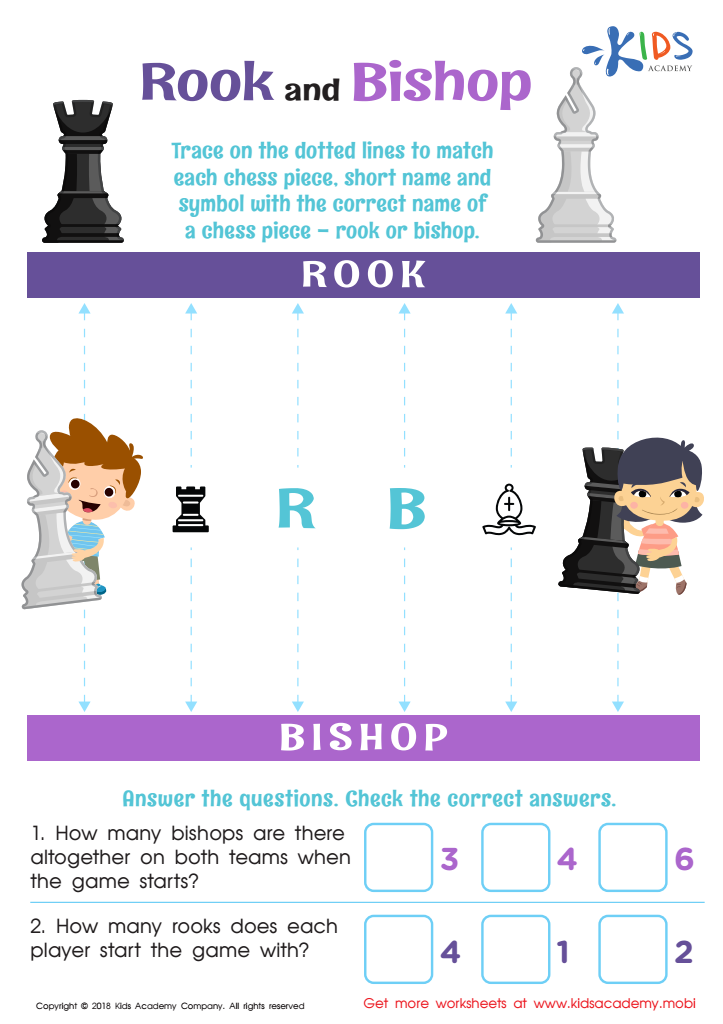
Rook and Bishop Worksheet
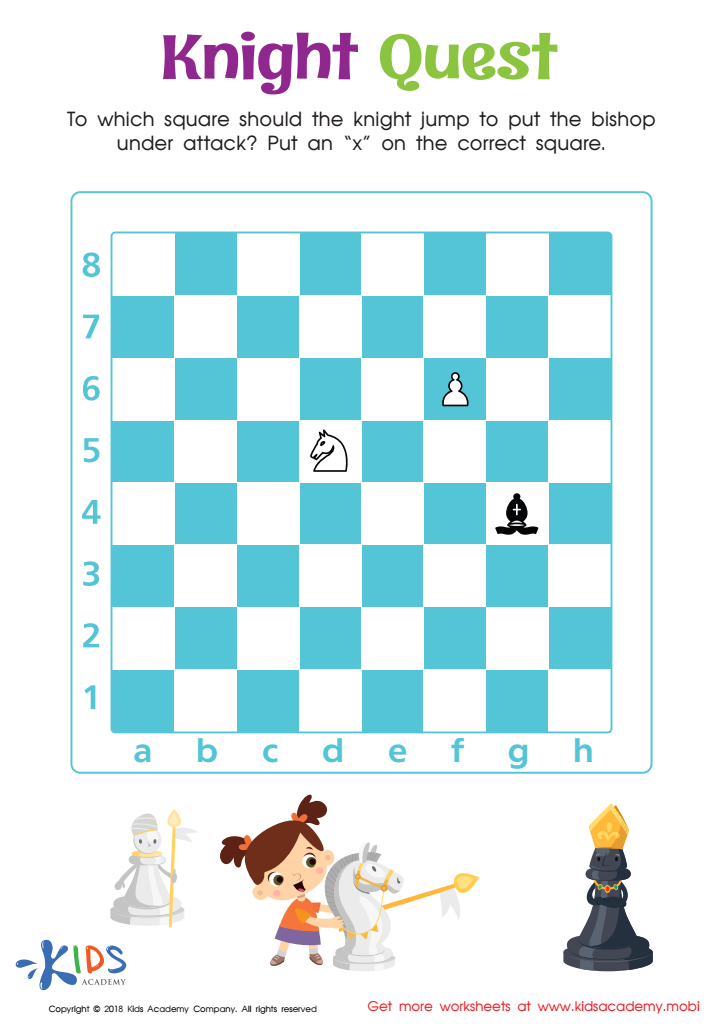
Knight Quest Worksheet
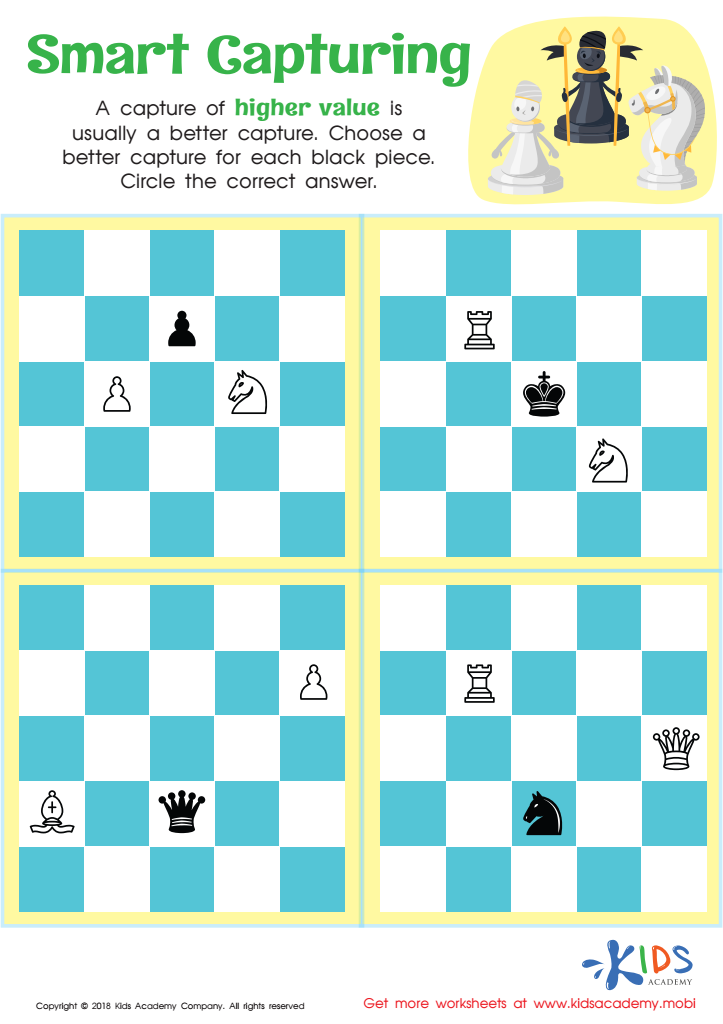
Smart Capturing Worksheet
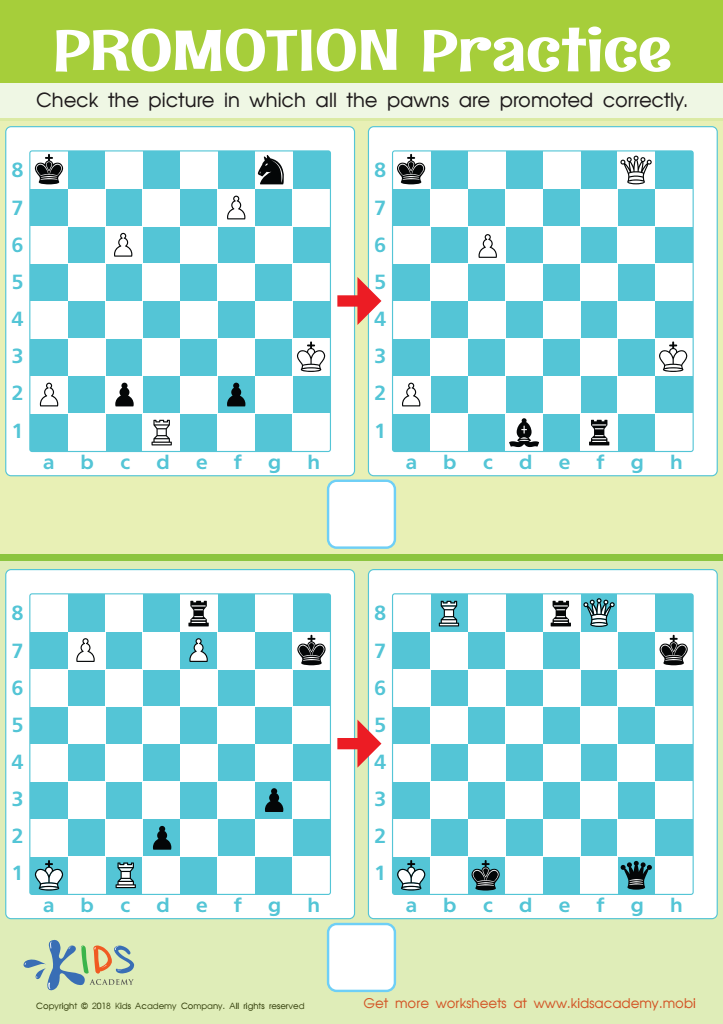
Promotion Practice Worksheet
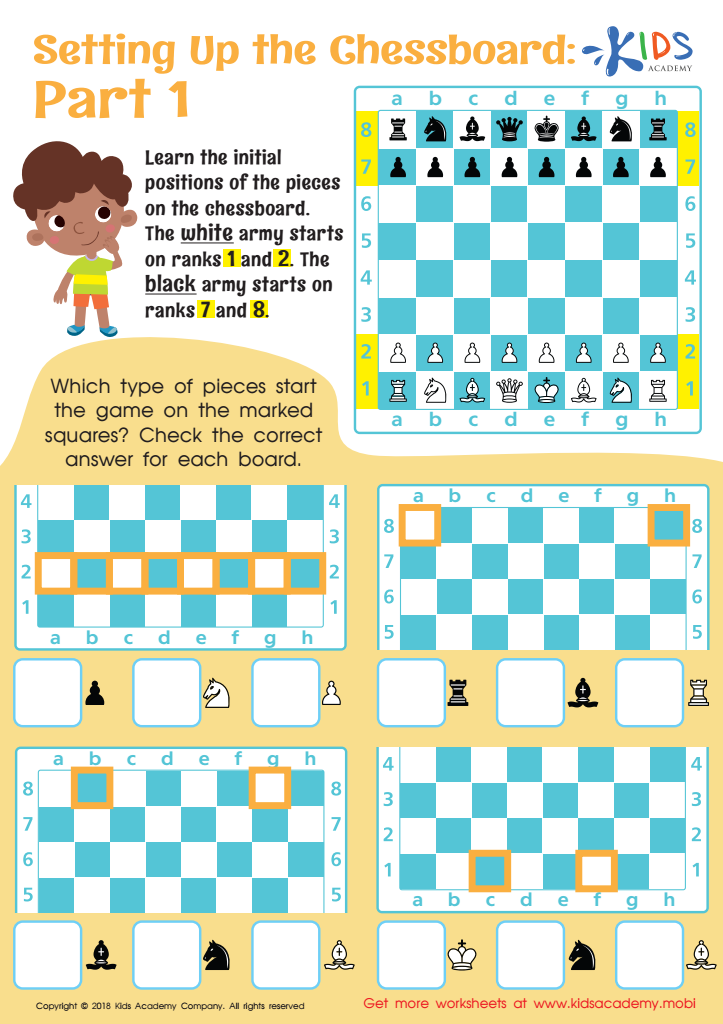
Setting up the Chessboard: Part 1 Worksheet





Parents and teachers should consider introducing Normal Chess to children aged 7–9 because it offers significant educational and developmental benefits. Chess is often lauded for enhancing cognitive skills, such as problem-solving, critical thinking, and strategic planning. When children play chess, they learn to anticipate consequences and think several steps ahead, which can directly impact their academic performance in subjects like mathematics and science.
Furthermore, chess teaches valuable life skills, including patience, concentration, and perseverance. Children must learn to stay focused for extended periods and handle both wins and losses gracefully, promoting emotional resilience and maturity. The game also fosters creativity as players develop unique strategies and solutions to outsmart their opponents.
Socially, chess can help improve communication and interpersonal skills. Playing with peers or mentors encourages respectful interaction, sharing, and learning from one another. It’s a platform where children of varying abilities can engage on an equal footing, building self-esteem and mutual respect.
Furthermore, normal chess does not rely on technology, providing a healthy, screen-free activity that stimulates the mind. Overall, the intellectual, emotional, social, and even physical patience developed through chess makes it a highly beneficial activity for young children in their formative years.