Astronomy basics Normal Worksheets for Ages 7-9
3 filtered results
-
From - To
Dive into the fascinating world of space with our "Astronomy Basics Normal Worksheets" tailored for kids ages 7-9! Designed to engage and educate young minds, these worksheets introduce fundamental concepts about the solar system, stars, planets, and other celestial bodies. Each worksheet is crafted to enhance learning skills through fun activities and colorful illustrations that capture children's imaginations. Perfect for classroom use or at-home enrichment, these resources help young learners explore the wonders of astronomy while building their understanding and knowledge. Let your children embark on an astronomical adventure, enhancing their curiosity and love for learning!
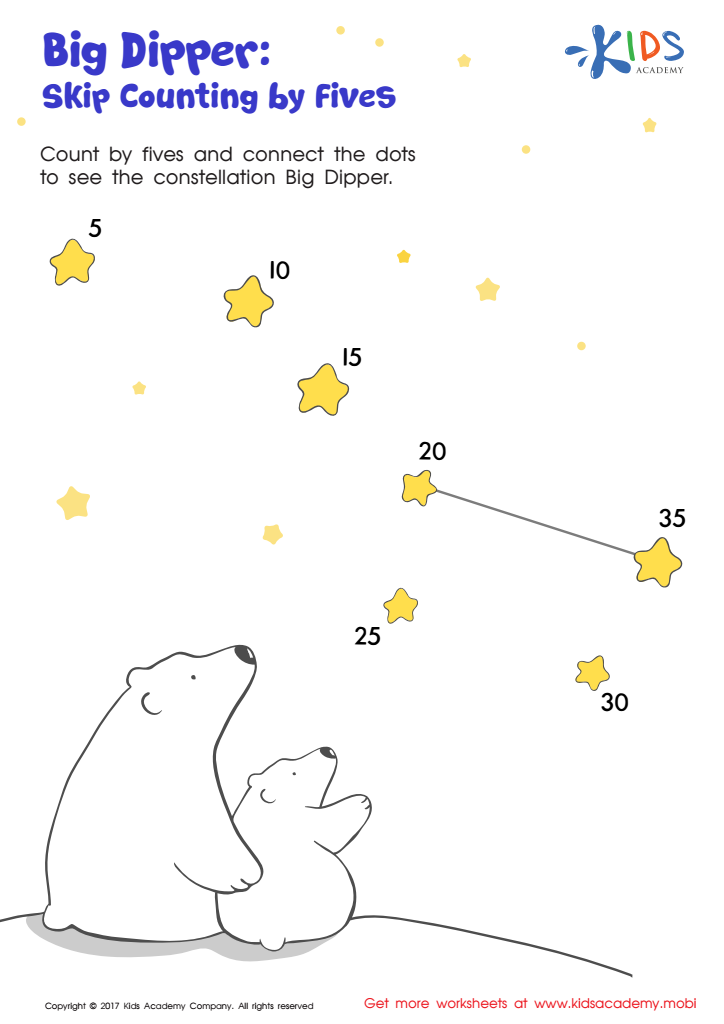
 Assign to My Students
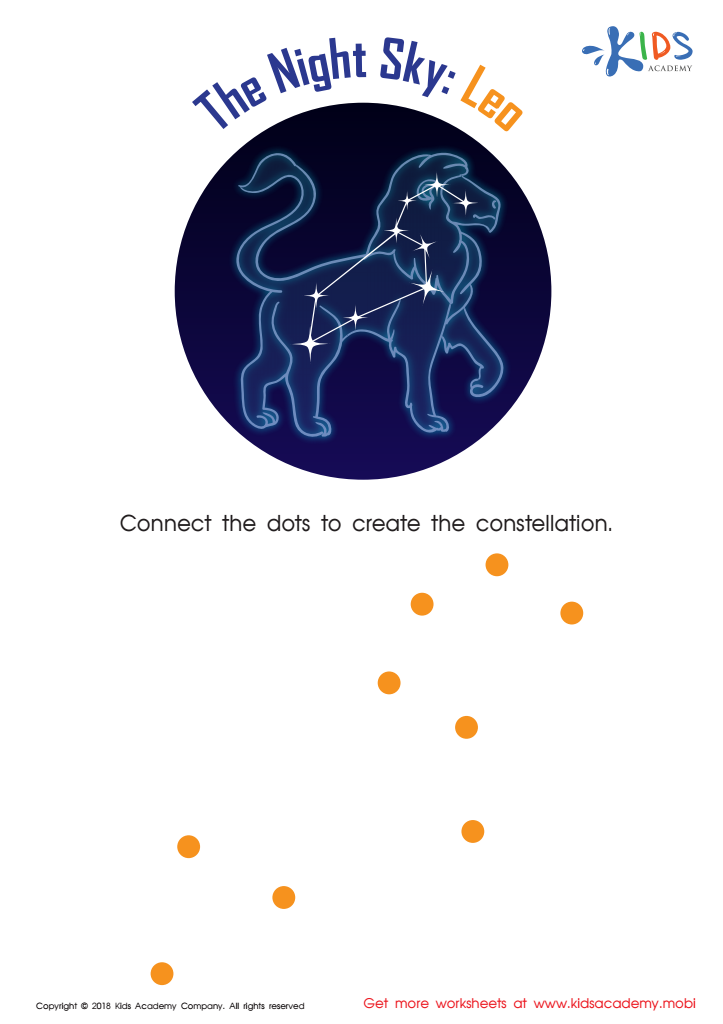
The Night Sky: Leo Worksheet
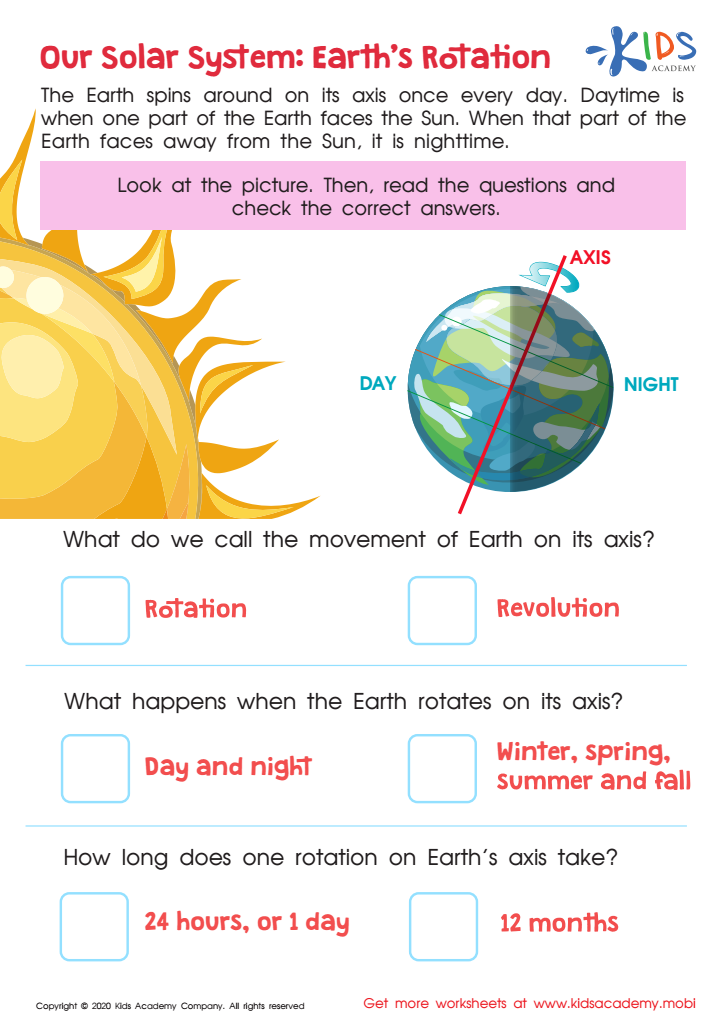
Our Solar System: Earth's Rotation Printable







Understanding the basics of astronomy for children aged 7-9 is crucial for several reasons. Firstly, it sparks curiosity and wonder about the universe, fostering a lifelong interest in learning and science. Astronomy helps young minds grasp the concept of vast spaces and complex systems beyond our planet, giving them early exposure to critical thinking. This comprehension aids in developing problem-solving skills as they learn to ask questions, gather data, and draw conclusions based on their observations.
Additionally, basic astronomy introduces kids to fundamental scientific principles like gravity, orbits, and the nature of light, which are essential building blocks for future science education. It also connects to other subjects, such as mathematics when calculating distances or understanding scales and geography when learning about Earth's place in the solar system.
From a social perspective, learning about astronomy promotes a sense of global citizenship by making children aware that Earth is part of a much larger universe. It can cultivate a sense of stewardship for our planet and encourage appreciation of other cultures' contributions to our understanding of space.
Parents and teachers who engage children in astronomy provide them with an exciting, multidisciplinary platform for education, which is both enjoyable and informative at a fundamental stage in their cognitive development.








