Phonological awareness Normal Worksheets for Ages 7-9
3 filtered results
-
From - To
Enhance your child's literacy skills with our Phonological Awareness Normal Worksheets designed specifically for ages 7-9. These engaging and interactive worksheets offer activities that focus on sound patterns, syllables, rhyme detection, and more. Perfect for strengthening your child’s reading and listening abilities, our worksheets provide varied exercises that make learning fun. Whether in the classroom or at home, these resources encourage cognitive development and help children recognize the sounds in words, setting a solid foundation for reading success. Explore our collection today to boost your child's phonological awareness and spark a lifelong love for learning!
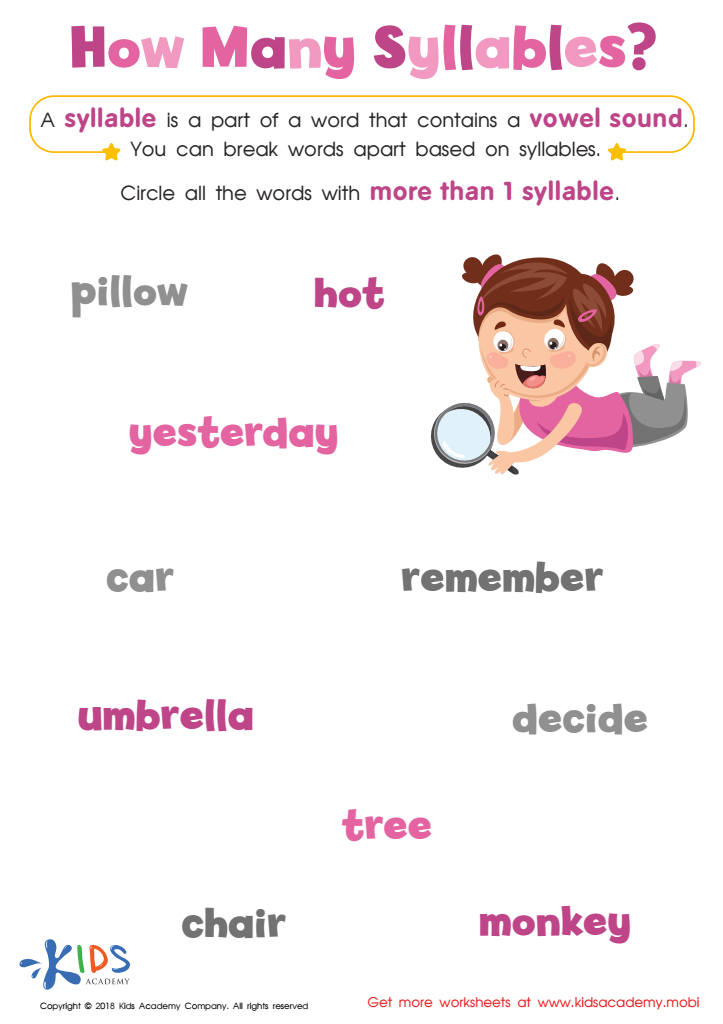
Reading: How Many Syllables Worksheet
 Assign to My Students
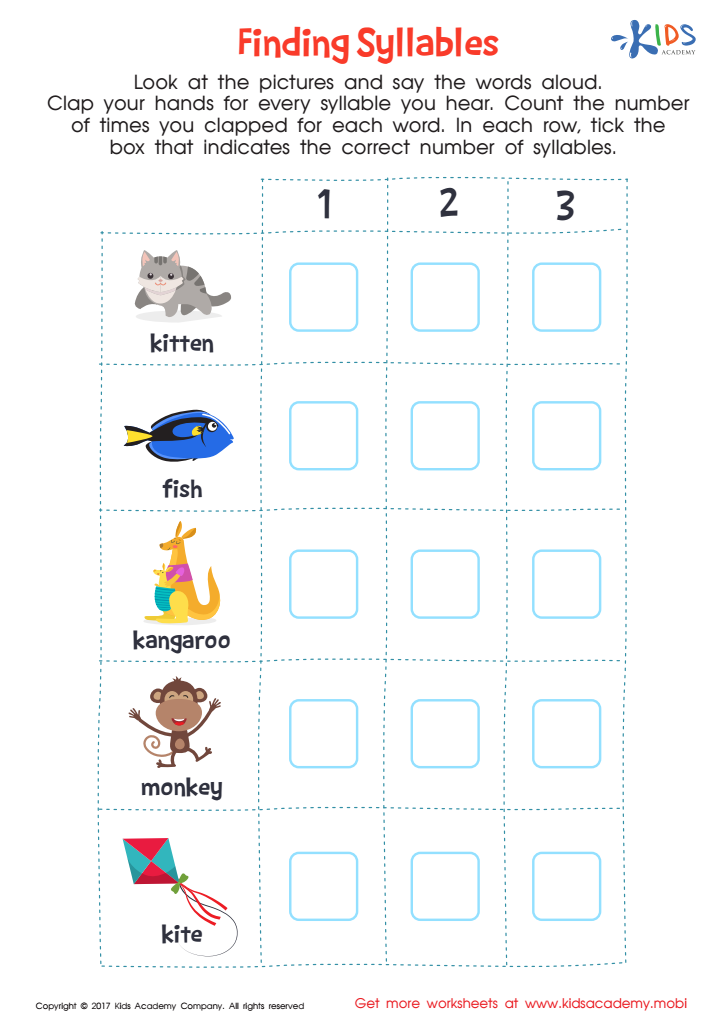
Finding Syllables Word Structure Worksheet
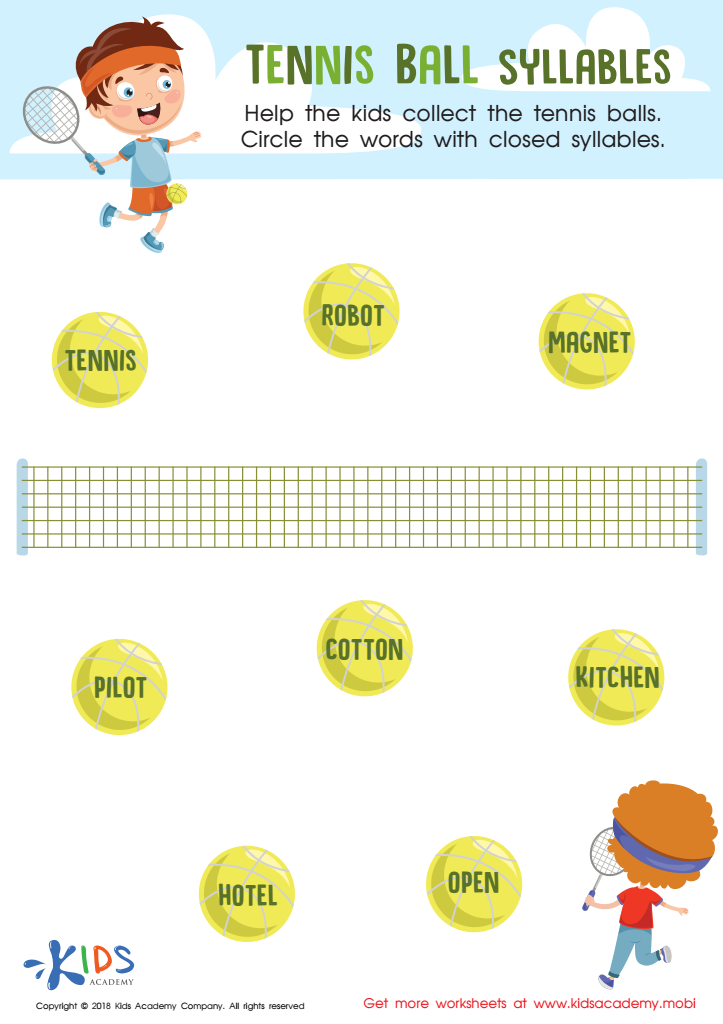
Tennis Ball Syllables Worksheet








Phonological awareness, the essential skill that involves recognizing and manipulating sounds in spoken language, is crucial for children aged 7-9. During this developmental stage, children transition from learning to read to reading to learn. Mastery of phonological awareness significantly enhances their reading abilities, vocabulary development, and overall literacy skills.
When parents and teachers prioritize phonological awareness, they equip children with the tools needed for decoding words. Children who can break down sounds are better prepared to make connections between letters and their corresponding sounds, which is foundational for reading. Additionally, phonological awareness positively influences spelling, writing, and oral communication skills.
Moreover, children struggling with phonological awareness often face challenges in the classroom, leading to reduced confidence or disengagement. By fostering phonological skills through engaging activities, parents and teachers can create a supportive learning environment that promotes success in literacy.
Supporting phonological awareness not only aids academic achievement but also lays the groundwork for lifelong learning. By recognizing its importance, parents and teachers can collaborate to ensure children develop strong literacy skills, setting them on a path to becoming confident, capable readers and successful individuals.








