Time recognition Normal Worksheets for Ages 7-9
5 filtered results
-
From - To
Our Time Recognition Normal Worksheets for Ages 7-9 are expertly designed to help children master time-telling skills. Through engaging activities and colorful illustrations, kids will learn to read clocks, understand digital and analog time, and grasp concepts like hours, minutes, and seconds. Each worksheet progressively challenges young learners, reinforcing their ability to recognize and manage time confidently. Ideal for both classroom and home use, these worksheets are perfect for fostering essential time management skills, critical thinking, and daily routine understanding. Empower your child to become time-savvy with our educational and fun worksheets! Start the journey today at Kids Academy.
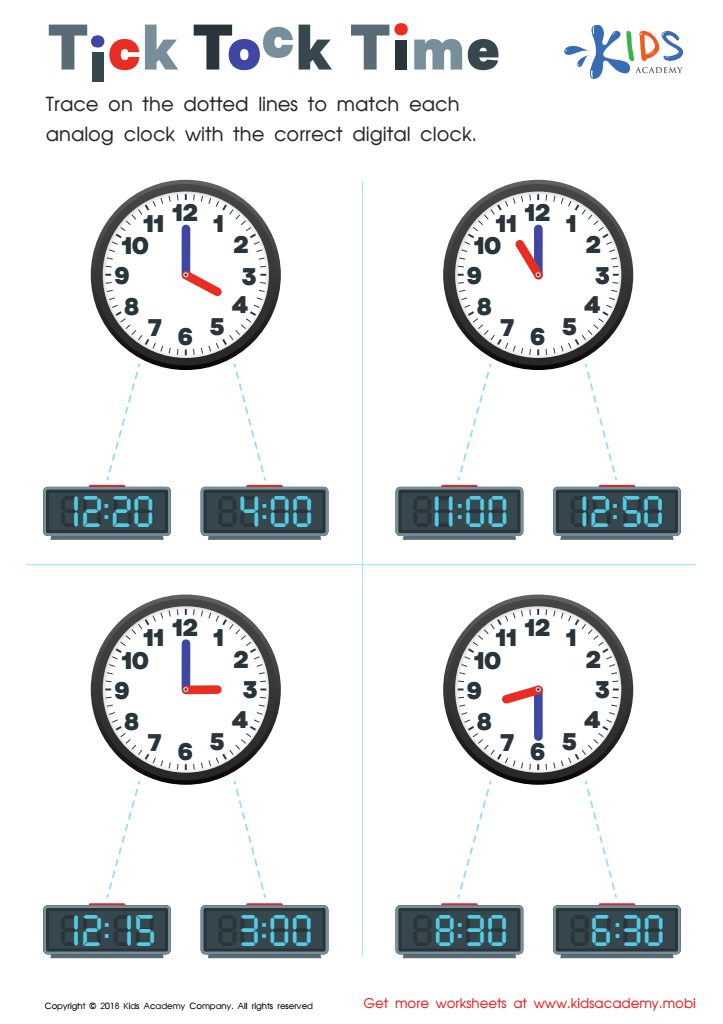
Tick Tock Time Worksheet
 Assign to My Students
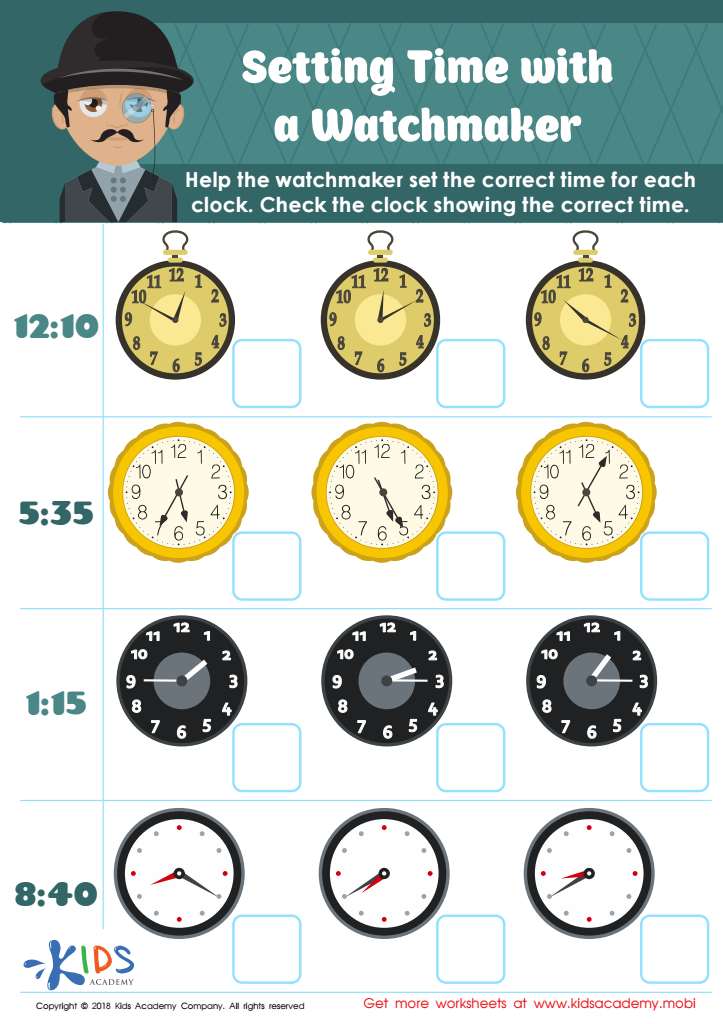
Setting Time with Watchmaker Worksheet
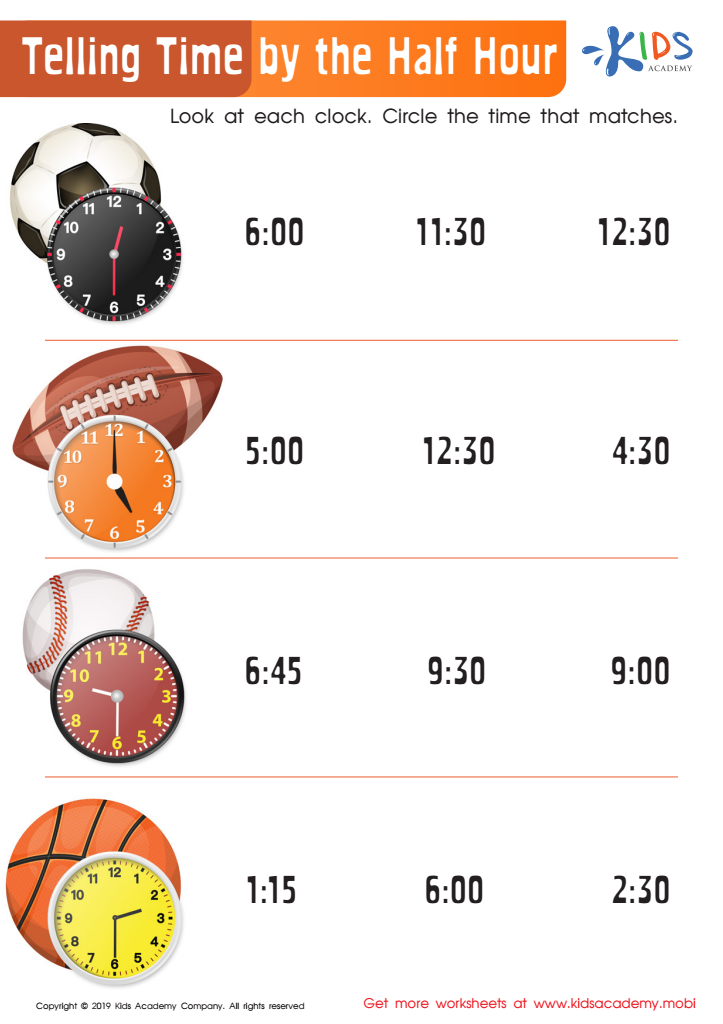
Telling Time by the Half Hour Worksheet
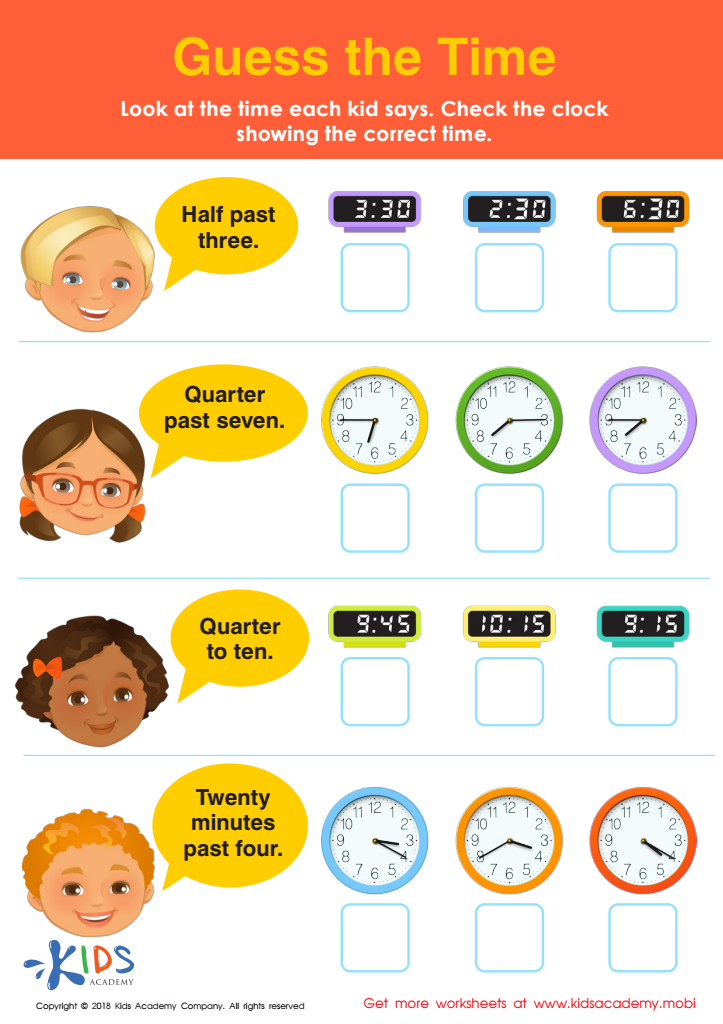
Guess the Time Worksheet
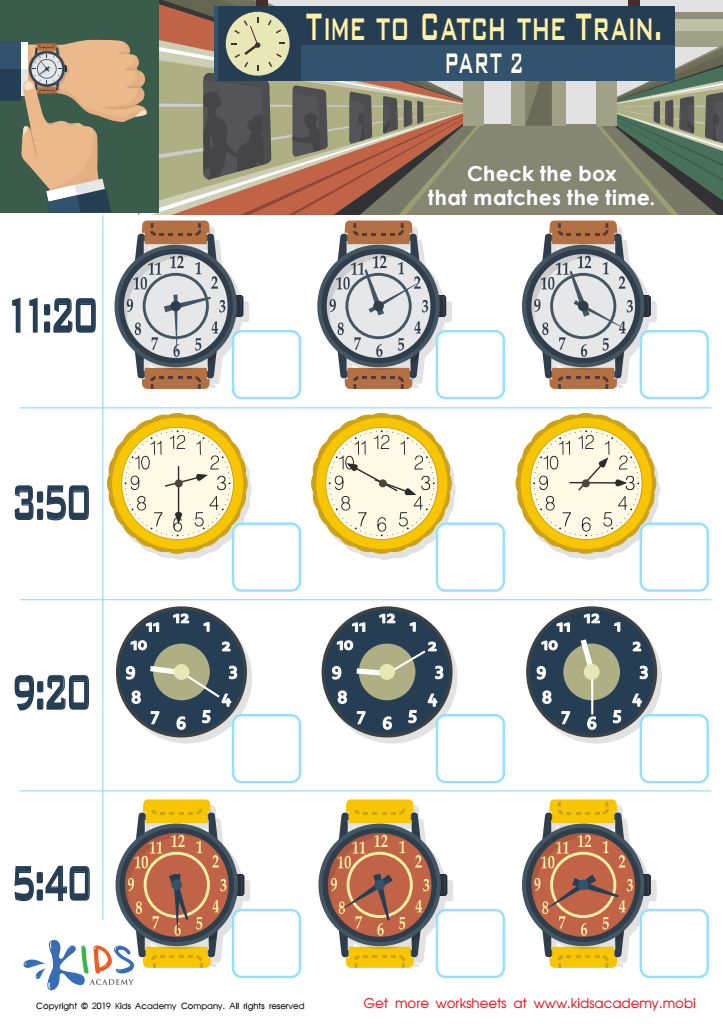
Time to Catch the Train Part 2 Worksheet








Time recognition is a fundamental skill that supports various aspects of a child's development and overall functionality. For children aged 7-9, learning to tell time is crucial not just academically, but also for forming life skills and fostering independence. For both parents and teachers, understanding the importance of time recognition at this stage can greatly benefit a child.
Primarily, telling time helps children comprehend the concept of time management and punctuality. It instills a sense of schedule and routine, allowing them to navigate daily activities more efficiently. Knowing the difference between hours and minutes, and interpreting analog and digital clocks, enhances their mathematical skills, reinforcing other academic areas such as fractions, addition, and subtraction.
Moreover, for parents and teachers, ensuring children can recognize and understand time means they can be more self-reliant. Kids who can tell time are better at organizing tasks, preparing for school on their own, and completing homework systematically. This autonomy boosts their confidence.
In social contexts, being able to discuss times for activities with peers is vital. Whether it's understanding when recess begins or when they need to meet a friend, mastering time facilitates better social interactions. In summary, fostering time recognition in ages 7-9 is a cornerstone for academic success, independence, confidence, and social integration.








