Understanding subtraction Normal Addition & Subtraction Worksheets for Ages 7-9
10 filtered results
-
From - To
Explore our "Understanding Subtraction Normal Addition & Subtraction Worksheets" designed specifically for children aged 7-9. These engaging worksheets help reinforce foundational subtraction skills through interactive exercises and real-world problem-solving scenarios. Children will gain a clear understanding of how subtraction operates in conjunction with addition, fostering their mathematical confidence and competence. With a variety of fun layouts and difficulty levels, our resources cater to different learning styles and encourage independent practice. Ideal for both classroom and home learning, these worksheets help young learners grasp essential math concepts while building essential cognitive skills. Unlock your child's math potential today!
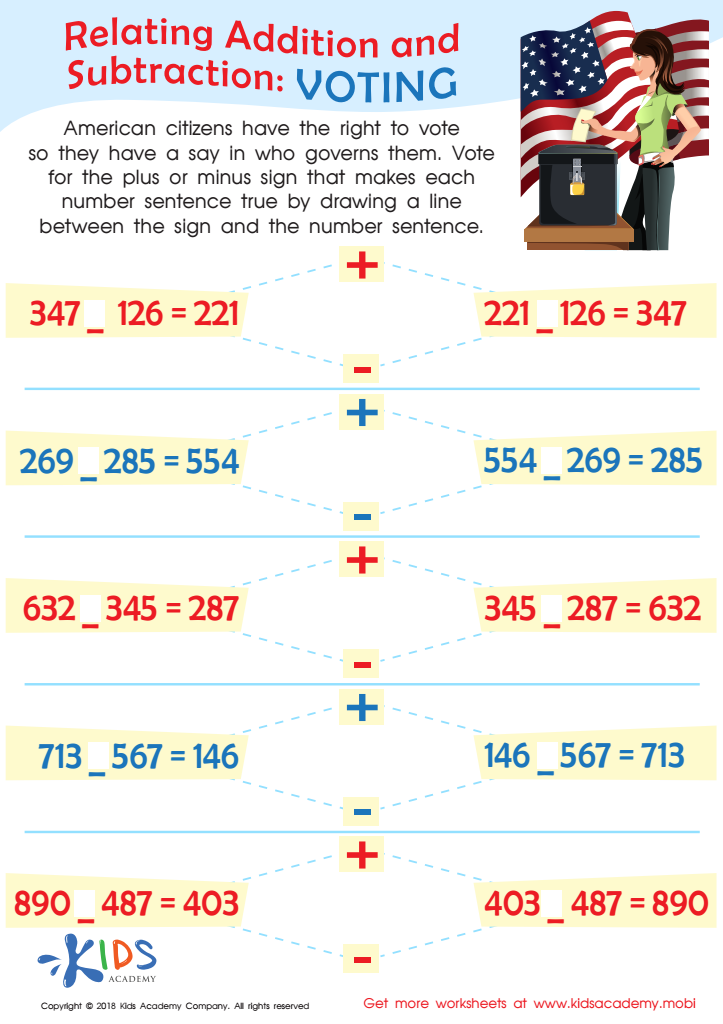
Voting Worksheet
 Assign to My Students
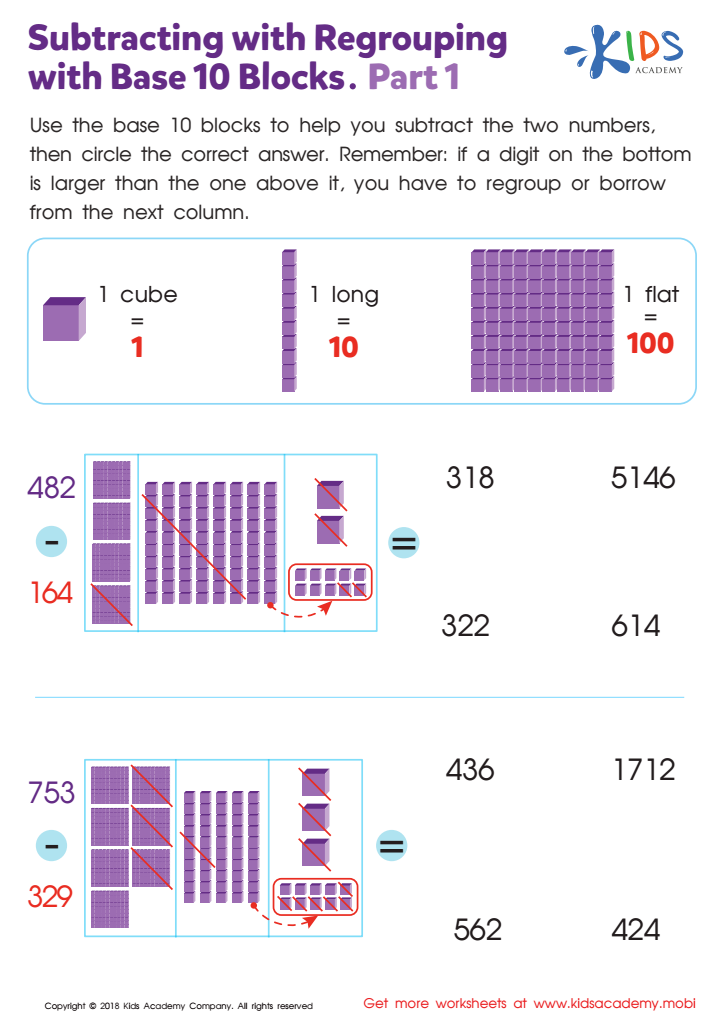
Subtracting with Regrouping with Base 10 Blocks. Part1 Worksheet
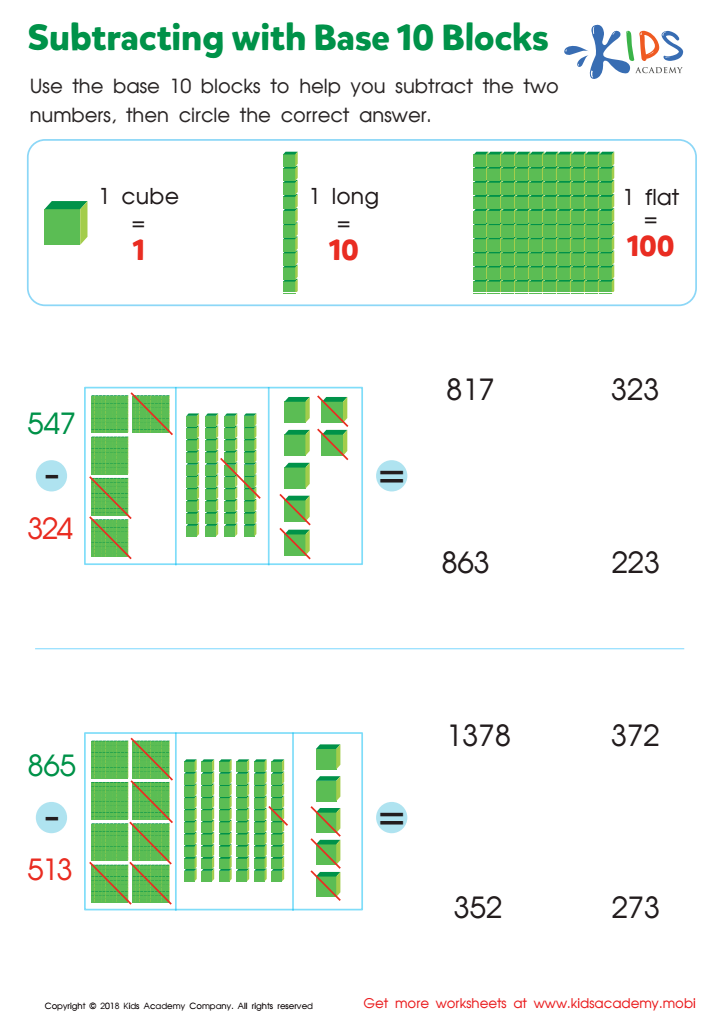
Subtracting with Base 10 Blocks Worksheet
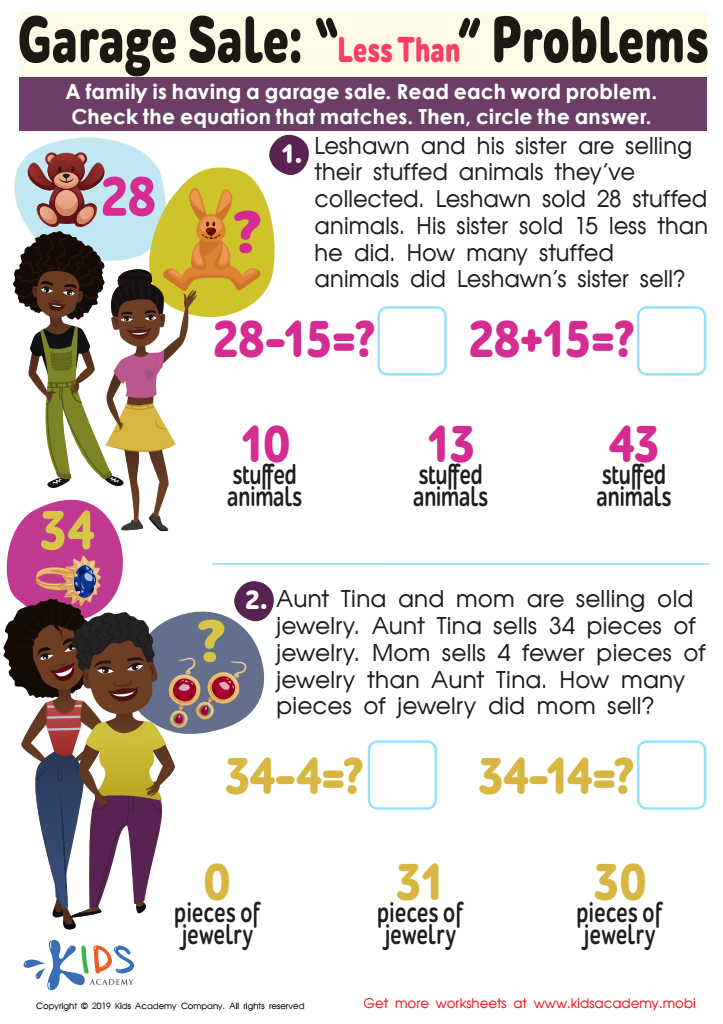
Garage Sale Less Than Worksheet
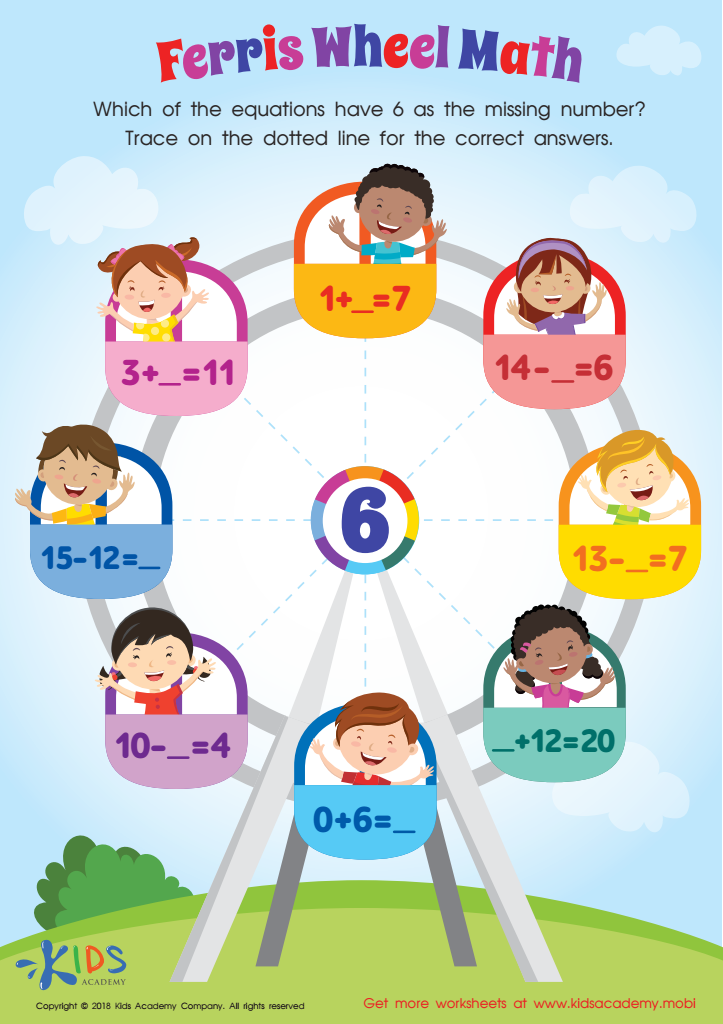
Missing Number: Ferris Wheel Math Worksheet
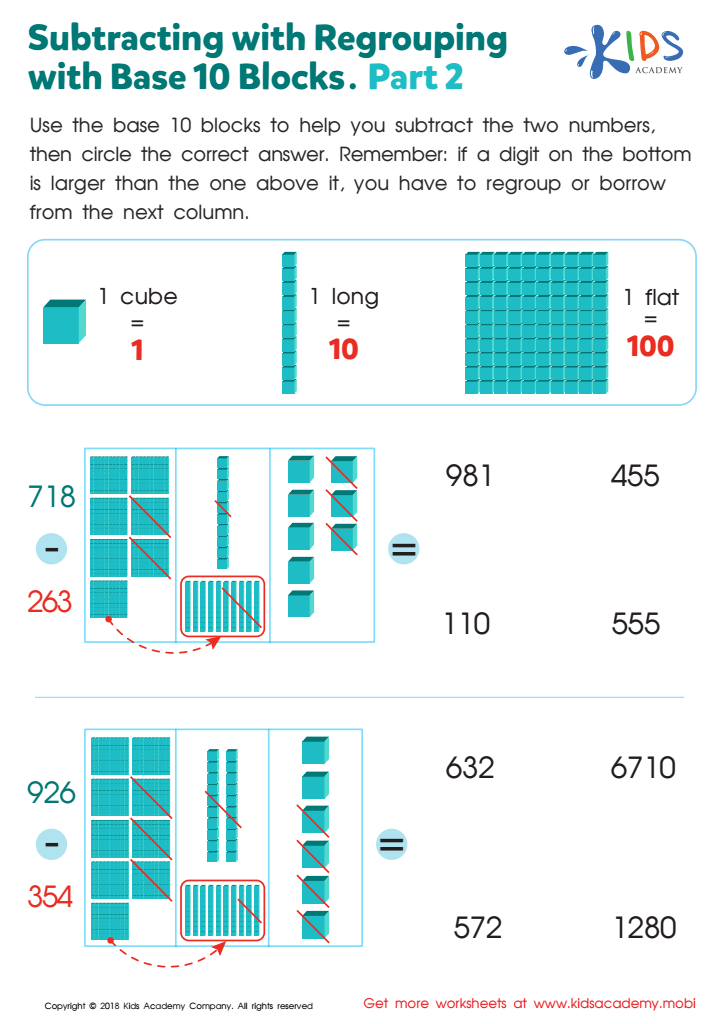
Subtracting with Regrouping with Base 10 Blocks. Part 2 Worksheet
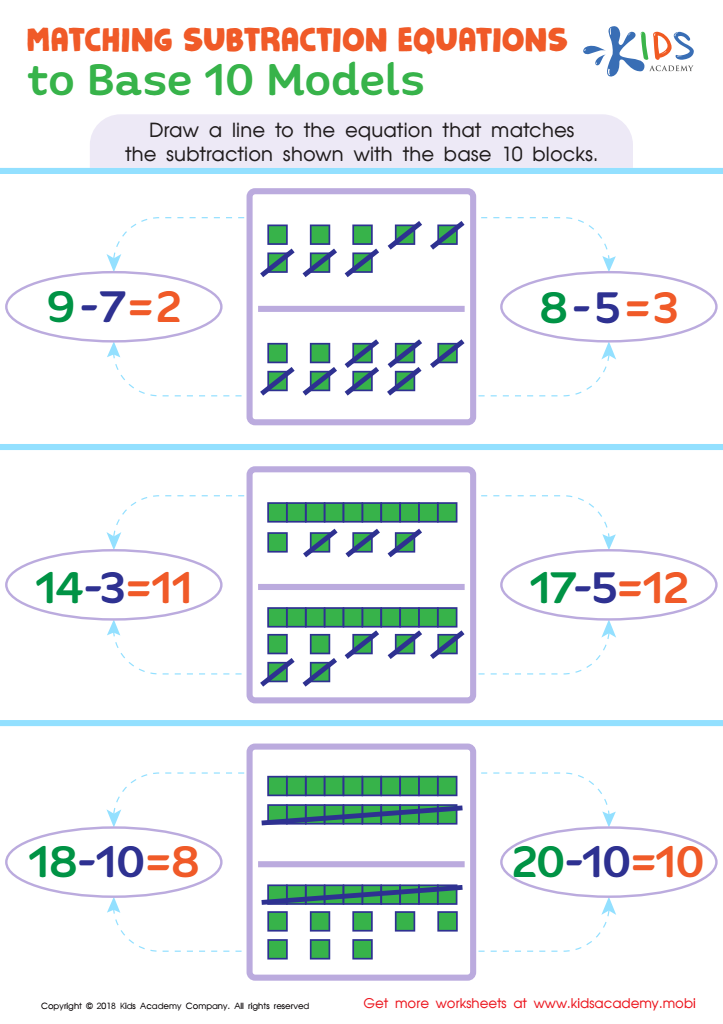
Matching Subtraction Equations To Base 10 Models Worksheet
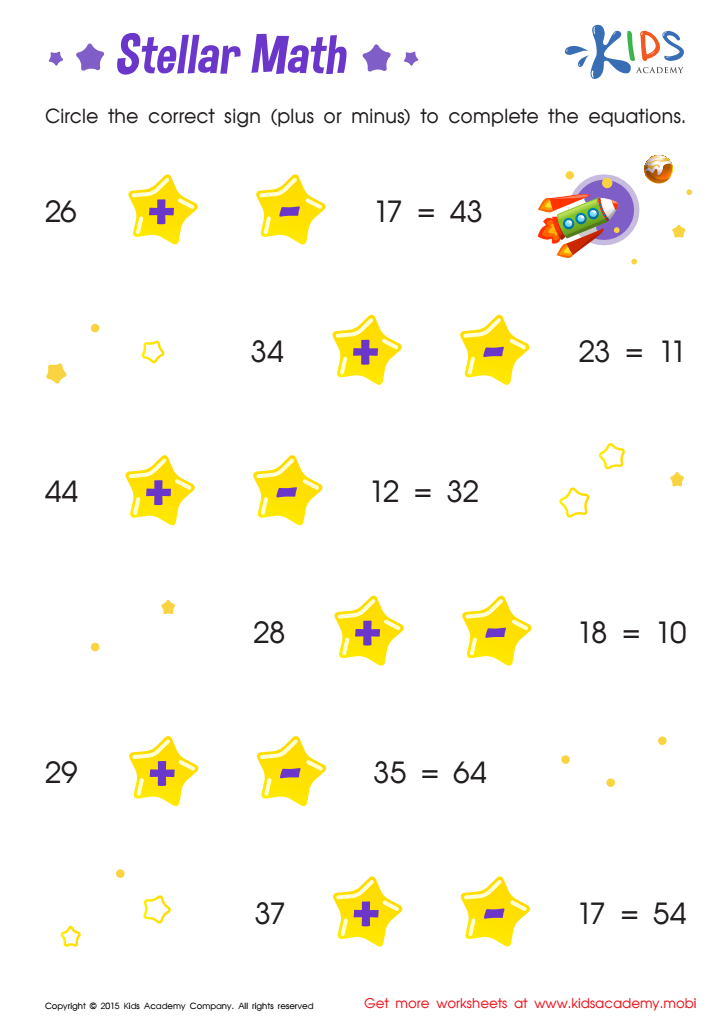
Stellar Math Substraction Worksheet
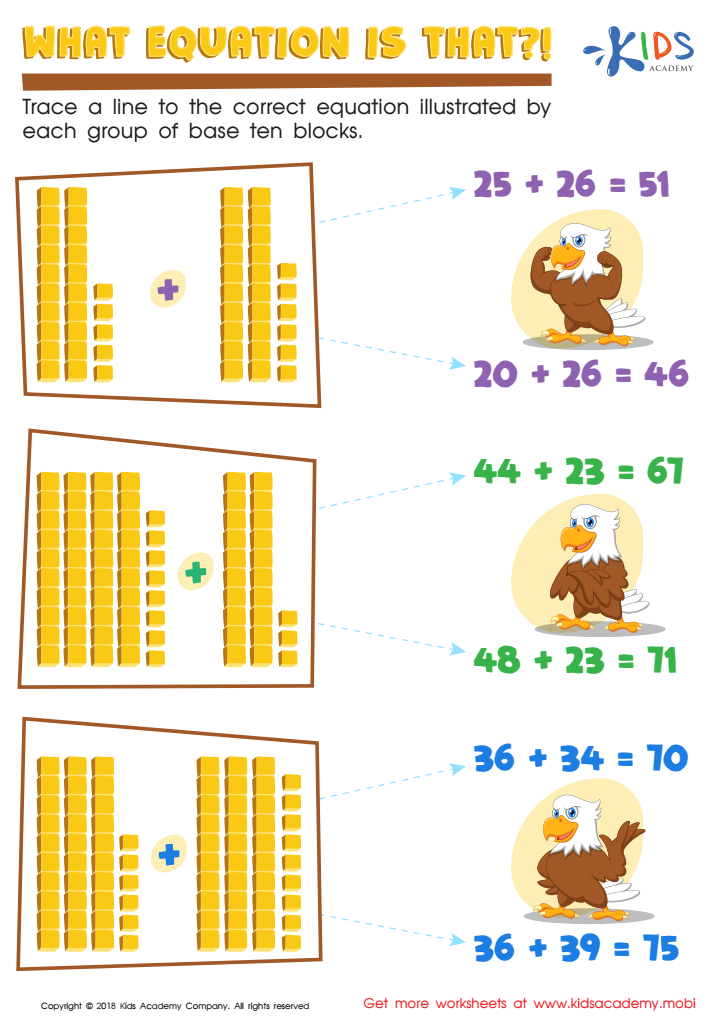
What Equation Is That? Worksheet
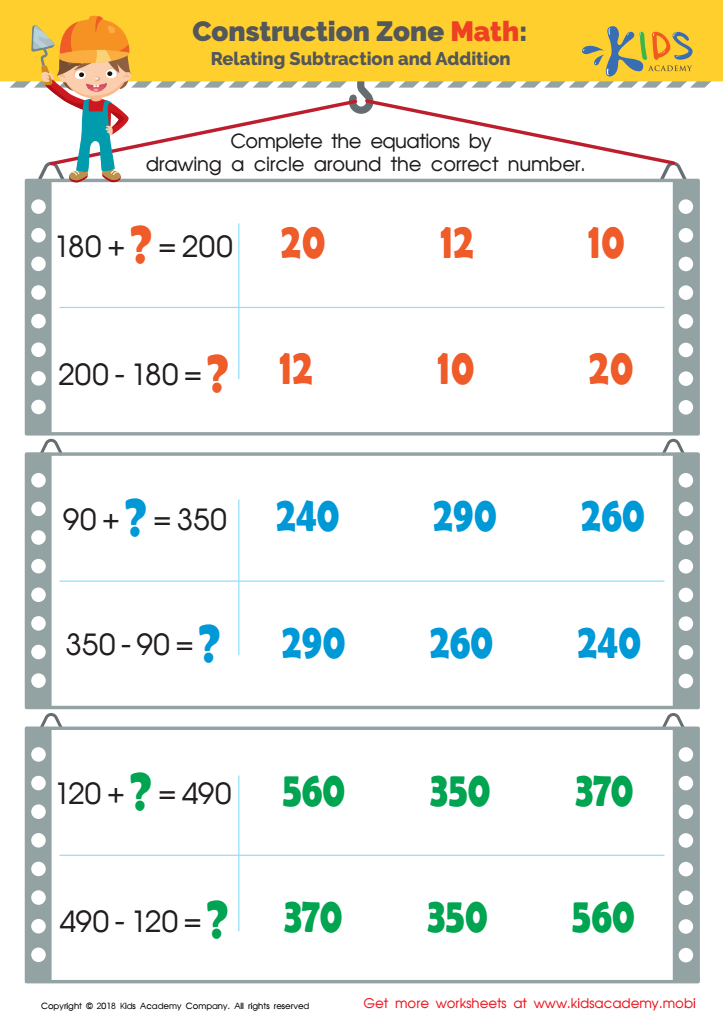
Construction Zone Math: Relating Subtraction and Addition Worksheet








Understanding subtraction, alongside normal addition, is crucial for children aged 7-9 as these foundational skills serve as building blocks for more advanced mathematical concepts. During these developmental years, children begin transitioning from concrete understanding to more abstract reasoning, making it essential for them to solidify their grasp on basic arithmetic.
Parents and teachers should care about this understanding because it directly impacts a child's confidence and competence in math. Proficiency in subtraction encourages problem-solving skills, critical thinking, and the ability to handle everyday situations that require quick calculations — like budgeting allowance, measuring ingredients for a recipe, or understanding simple time concepts. Furthermore, a solid foundation in these skills significantly reduces academic anxiety and promotes a positive attitude toward learning.
Additionally, this age group is preparing for more complex mathematical operations, such as multiplication and division. Mastery of addition and subtraction is essential, as these operations are interrelated, and proficiency in one often enhances the understanding of the other. By fostering a supportive environment for children to explore and understand subtraction, parents and teachers not only equip them with essential skills critical for their academic success but also foster a lifelong love for mathematics.








