Fine Motor Skills Normal Geometry Worksheets for Ages 7-9
5 filtered results
-
From - To
Enhance your child's fine motor skills with our engaging Normal Geometry Worksheets designed specifically for ages 7 to 9. These thoughtfully crafted activities blend essential geometric concepts with hands-on tasks that promote dexterity and coordination. Through fun exercises involving shapes, lines, and spatial reasoning, children will develop precision as they trace, color, and manipulate geometric figures. Our worksheets encourage creativity while reinforcing math skills, making learning both interactive and enjoyable. Perfect for use at home or in the classroom, these worksheets provide valuable practice for young learners to strengthen their fine motor abilities and geometric understanding simultaneously. Download now for rewarding educational experiences!
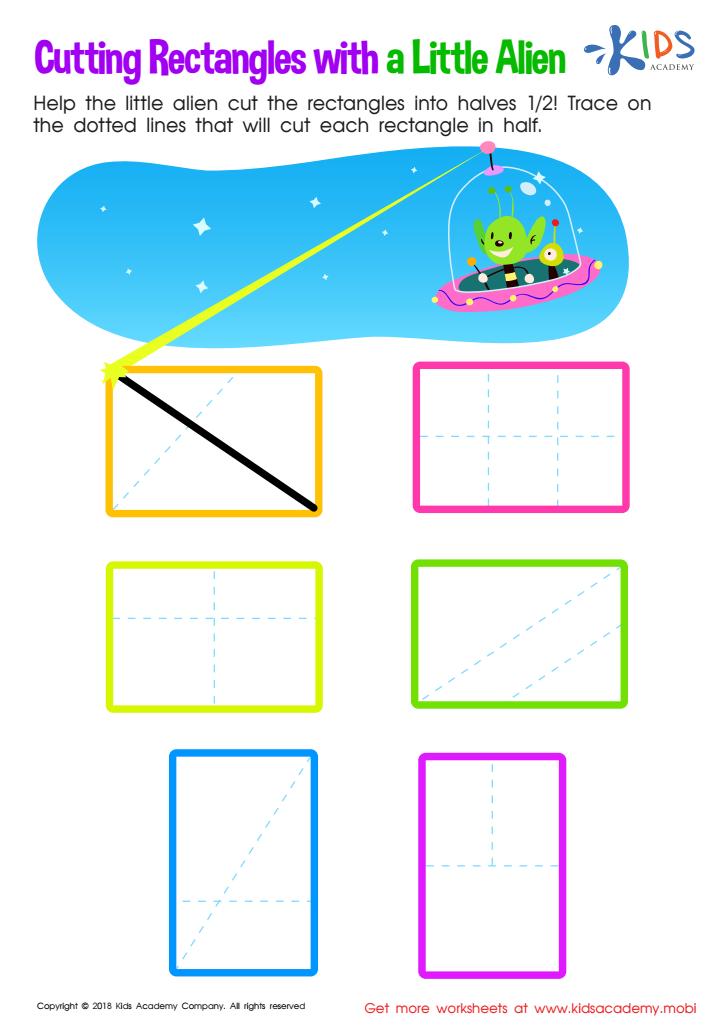
Cutting Rectangles with Alien Worksheet
 Assign to My Students











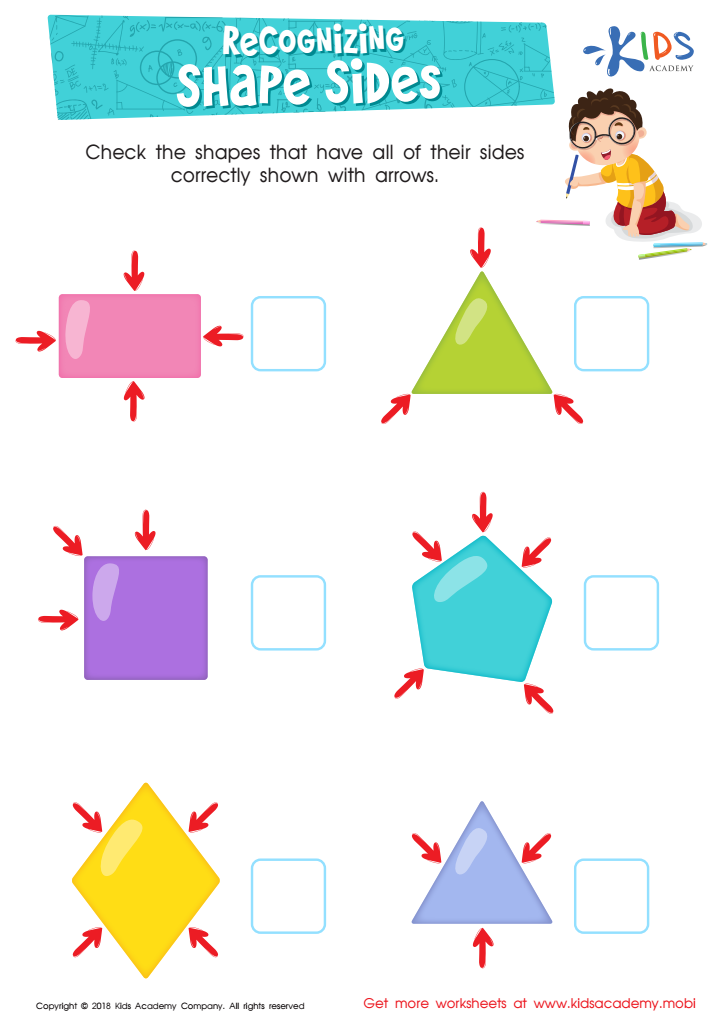
Recognizing Shape Sides Worksheet

Three–Dimensional Shapes: Cylinder Worksheet
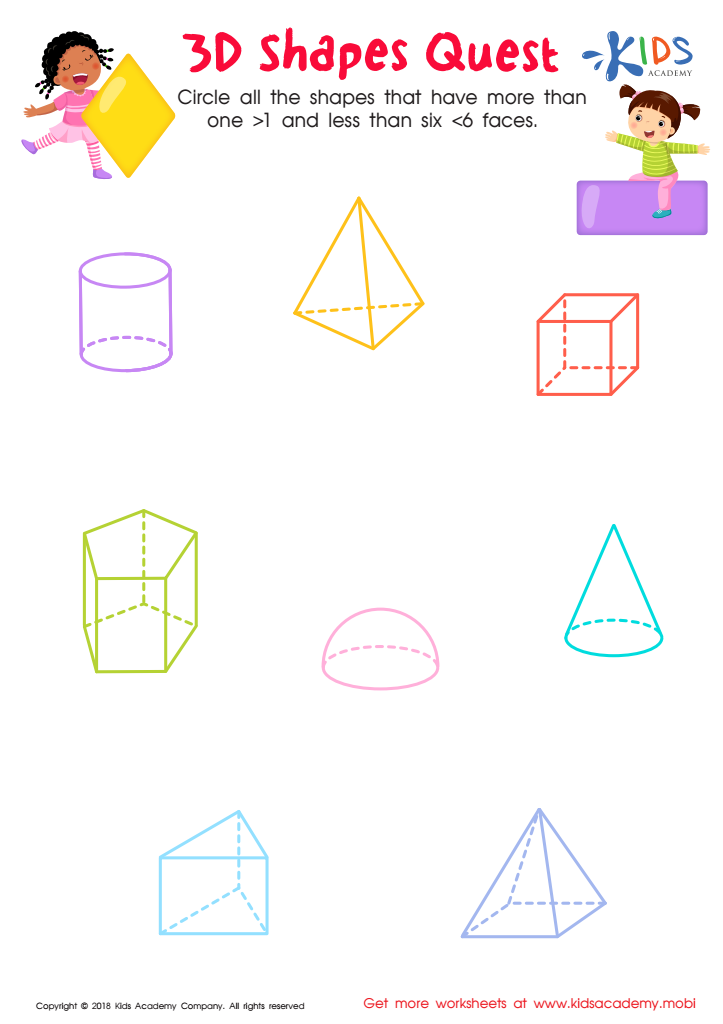
3D Shapes Quest Worksheet
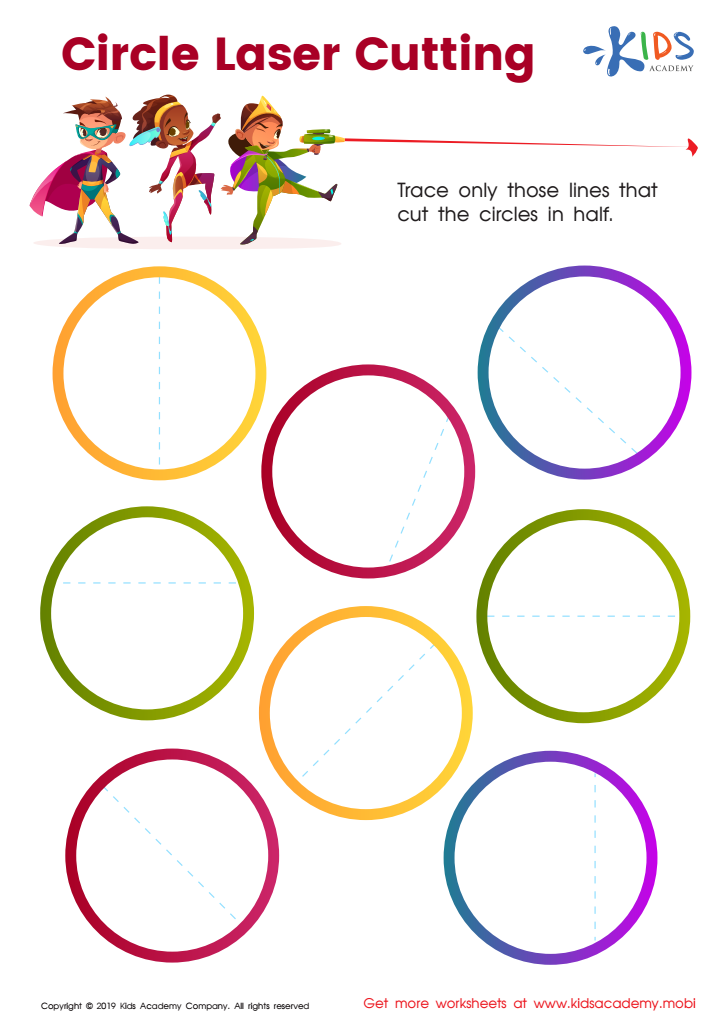
Circle Laser Cutting Worksheet








Fine motor skills are crucial for children aged 7 to 9 as they play a foundational role in their overall development and everyday interactions with the world around them. At this age, children are refining their ability to manipulate tools and objects, which is essential not only for writing and drawing but also for performing daily tasks, such as buttoning clothing or using utensils.
Normal geometry, encompassing shapes, spatial awareness, and measurement, aligns closely with fine motor development. Proficiency in these areas helps children understand and engage with mathematical concepts early on. The combination of fine motor skills and geometric understanding leads to improved problem-solving capabilities, boosts creativity, and enhances cognitive functions, as children learn to visualize and manipulate objects in various ways.
By focusing on developing these skills, parents and teachers empower children to express themselves better, build their confidence, and foster academic success. Strong fine motor abilities also correlate with future achievements in STEM fields, artistic endeavors, and practical daily living skills. Supporting the development of fine motor skills and geometry not only enhances performance in school subjects but also prepares children for a successful, independent future, making it vital for caregivers and educators to prioritize these critical areas of development.








