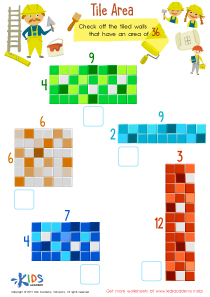
Basic Addition Skills Normal Numbers Worksheets for Ages 7-9
5 filtered results
-
From - To
Enhance your child's mathematical foundation with our Basic Addition Skills Worksheets, specially designed for ages 7-9. These engaging resources focus on normal numbers, enabling young learners to grasp addition concepts through fun activities and practice exercises. Perfect for both classroom and home learning, our worksheets include various problems that cater to different skill levels, ensuring a comprehensive learning experience. Foster a love for math while reinforcing essential skills with interactive practice that captivates young minds. Explore a variety of formats—from visual aids to challenging puzzles—making addition enjoyable. Prepare your child for future math success by starting with these essential worksheets!
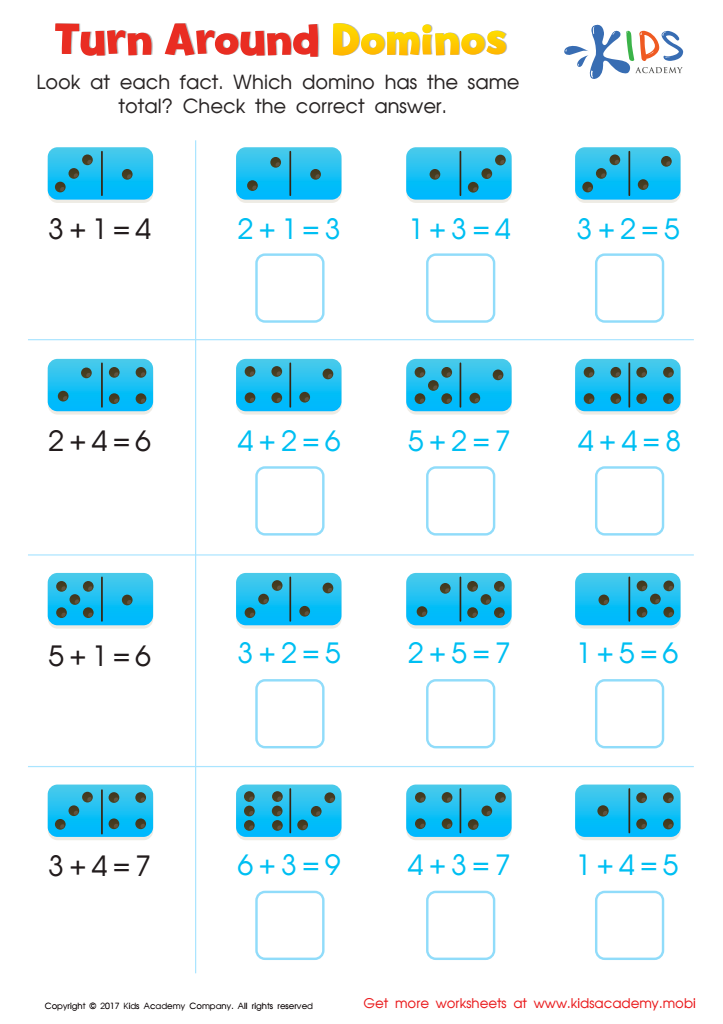
Turn Around Dominos Worksheet
 Assign to My Students
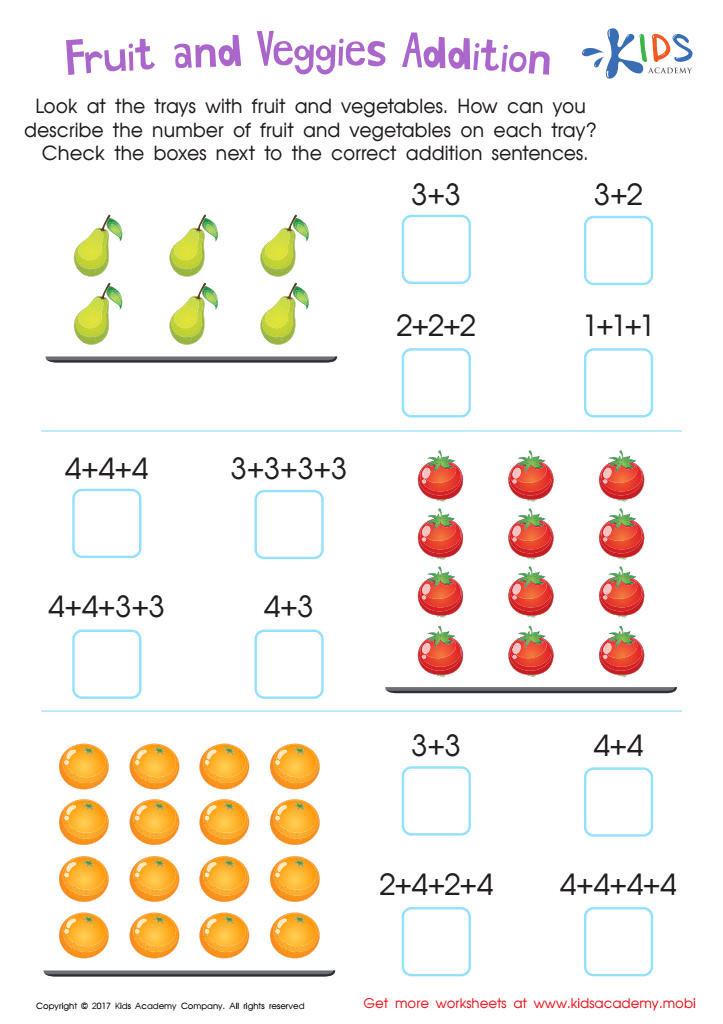
Fruit and Veggies Worksheet
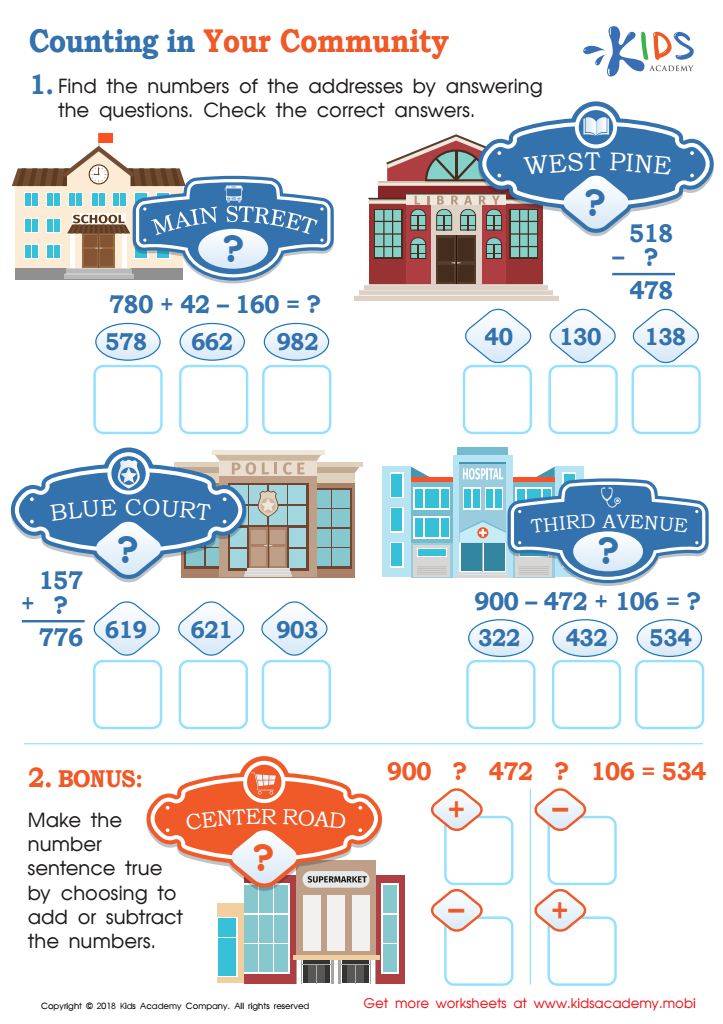
Counting in Your Community Worksheet
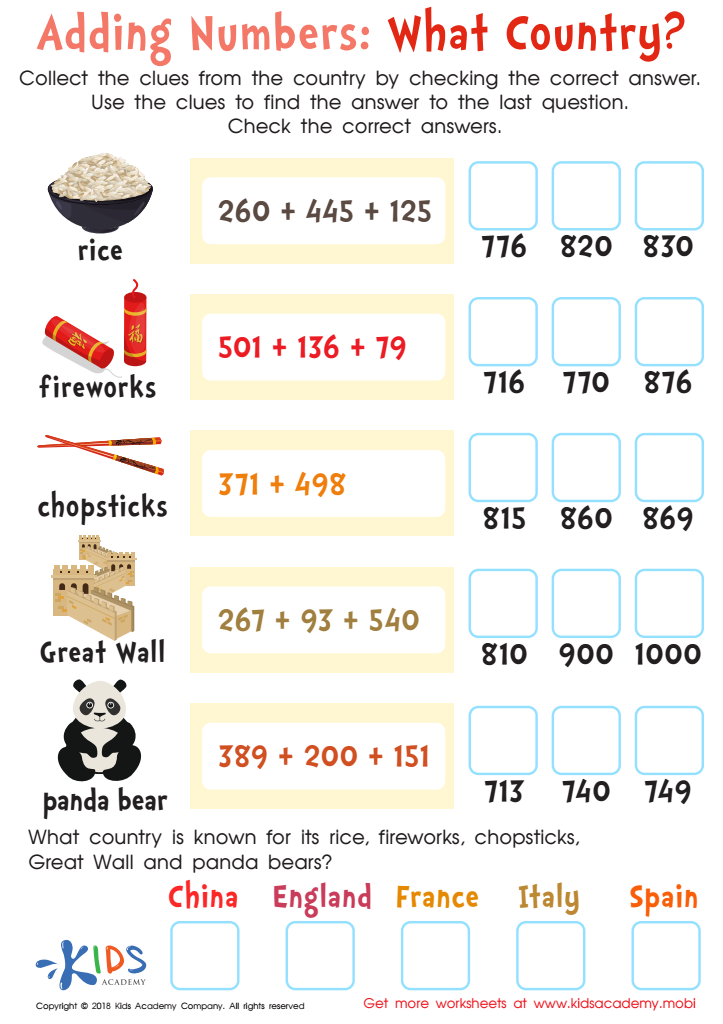
Adding Numbers: What Country Worksheet
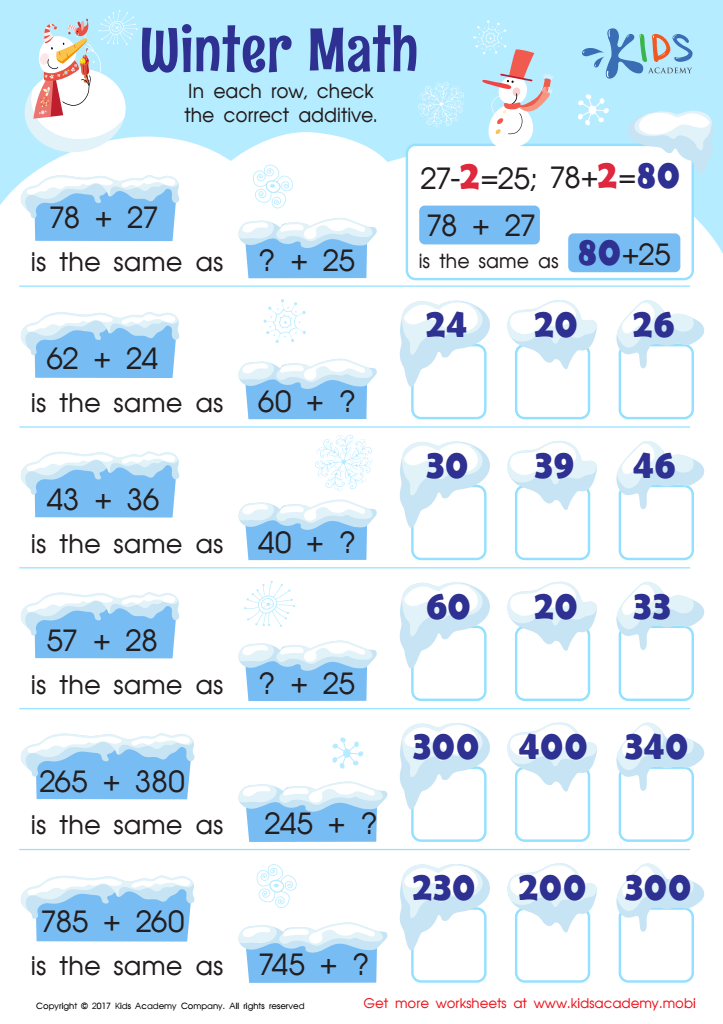
Free Addition Worksheet





%20(1).jpg)


Basic addition skills for children aged 7-9 are crucial for their cognitive development and academic success. At this age, children are beginning to build a strong numerical foundation, which is essential for their future studies in mathematics. Mastering addition lays the groundwork for more complex mathematical concepts, such as subtraction, multiplication, and division.
Parents and teachers should care about fostering these skills because they promote critical thinking and problem-solving abilities. When children understand basic addition, they can better tackle everyday situations such as budgeting, shopping, and time management. Additionally, strong arithmetic skills enhance their confidence and independence in learning.
Moreover, the development of basic addition skills supports social interaction. Cooperative games and group activities often involve calculations, helping children develop teamwork and communication abilities. In a broader context, proficient addition skills are linked to better performance in standardized tests and academic settings, positively influencing future educational opportunities.
By prioritizing the teaching of basic addition, parents and teachers can help children develop a lifelong love for mathematics, ensuring they are well-equipped to face future challenges in both academic and real-world scenarios.