Understanding subtraction Normal Math Worksheets for Ages 7-9
10 filtered results
-
From - To
Welcome to our "Understanding Subtraction" Normal Math Worksheets, designed specifically for children aged 7-9. These engaging worksheets help young learners grasp the fundamentals of subtraction, making the concept clear and relatable. Tailored to suit various learning styles, the exercises range from simple problems to more challenging scenarios, ensuring a comprehensive understanding of subtractive concepts. Each worksheet encourages critical thinking, problem-solving skills, and reinforces number fluency in a fun, interactive way. Ideal for classroom use or at-home practice, these resources are perfect for helping your child build a solid foundation in mathematics as they progress through their educational journey.
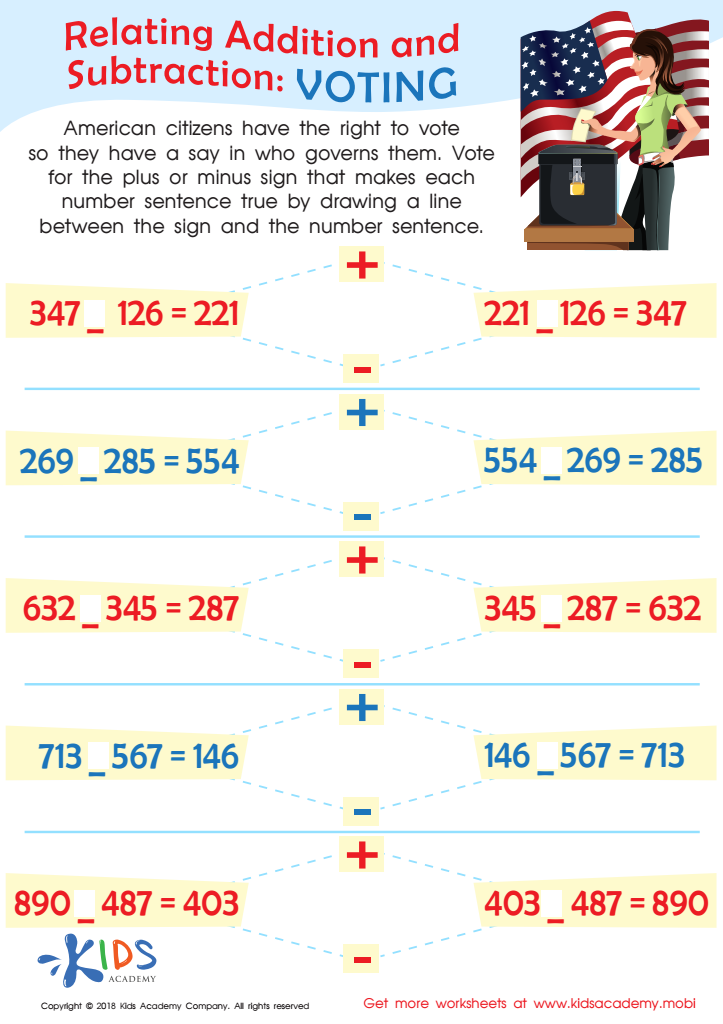
Voting Worksheet
 Assign to My Students
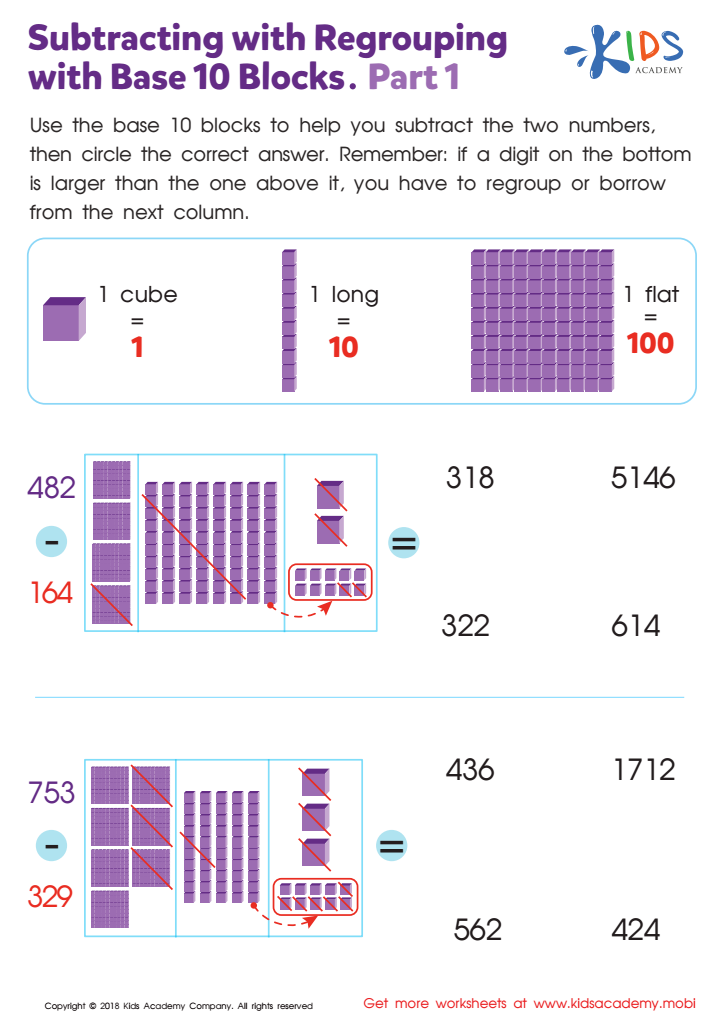
Subtracting with Regrouping with Base 10 Blocks. Part1 Worksheet
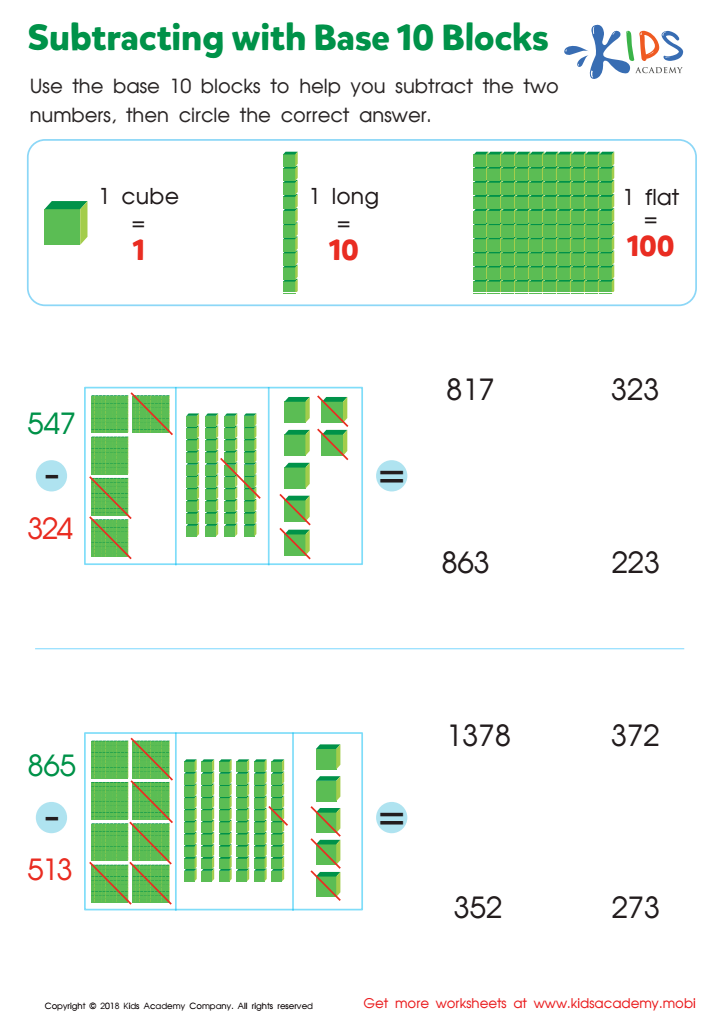
Subtracting with Base 10 Blocks Worksheet
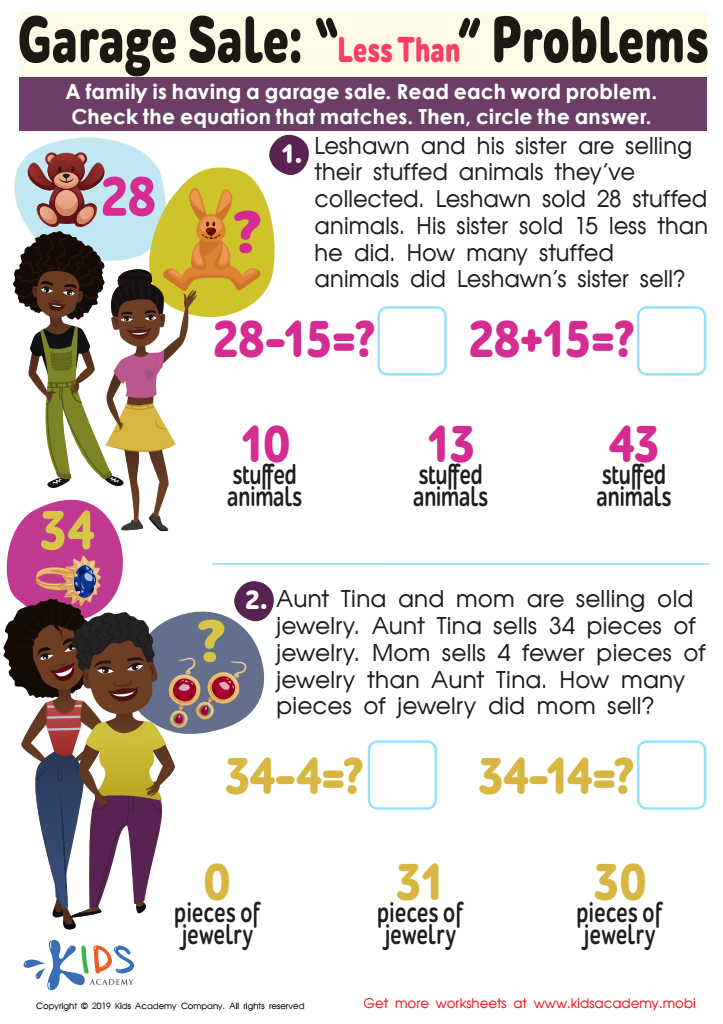
Garage Sale Less Than Worksheet
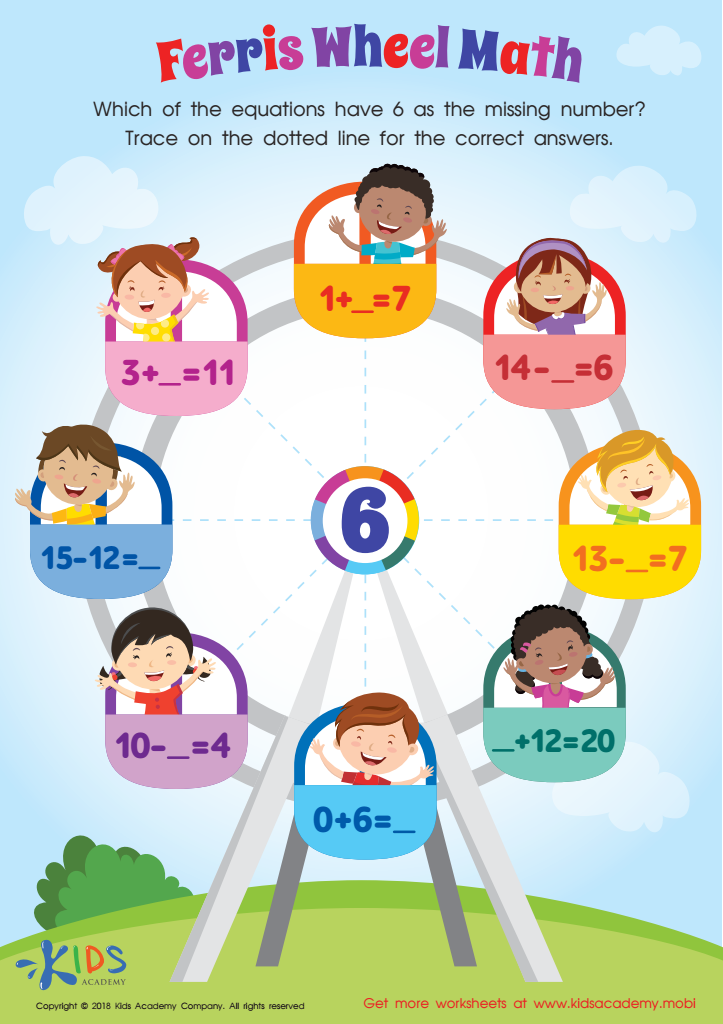
Missing Number: Ferris Wheel Math Worksheet
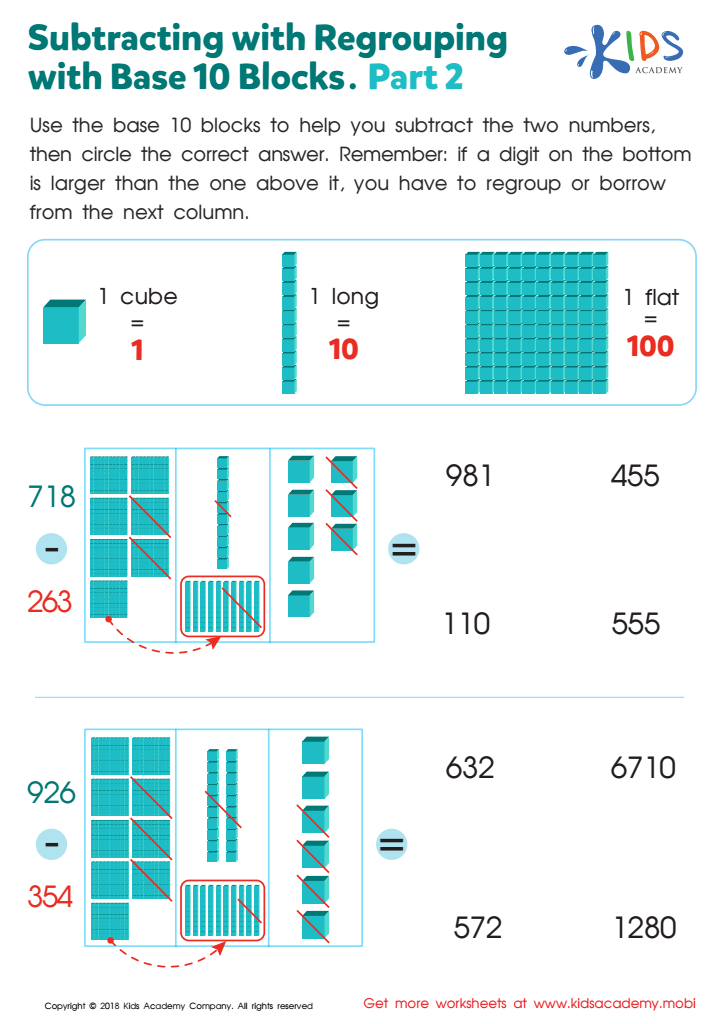
Subtracting with Regrouping with Base 10 Blocks. Part 2 Worksheet
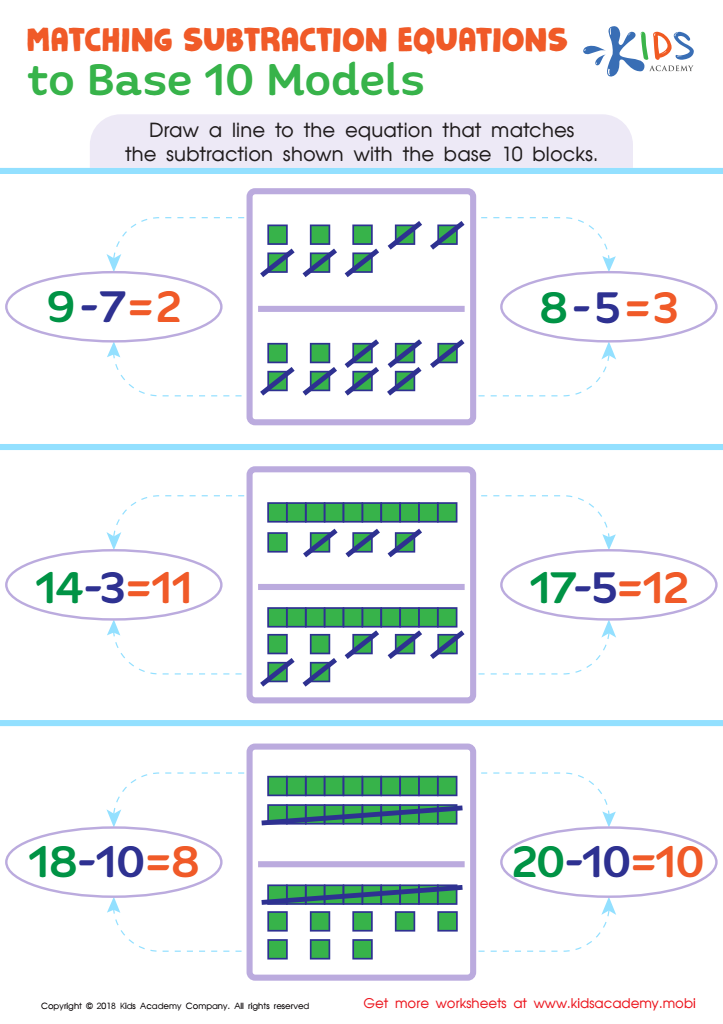
Matching Subtraction Equations To Base 10 Models Worksheet
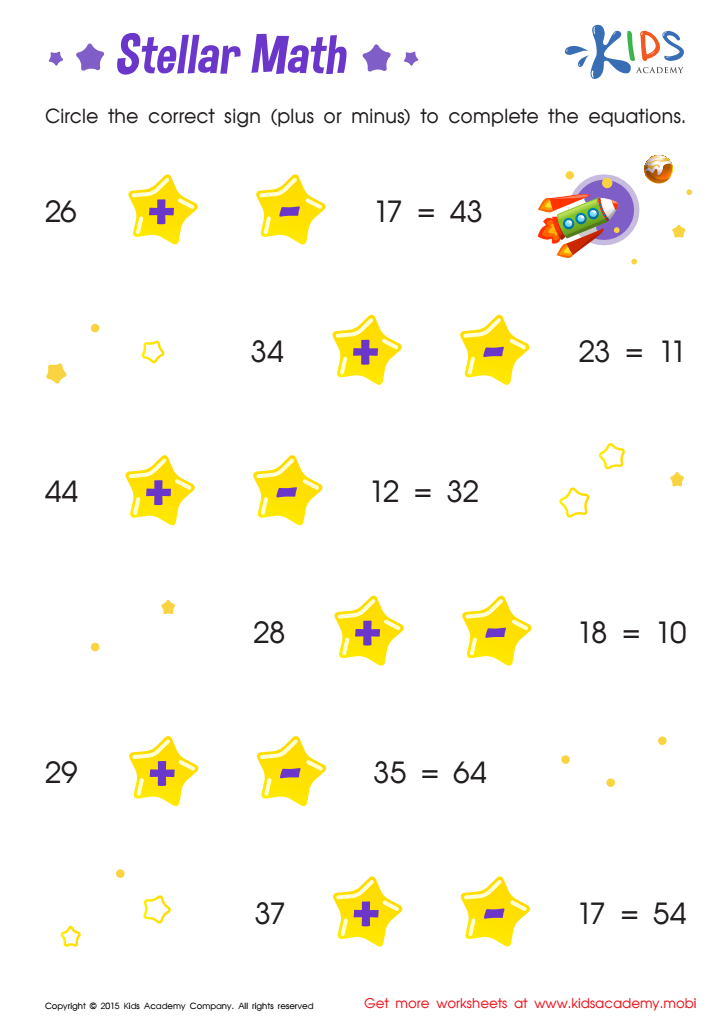
Stellar Math Substraction Worksheet
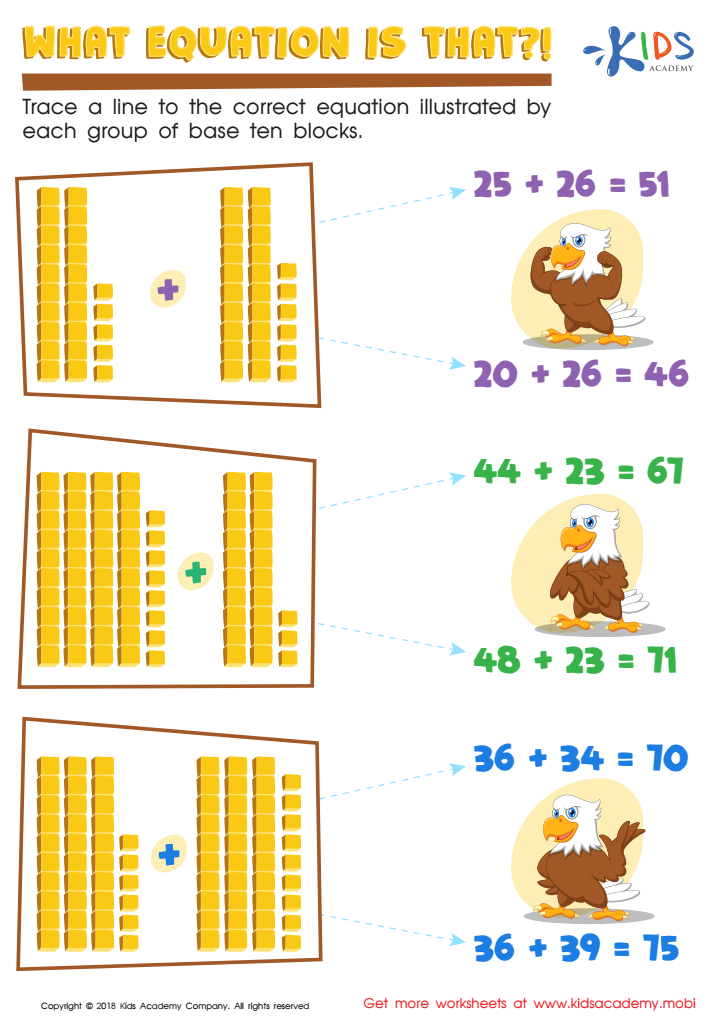
What Equation Is That? Worksheet
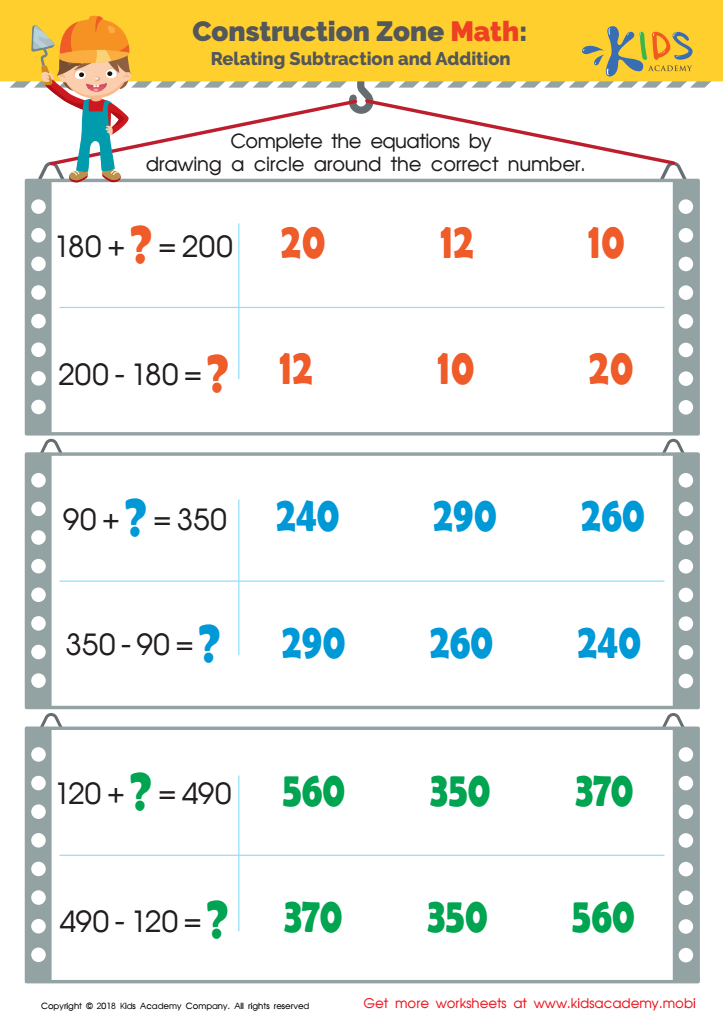
Construction Zone Math: Relating Subtraction and Addition Worksheet


.jpg)





Understanding subtraction is crucial for children aged 7-9, since this foundational mathematical concept underpins their overall numeracy skills. At this stage, learners transition from simple calculations to more complex mathematical reasoning. Recognizing the significance of subtraction equips children to tackle real-world problems, such as budgeting, measurement, and time management, throughout their lives.
For parents and teachers, fostering this understanding goes beyond rote memorization. It encourages learners to grasp the concept of taking away or comparing quantities, critical for developing logical thinking and problem-solving abilities. By grasping subtraction, children improve their ability to comprehend related concepts such as addition, multiplication, and division, creating a robust mathematical framework.
Moreover, understanding subtraction can boost a child's confidence in math. When children feel more competent, they are more likely to engage with higher-level math concepts without fear or anxiety. Active involvement in learning through games, real-life scenarios, and hands-on activities enables children to see subtraction as not just a skill but a practical tool for everyday life.
Ultimately, prioritizing comprehension of subtraction prepares children for further academic success, cultivates a positive attitude toward learning, and helps establish a lifelong appreciation for mathematics.








