Handwriting practice Normal Tracing Numbers Worksheets for Ages 7-9
3 filtered results
Difficulty Level
Grade
Age
-
From - To
Subject
Activity
Standards
Enhance your child’s math skills with our Handwriting Practice Normal Tracing Numbers Worksheets for Ages 7-9. Designed by experts, these printable worksheets blend fun and learning, helping children to master number formation with ease. Perfect for developing fine motor skills, each sheet encourages precision and consistency while tracing numbers. Ideal for both classroom and home use, our worksheets support young learners in improving their handwriting and gaining confidence in mathematics. Boost your child's educational journey by providing them with these engaging, skill-building tools. Download today and watch their abilities grow!
Favorites
With answer key
Interactive
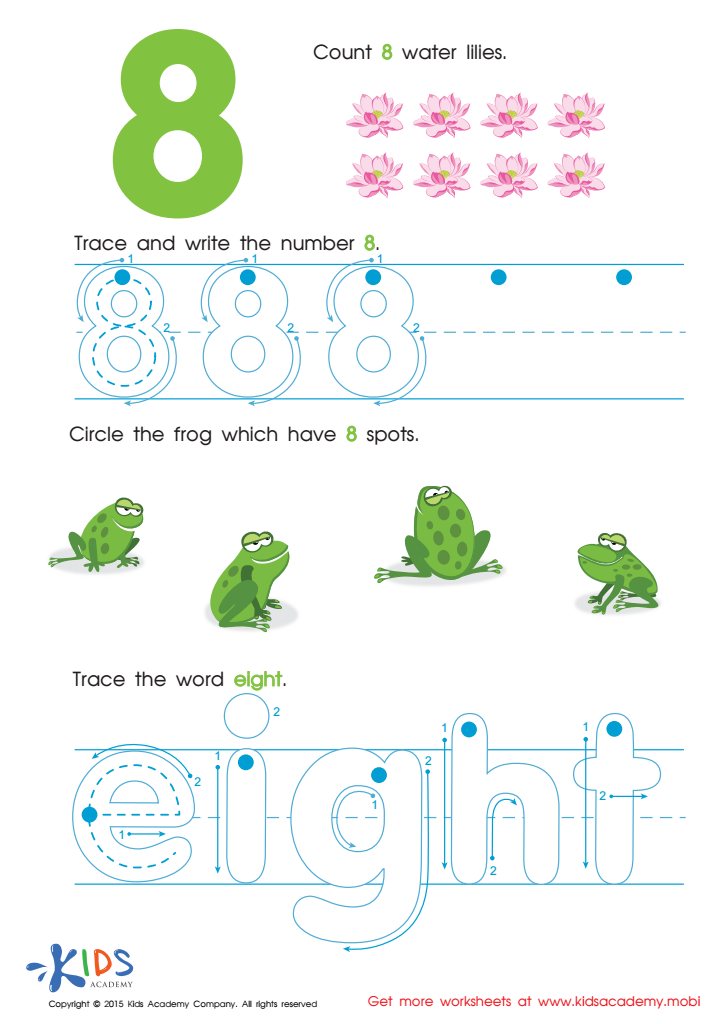
Learn Number 8 Easily Worksheet
Kids can trace, write numbers and learn to pronounce them through exciting activities and games. Try our number worksheets for preschoolers to make learning fun!
 Assign to My Students
Learn Number 8 Easily Worksheet
Worksheet
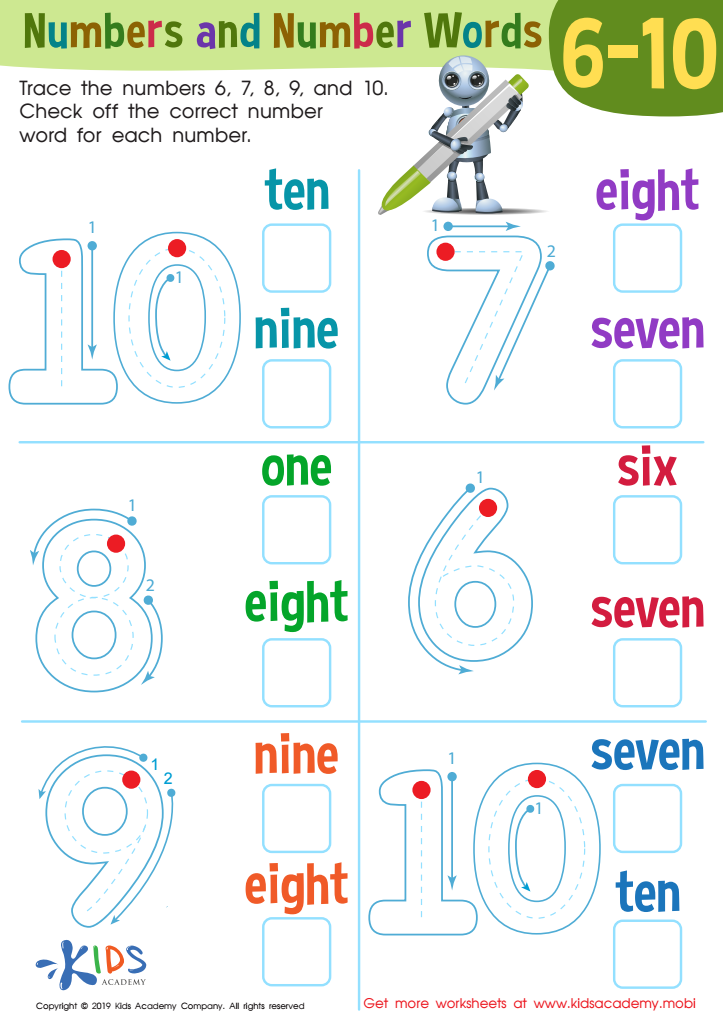
Numbers and Number Words 6–1 Worksheet
As children explore numbers and words, parents and teachers can help them learn to count and read with activities such as this worksheet. Here, the student traces numbers 6-10 and then selects the right number words to match. A fun and interactive way to learn!
Numbers and Number Words 6–1 Worksheet
Worksheet
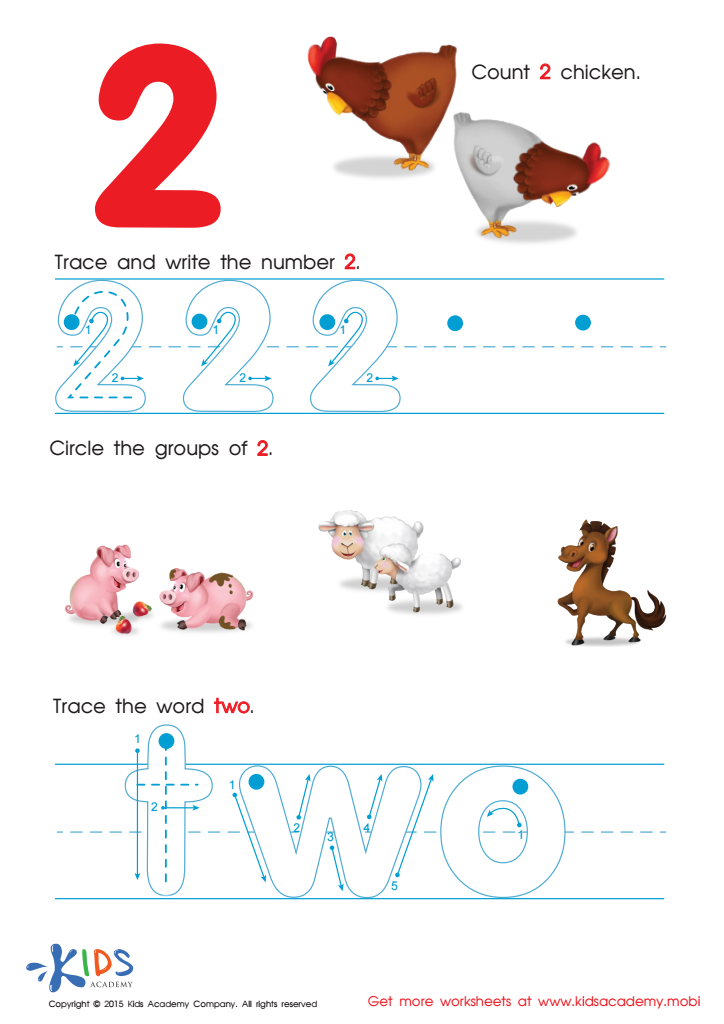
Learn to Write the Number 2 Worksheet
Teaching numbers should be fun! Ask your kids to count the two chicks, circle the groups of two among the animals, then trace and write the number and word. Get more fun worksheets from Kids Academy.
Learn to Write the Number 2 Worksheet
Worksheet
Join Kids Academy for Free
Who is primarily going to use this learning content?








Parents and teachers should care about handwriting practice, particularly normal tracing numbers, for children aged 7-9 because it builds foundational skills essential for academic success and cognitive development. First, handwriting practice improves fine motor skills, allowing children to develop the muscle memory necessary for legible and efficient writing. Carefully tracing numbers helps them understand the structure and formation of characters, which is critical for clear written communication.
Moreover, practicing handwriting enhances attention to detail and enhances neural brain development. The repeated effort of forming numbers enforces kinesthetic learning, embedding numeric concepts more robustly in a child's mind. This is crucial for math proficiency, where understanding and correctly writing numbers is a basic necessity.
Handwriting practice also encourages patience and boosts concentration. As children trace numbers, they experience the satisfaction of completion and improvement, which builds confidence and a positive attitude toward learning tasks. For many students, handwriting is also linked to improved reading and comprehension skills; forming each letter and number by hand creates a stronger connection between the written and the visual forms.
Overall, normal tracing numbers are not merely about writing but about nurturing integral developmental skills that support both academic achievement and everyday functionality, making it a vital component of early education.