Filters

38 filtered results

Clear all filters
Favorites
With answer key
Interactive

38 filtered results

Difficulty Level

Grade


Check out this FREE Trial Lesson on Animals for age 7-9!

What Do Animals Need?

Favorites
With answer key
Interactive
  • 7-9
  • Animals
  • Normal
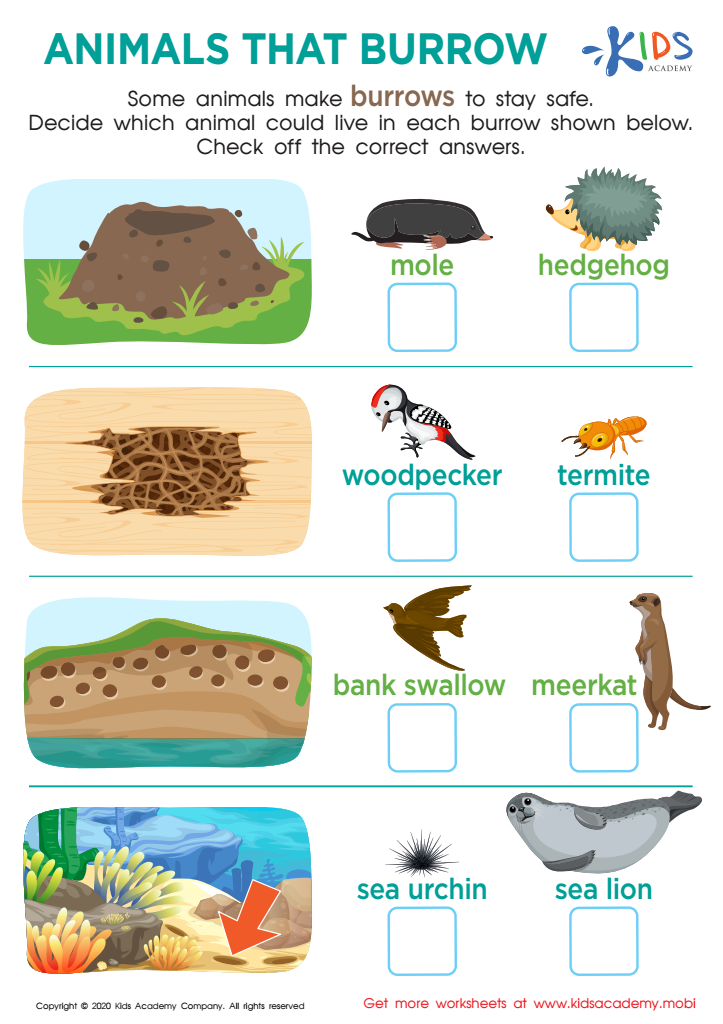
Animals That Burrow Worksheet

Animals That Burrow Worksheet

Teach your little one about animal protection with this Kids Academy PDF worksheet! Help them read the description of burrowing animals, then check off the pictures to discover which ones hide in holes. It's an exciting way to learn about the fascinating ways animals keep themselves safe from predators.
Animals That Burrow Worksheet
Worksheet
Classifying animals worksheet 2nd grade

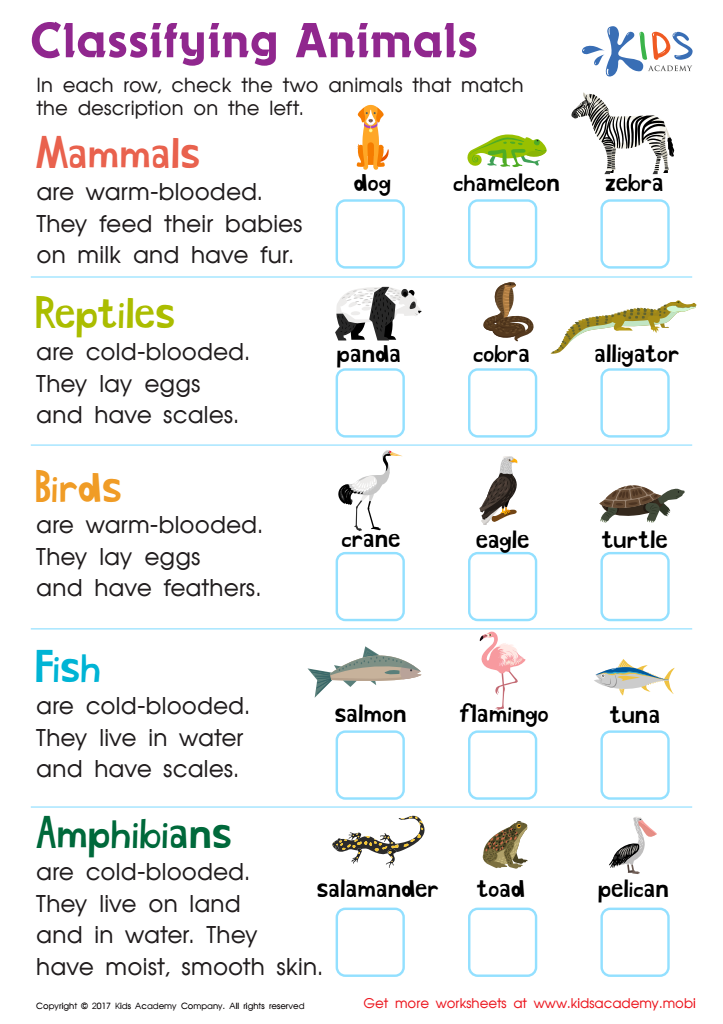
Classifying Animals Worksheet

Print the 2nd grade animal classification worksheet and help kids study the differences between mammals, reptiles, birds, fish and amphibians. Let them pick two examples from the options given.
Classifying Animals Worksheet
Worksheet
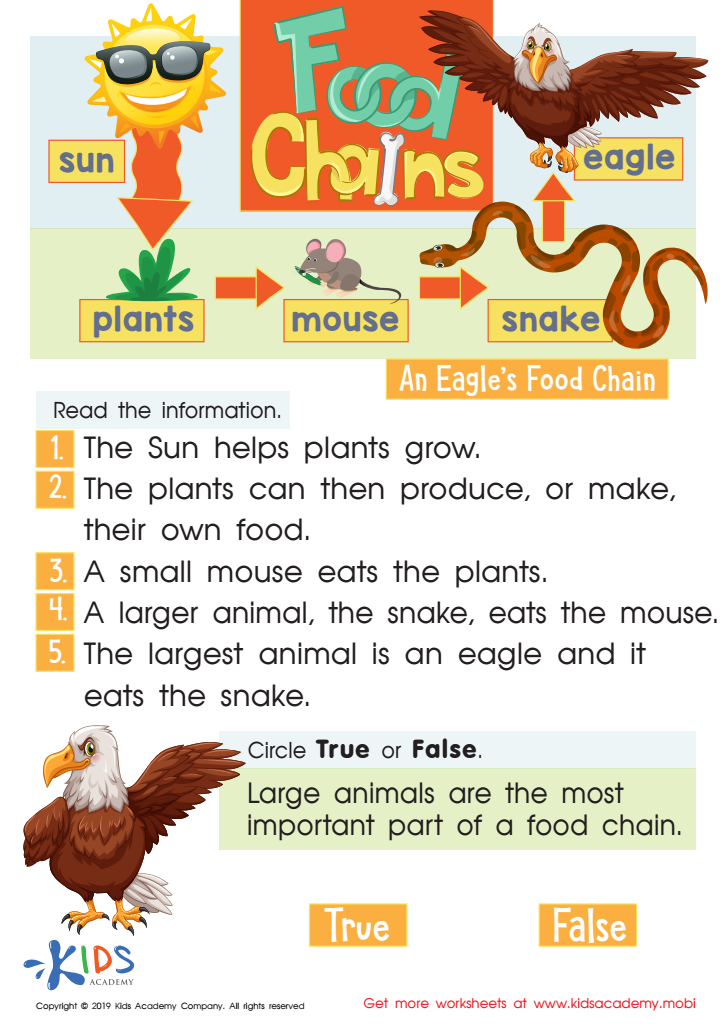
Food Chains Worksheet

Food Chains Worksheet

This worksheet gets your child thinking about the sun's key role in the food chain. Read the info on the page, then discuss the true/false question. Are large animals the most important? Explain that without the sun, the other organisms would not exist. Have them circle the correct answer to finish.
Food Chains Worksheet
Worksheet
Living and Non-living Worksheet

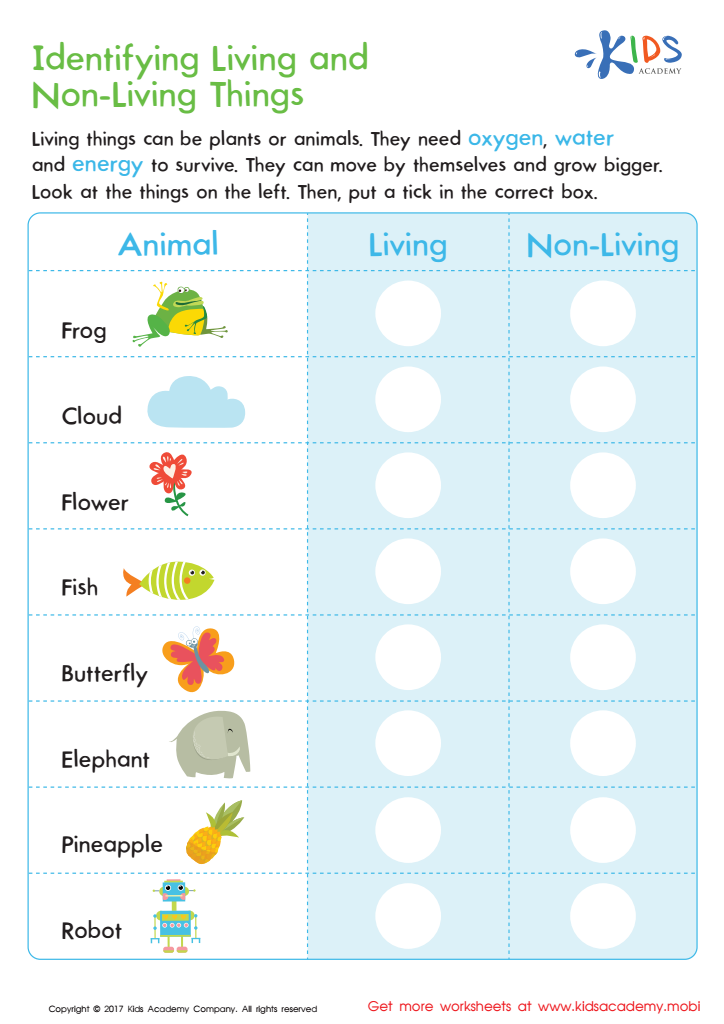
Identifying Living or Non–living Worksheet
Help your child learn to sort and categorize in a new way! Teach them to classify things as living or non-living using this worksheet. It's the perfect way to build their scientific understanding, and to have some learning fun! Print this worksheet and watch them discover the world of science!
Identifying Living or Non–living Worksheet
Worksheet
Octopus facts worksheet for kids

Octopus Facts Worksheet For Kids

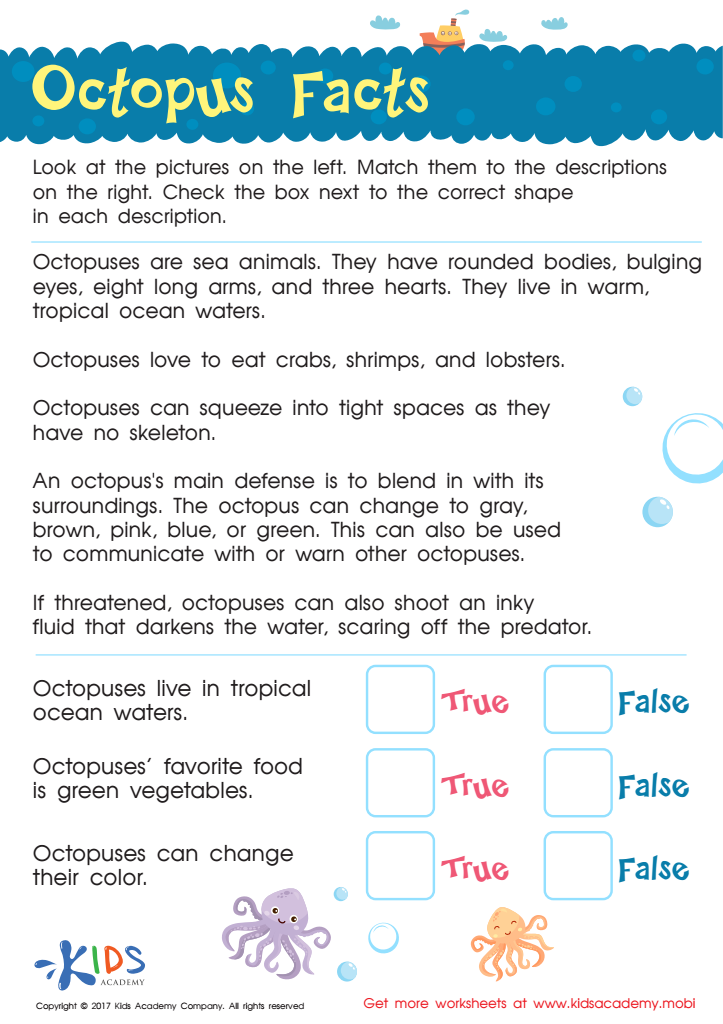
Let your child dive into the world of octopuses with this fun worksheet. It offers invaluable practice in reading non-fiction texts, while they learn interesting facts about these strange sea creatures. It's a great way to help them hone their skills in reading comprehension.
Octopus Facts Worksheet For Kids
Worksheet
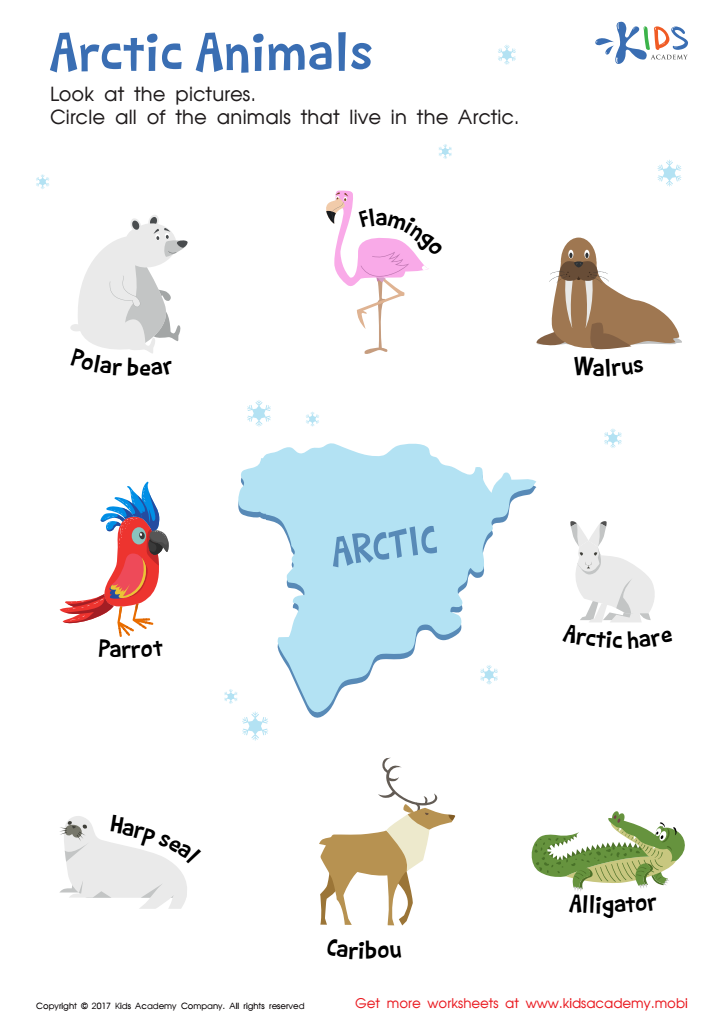
Arctic Animals Worksheet

Arctic Animals Worksheet

Kids love animals and this worksheet is a great way to teach them where they live. It reinforces classification skills and introduces new animals, like the Arctic hare. Use it to discuss the Arctic climate and how these animals live, then ask your child where other animals live to keep the conversation going.
Arctic Animals Worksheet
Worksheet
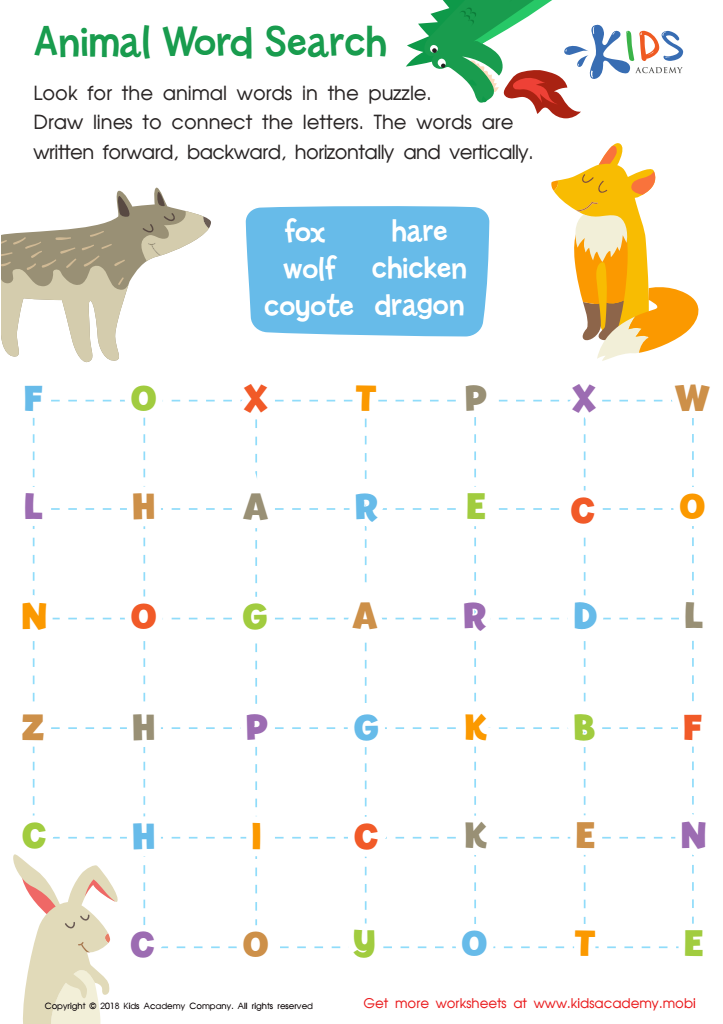
Animal Word Search Worksheet

Animal Word Search Worksheet

Students can have fun and strengthen spelling and vocabulary skills with this word search worksheet. Search for animal words and circle the letters in the puzzle. Words can be found forwards, backwards, horizontally or vertically, providing a great challenge to foster critical thinking skills. An enriching activity for all ages!
Animal Word Search Worksheet
Worksheet
Ecosystems: Assessment 2 Worksheet

Ecosystems: Assessment 2 Worksheet

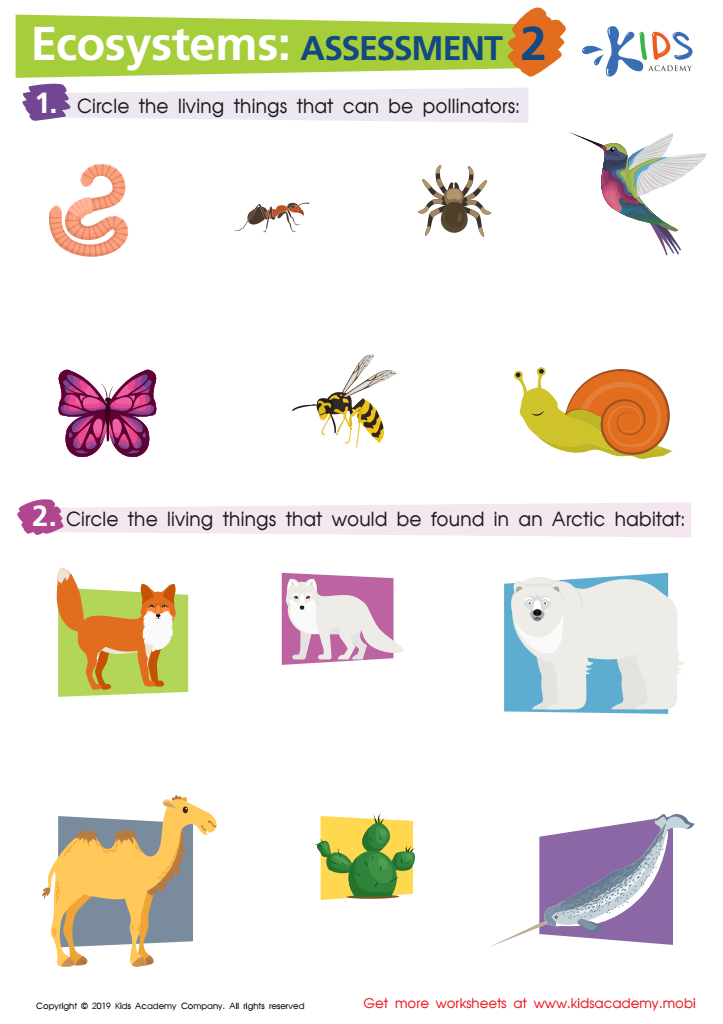
Pollinators are living or non-living things that help pollen spread. Test your child's knowledge of the ecosystem with this worksheet. Point out animals in the picture, then ask the simple questions. Help your child circle the right answers.
Ecosystems: Assessment 2 Worksheet
Worksheet
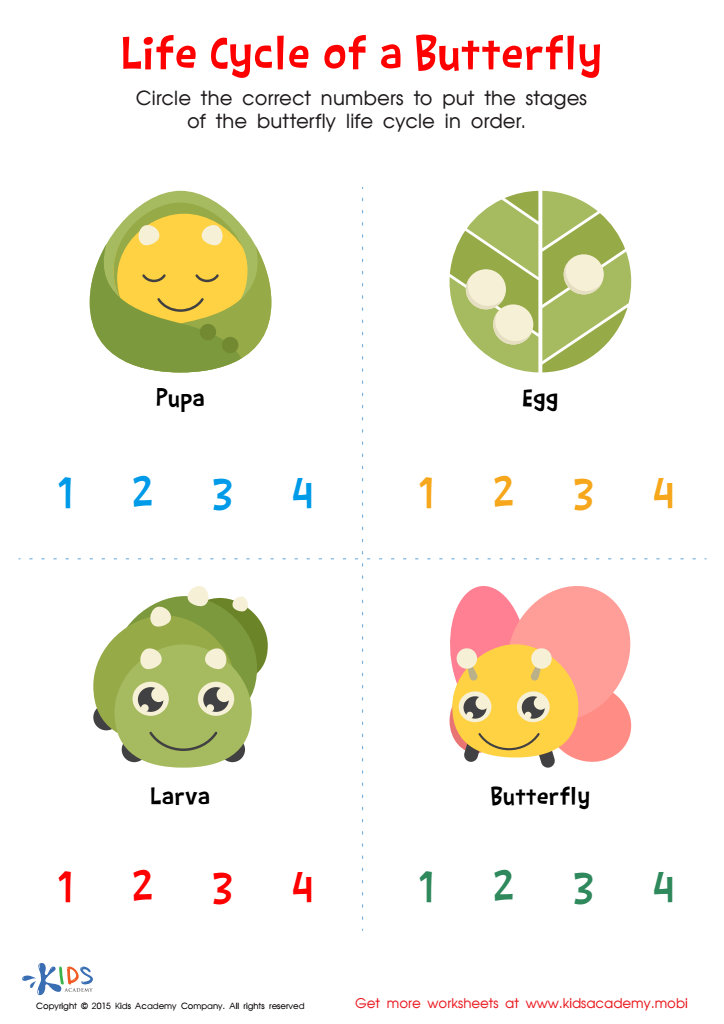
Butterfly Life Cycle Printable Worksheet

Life Cycle of Butterfly Printable
Kids and grownups alike marvel at the beauty of butterflies. With this printable worksheet, kids can review the life cycle of these favorite insects and strengthen cognitive and problem solving skills. From egg to butterfly, kids will order the stages and use the best strategy to solve it. Guide them as they work and they'll learn multiple skills.
Life Cycle of Butterfly Printable
Worksheet
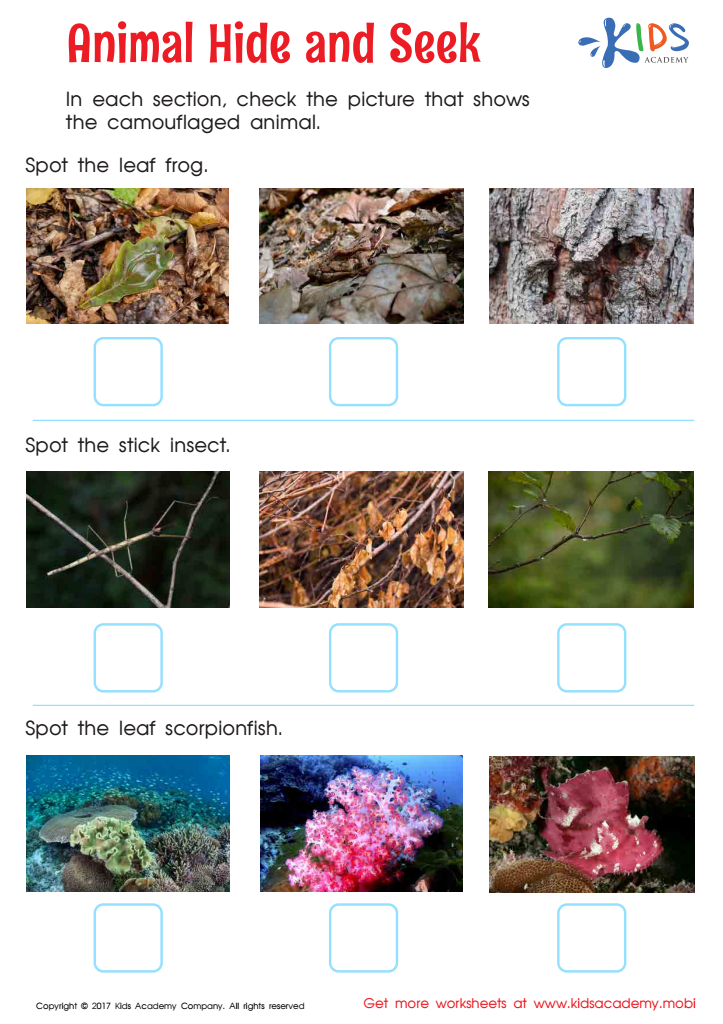
Animal hide and seek worksheet pdf

Animal Hide and Seek Worksheet

Try Kids Academy's animal hide and seek worksheet. See if your kids can spot the hidden animals – a leapfrog, a stick insect, and a leaf scorpionfish. A fun and educational activity to raise awareness of the variety of nature and spur further exploration of the world around them.
Animal Hide and Seek Worksheet
Worksheet
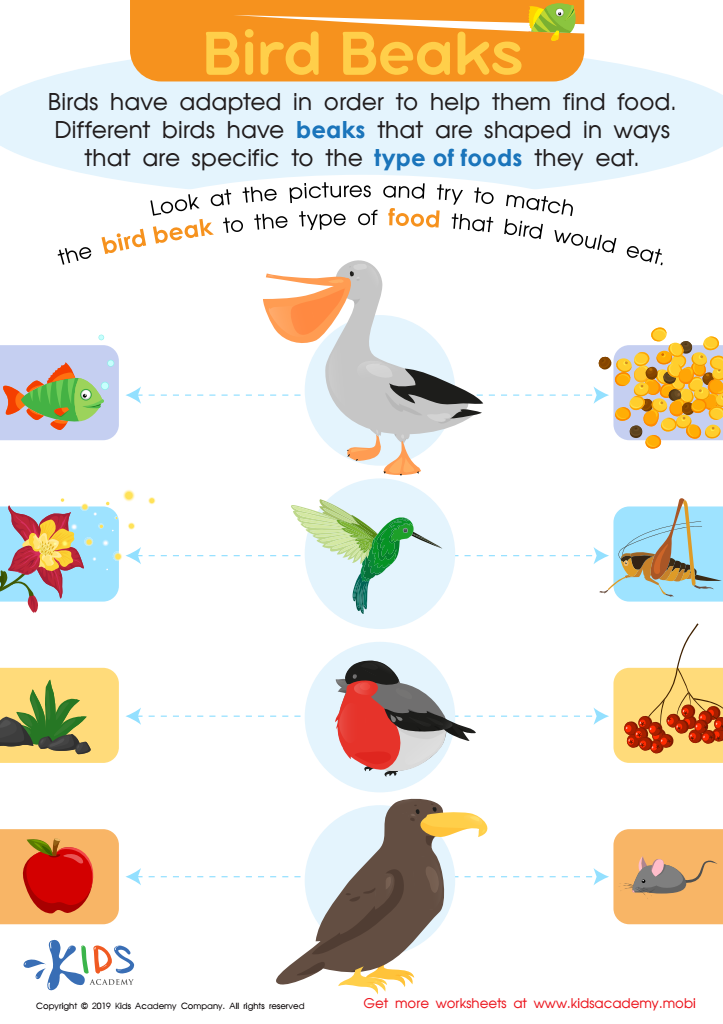
Bird Beaks Worksheet

Bird Beaks Worksheet

Birds' beak shapes and sizes are adapted to help them find food. This worksheet teaches kids how to identify different beak types by matching each to the type of food they eat. They'll use traceable lines to practice connecting the beaks to the food they would eat, understanding how each beak shape is perfectly suited to its purpose.
Bird Beaks Worksheet
Worksheet
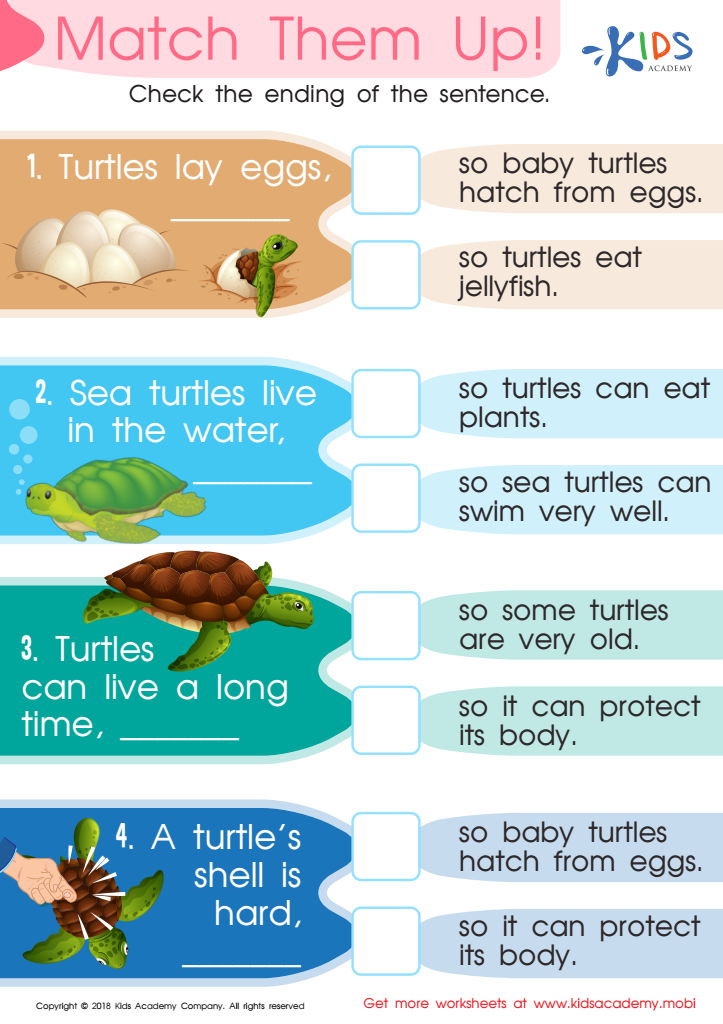
Match Them Up Worksheet

Match Them Up Worksheet

Reading offers a wealth of knowledge, but young readers may struggle to remember info from informational texts. Help your child practice comprehension with this fun turtle-related worksheet. Just read the sentence starters and select the correct ending from the options given. Check the box to indicate the right statement!
Match Them Up Worksheet
Worksheet
Food Chain Cause Worksheet

Food Chain Cause Worksheet

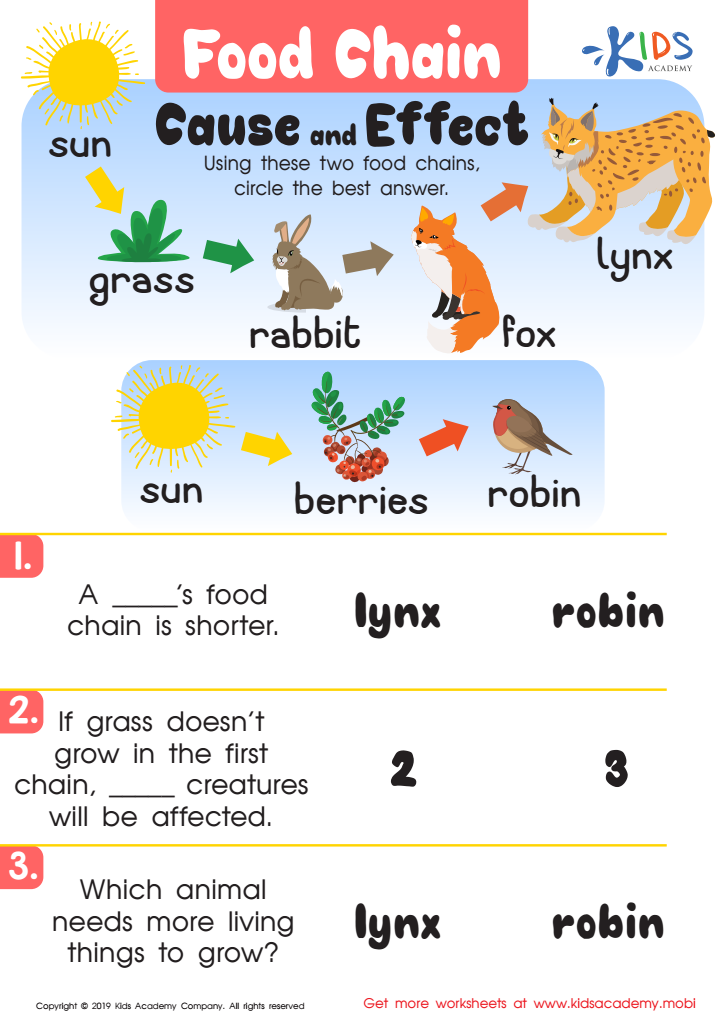
Help your little learner analyze ecosystems and compare food chains with this Kids Academy worksheet! Kids will compare a carnivore's and herbivore's food chain; which is longer and why? Questions at the bottom of the page will help them compare and circle the best answers. A great way to understand animal food chains!
Food Chain Cause Worksheet
Worksheet
Compare Two Sources Worksheet


Compare Two Sources Worksheet

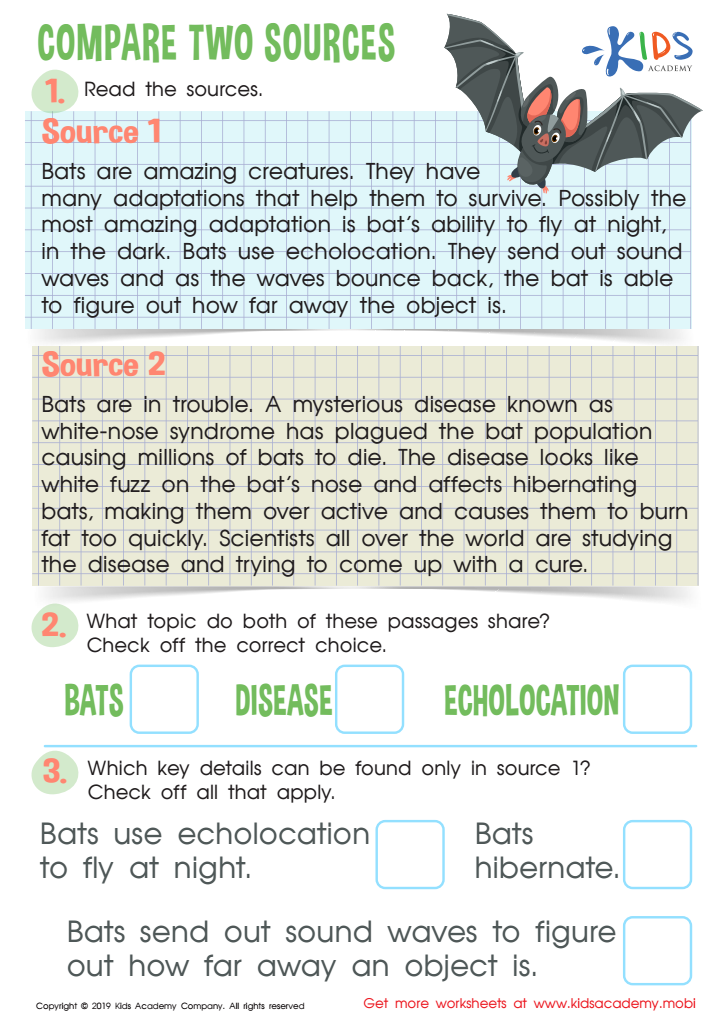
Reading exposes us to new words, spelling, and info about different topics. Kids can practice their reading skills, and learn about bats, with this worksheet. Read the two sources in the picture, then help your kids answer the questions at the bottom.
Compare Two Sources Worksheet
Worksheet


Understanding and appreciating normal, everyday animals is vital for children aged 7-9, as it lays the groundwork for a broad range of developmental benefits. Animals can foster compassion and empathy as children learn to care about creatures different from themselves. This interest can inspire curiosity and drive inquiry-based learning.

For young learners, regular interaction or education about common animals can also support emotional and social development. For instance, pets or frequent encounters with urban wildlife can satiate the curiosity and teach important life lessons such as responsibility, routine, and the lifecycle of living beings. This knowledge serves as a foundation for biological and environmental sciences, making classroom topics more relatable and tangible.

Moreover, discussing normal animals allows for the introduction of broader ecological concepts. Understanding how ants create colonies or how birds migrate can engage children’s critical thinking skills and highlight the interconnectedness of life. Adventures like bug hunting, watching birds, or visiting local parks can become delightful, educational experiences that bolster observation skills and scientific thinking.

In summary, focusing on normal animals equips children with a better appreciation of the natural world, helping them emotionally, socially, and intellectually. Parents and teachers should encourage this interest for a well-rounded, empathetic, and knowledgeable youngster.