Shape Recognition Normal Worksheets for Ages 8-9
12 filtered results
-
From - To
Discover our engaging Shape Recognition Normal Worksheets designed for children ages 8-9. These expertly crafted resources help young learners identify, differentiate, and comprehend various geometric shapes through fun and interactive activities. Fuel your child's passion for mastering shape recognition while enhancing their critical thinking and problem-solving skills. Our worksheets cater to a range of learning styles, ensuring that every student can progress confidently at their own pace. Perfect for both classroom and home use, these printable worksheets are a valuable addition to any educational toolkit, fostering a solid foundation in geometry for your child's academic success.
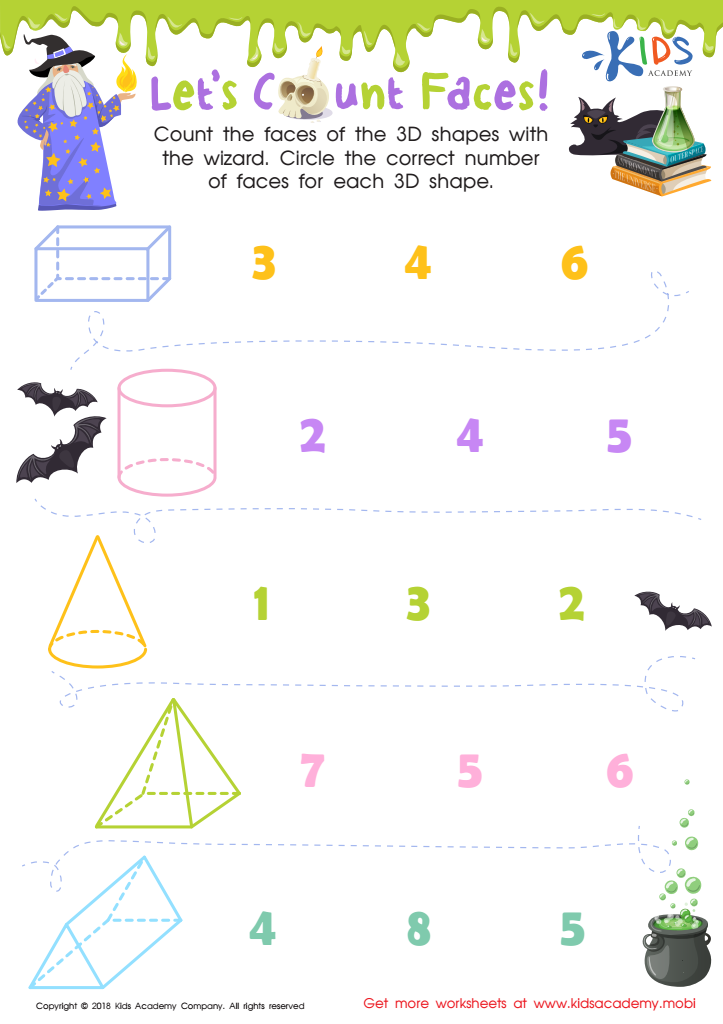
Let's Count Faces! Worksheet
 Assign to My Students
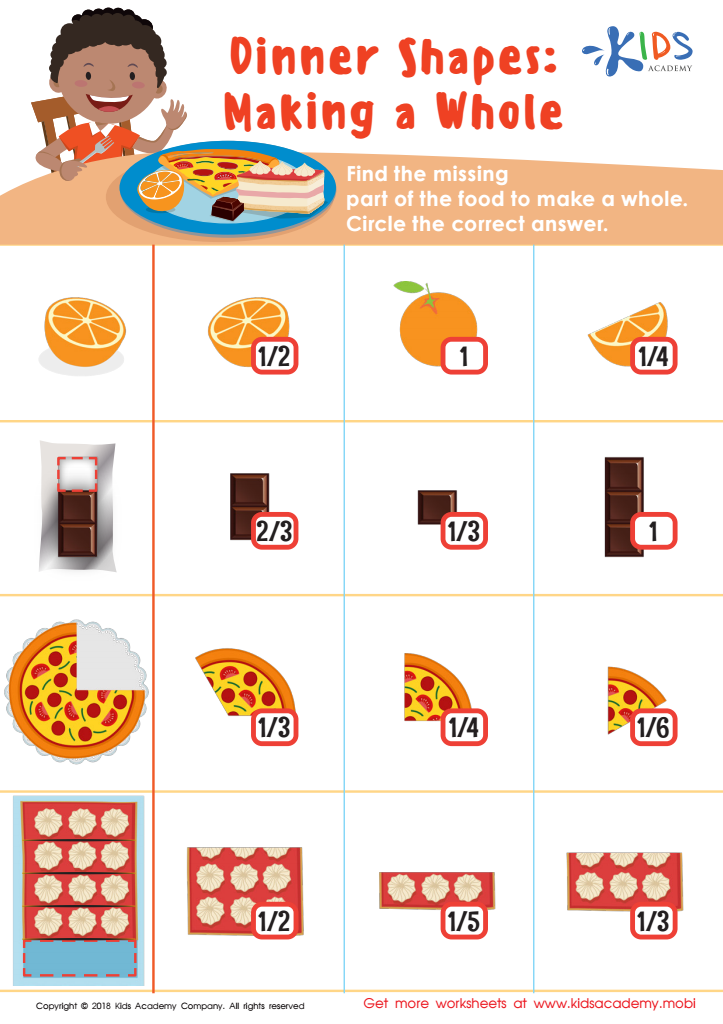
Dinner Shapes: Making a Whole Worksheet
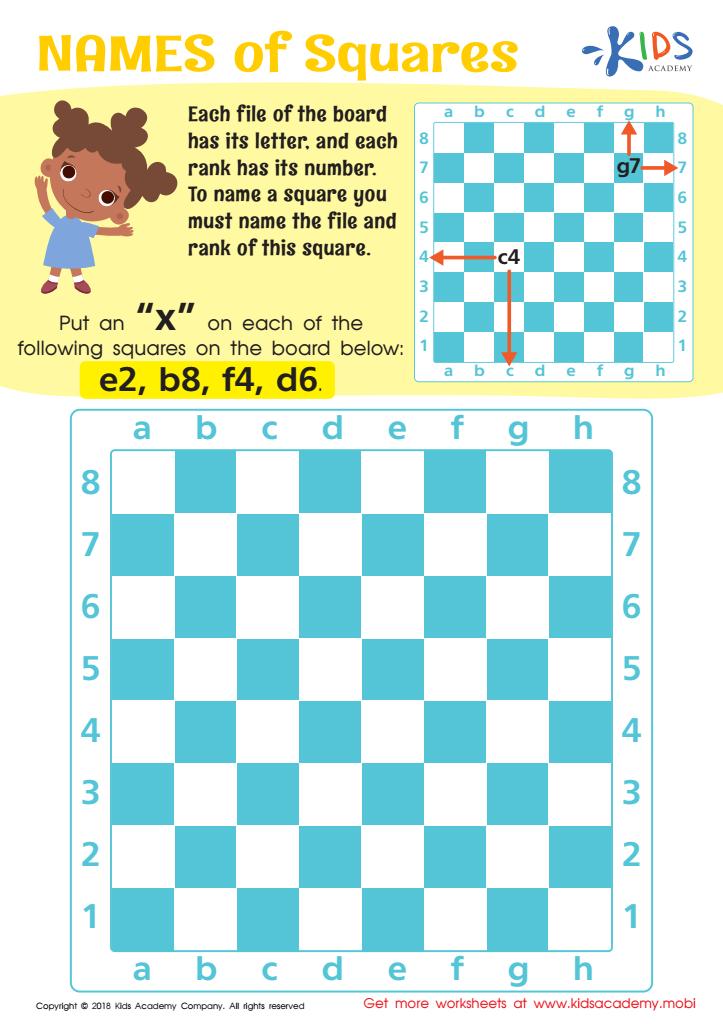
Names of Squares Worksheet
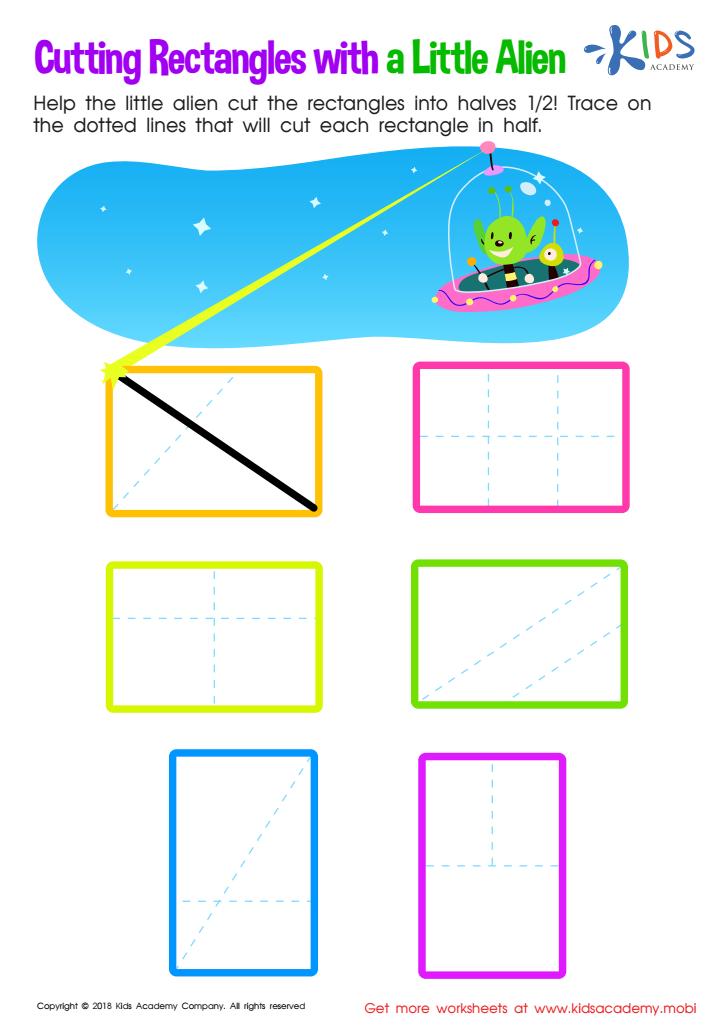
Cutting Rectangles with Alien Worksheet
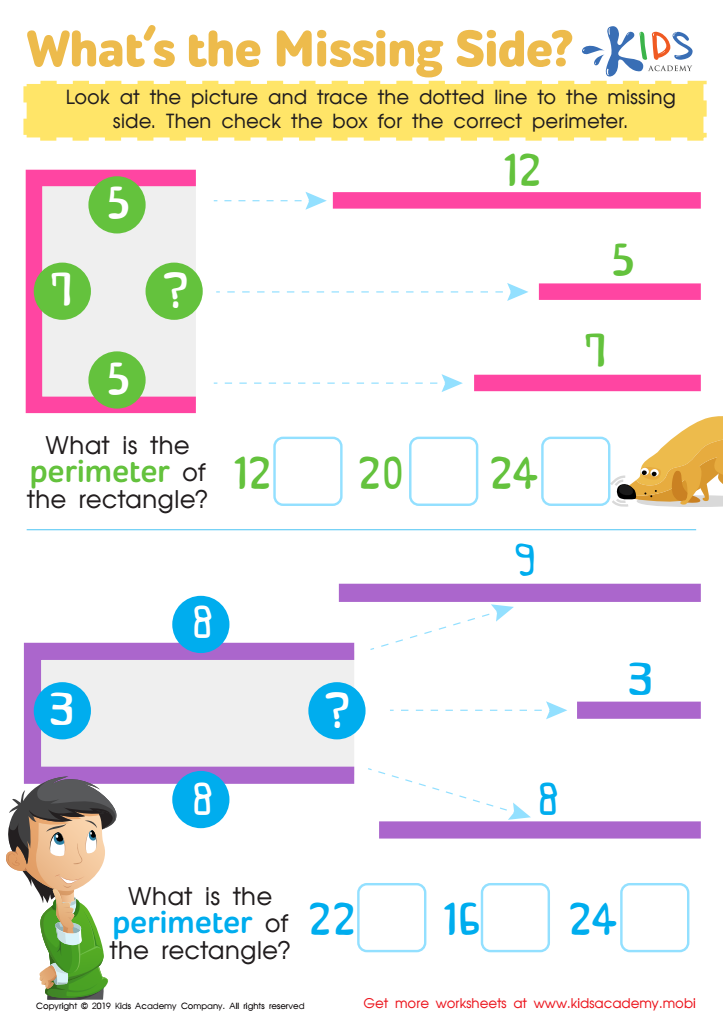
What's the Missing Side Worksheet
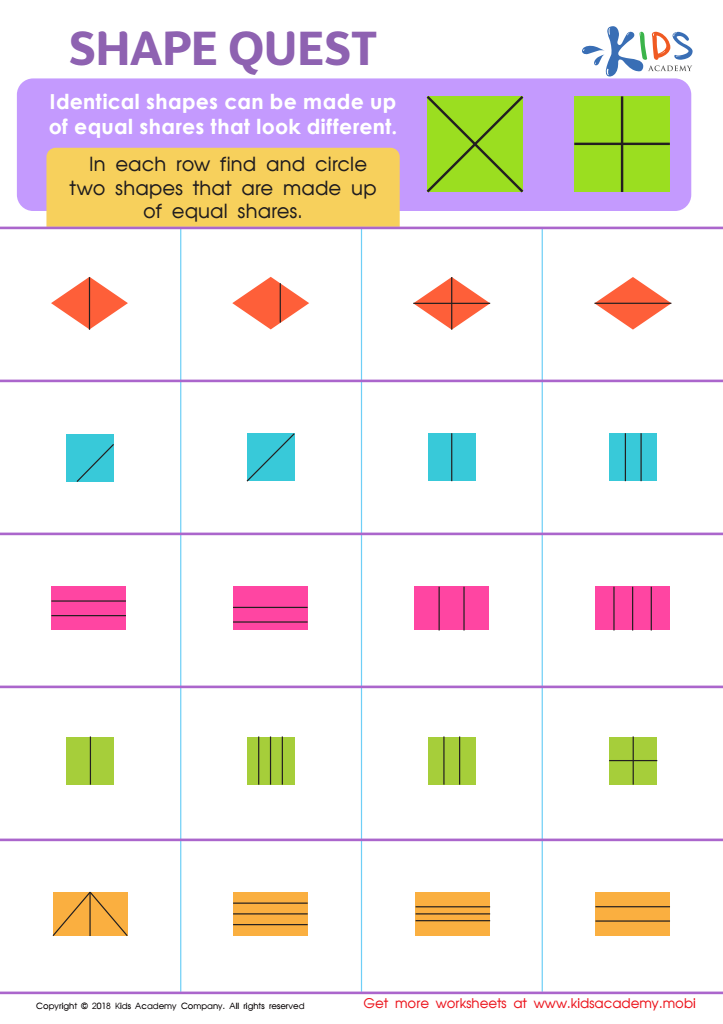
Shape Quest Worksheet
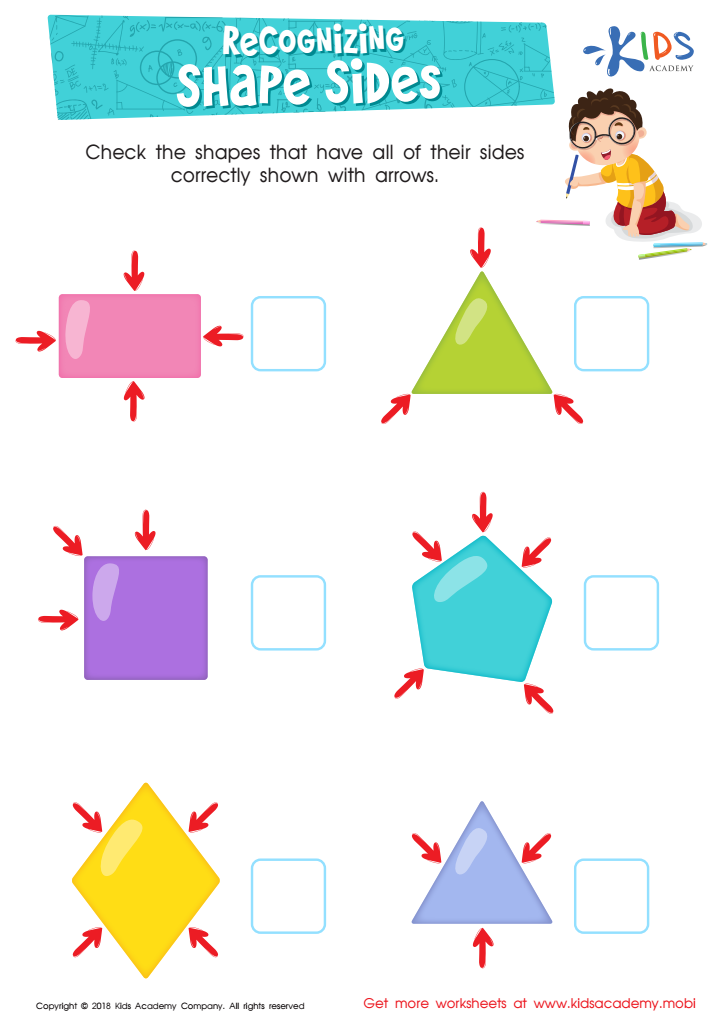
Recognizing Shape Sides Worksheet
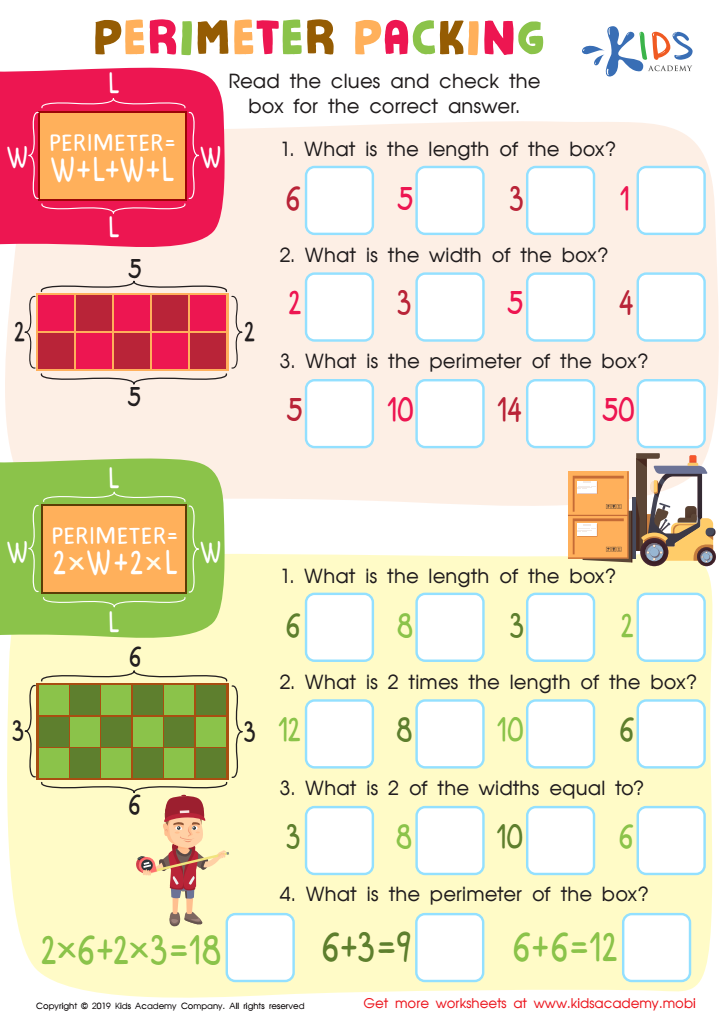
Perimeter Parking Worksheet
Knight and Pawn Worksheet
3D Shapes Quest Worksheet
Take a Look - Part 1 Worksheet
Circle Laser Cutting Worksheet



.jpg)




Shape recognition plays a fundamental role in the cognitive development of children aged 8-9. Parents and teachers should care about it because this skill is closely linked to mathematical reasoning, spatial awareness, and problem-solving abilities. By recognizing and understanding shapes, children learn to categorize and compare objects, which serve as critical skills in more advanced mathematical concepts such as geometry and fractions.
Moreover, shape recognition enhances visual discrimination, allowing children to differentiate objects in their environment, which is essential for reading and writing. When children identify letters and numbers, they are essentially recognizing various shapes and lines. This foundational skill also underpins their ability to understand graphs, charts, and other visual data representations, increasingly important in a data-driven world.
Encouraging shape recognition at this age fosters creativity and art appreciation, as children begin to see the world differently and can replicate or create intricate designs. It provides them with the precision and attention to detail necessary for subjects beyond mathematics, including science and engineering.
Additionally, activities revolving around shape recognition promote fine motor skills through drawing, cutting, and manipulating shapes. Therefore, parents and teachers investing in sharpening these skills through playful learning activities ensure that children have well-rounded development, setting them up for future academic success.








