Critical Thinking Normal Animals Worksheets for Ages 8-9
3 filtered results
-
From - To
Enhance your child's critical thinking skills with our engaging "Critical Thinking Normal Animals Worksheets" designed for ages 8-9! These worksheets encourage young learners to explore various aspects of animal life while developing their analytical abilities. Each activity challenges students to observe, compare, and draw conclusions about normal animals and their habitats. Perfect for classrooms or at-home learning, these worksheets promote curiosity and cognitive skills through interactive tasks. Dive into the fascinating world of animals, spark discussions, and foster a love for science with these well-crafted educational resources. Equip your child with essential skills for academic success while having fun!
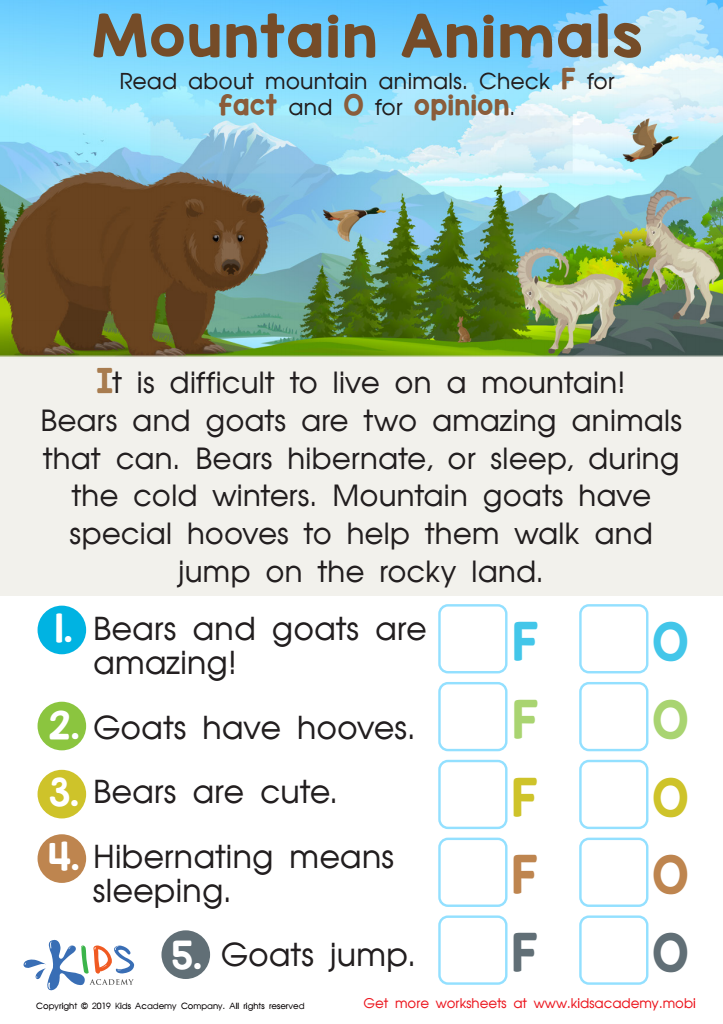
Mountain Animals Worksheet
 Assign to My Students
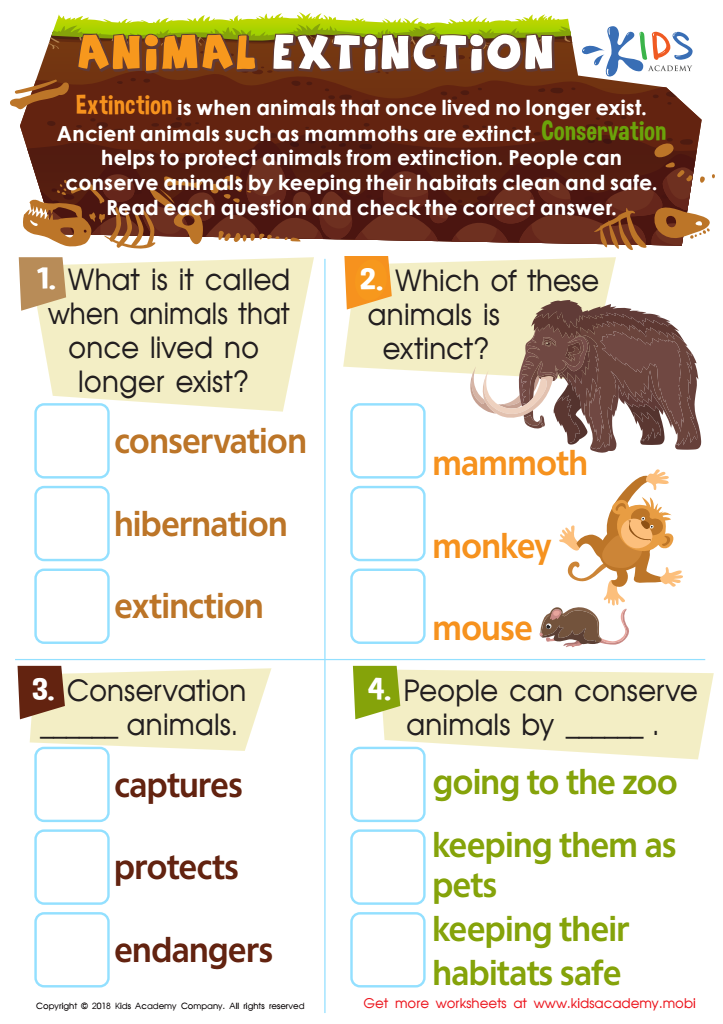
Animal Extinction Worksheet
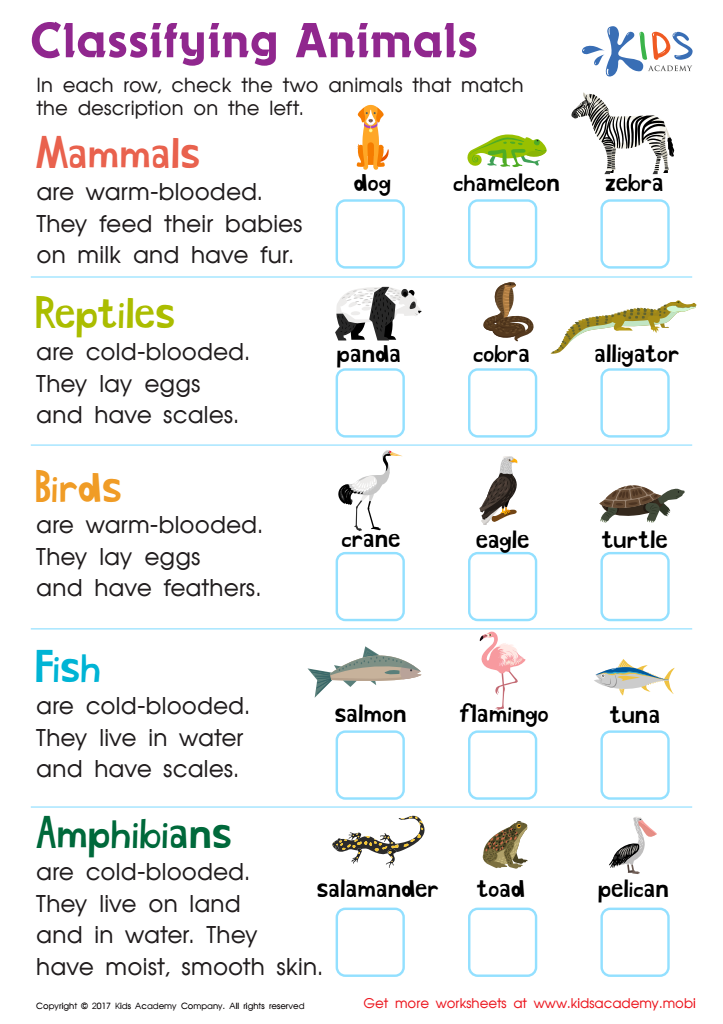
Classifying Animals Worksheet






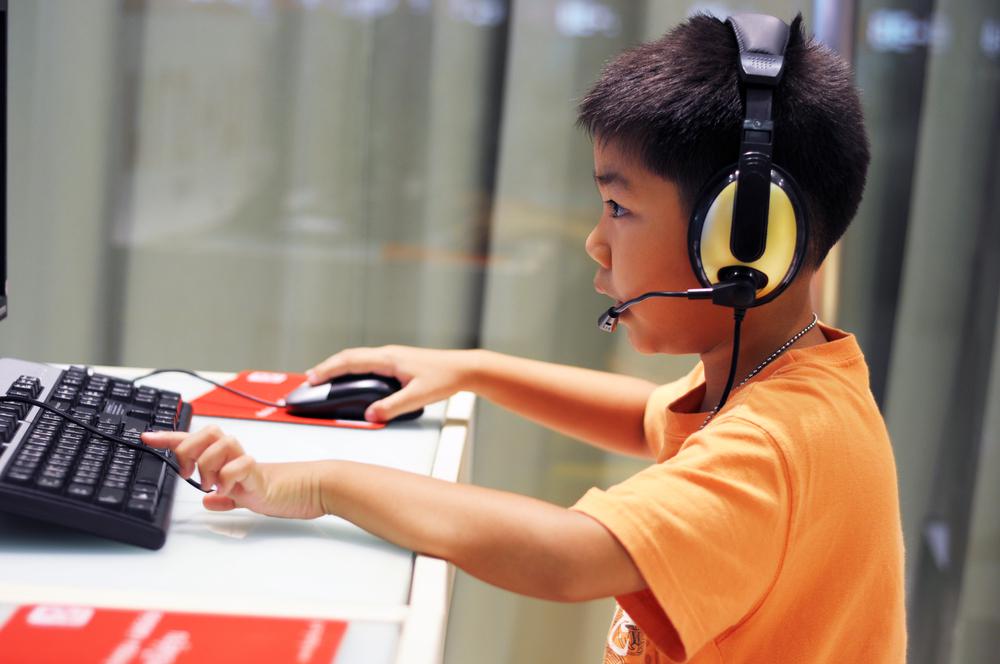
Critical Thinking Normal Animals, aimed at children aged 8-9, is an invaluable educational resource that fosters analytical skills and promotes curiosity in young learners. At this developmental stage, children are beginning to think more abstractly, and engaging them with content that challenges their reasoning abilities enhances cognitive development.
Parents and teachers should care about this program as it encourages not only academic skills but also critical life skills such as problem-solving, reasoning, and decision-making. By exploring the characteristics and behaviors of various animals, children can learn to make observations, draw conclusions, and justify their thoughts—foundational skills for successful learning.
Furthermore, understanding animals fosters empathy and a deeper appreciation for the natural world, encouraging responsible citizenship. Children develop the ability to consider different perspectives and become more open-minded through discussions and collaborations with peers on animal-related topics.
Incorporating Critical Thinking Normal Animals into the learning environment can also motivate children by integrating enjoyable, relatable content, ensuring that lessons are engaging. By prioritizing critical thinking skills in a fun and interactive way, parents and teachers can help children become independent thinkers, preparing them for future academic and personal successes.








