Understanding biodiversity Normal Worksheets for 8-Year-Olds
4 filtered results
-
From - To
Discover our "Understanding Biodiversity" worksheets tailored for 8-year-olds, available at Kids Academy! Crafted to foster young minds' appreciation of nature, these engaging activities blend education and entertainment seamlessly. Our worksheets introduce biodiversity concepts, showcase diverse habitats, and highlight the importance of ecosystem balance. Through hands-on tasks, quizzes, and vibrant illustrations, children gain a comprehensive understanding of plant and animal diversity. Perfect for at-home learning or classroom use, the worksheets cultivate critical thinking, observation, and environmental stewardship. Ignite your child's curiosity about the natural world with our expert-designed resources, and nurture a generation ready to safeguard our planet. Explore today!
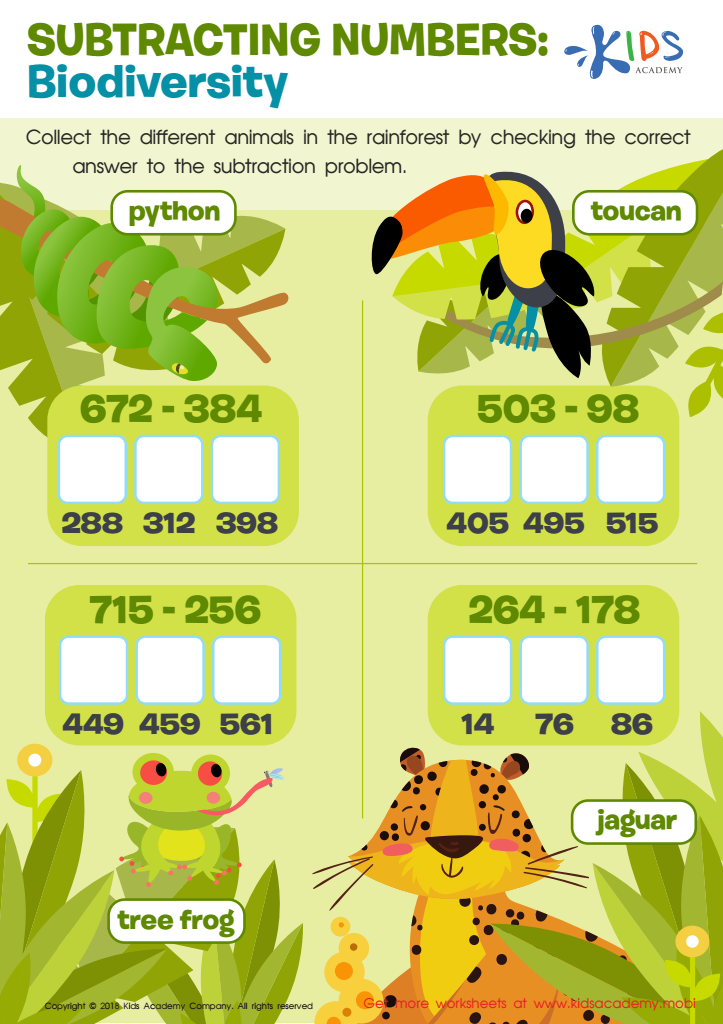
Subtracting Numbers: Biodiversity Worksheet
 Assign to My Students
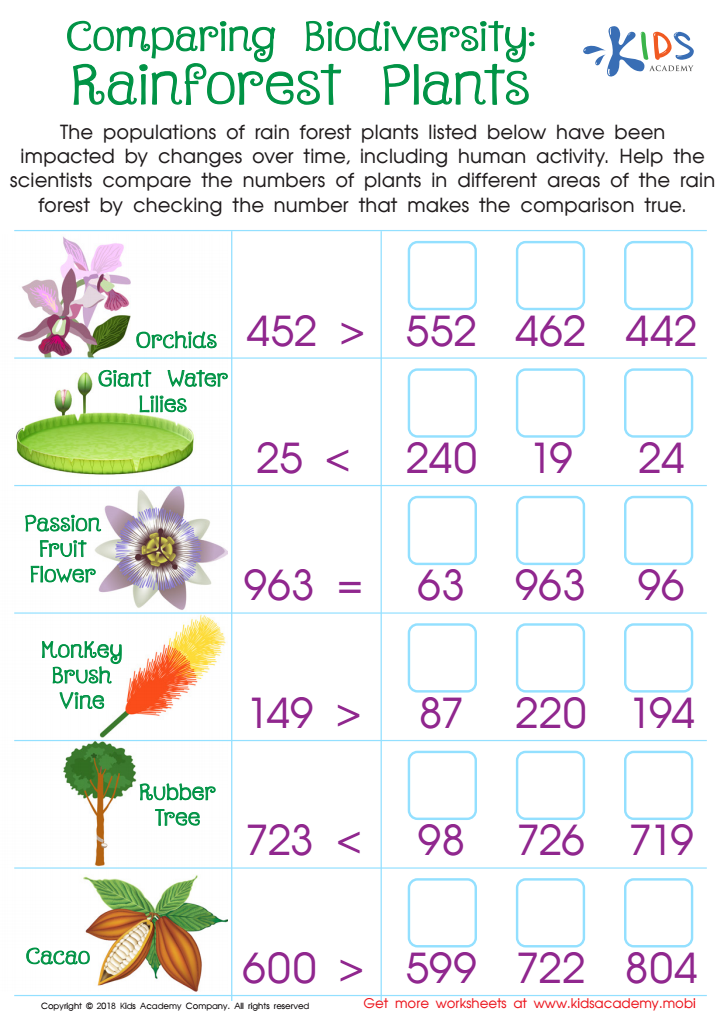
Comparing Biodiversity: Rainforest Plants Worksheet
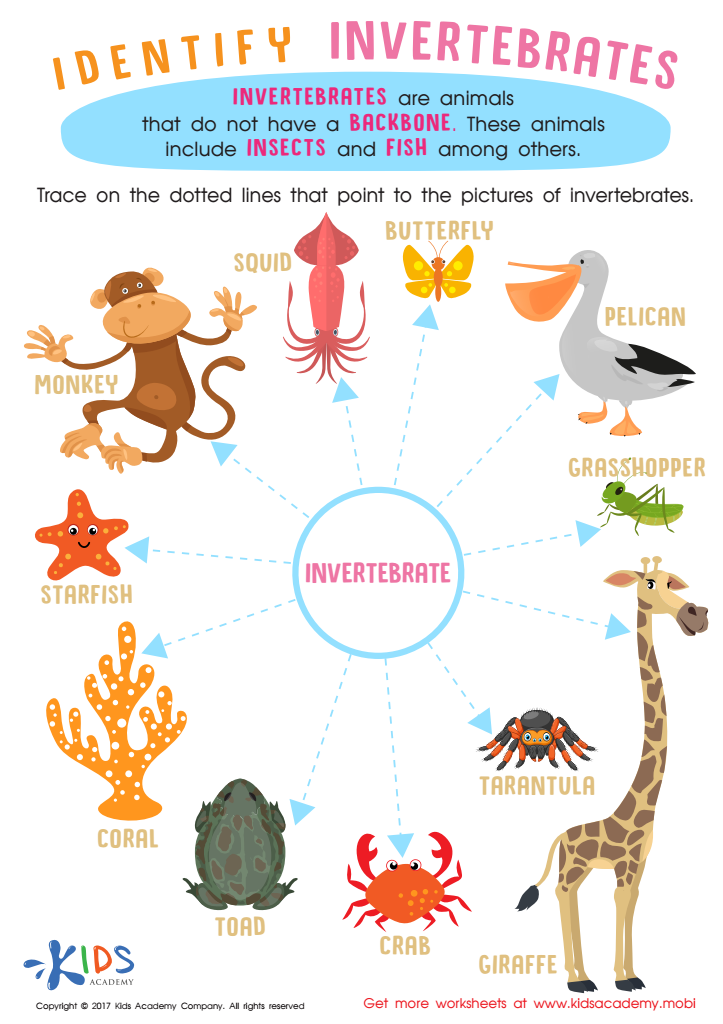
Invertebrates Worksheet for Grade 3
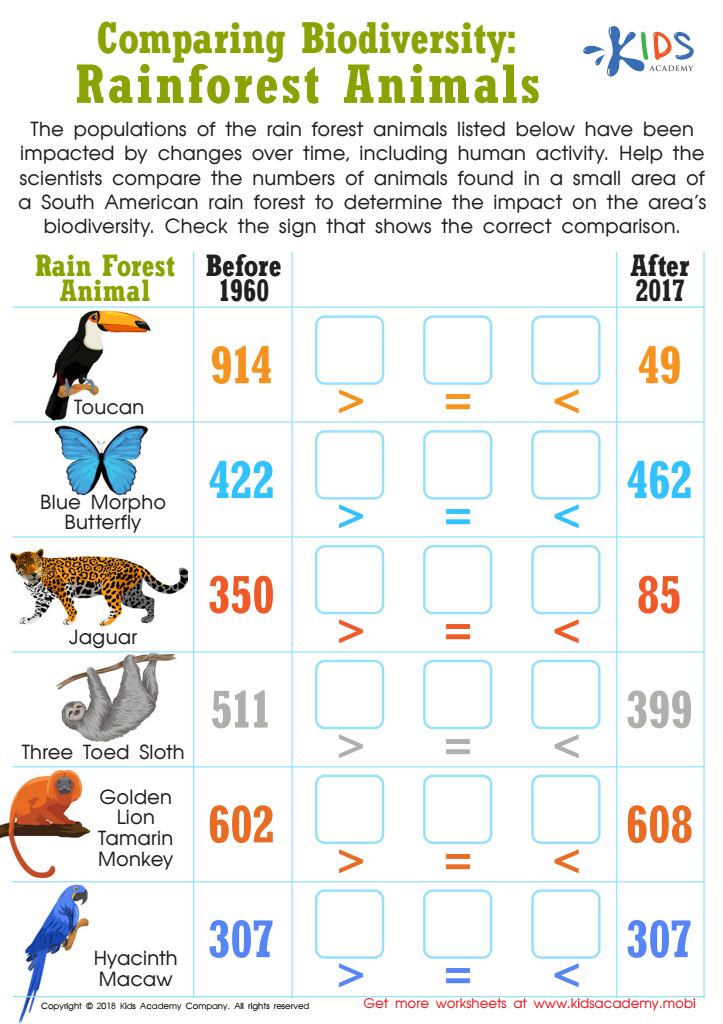
Comparing Biodiversity: Rainforest Animals Worksheet






Understanding biodiversity is crucial, and as teachers or parents, instilling this knowledge in 8-year-olds can have significant benefits. Biodiversity refers to the variety of living beings on Earth, like plants, animals, and microorganisms. It supports ecosystems, which provide us with essentials like food, clean water, and air.
Teaching kids about biodiversity helps them appreciate nature and understand the importance of conservation. For example, explaining how different animals and plants contribute to our ecosystem makes them realize how everything is connected. They learn that bees pollinate flowers, which helps plants grow, and these plants provide food and oxygen for other creatures, including humans.
Understanding biodiversity also fosters curiosity and critical thinking. Kids become little scientists, eager to observe their surroundings and ask questions. They can identify different species, recognize their roles, and understand the consequences of losing them.
Moreover, instilling a sense of care for nature from an early age encourages responsible behavior. Kids learn to protect natural habitats, respect living creatures, and practice eco-friendly habits like recycling and reducing waste.
In essence, by educating 8-year-olds about biodiversity, parents and teachers are shaping mindful, knowledgeable future citizens who will contribute to the sustainability and health of our planet.








