Problem-Solving Skills Normal Geometry Worksheets for 8-Year-Olds
3 filtered results
-
From - To
Unlock your child's potential with our Problem-Solving Skills Normal Geometry Worksheets designed specifically for 8-year-olds. These engaging activities combine fun and learning, encouraging kids to think critically and creatively while mastering essential geometry concepts. Through interactive challenges and visual aids, children will explore shapes, patterns, and spatial reasoning, laying a strong foundation for future math success. Our worksheets promote independent thinking, improve problem-solving abilities, and boost confidence in a supportive environment. Tailored to complement various learning styles, these resources make geometry enjoyable, ensuring your child develops a love for math while sharpening their analytical skills. Dive into the world of shapes now!
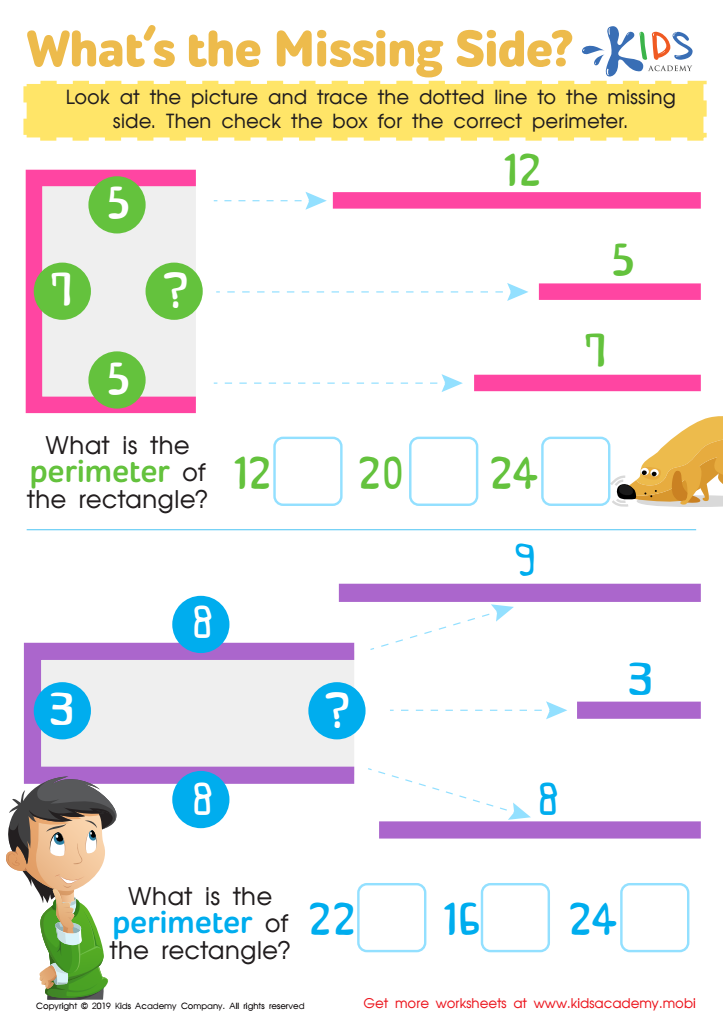
What's the Missing Side Worksheet
 Assign to My Students











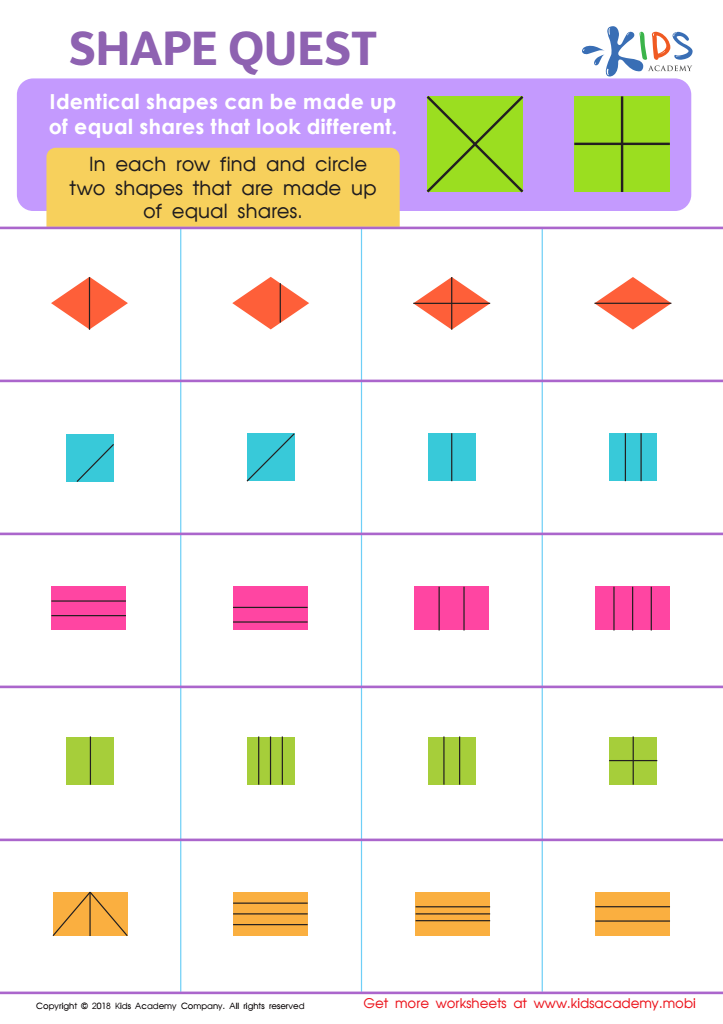
Shape Quest Worksheet
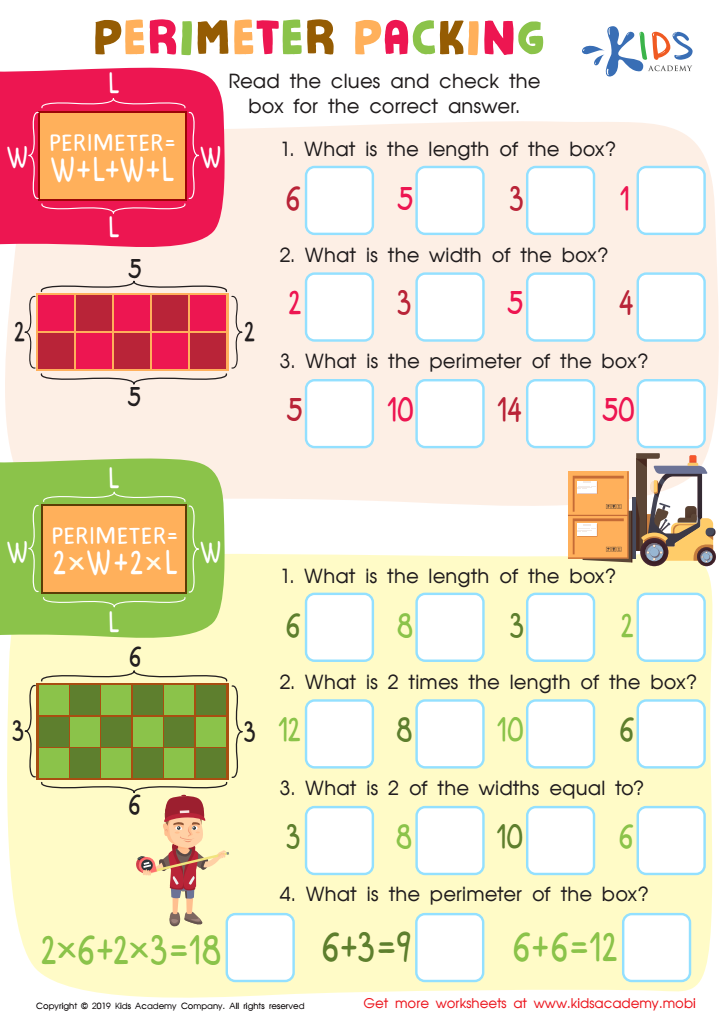
Perimeter Parking Worksheet








Problem-solving skills in normal geometry are critical for 8-year-olds, as these abilities lay the foundation for a child's overall cognitive development and future mathematical understanding. At this age, children begin to encounter shapes, measurements, and spatial relationships, which are essential components of geometry. Developing proficient problem-solving skills enables them to approach mathematical challenges with confidence and creativity.
Parents and teachers should care about these skills because they not only support understanding in mathematics but also foster critical thinking and analytical abilities. Mastering geometry helps children recognize patterns, make connections, and enhance their reasoning skills, which are applicable across various disciplines.
Moreover, problem-solving in geometry encourages persistence and resilience. Children learn to tackle problems from different angles and find multiple solutions, which cultivates a growth mindset. This not only enhances their math proficiency but also equips them with the skills required to navigate real-world challenges.
Involving parents in this process by encouraging at-home activities, or supportive discussions, can create a positive and collaborative learning environment. Teachers, by integrating engaging geometric problem-solving activities into their curriculum, can inspire a love for math that lasts a lifetime, ultimately paving the way for academic success.








