
Color Identification Normal Math Worksheets for 8-Year-Olds
3 filtered results
Difficulty Level
Grade
Age
-
From - To
Subject
Activity
Standards
Our "Color Identification Normal Math Worksheets for 8-Year-Olds" offer an engaging way for young learners to enhance their math skills while having fun with colors. These specially designed worksheets blend basic math concepts with color recognition exercises, fostering cognitive development and creativity. By solving problems and then coloring by code, students practice arithmetic operations such as addition, subtraction, multiplication, and division in an enjoyable context. Ideal for 8-year-olds, these activities support both math proficiency and artistic expression. Download now for an effective blend of education and play to keep your child intellectually stimulated and entertained!
Favorites
With answer key
Interactive
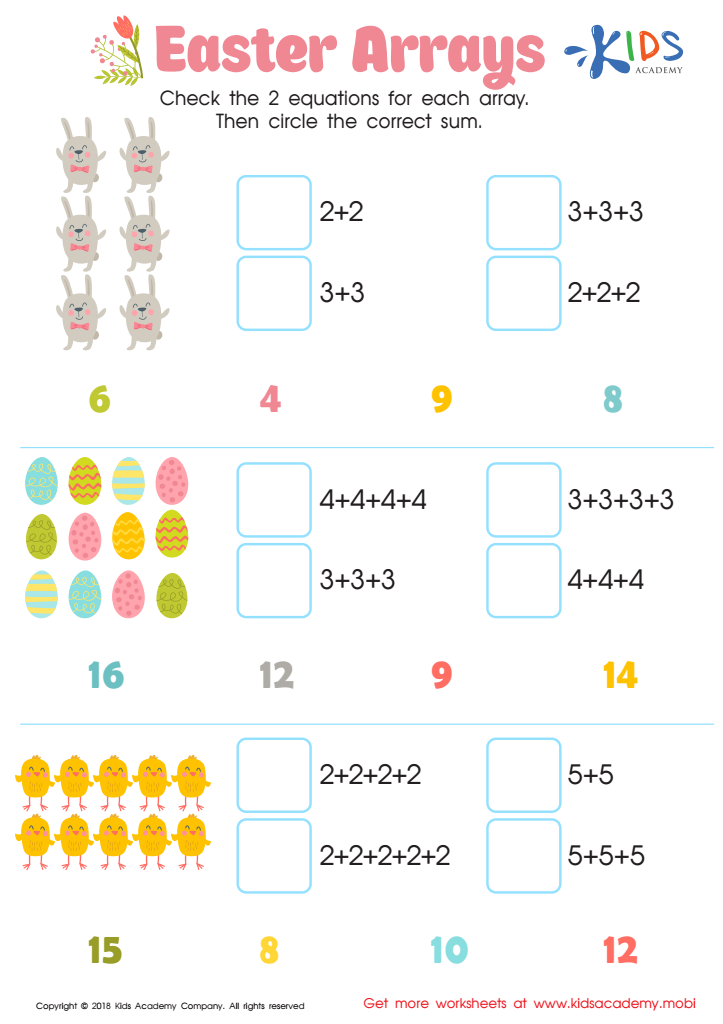
Easter Arrays Worksheet
Does your child love Easter? Do they adore the Easter bunny and egg hunts? Help them have fun with this worksheet! Go through it with them and check the equations for each array. Then, have them circle the correct sum. It's a great way to make the holiday extra exciting!
 Assign to My Students
Easter Arrays Worksheet
Worksheet
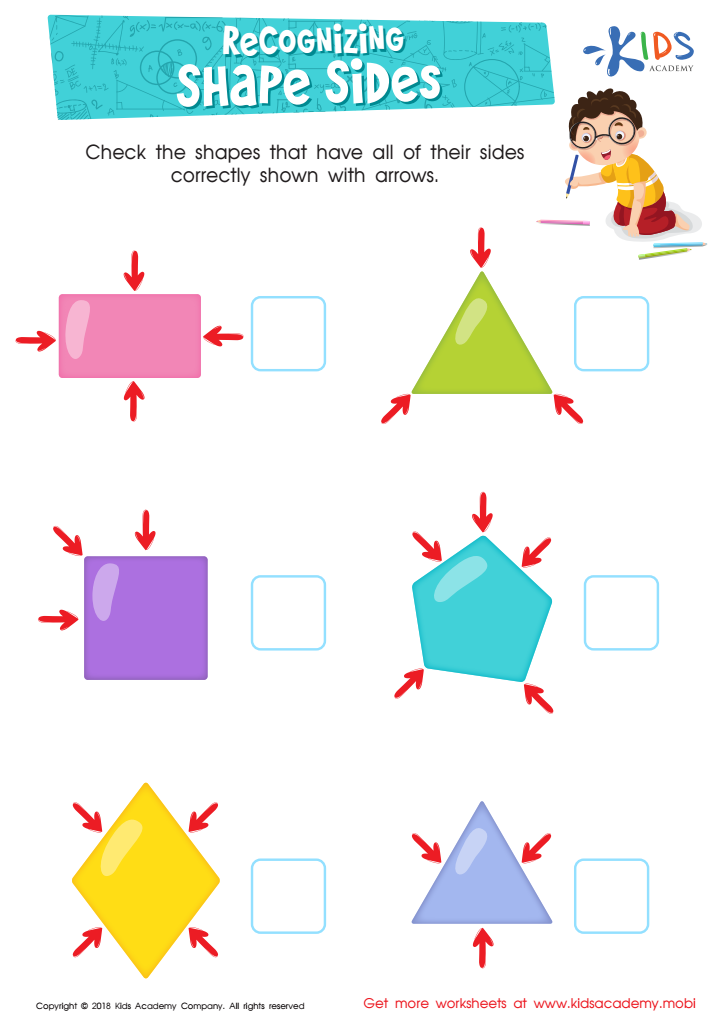
Recognizing Shape Sides Worksheet
This exercise will help your child recognize shape sides. Go over the difference between sides and angles first, then have them check the shapes with arrows to show the sides. They'll quickly get the hang of it and find it much easier after completing the colorful worksheet.
Recognizing Shape Sides Worksheet
Worksheet
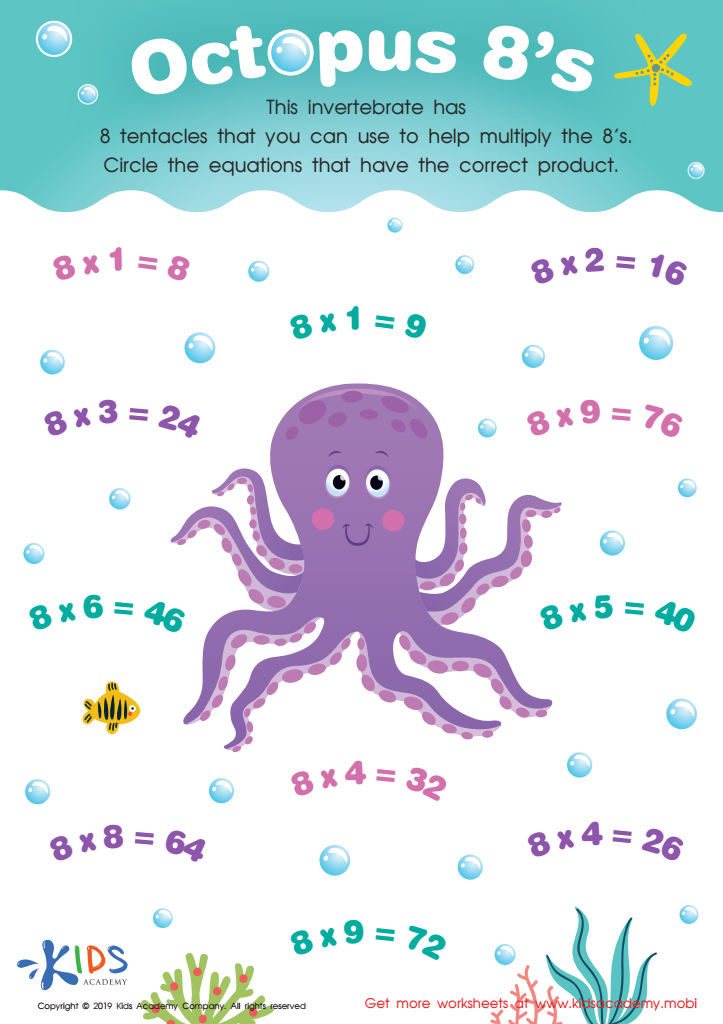
Octopus 8’s Worksheet
Can your child identify the octopus in the worksheet? It's an invertebrate with 8 tentacles. Have your child circle the equations with the correct products, and see if they can tell you some other features of the octopus too.
Octopus 8’s Worksheet
Worksheet
Join Kids Academy for Free
Who is primarily going to use this learning content?







Color identification and normal math skills are both fundamental components of a child's development and their ability to interact with the world around them. For 8-year-olds, mastering color identification enhances cognitive development, as it is closely linked to language skills, memory, and overall brain function. When children learn to identify and name colors, they also build their vocabulary and improve their capacity to describe and understand their environment.
From a mathematical perspective, recognizing colors supports the development of categorization skills, which are crucial for solving math problems. For example, sorting objects by color helps children grasp concepts of grouping, pattern recognition, and order—preliminary steps towards more advanced math skills like addition, subtraction, and even multiplication.
Furthermore, engaging in activities that combine color identification with math tasks can make learning more enjoyable and accessible. A child who sees math as a colorful, engaging activity is more likely to develop a positive attitude towards the subject. For young learners, positive early experiences with math can build confidence and reduce math-related anxiety.
Thus, parents and teachers should care about color identification in conjunction with normal math skills because it nurtures essential cognitive abilities and promotes a more holistic approach to learning, setting the stage for future academic success.








