
Critical Thinking Normal Math Worksheets for 9-Year-Olds
8 filtered results
Difficulty Level
Grade
Age
-
From - To
Subject
Activity
Standards
Boost your child's mathematical skills with our engaging Critical Thinking Normal Math Worksheets designed specifically for 9-year-olds. These specially crafted worksheets foster analytical thinking and problem-solving abilities while reinforcing foundational math concepts. Each activity encourages students to think creatively and logically as they explore challenges tailored to enhance their critical thinking skills. Perfect for both classroom use and home learning, these worksheets provide a fun and educational way to develop mathematical confidence and competence. Help your child not just learn math, but also apply their skills effectively in real-life situations. Unlock their potential with our structured, interactive learning resources today!
Favorites
With answer key
Interactive
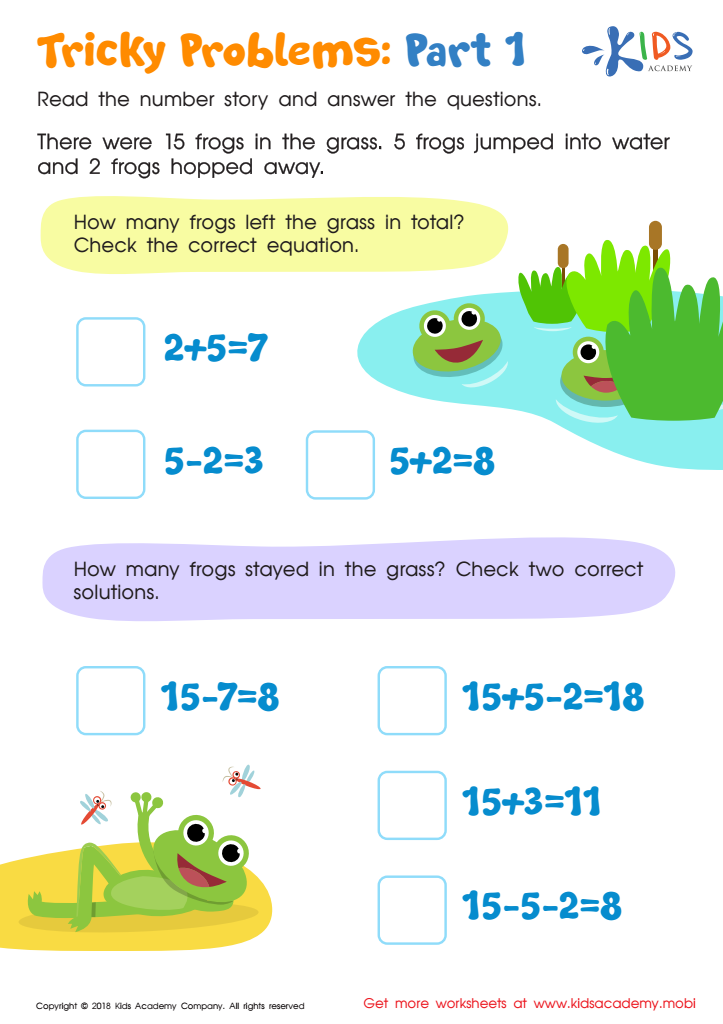
Tricky Problems Worksheet: Part 1
Visualizing word problems can help students solve them. This fun PDF worksheet encourages students to create mental images using math facts, then check boxes to match the equations for basic addition problems. It's a great way to build confidence in solving math.
 Assign to My Students
Tricky Problems Worksheet: Part 1
Worksheet
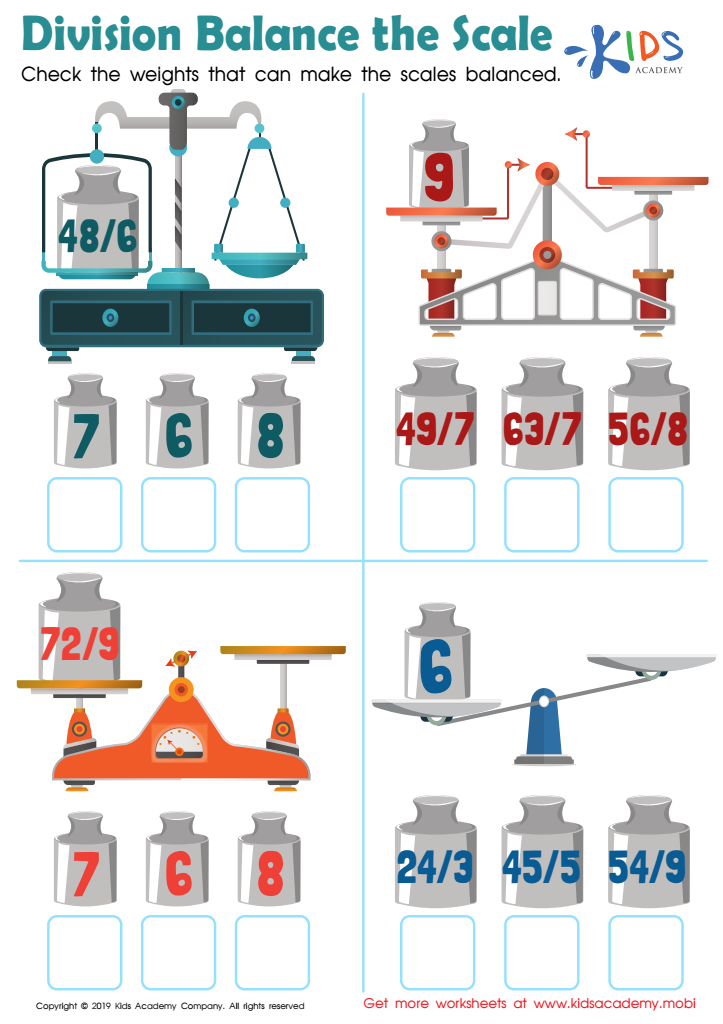
Division Balance the Scale Worksheet
Students can learn math better when they understand the relationships between numbers. This free worksheet helps them practice division: solving problems and matching the correct quotient to balance the scales. Fun visual boxes make it a unique way to engage with the material.
Division Balance the Scale Worksheet
Worksheet
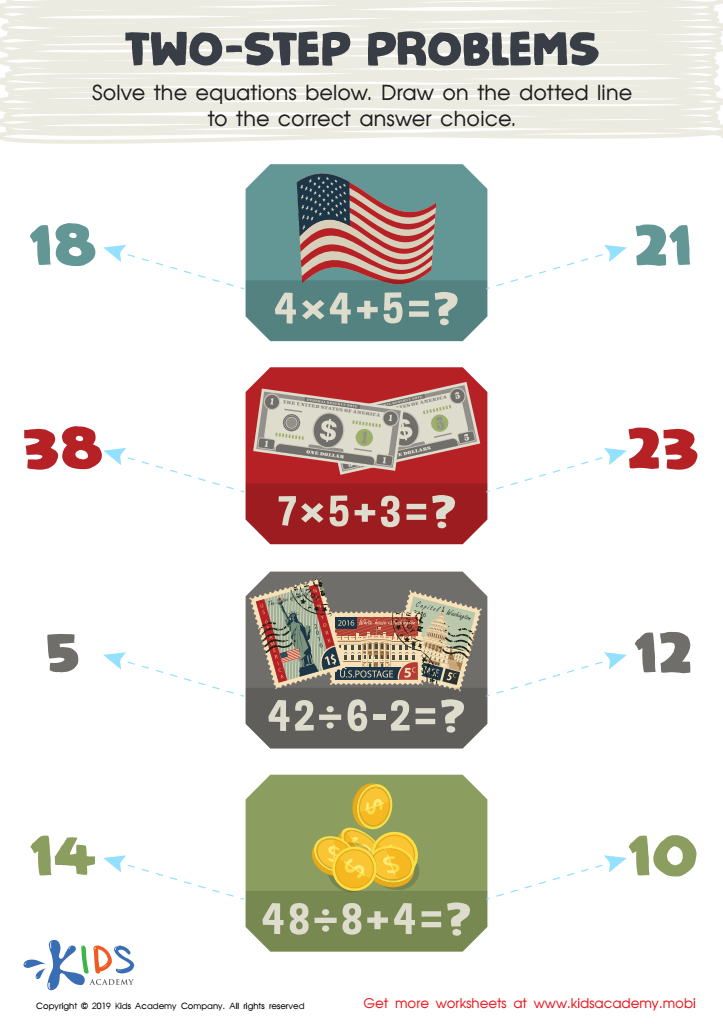
Two-Step Problems Worksheet
Help your child practice their math problem-solving skills with this worksheet. It covers the basics of subtractions, additions, multiplications, and divisions. With four simple equations, your kids can solve them and draw the correct answer on the dotted line. Reduce their strain and give them the help they need.
Two-Step Problems Worksheet
Worksheet
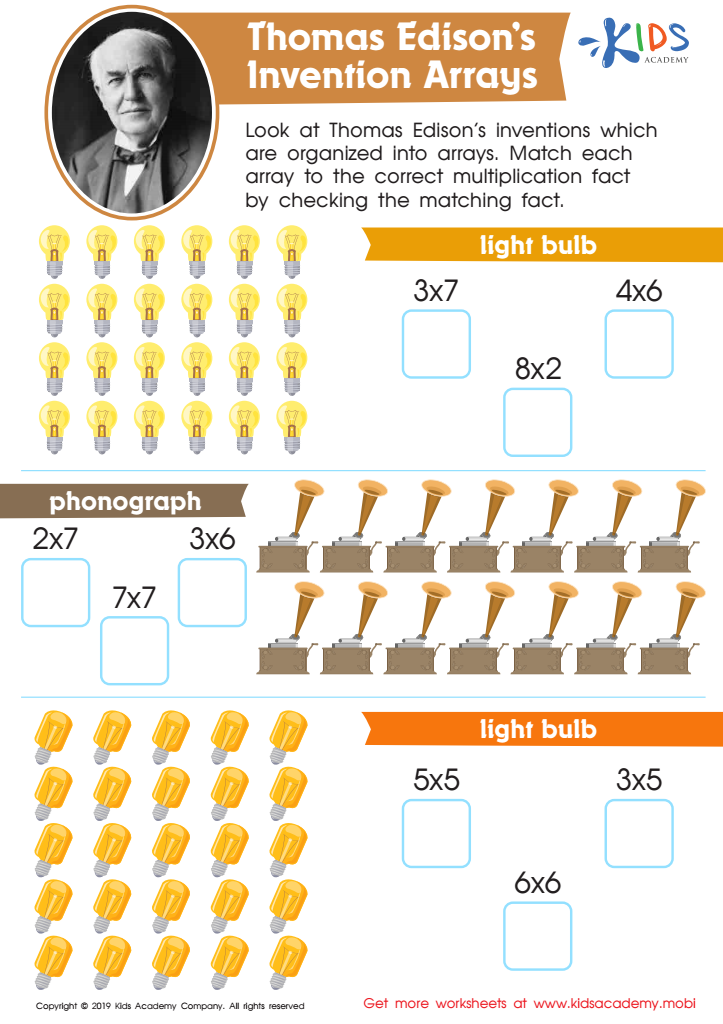
Thomas Edison’s Invention Arrays Worksheet
Test your students' knowledge on history by asking them what Thomas Edison invented. If they get the right answer, provide more information on other inventors. Check out this printout of Edison's light bulb inventions laid out in arrays. Get them to match each array to the correct multiplication fact.
Thomas Edison’s Invention Arrays Worksheet
Worksheet
Divide up the Garden Worksheet
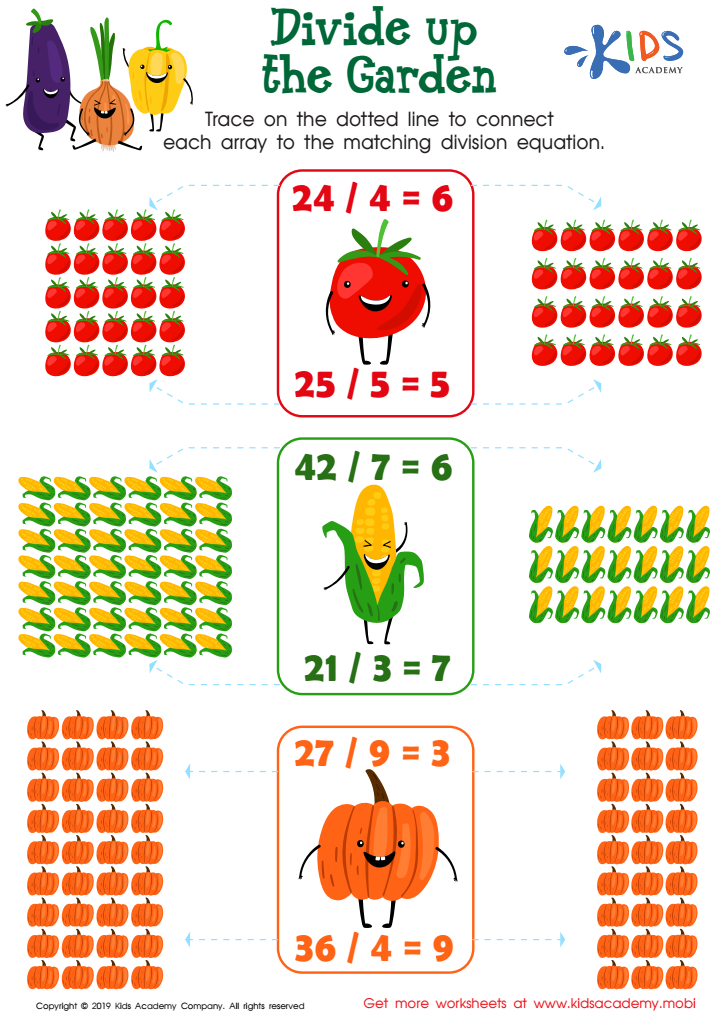
Dividing is simply grouping items into equal sets. This worksheet helps kids see division problems in array form. They'll match each equation with a picture group, using the lines provided. It's a great way for beginners to understand division more concretely.
Divide up the Garden Worksheet
Worksheet
Word Problems: Assessment 2 Worksheet
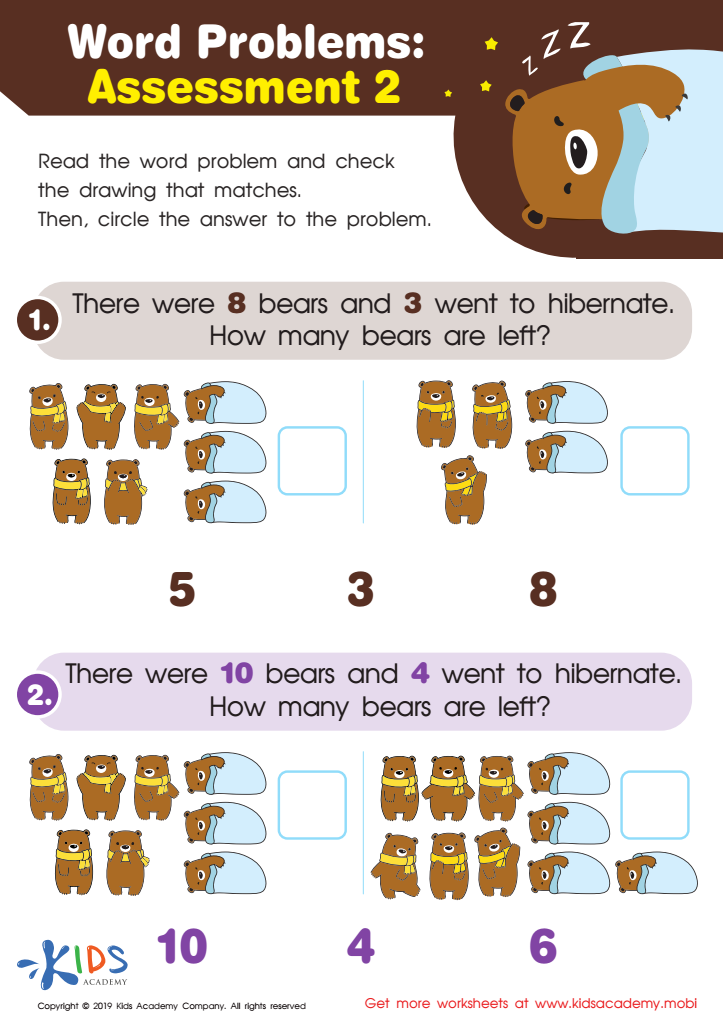
This bear-themed worksheet is a great way to test subtraction skills. Have your child read the word problems and match the correct drawing with the answer. It's a fun way to quiz them without them even knowing. Enjoy counting cute snoozing bears! (80 words)
Word Problems: Assessment 2 Worksheet
Worksheet
Party Problems Worksheet
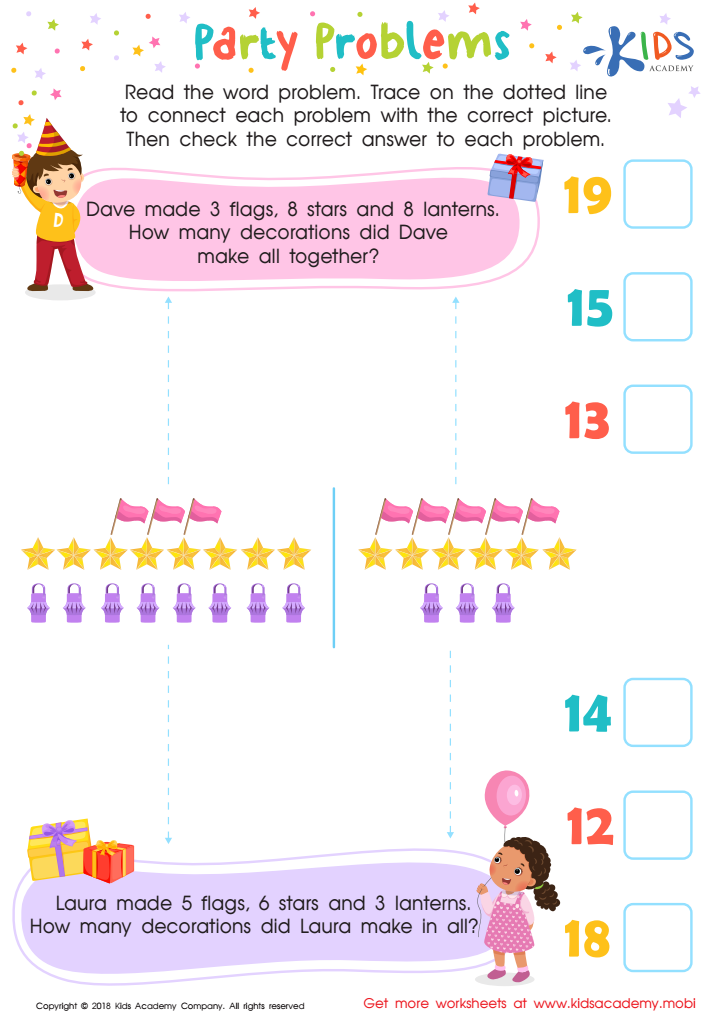
Problems at parties? No problem! With this engaging PDF worksheet, your student can connect word problems to pictures, check correct answers, and find the sum of 3 addend problems. They'll be a party-saving hero in no time!
Party Problems Worksheet
Worksheet

World Traveler Worksheet
Kids love exploring the world? Inez sure does! She's seen oceans and continents around the globe. Your kids can help her figure out what fraction of the world she has visited. Have them name all the countries they've been to, then look at the marked sections on the printout to find out!
World Traveler Worksheet
Worksheet
Join Kids Academy for Free
Who is primarily going to use this learning content?







Critical Thinking Normal Math (CTNM) for 9-year-olds is essential for fostering a robust mathematical foundation and encouraging deeper comprehension of mathematical concepts. At this age, children are not just learning how to solve problems but should also begin understanding the “why” behind mathematical operations. CTNM promotes analytical skills, enabling students to evaluate information, find patterns, and apply their knowledge in practical scenarios.
By integrating critical thinking into math education, parents and teachers help children develop reasoning abilities essential not only in academics but in everyday life. When children learn to approach problems critically, they become more adept at overcoming challenges and constructing logical arguments. This enriches their educational experience and builds confidence in tackling complex tasks.
Furthermore, nurturing critical thinking in math prepares children for advanced mathematical concepts in future schooling. As they engage in reasoning, they learn to draw connections between different mathematical ideas, enhancing their overall cognitive development.
By prioritizing CTNM, parents and educators equip children with essential life skills, making them better problem solvers and independent thinkers, ultimately setting the stage for their future success in both academic and personal endeavors. Engaging in such practices benefits not only the child but also contributes to a more intellectually curious society.








