
Analytical skills Normal Worksheets
11 filtered results
Difficulty Level
Grade
Age
-
From - To
Subject
Activity
Standards
Enhance your child's analytical skills with our comprehensive collection of normal worksheets, designed to instill critical thinking and problem-solving abilities. Tailored for early learners, these engaging worksheets help develop reasoning and interpretation skills through a variety of fun activities. From identifying patterns to solving puzzles, each worksheet is crafted to challenge young minds while keeping learning enjoyable. Our user-friendly platform offers easy access to downloadable and printable resources, allowing parents and educators to support children's growth at home or in the classroom. Start fostering essential analytical skills today and set the foundation for your child's academic success!
Favorites
With answer key
Interactive
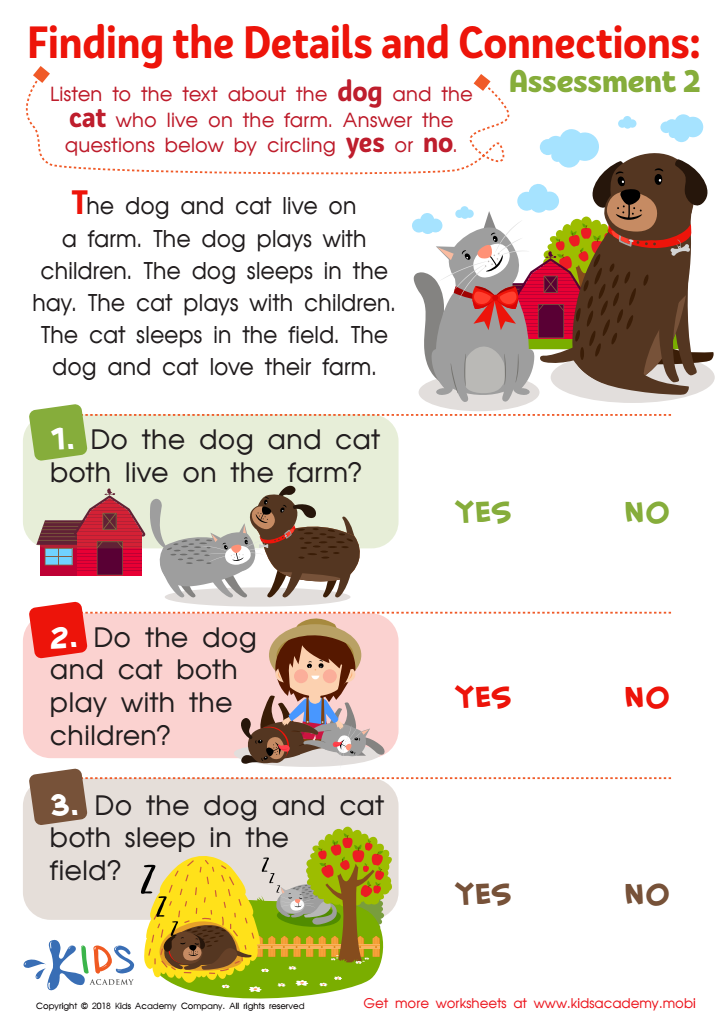
Finding the Details and Connections: Assessment 2 Worksheet
Does your child love animals? If you have pets, they'll relate to the text in this worksheet. Read it aloud to them and help them answer the simple questions by circling yes or no. The story is about a dog and cat living on a farm. Let your child read it aloud to you if they can.
 Assign to My Students
Finding the Details and Connections: Assessment 2 Worksheet
Worksheet
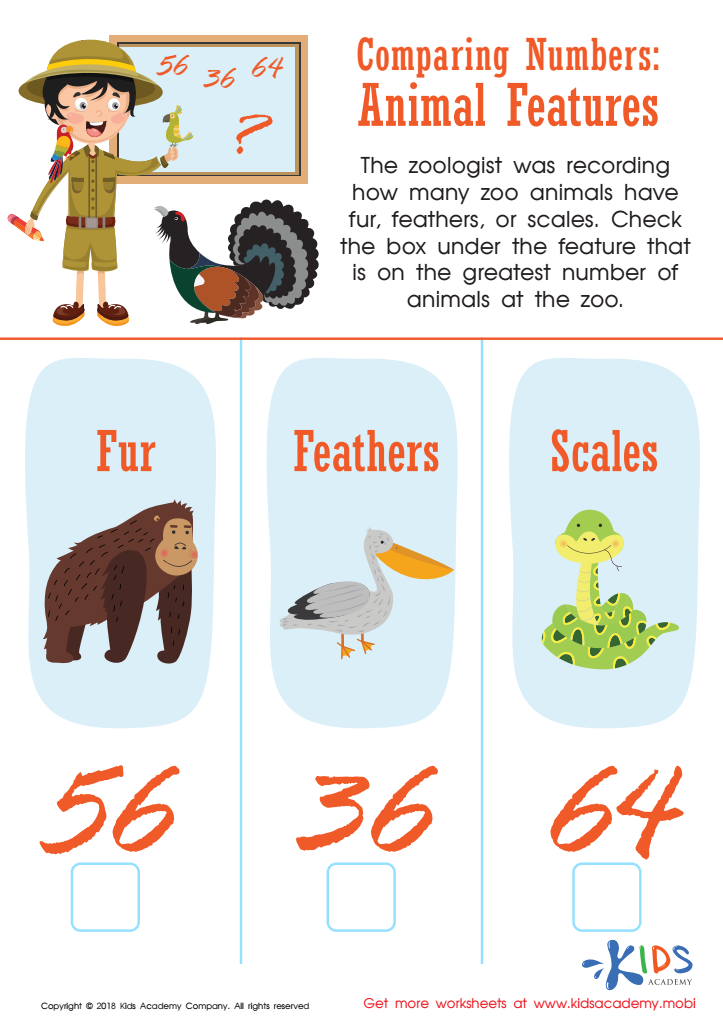
Animal Features Worksheet
Let your kids join a budding zoologist! They can count zoo animals' fur, feathers or scales, then use numbers and comparison to check the box with the most friends. The PDF will captivate them and help them understand how the value of '6' changes based on its position.
Animal Features Worksheet
Worksheet
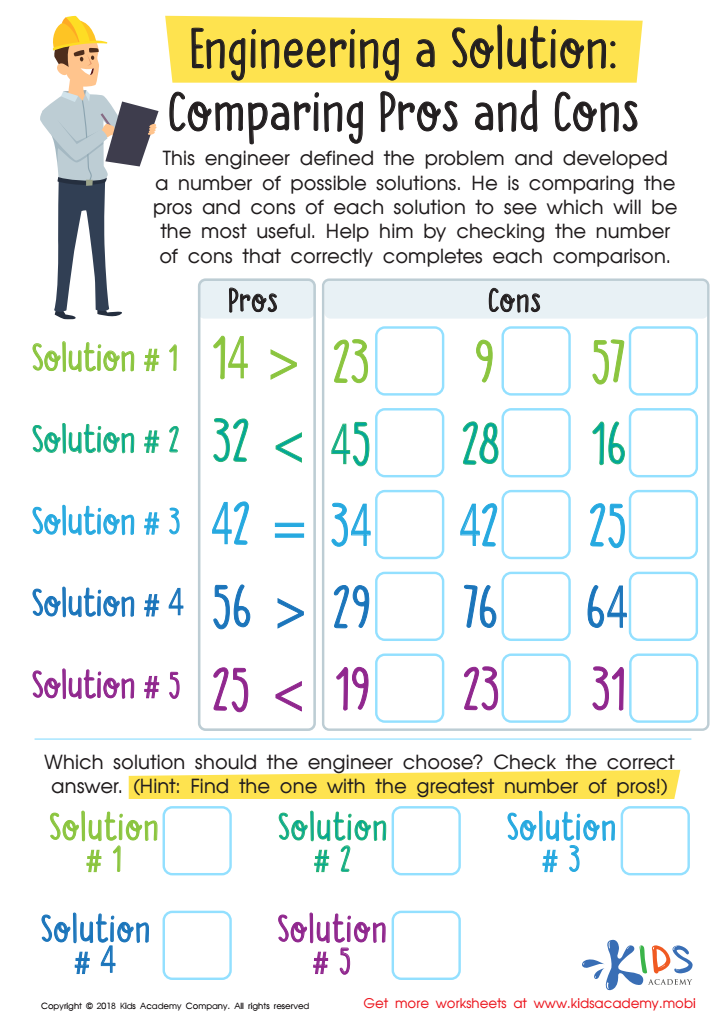
Engineering a Solution: Comparing Pros and Cons Worksheet
Help our little engineers assist the engineer in making a decision! They will solve the equations using greater than, less than, and equal to, and then decide the best solution for the problem using the pros and cons of each.
Engineering a Solution: Comparing Pros and Cons Worksheet
Worksheet
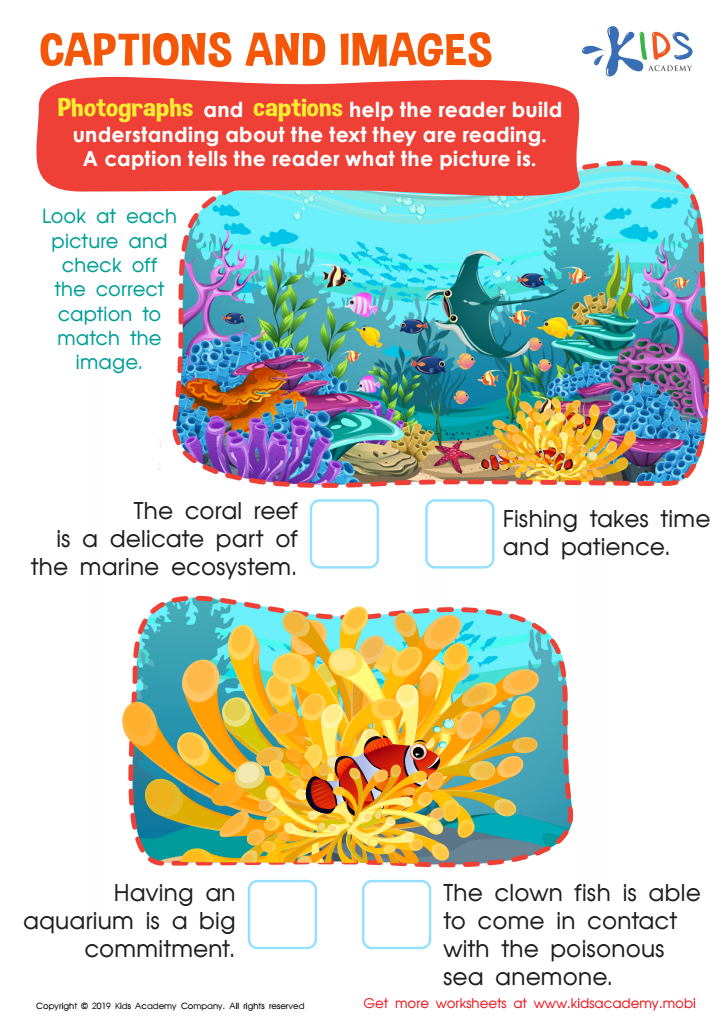
Captions and Images Worksheet
Pictures and captions can aid understanding. That's why many children's books have them. Have your kids look at the pictures in the worksheet, then help them match the right caption to each image. This will help them understand the story.
Captions and Images Worksheet
Worksheet
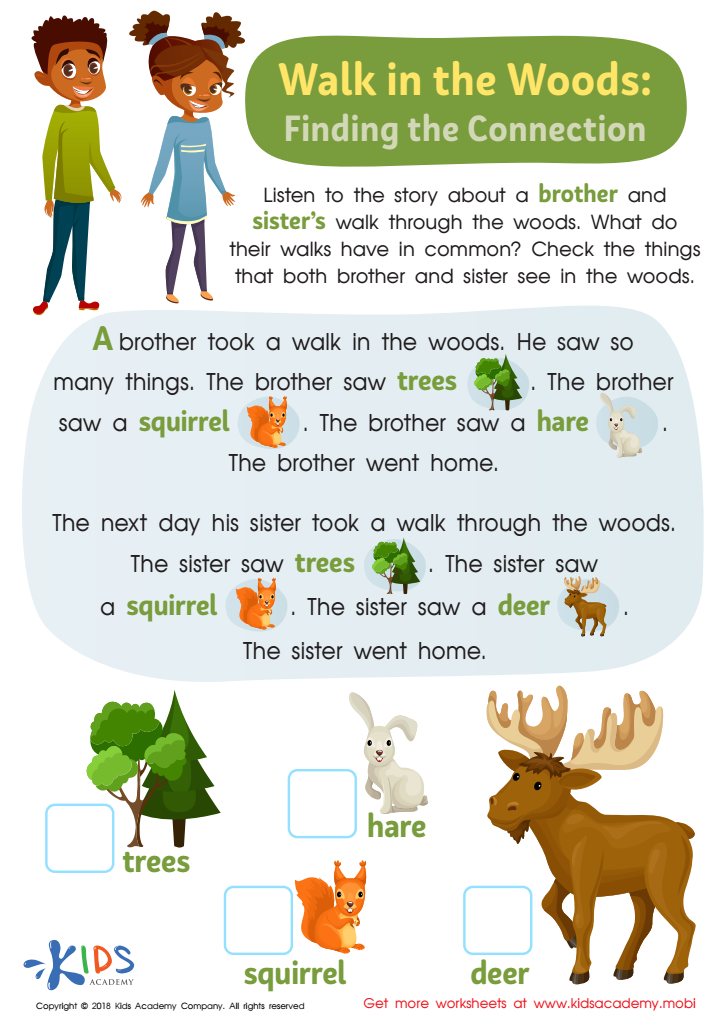
Walk In the Woods: Finding Connections Worksheet
Brother and sister took a walk in the woods to connect with nature and get some exercise. As they went, they noted different things like birds and plants, which they share in this story. Read it to your little ones, and help them check off the items the two saw. It's a great way to learn about nature and enjoy the outdoors.
Walk In the Woods: Finding Connections Worksheet
Worksheet
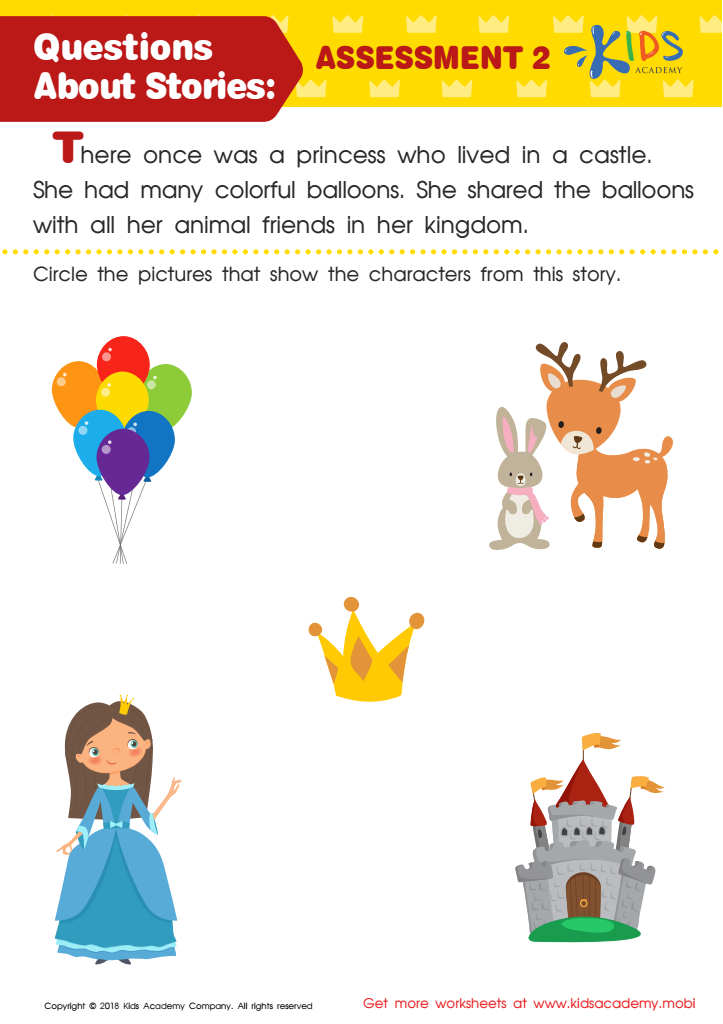
Questions About Stories: Assessment 2 Worksheet
Talk to your child about what a princess is and what activities they associate with that word. Then, read the story to them and help them identify characters in the pictures. Look out for details and ask them questions to ensure they understand.
Questions About Stories: Assessment 2 Worksheet
Worksheet
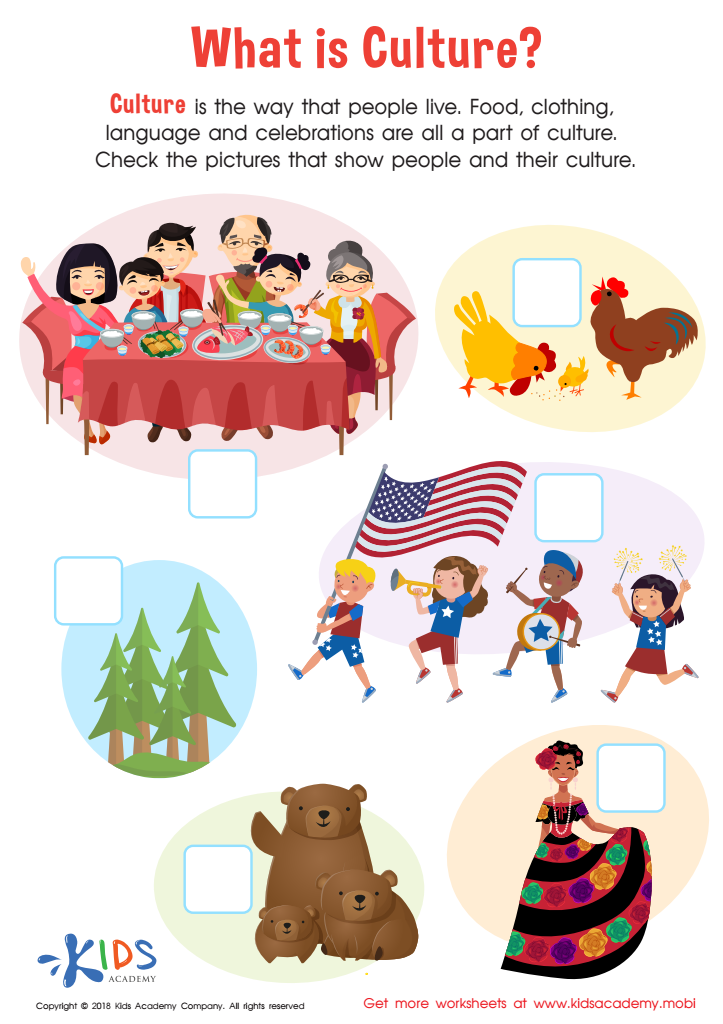
What Is Culture? Worksheet
Before beginning, talk to your kids about different cultures and how they may differ from yours. Explain that culture is the way of life and includes food, clothing, language and celebrations. Ask if they know any friends or classmates with a different culture and see if they can tell you about it. Then, help them look through this printout and check the pictures that show people and their culture.
What Is Culture? Worksheet
Worksheet
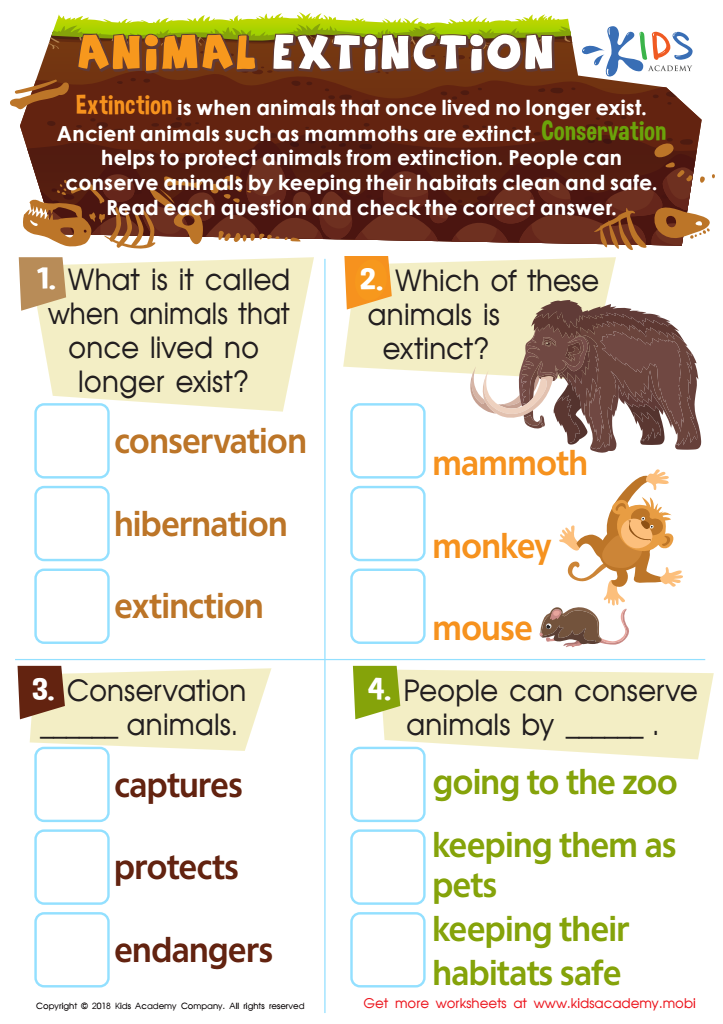
Animal Extinction Worksheet
Children can learn how their actions can help endangered animals with this free PDF worksheet. It explains extinction, looks at the mammoth as an example, and poses questions about conservation. Keeping habitats clean and safe is key to protecting animals and keeping them abundant. Learning about this now can make a huge difference for future generations.
Animal Extinction Worksheet
Worksheet
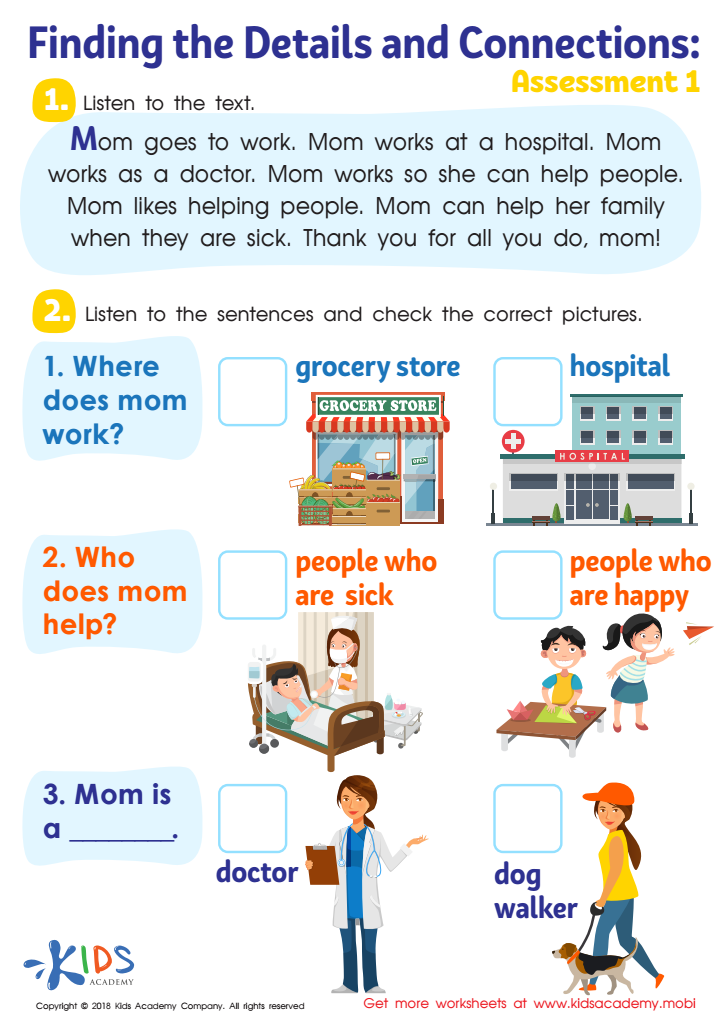
Finding the Details and Connections: Assessment 1 Worksheet
Ask your students what their parents do for a job. Do they know what profession their mom is in and where she works? Professionals have places they go to do their job. In this task, Mom goes to a hospital and is a doctor. Read the text and help them check the right pictures.
Finding the Details and Connections: Assessment 1 Worksheet
Worksheet
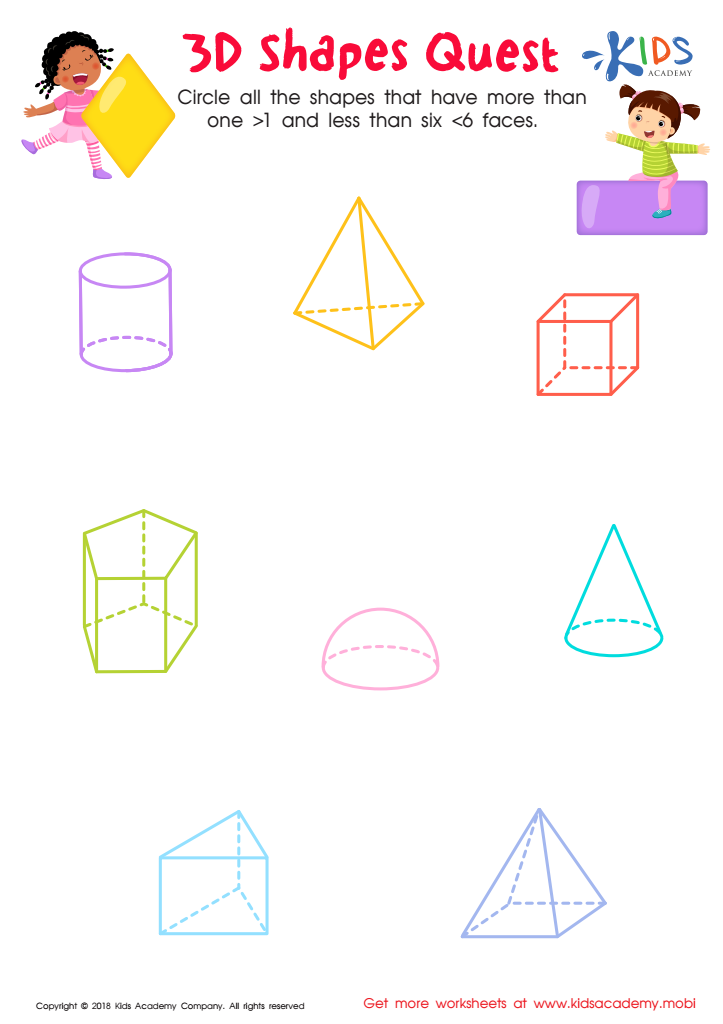
3D Shapes Quest Worksheet
Ask your child if they know what faces of shapes are. If not, explain that faces are flat surfaces on shapes. Ask what a square and rectangle have in common - both have four faces. Your child's task is to circle shapes with more than 1 and less than 6 faces in this exercise.
3D Shapes Quest Worksheet
Worksheet
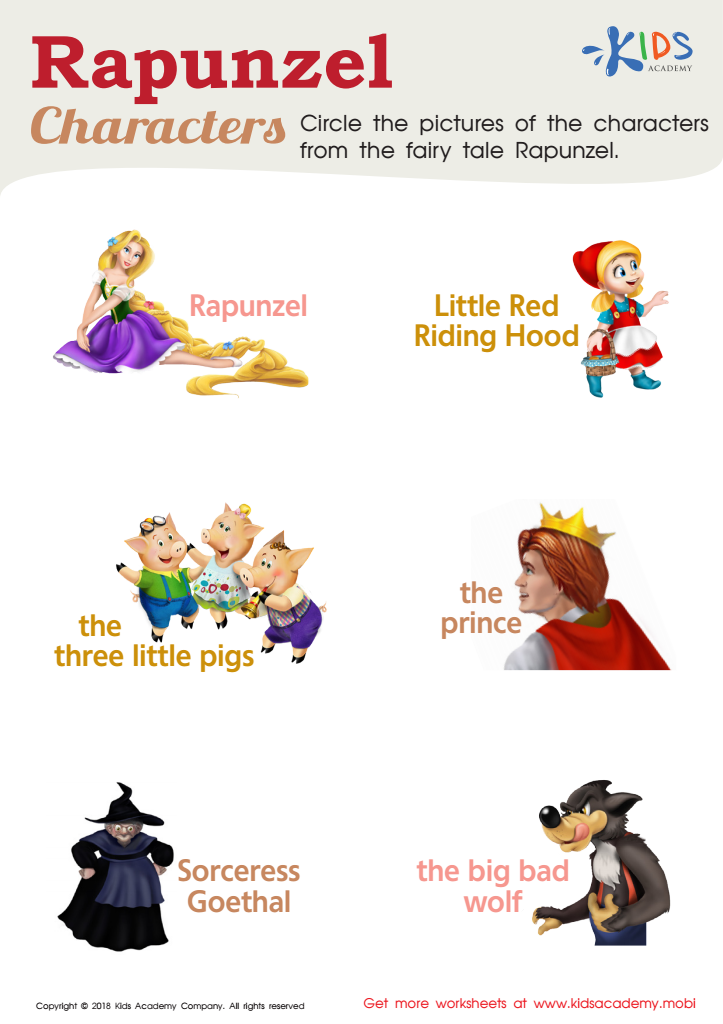
Rapunzel Characters Worksheet
This fun and colourful worksheet is perfect to see what your kids have learned from story time. Test their knowledge with a Rapunzel-themed exercise! Ask them to circle the pictures of the characters from the fairy tale. Helping them to remember the lessons taught in the stories you have read.
Rapunzel Characters Worksheet
Worksheet
Join Kids Academy for Free
Who is primarily going to use this learning content?







Analytical skills are essential for children's development and future success. Parents and teachers should prioritize nurturing these skills as they lay the foundation for critical thinking and problem-solving abilities. Analytical skills enable children to assess information, evaluate evidence, and draw logical conclusions. This competency is not only vital in academic settings but also equips children to navigate real-world situations effectively.
Cultivating analytical skills fosters independence and confidence in decision-making. When children learn to analyze situations or materials, they develop the ability to approach challenges logically rather than relying solely on memorization or rote learning. This enhances their creativity, encouraging them to explore multiple perspectives and solutions.
Moreover, strong analytical skills are increasingly sought after in the workforce. Many future careers will demand innovative thinkers who can dissect information and understand complex concepts. By prioritizing these skills in early education, parents and teachers are preparing children to succeed in a rapidly evolving world.
Ultimately, investing time and resources into developing analytical abilities not only benefits individual learners today but also contributes to a more competent, thoughtful society in the future. Thus, fostering analytical skills should be a shared goal of parents and educational institutions alike.








