Pattern recognition Normal Geometry Worksheets
3 filtered results
-
From - To
Explore our engaging Pattern Recognition Normal Geometry Worksheets, designed to enhance young learners' ability to identify and understand patterns in geometric shapes. These worksheets provide a fun and interactive way for children to develop critical thinking and problem-solving skills. Each activity encourages students to recognize patterns through shapes, colors, and sizes, promoting spatial awareness and logical reasoning. Ideal for early grade classrooms, these resources align with educational standards, making them perfect for both independent practice and guided learning. Unlock your child’s potential in geometry with our expertly crafted worksheets that make learning enjoyable and effective!
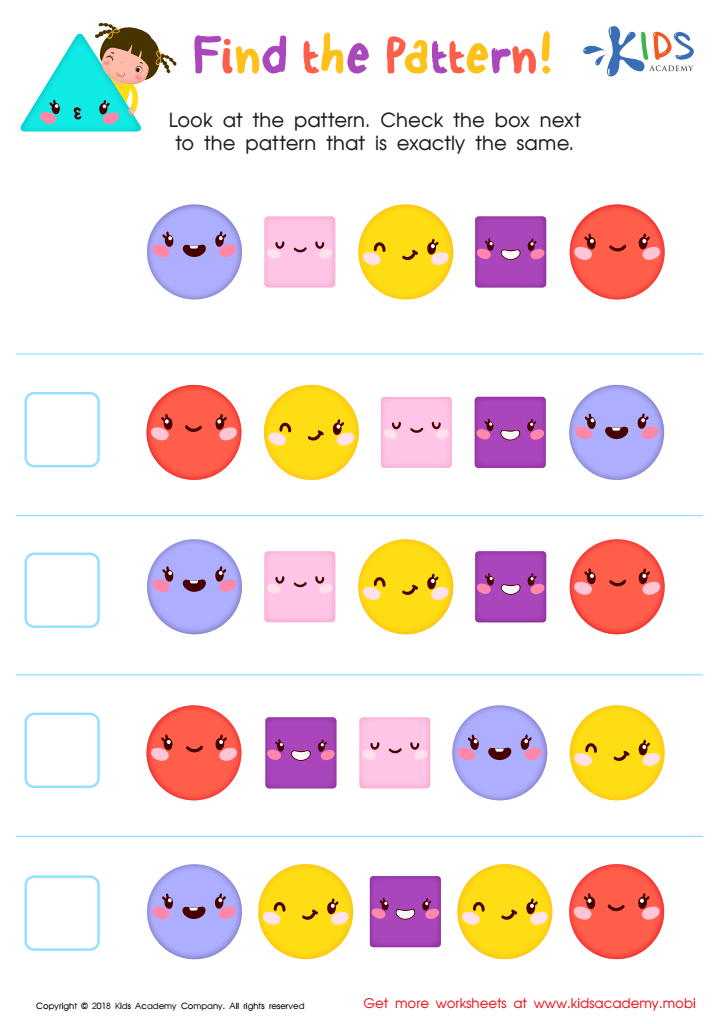
Find the Pattern Worksheet
 Assign to My Students











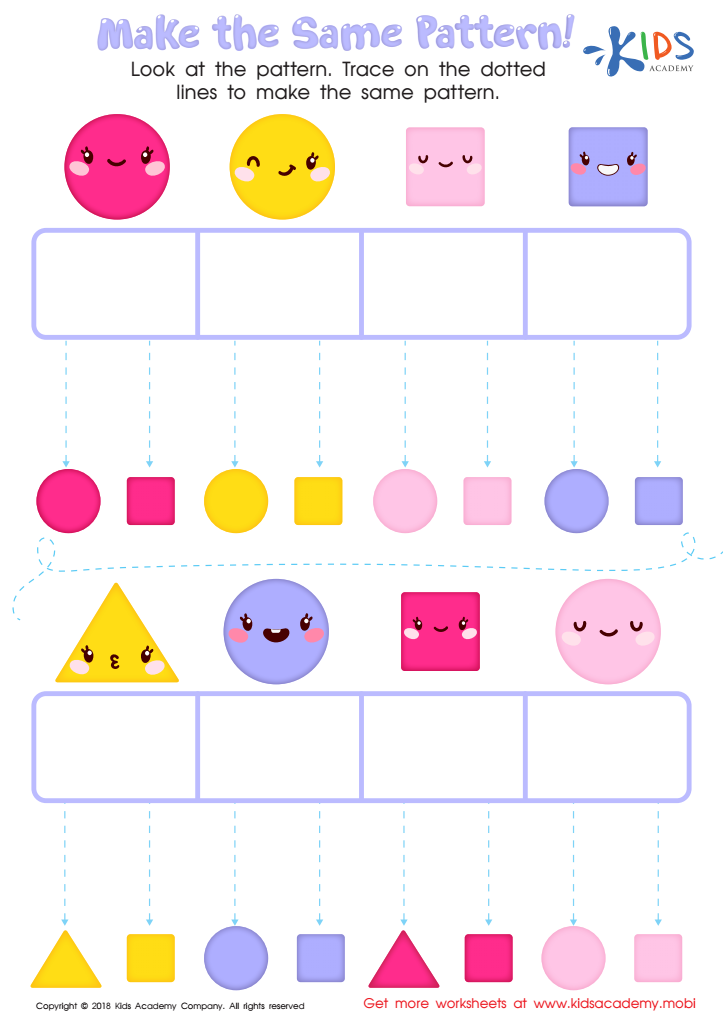
Make the Same Pattern Worksheet
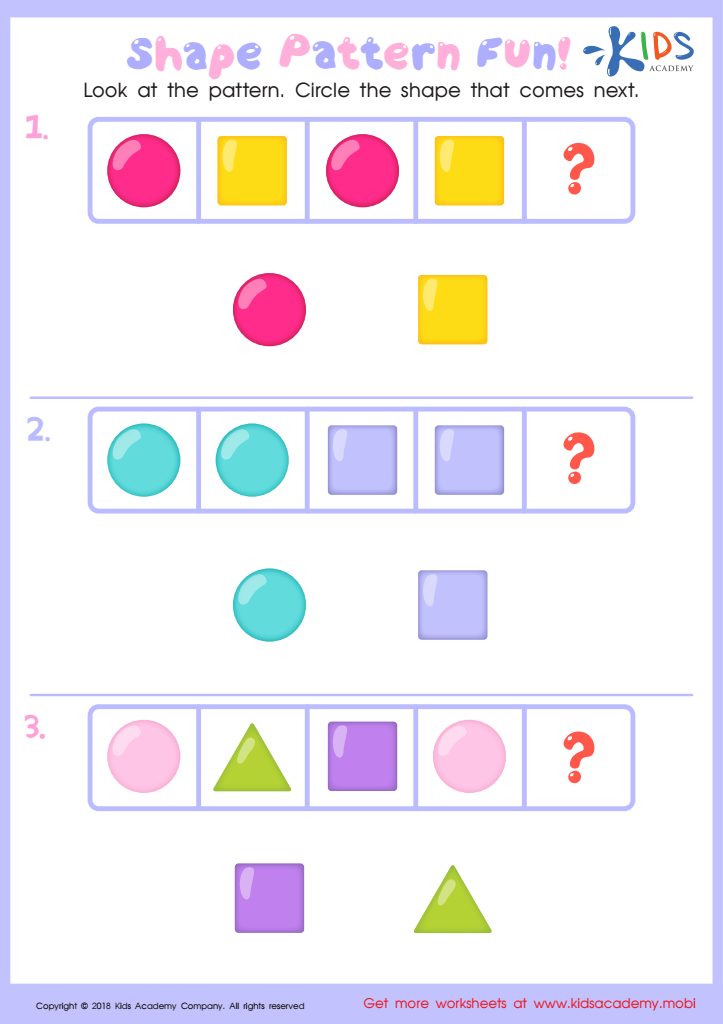
Shape Pattern Fun Worksheet








Pattern recognition in geometry is a fundamental skill that significantly enhances a child's mathematical understanding and cognitive development. For parents and teachers, fostering these skills early on is crucial for several reasons. Firstly, recognizing patterns lays the groundwork for more advanced math concepts. Children who engage in pattern identification become adept problem solvers, which is essential not only in mathematics but also in daily life.
Furthermore, understanding geometric patterns helps children develop spatial awareness, integral for both math and real-world skills, such as navigation and design. As students encounter geometric shapes and figures, those who can identify similarities and anomalies are better prepared to make connections between concepts, promoting a deeper understanding of the subject.
Encouraging pattern recognition also supports critical thinking and creativity, enabling children to hypothesize and experiment. This is vital for developing a growth mindset, as students learn that making mistakes is part of the learning process.
Overall, by prioritizing pattern recognition in geometric contexts, parents and teachers equip children with essential tools for academic success, enhance their analytical abilities, and instill a positive attitude towards lifelong learning in mathematics.








