Shape Recognition Normal Geometry Worksheets - Page 2
30 filtered results
-
From - To
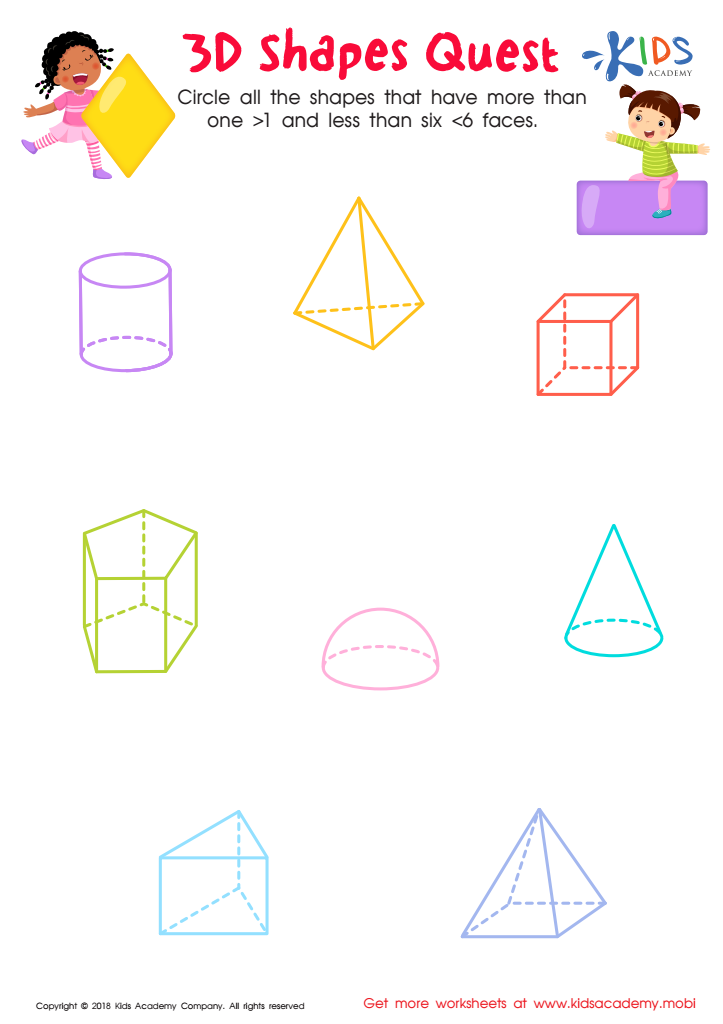
3D Shapes Quest Worksheet
 Assign to My Students











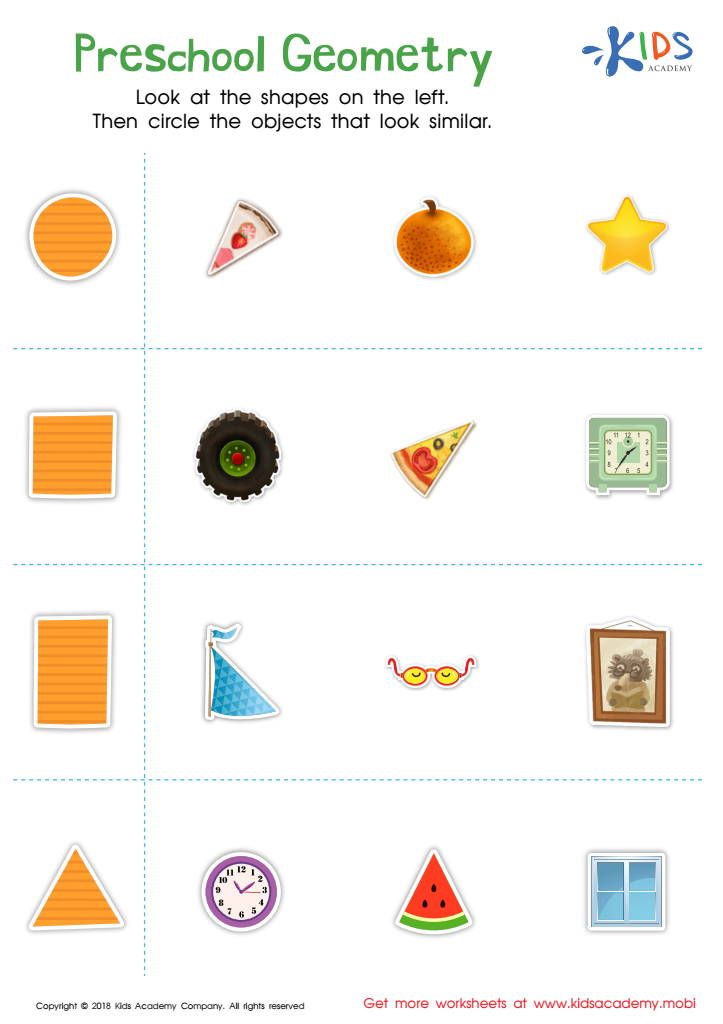
Preschool Geometry Worksheet
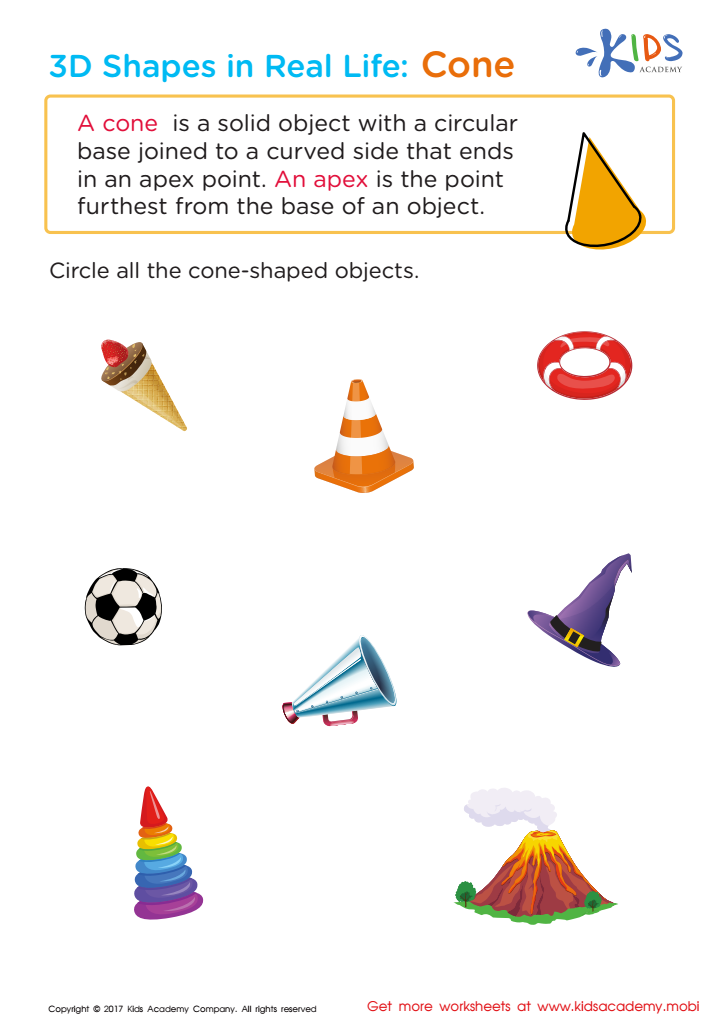
Shapes in Real Life: Cone Worksheet
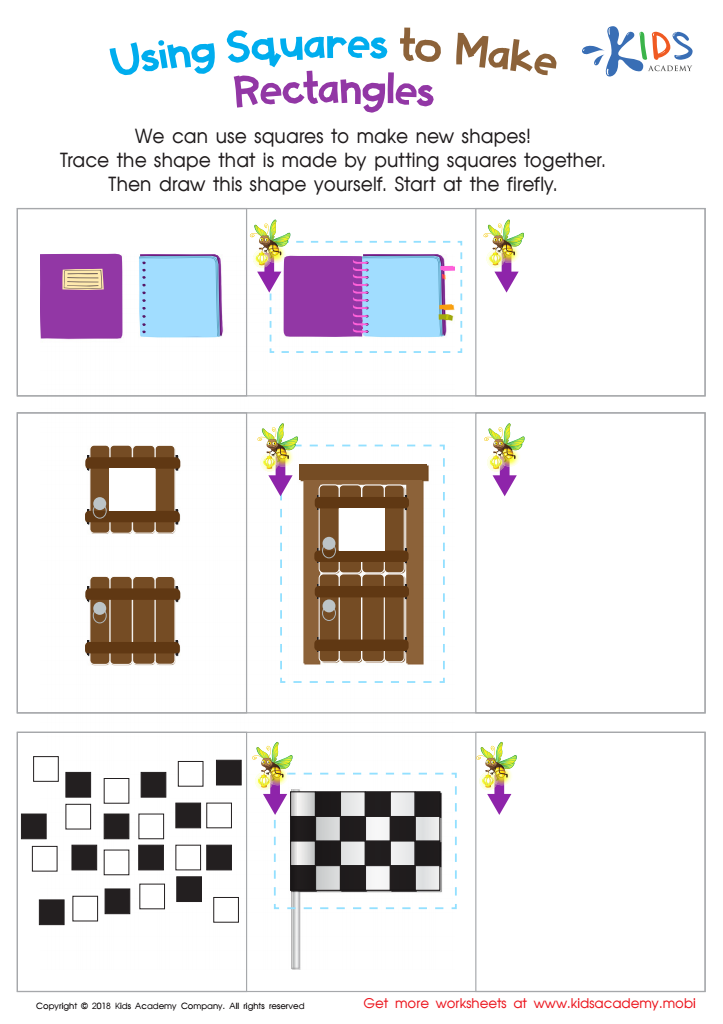
Using Squares to Make Rectangles Worksheet
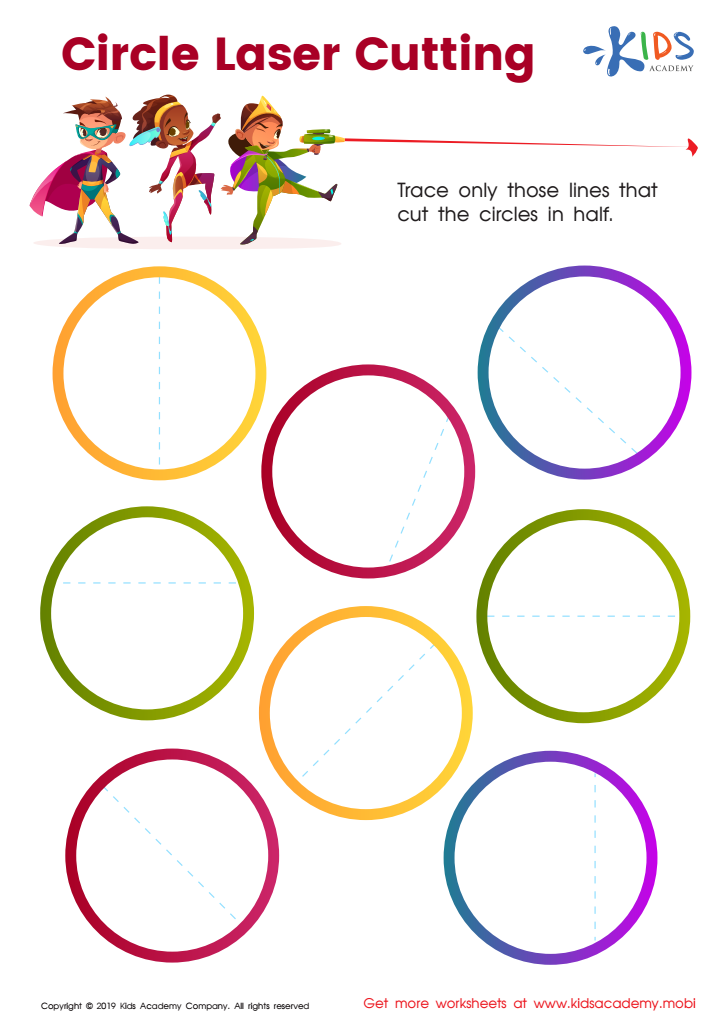
Circle Laser Cutting Worksheet
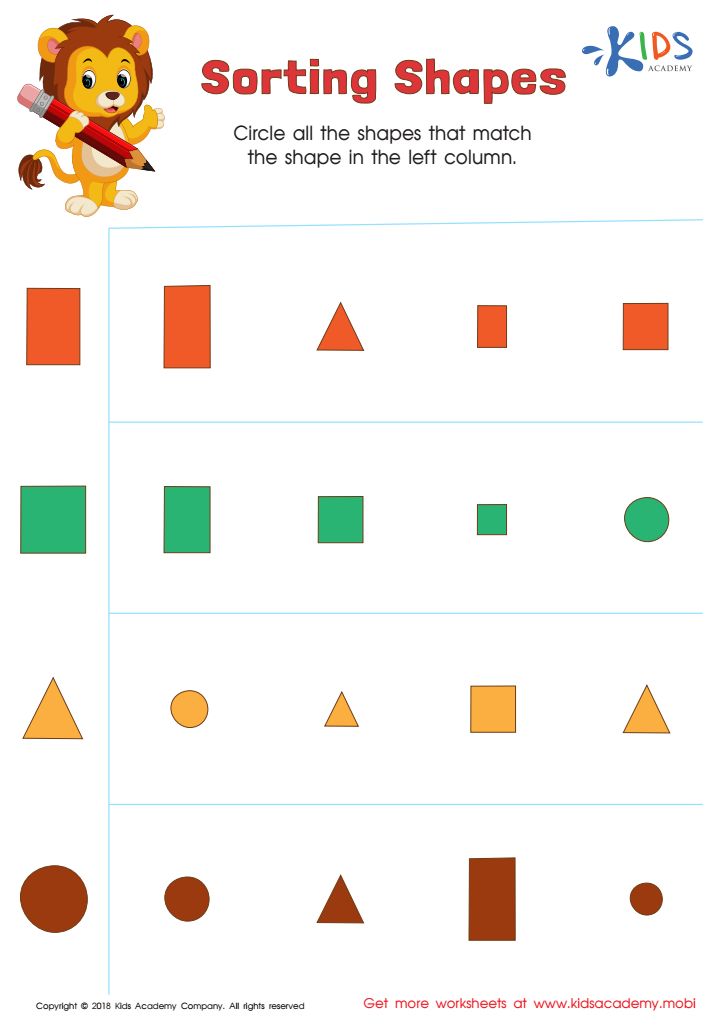
Sorting Shapes - Part 2 Worksheet








Shape recognition and understanding basic geometry form the foundation of early childhood education and cognitive development. Parents and teachers should focus on these areas because recognizing shapes enhances spatial awareness, which is critical for navigating the world. Developing this skill in the early years helps children understand and interpret their environment more effectively.
Furthermore, shape recognition is directly linked to mathematics. Geometry introduces children to concepts of symmetry, measurement, and properties of different shapes, often setting the stage for more advanced math skills such as algebra and calculus. By grasping elemental geometry, children easily transition into identifying patterns and solving puzzles, which stimulates logical thinking and problem-solving skills.
Moreover, learning shapes is fundamental for language development. When children compare and contrast various shapes, they learn descriptive language and refine their ability to articulate their thoughts clearly. This process enhances their overall communication skills.
Lastly, emotion and confidence are high when children successfully recognize and work with shapes. This feeling of accomplishment propels a positive attitude toward learning and boosts self-esteem, encouraging a lifelong love for education. Thus, focusing on shape recognition not only builds critical academic skills but also contributes to a child's holistic development.








