Enhancing observation skills Normal Math Worksheets
5 filtered results
-
From - To
Enhance your child's observation skills with our expertly designed Normal Math Worksheets, tailored to foster critical thinking and attention to detail. Based on proven educational techniques, these engaging worksheets focus on identifying patterns, comparing objects, and understanding sequences. Perfect for early learners, they provide a fun and effective way to boost math proficiency while sharpening observational abilities. Accessible and easy to understand, these activities inspire confidence and curiosity in young minds. Download our free printable worksheets from Kids Academy to give your child a head start in math alongside essential learning skills. Nurture a love for learning with each thoughtfully crafted exercise!
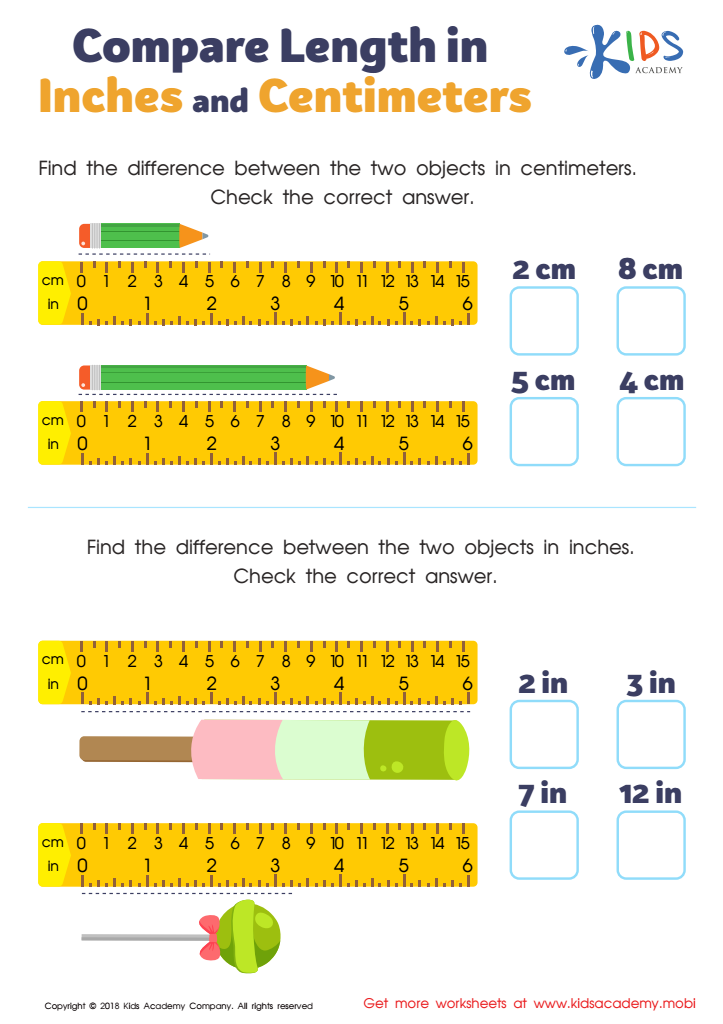
Compare Length in Inches and Centimeters Worksheet
 Assign to My Students
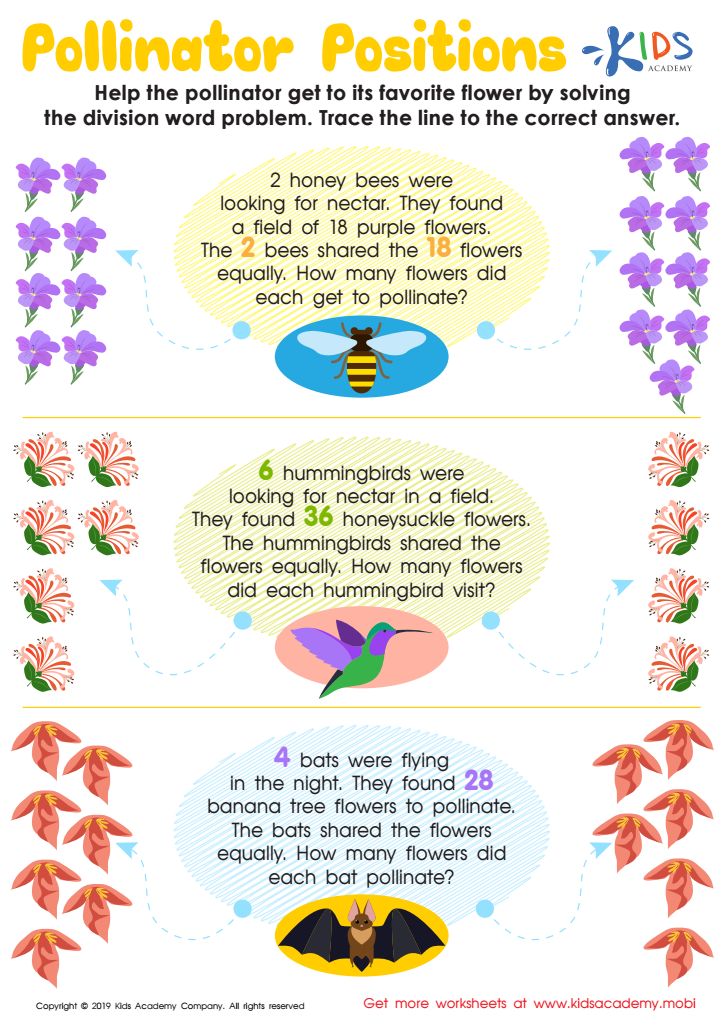
Pollinator Positions Worksheet
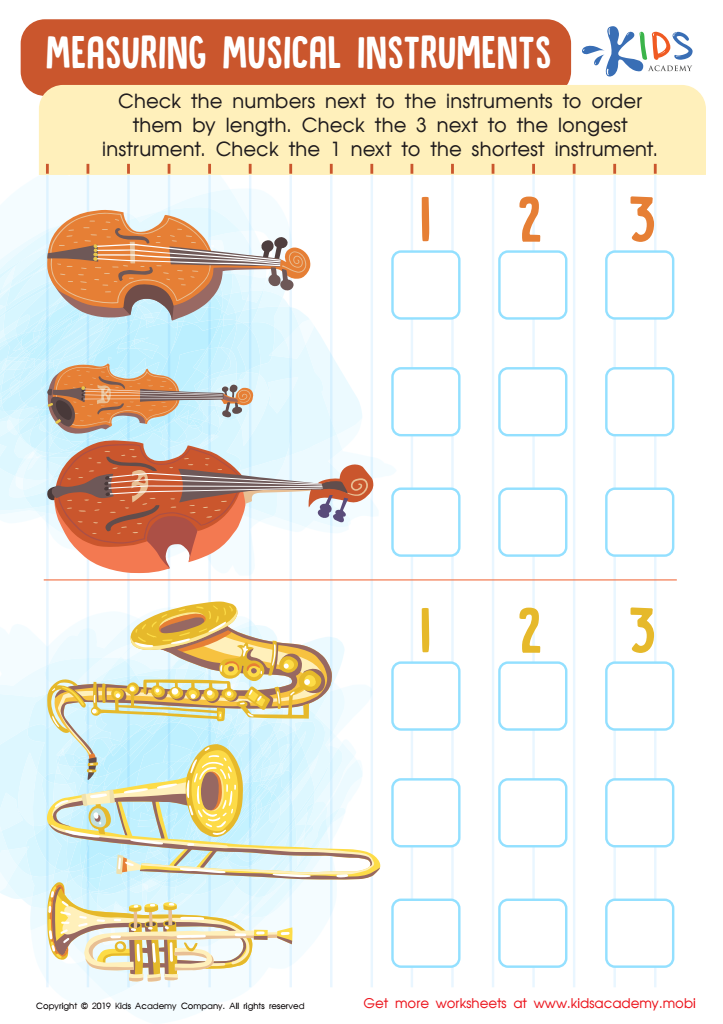
Measuring Musical Instruments Worksheet
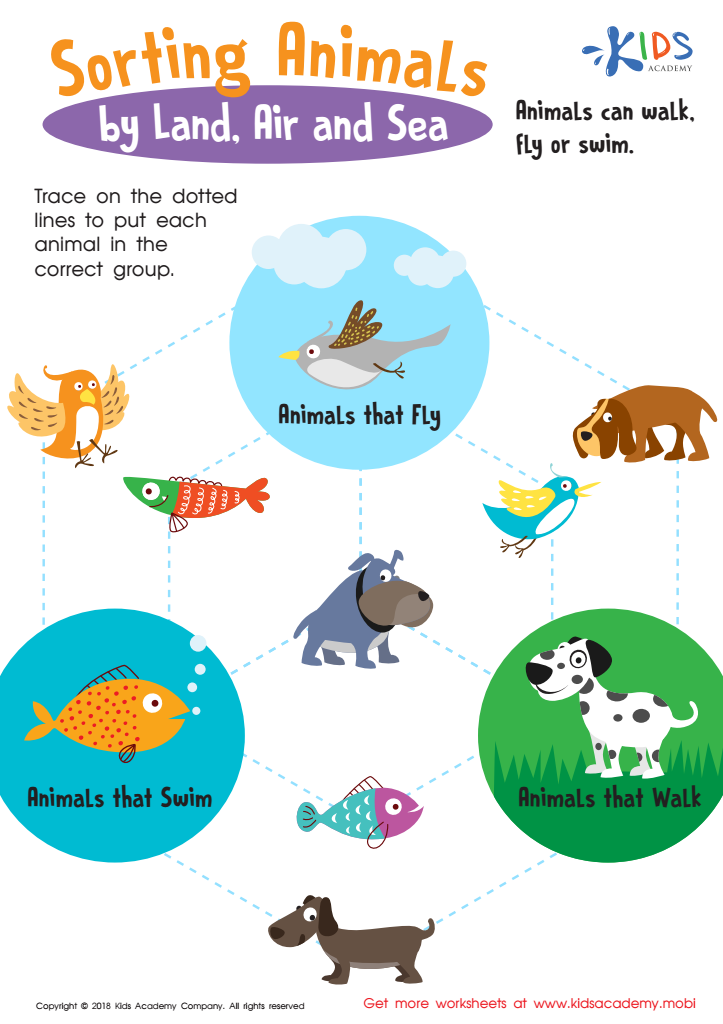
Sorting Animals by Land, Air and Sea Worksheet
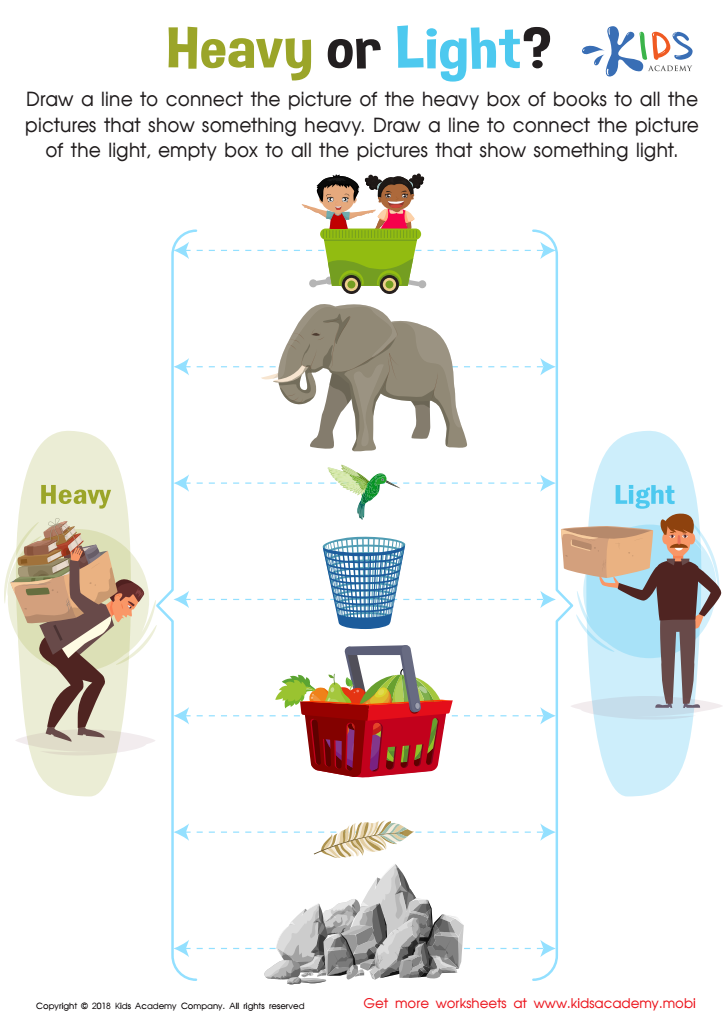
Heavy or Light? Worksheet




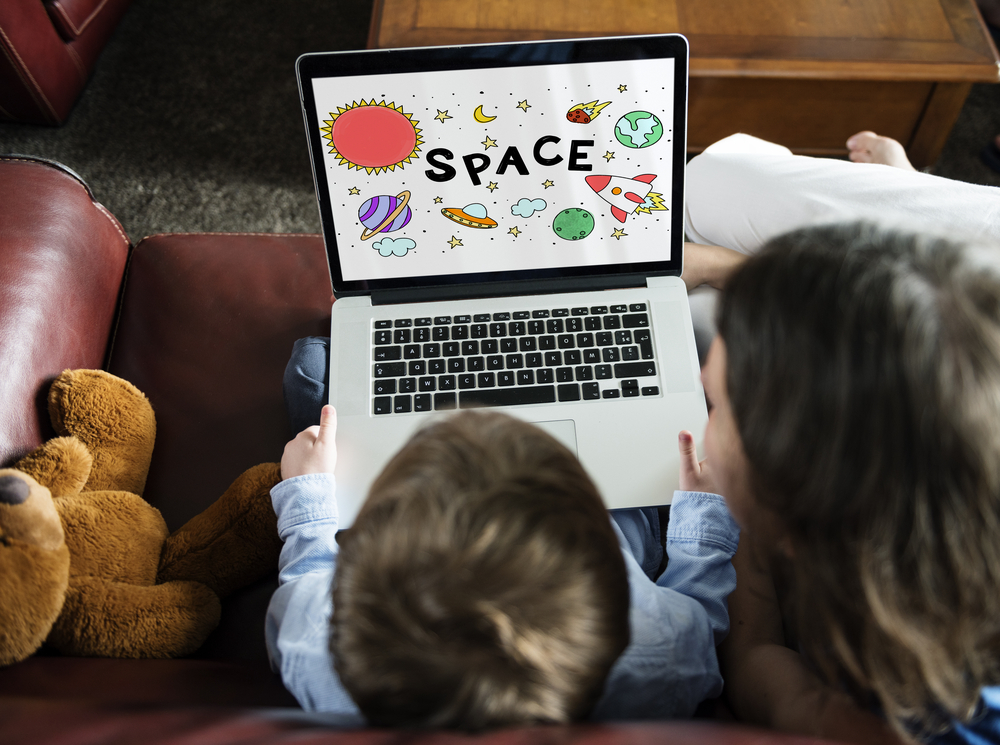


Enhancing observation skills in early math education is crucial for a child's development and lifelong learning. Observation isn't just about seeing; it's about noticing patterns, understanding relationships, and making sense of the world. In mathematics, these skills lay the foundation for more complex concepts.
For example, when children observe shapes, sizes, or quantities, they begin to grasp fundamental mathematical principles. Noticing that one group of objects is larger than another is an early lesson in quantities and comparisons, crucial for future arithmetic understanding. The ability to observe details also enhances problem-solving skills, helping children to identify and correct errors and understand underlying patterns.
For parents and teachers, fostering these skills means incorporating activities that encourage close examination and discussion, such as sorting objects, playing with blocks, or exploring nature. This active learning approach makes math tangible and relatable.
Better observation skills lead to improved academic performance, as children learn to apply critical thinking to new challenges. Moreover, these skills benefit other subjects and everyday life, fostering curiosity and a lifelong love of learning. Both parents and teachers play key roles in encouraging and developing these skills, ensuring children gain a strong mathematical foundation.








