Pattern recognition Normal Matching Worksheets
6 filtered results
-
From - To
Discover our engaging Pattern Recognition Normal Matching Worksheets designed to enhance early learners' cognitive skills. These interactive worksheets help children identify and match various patterns, boosting their critical thinking and problem-solving abilities. Perfect for preschoolers and kindergarteners, the colorful and fun activities make learning enjoyable and effective. Our expertly crafted resources ensure kids develop a strong foundation in pattern recognition, a crucial skill for math success. Ideal for classroom settings or at-home practice, explore our collection today to give your child the best start in their educational journey. Download now and watch your child thrive!
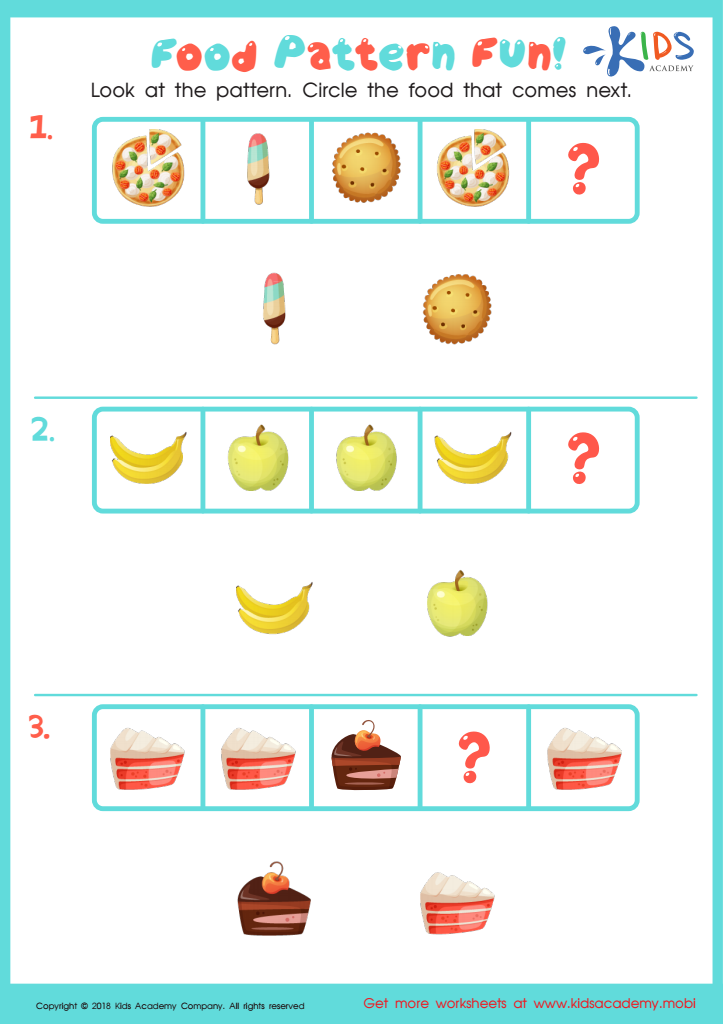
Food Pattern Fun Worksheet
 Assign to My Students
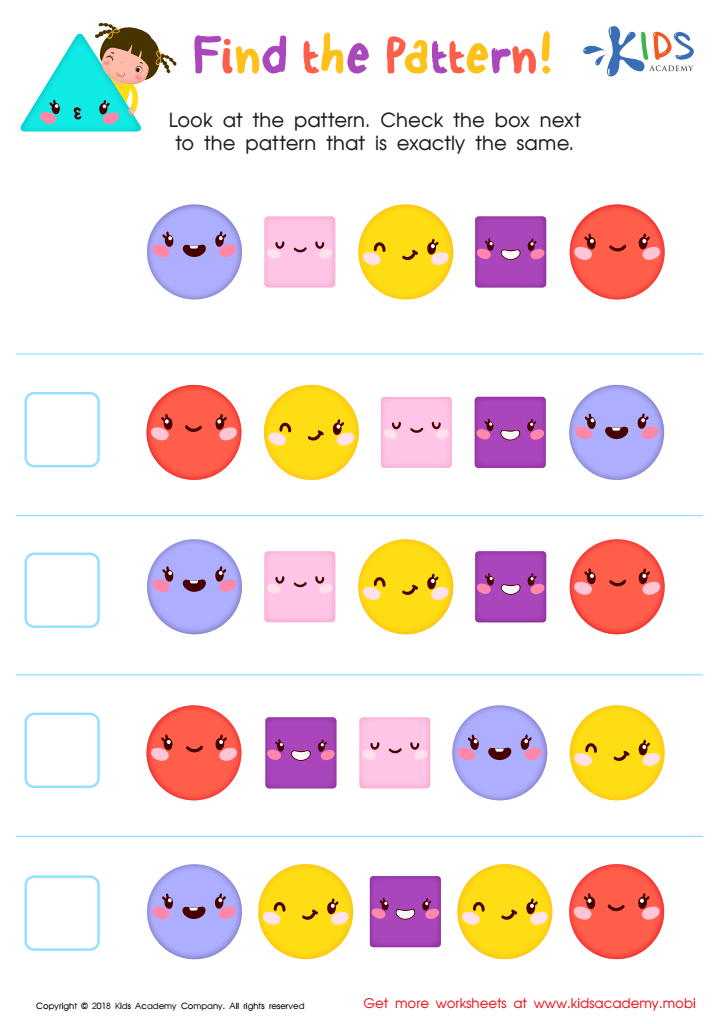
Find the Pattern Worksheet
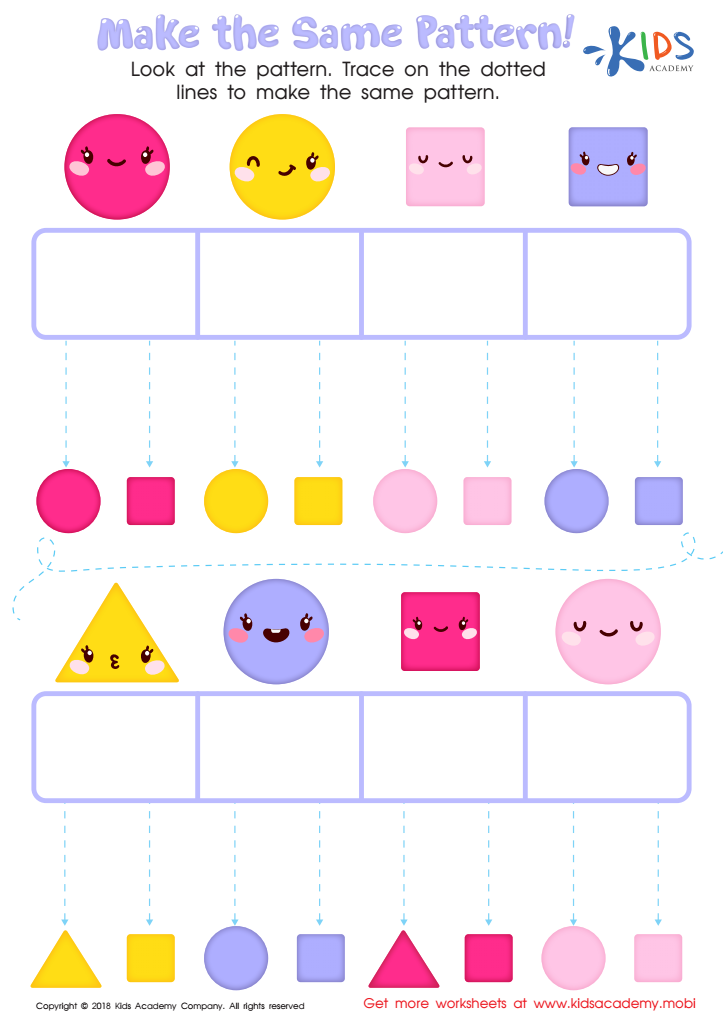
Make the Same Pattern Worksheet
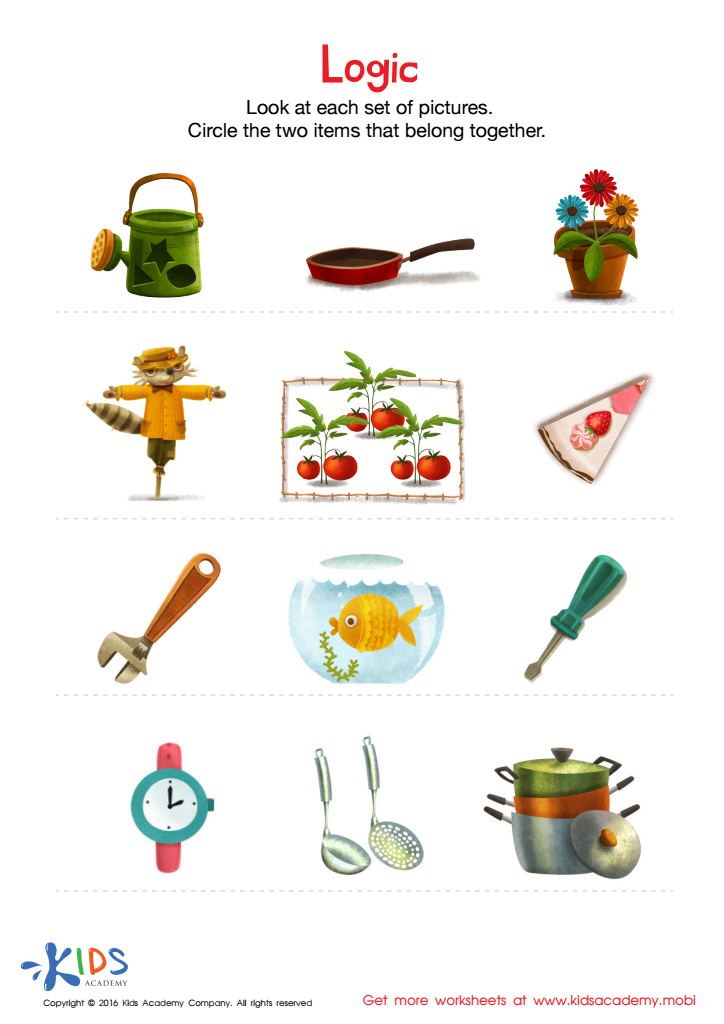
Logic Game Sorting Worksheet
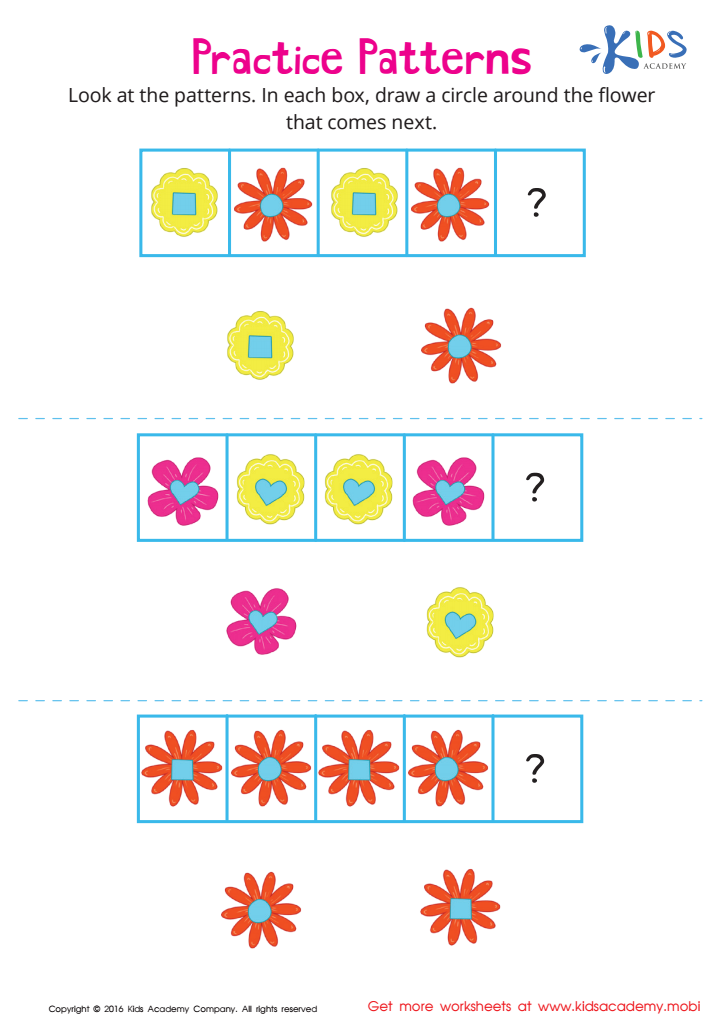
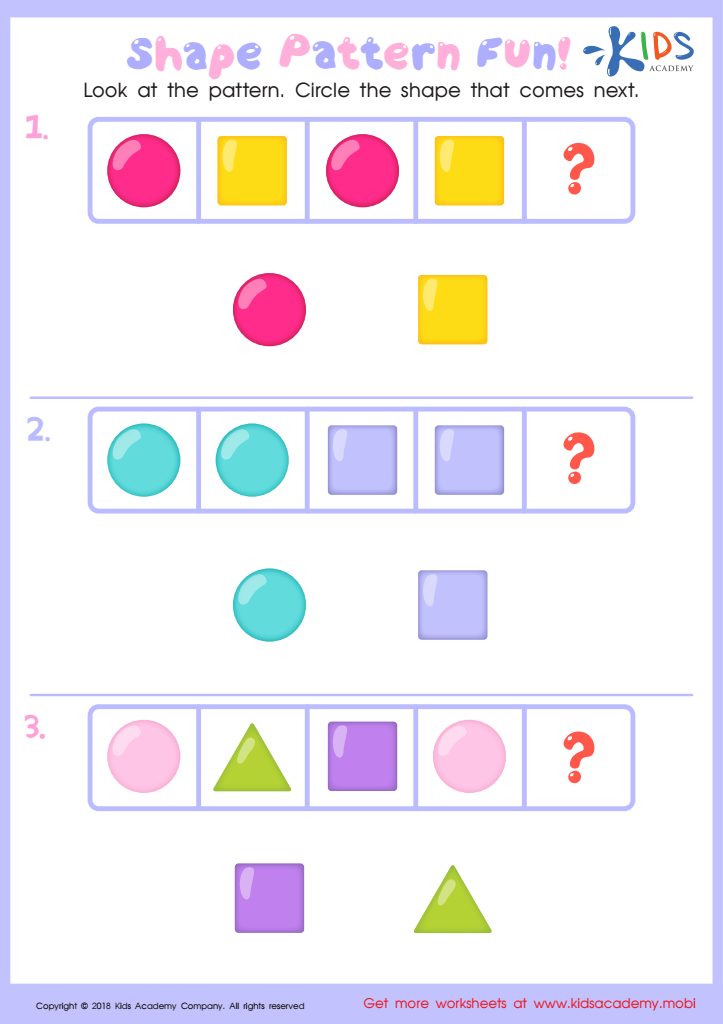
Shape Pattern Fun Worksheet








Pattern recognition and normal matching are foundational cognitive skills that play a crucial role in a child's cognitive development and learning process. Teachers and parents should care about these skills because they enable children to make sense of the world around them and lay the groundwork for more complex problem-solving abilities.
For young students, mastering pattern recognition can significantly impact their early math and literacy skills. For instance, recognizing sequences, shapes, and colors helps with understanding numbers, identifying letters, and following directions. These skills are critical for success in school, where structured learning often depends on the ability to observe and predict patterns.
Moreover, pattern recognition fosters critical thinking and analytical skills. Children learn to categorize, compare, and contrast information, which enhances their capacity to understand and absorb new concepts efficiently. The ability to foresee outcomes based on recognizable patterns also aids in developing decision-making and planning skills.
Normal matching, including activities like pairing socks or matching pictures in a game, reinforces memory, concentration, and attention to detail. These activities nurture a child's spatial and visual understanding, contributing to better handwriting, reading comprehension, and everyday problem-solving abilities.
In summary, efforts by parents and teachers to nurture these skills provide children with a vital toolkit for academic achievement and intellectual growth, setting the stage for lifelong learning and adaptation.








