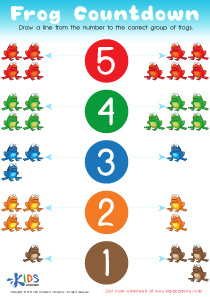
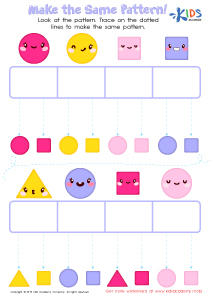
Categorization skills Normal Preschool Math Worksheets
7 filtered results
-
From - To
Unlock the world of learning with our "Categorization Skills Normal Preschool Math Worksheets"! Designed specifically for preschoolers, these worksheets help young learners develop critical thinking and sorting abilities. Through engaging activities, children practice grouping objects by various attributes such as shape, size, and color. These worksheets foster essential math foundations while making learning fun and interactive. Ideal for home or classroom use, our printable worksheets are excellent for reinforcing early math skills and boosting your child's confidence. Dive into the exciting realm of categorization and watch your preschooler thrive!
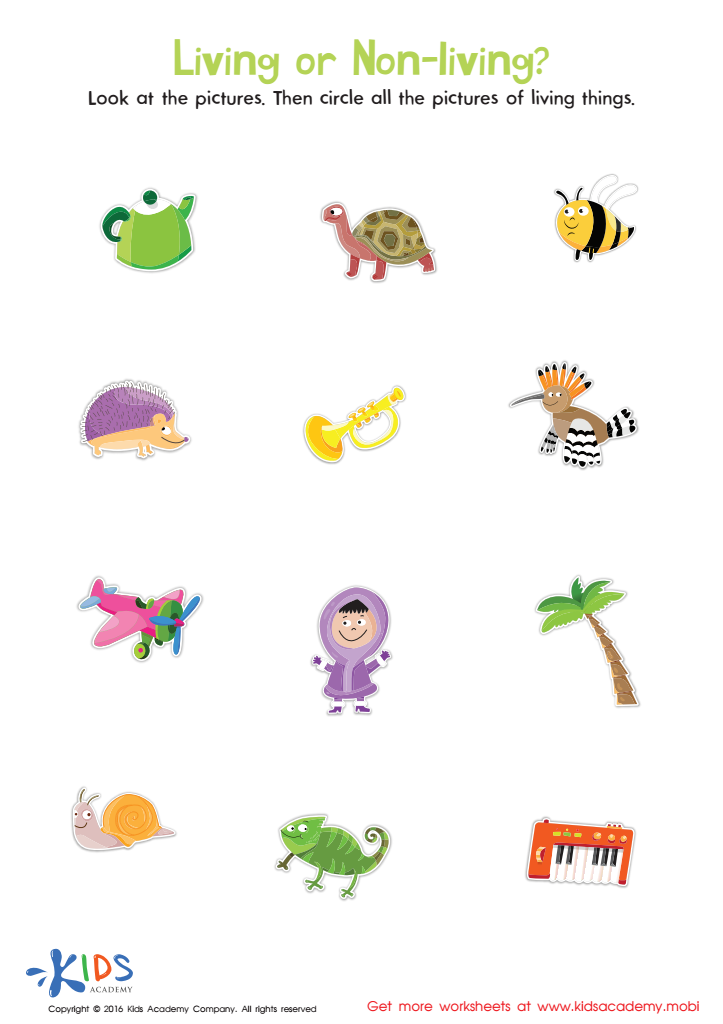
Identifying Living and Non–living Things Sorting Worksheet
 Assign to My Students
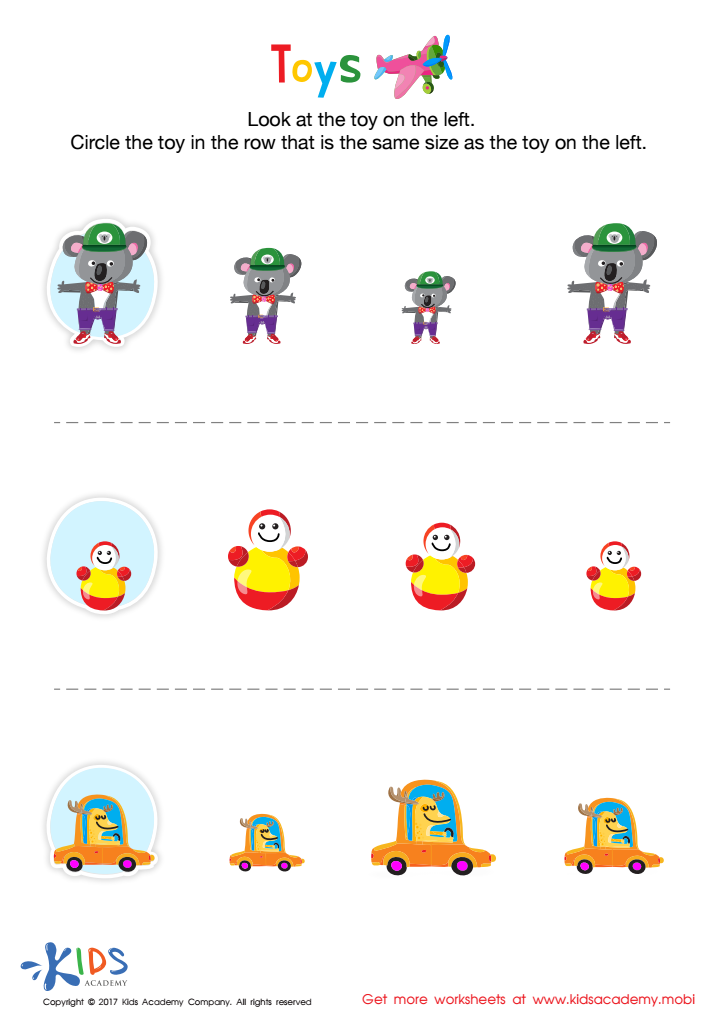
Matching: Classifying Toys by Size Worksheet
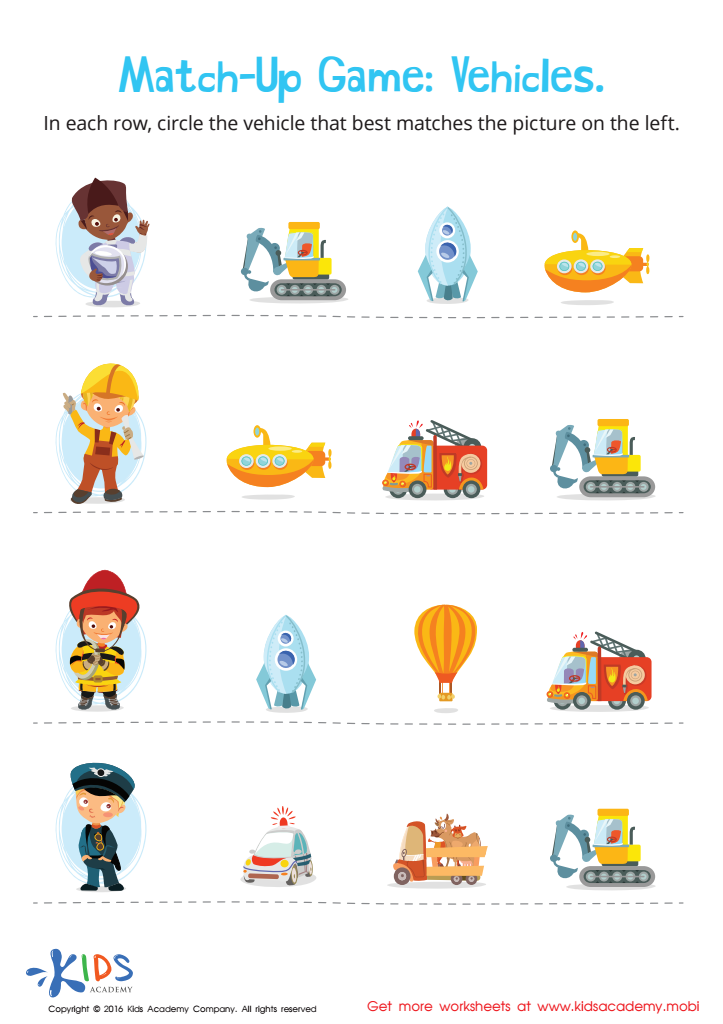
Vehicles Worksheet
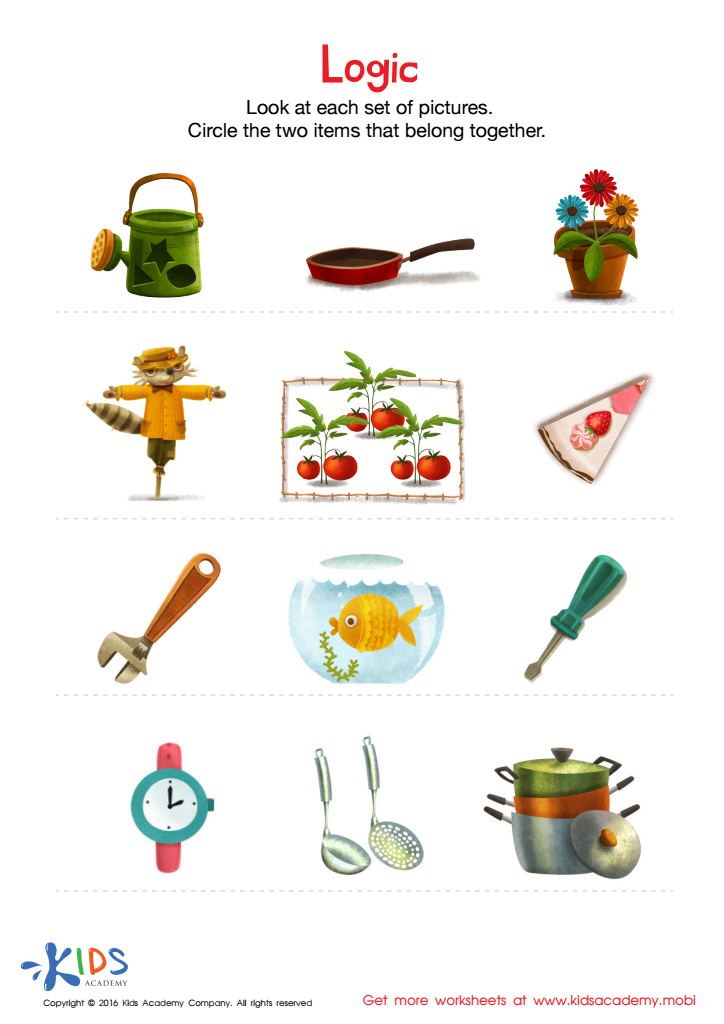
Logic Game Sorting Worksheet
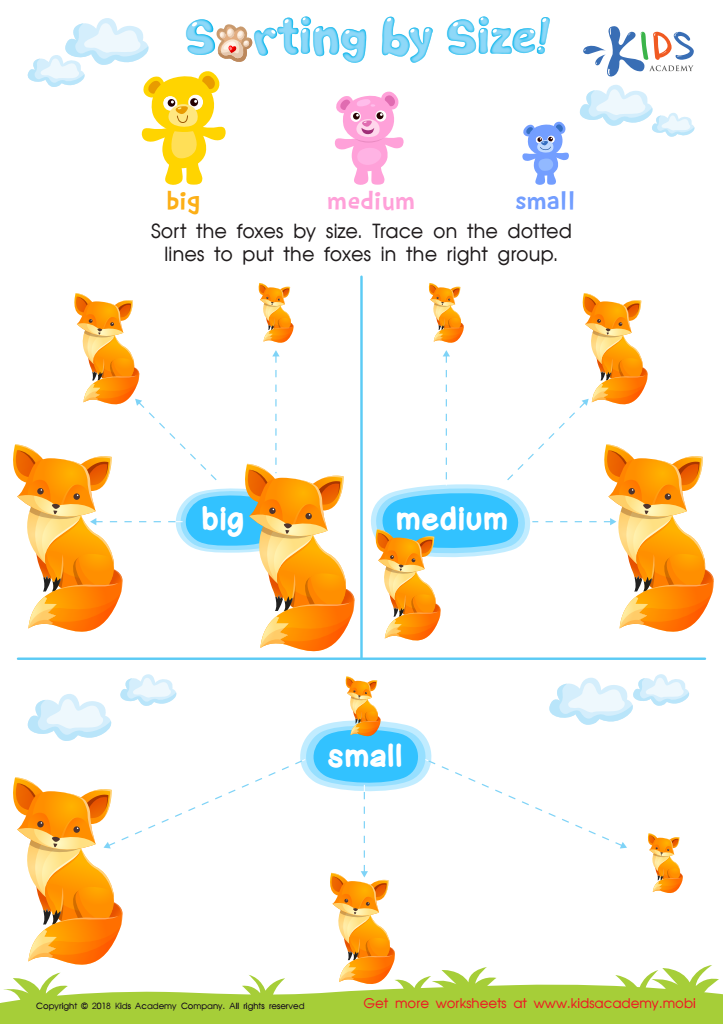
Sorting by Size Worksheet








Parents and teachers should care about categorization skills in preschool math because these skills lay the foundation for a child's cognitive development and future learning success. Categorization involves sorting objects into groups based on common characteristics, which enhances a child's ability to organize information, recognize patterns, and make connections between concepts. This foundational skill is crucial for future mathematical learning and problem-solving abilities.
When children practice categorization, they build critical thinking and reasoning skills. For instance, distinguishing between shapes, sizes, and colors helps children understand and organize their environment. These basic sorting activities are precursors to more complex mathematical concepts such as counting, comparing, and understanding sequences, which are vital educational milestones in mathematics.
Moreover, categorization fosters language development and literacy by expanding vocabulary and conceptual understanding through descriptive terms (like "big," "small," "round," or "square"). As children explain their choices for sorting items, they grow their communication and explanation capabilities, which are essential for effective interpersonal skills and learning in general.
Therefore, by encouraging and nurturing categorization skills in preschool, parents and teachers enable children to develop essential cognitive and communication skills. This not only supports immediate educational success but also equips them with critical foundational abilities for lifelong learning.