Vocabulary Building Normal Preschool Matching Worksheets
5 filtered results
-
From - To
Our "Vocabulary Building Normal Preschool Matching Worksheets" are designed to enhance your child's language skills through engaging activities. Perfect for early learners, these worksheets focus on matching words with corresponding images, promoting word recognition and comprehension. With vibrant illustrations and fun exercises, children effortlessly expand their vocabulary while developing crucial cognitive skills. These printable resources are ideal for home or classroom education, making learning both enjoyable and effective. Help your preschooler embark on a path to linguistic success with our expert-crafted worksheets, tailored to foster confident and articulate young learners. Start building their vocabulary today!
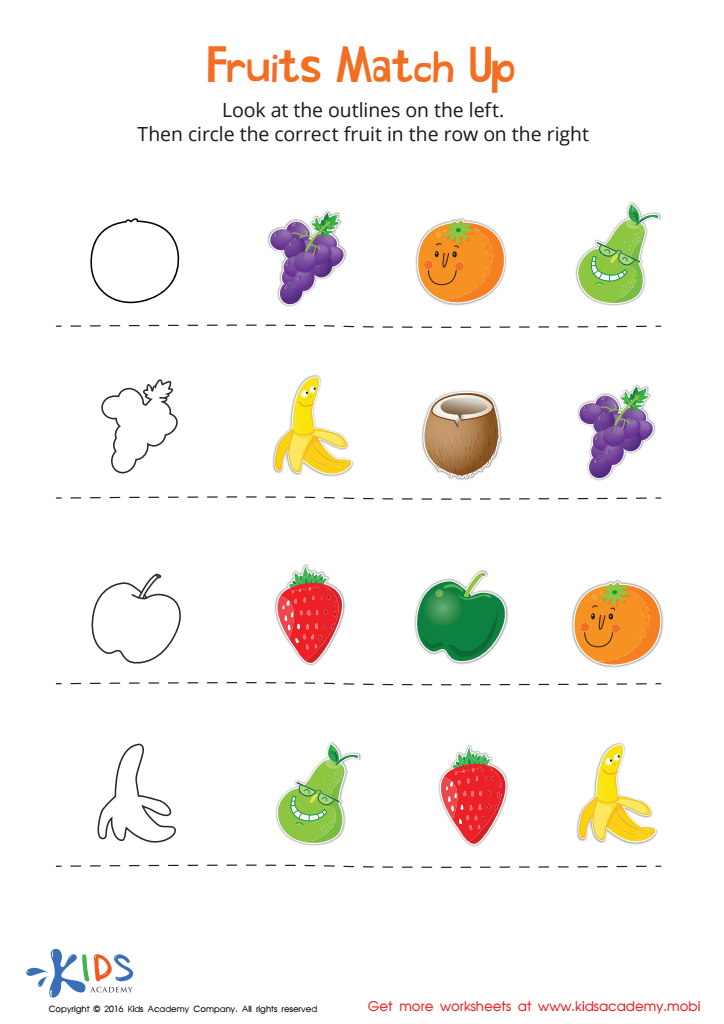
Fruits Match Up Worksheet
 Assign to My Students
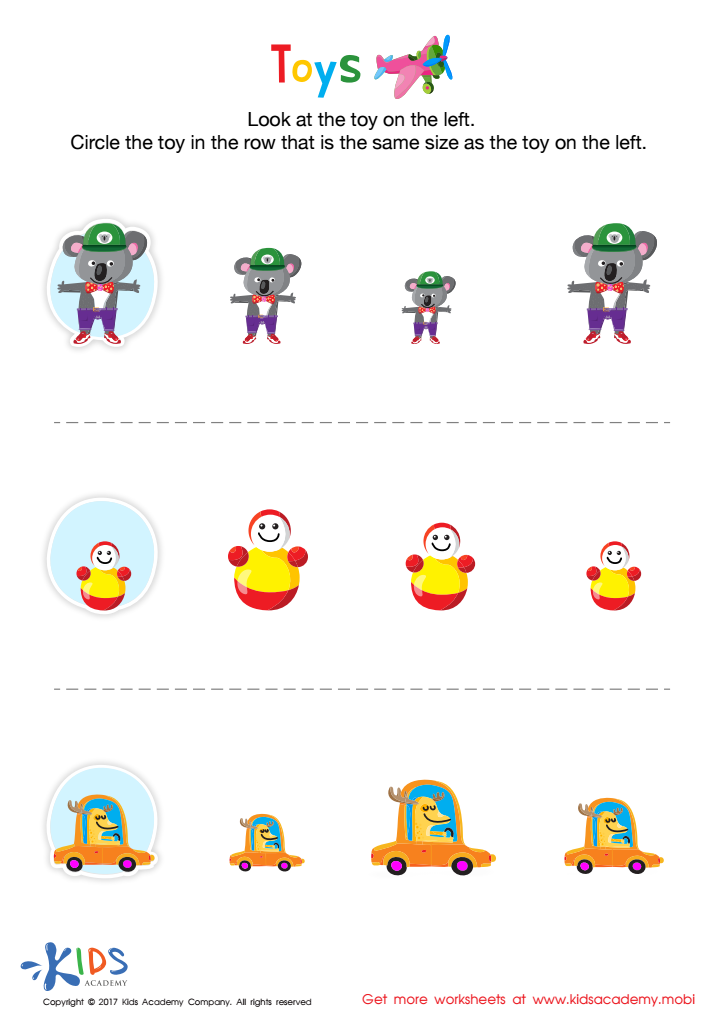
Matching: Classifying Toys by Size Worksheet
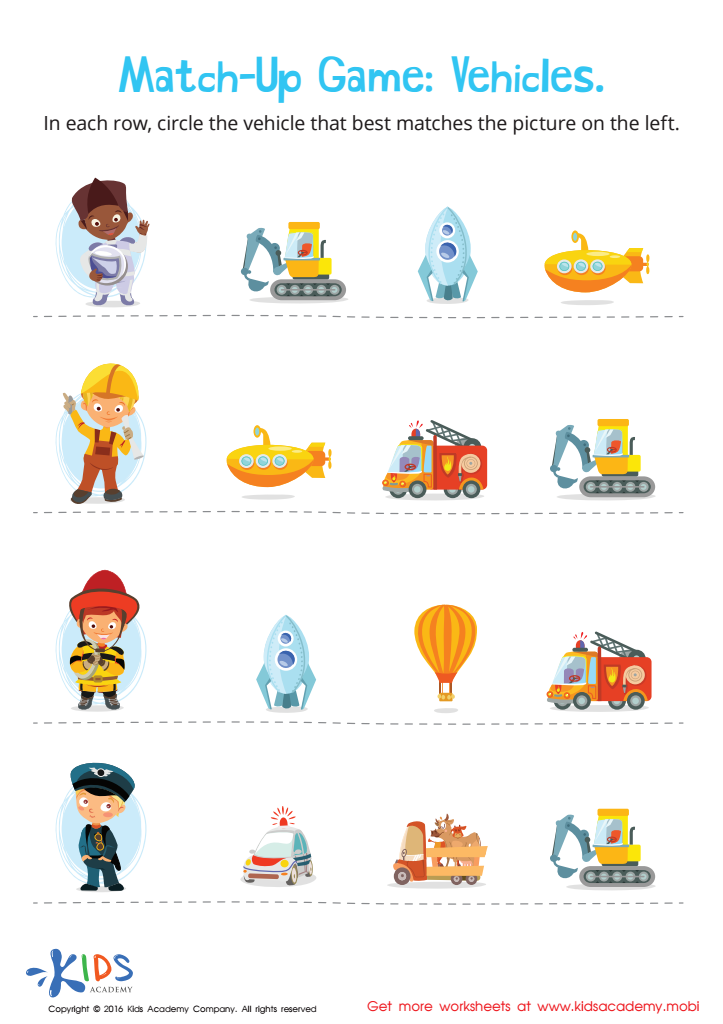
Vehicles Worksheet
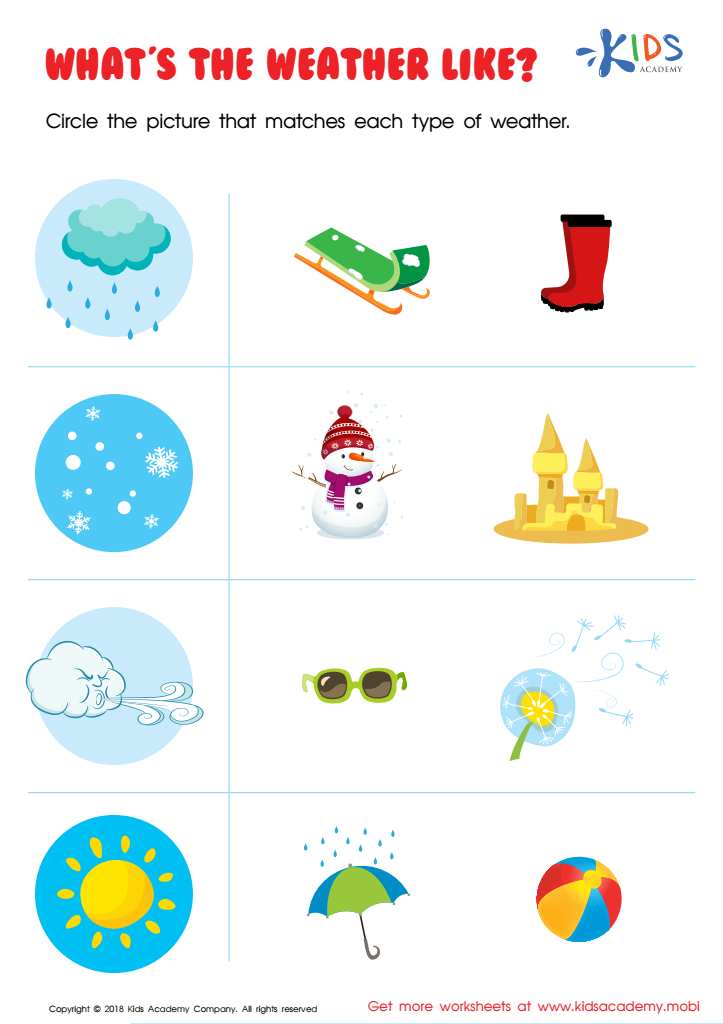
What's the Weather Like? Worksheet








Parents and teachers need to value vocabulary building and matching activities in preschoolers because early language skills are fundamental predictors of academic success and overall cognitive development. Vocabulary lays the foundation for reading comprehension, effective communication, and critical thinking, which are essential skills throughout a child's education. Early vocabulary skills are known to correlate closely with later literacy skills, so developing a rich vocabulary from a young age sets children up for future academic achievements.
Matching activities specifically help preschoolers strengthen their cognitive abilities by enhancing memory, concentration, and attention to detail. These activities require children to recognize similarities and differences, fostering logical thinking and problem-solving skills. Furthermore, by engaging in matching exercises that pair words with images or categorize similar objects, children naturally expand their vocabulary and improve their understanding of language.
Moreover, incorporating vocabulary building exercises in early education promotes social and emotional development. As children learn new words, they gain better tools to express their thoughts and emotions, aiding in effective communication with peers and adults. This can enhance their social interactions and build self-confidence. When both parents and teachers prioritize vocabulary development, they nurture well-rounded, intellectually curious, and confident children prepared to tackle future educational challenges.