Vocabulary expansion Normal Animals Worksheets
5 filtered results
-
From - To
Enhance your child's vocabulary with our engaging "Vocabulary Expansion Normal Animals Worksheets." Designed for early learners, these printable worksheets introduce children to a variety of animals while enriching their language skills. Each activity focuses on key concepts such as animal names, habitats, and characteristics, fostering an understanding of the natural world. Perfect for classroom use or at-home learning, these worksheets encourage creativity and critical thinking. Dive into a world of discovery as young learners expand their vocabulary and comprehension through fun, interactive tasks. Start their journey to mastering language with our captivating animal-themed worksheets today!
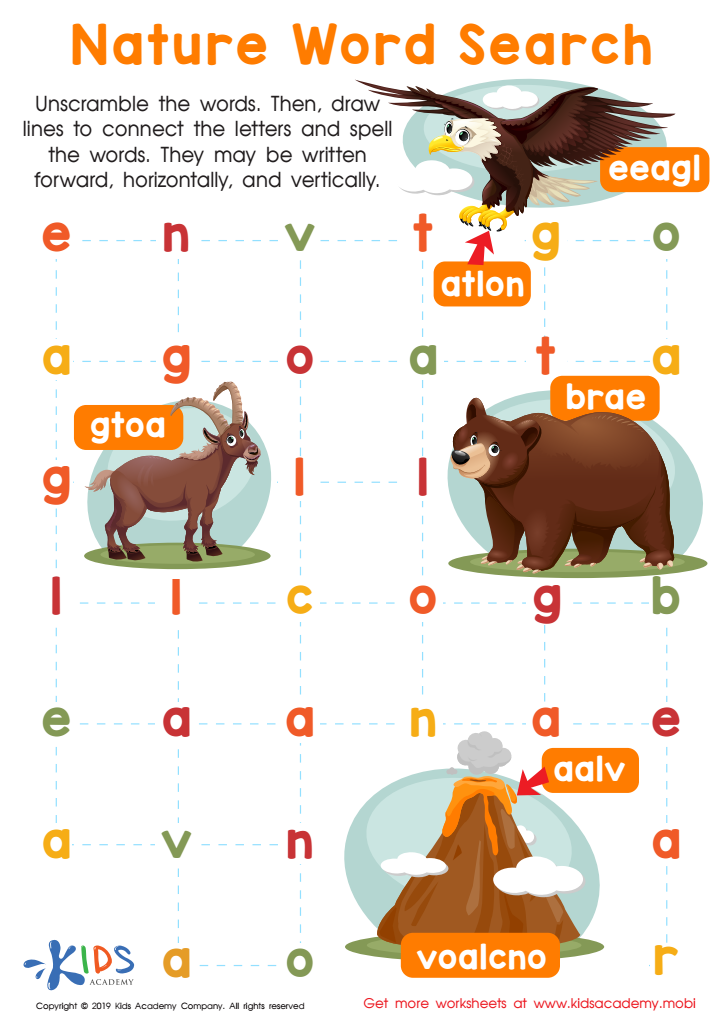
Nature Word Search Worksheet
 Assign to My Students
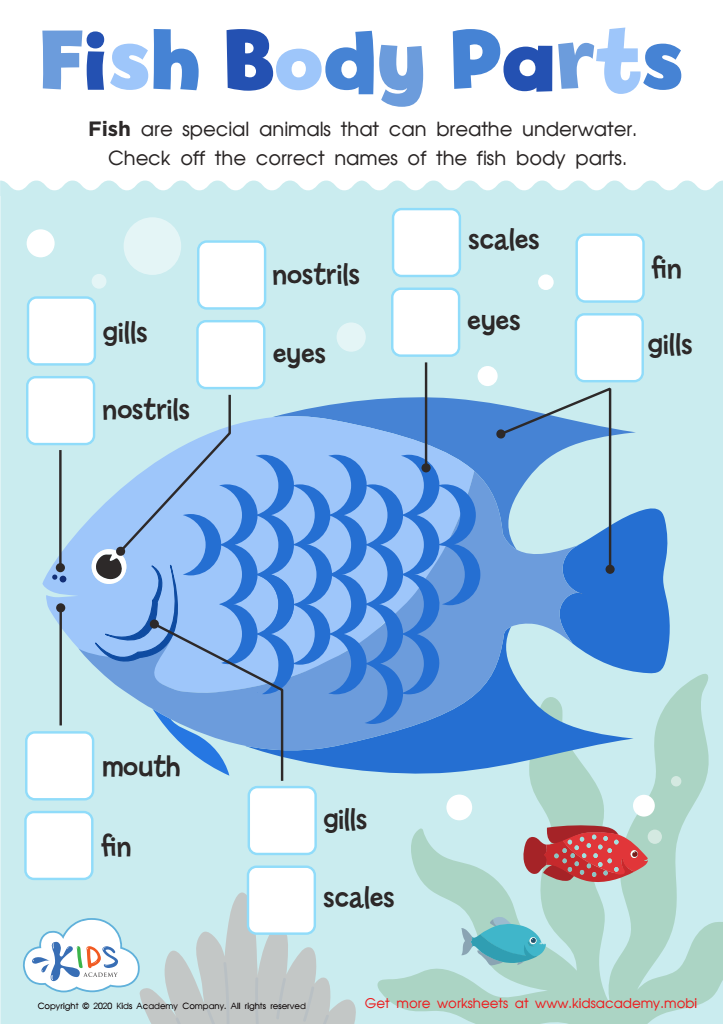
Fish Body Parts Worksheet
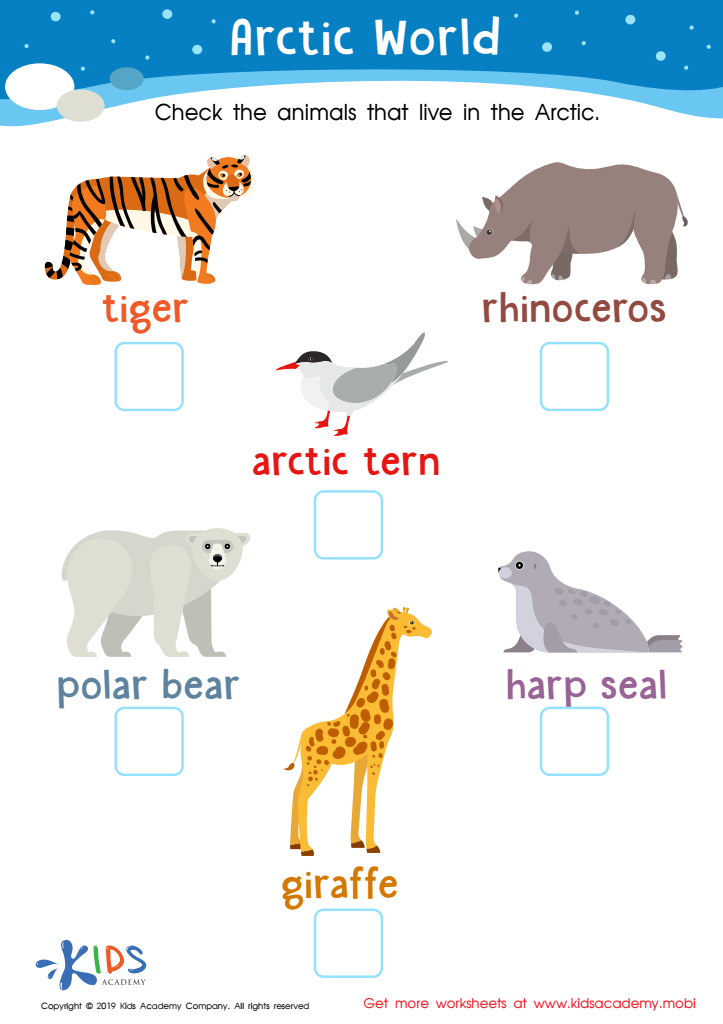
Arctic World Worksheet
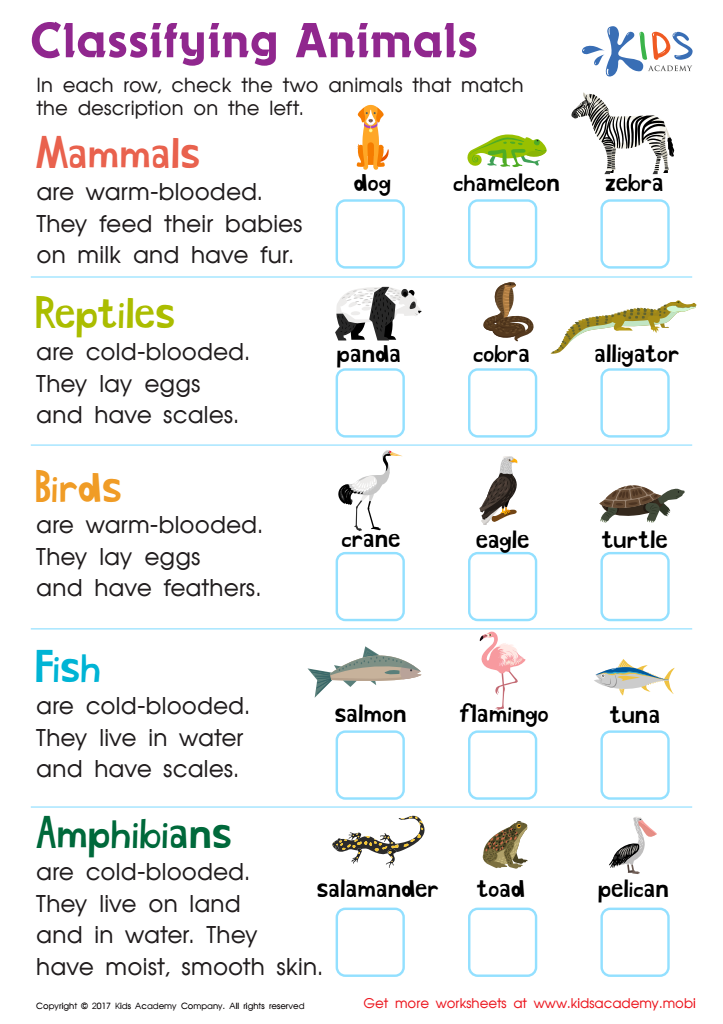
Classifying Animals Worksheet
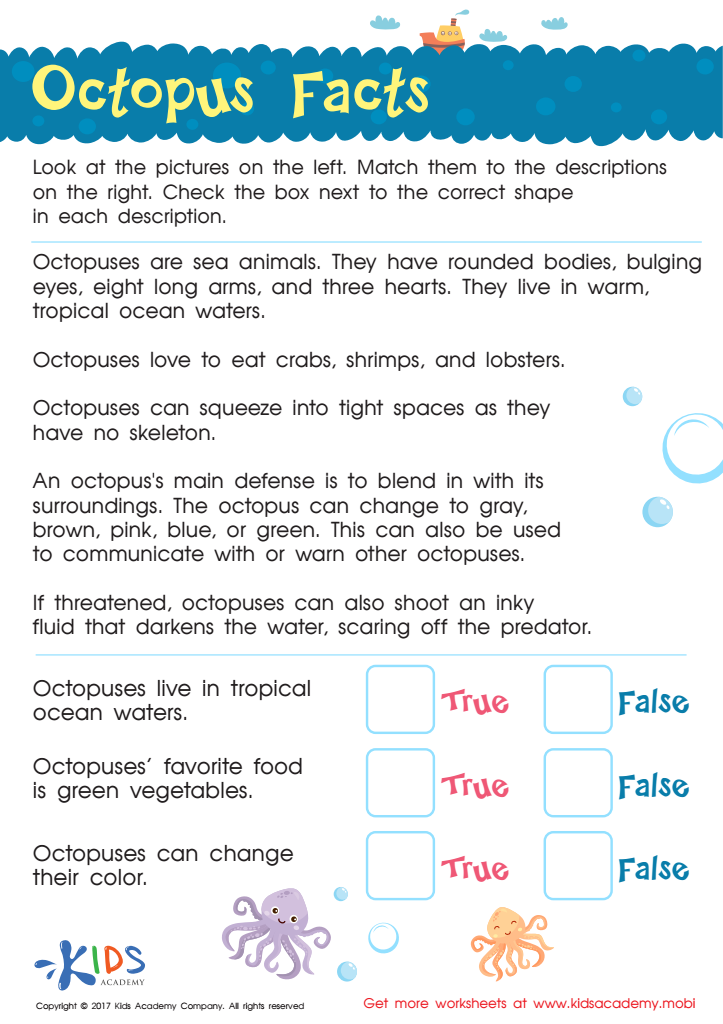
Octopus Facts Worksheet For Kids








Vocabulary expansion is crucial for young learners, especially regarding topics like normal animals. Understanding the vocabulary associated with animals enhances children's cognitive development and enhances their comprehension skills. When teachers and parents prioritize vocabulary related to normal animals—common species that children may encounter daily—they equip children with essential tools for effective communication and expression.
This knowledge supports literacy development, as children are more likely to engage with text about animals and remember information when they can identify and articulate the vocabulary. It fosters curiosity and a keen interest in the natural world, encouraging children to explore further, which can lead to scientific inquiry and observation skills.
Moreover, learned vocabulary boosts academic performance not just in language subjects, but across the curriculum. Effective language skills allow children to articulate their thoughts clearly, understand instructions better, and interact socially. Engaging with animal vocabulary can be a gateway to discussions about ecosystems, conservation, and empathy towards living beings. Therefore, for parents and teachers, promoting expanded vocabulary, especially around relatable topics like normal animals, serves as a cornerstone for holistic development in language, literacy, and social awareness.








