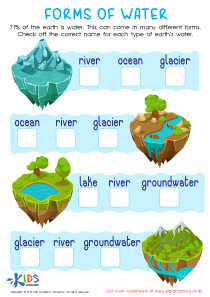
Comparing lengths Normal Grade 2 Worksheets
3 filtered results
-
From - To
Explore our engaging "Comparing Lengths Normal Grade 2 Worksheets" designed to enhance your child’s measurement skills! Specifically tailored for second graders, these worksheets provide fun and educational activities to help students compare lengths directly and indirectly. With vibrant illustrations and clear instructions, children will enjoy learning to measure objects using non-standard and standard units. Our worksheets foster critical thinking and problem-solving abilities, making math exciting and accessible. Perfect for classroom use or additional practice at home, they're an excellent resource for reinforcing fundamental measurement concepts. Start your child's learning journey with our dynamic and easy-to-use worksheets!
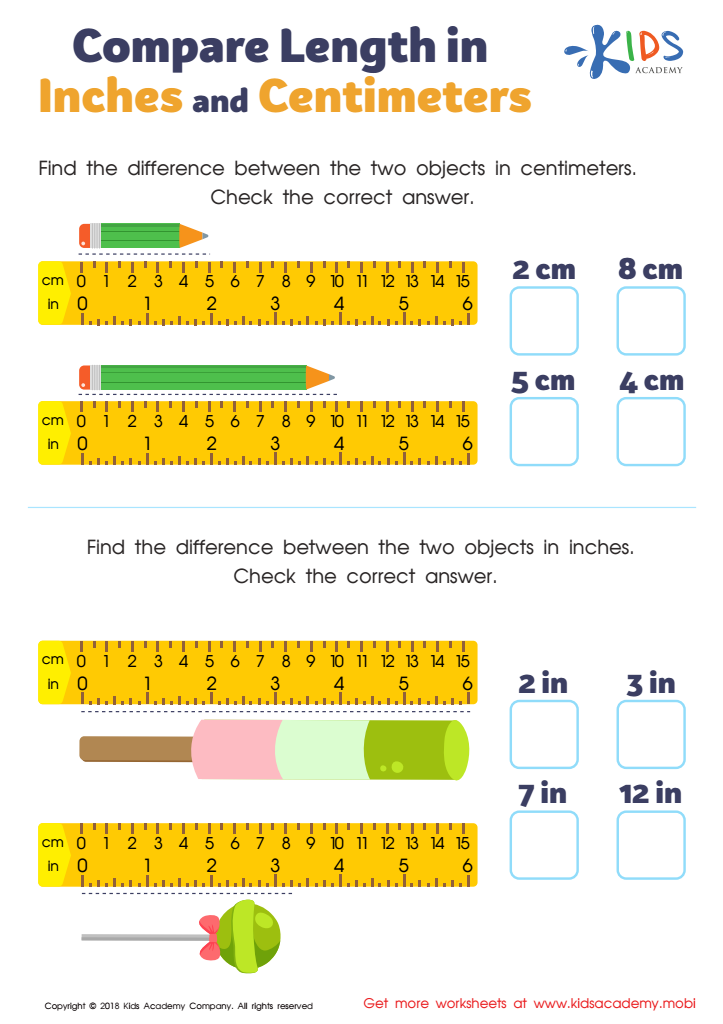
Compare Length in Inches and Centimeters Worksheet
 Assign to My Students
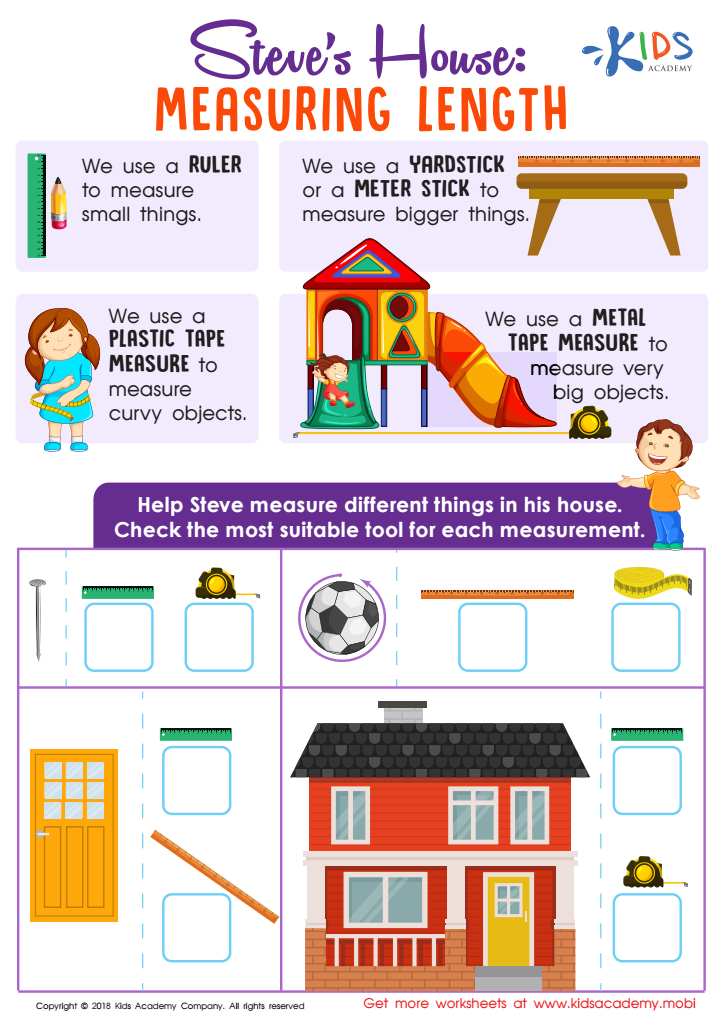
Steve's House: Measuring Length Worksheet
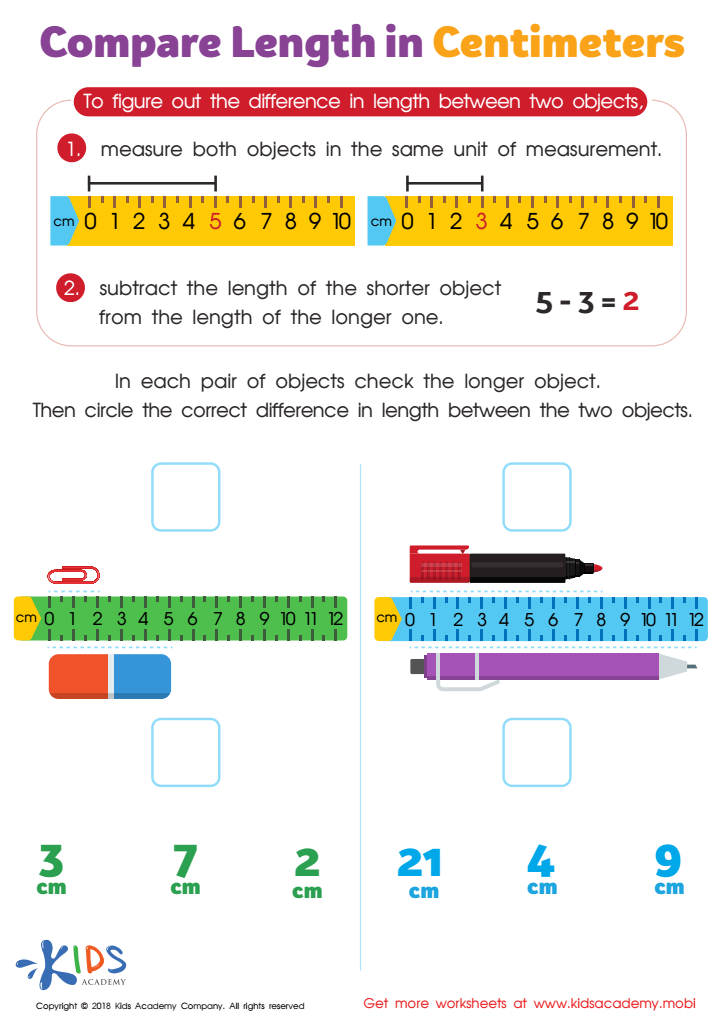
Compare Length in Centimeters Worksheet






Understanding the comparison of lengths is a foundational math skill crucial for second graders. Parents and teachers should prioritize this concept because it enhances children’s cognitive development and prepares them for real-life situations. Measuring and comparing lengths allow children to grasp more advanced mathematical concepts such as addition, subtraction, and the use of measurement tools, which are essential in later grades.
Practically, the ability to compare lengths fosters problem-solving abilities. For instance, it helps children understand how to determine whether one object will fit into a certain space or how to fairly divide objects amongst peers. It's also instrumental in developing spatial awareness—a vital skill in numerous everyday activities and future STEM (Science, Technology, Engineering, Mathematics) related fields.
Moreover, such lessons support language and communication skills. When children discuss lengths and measurements, they learn descriptive terminology such as "longer," "shorter," "taller," and “equal.” This vocabulary enhances their ability to express themselves clearly and better understand instructions.
In summary, the concept of comparing lengths is an essential stepping stone in a child’s educational journey, offering both intellectual and practical benefits. Parents and teachers, by focusing on this skill, pave the way for children’s success in math and their overall development.