Shape Recognition Normal Grade 2 Math Worksheets
5 filtered results
Difficulty Level
Grade
Age
-
From - To
Subject
Activity
Standards
Enhance your second grader's math skills with our engaging Shape Recognition worksheets! Designed for normal-grade students, these printables provide fun and interactive exercises that help children identify and differentiate various shapes. Perfect for reinforcing concepts taught in class, our worksheets challenge young learners with exciting activities that involve sorting, matching, and drawing shapes. Build their confidence and skills in recognizing shapes and their attributes, all while making learning enjoyable. With a variety of colorful and stimulating tasks, our Shape Recognition worksheets are an excellent resource for teachers and parents alike to support children's math education at home or in the classroom!
Favorites
With answer key
Interactive
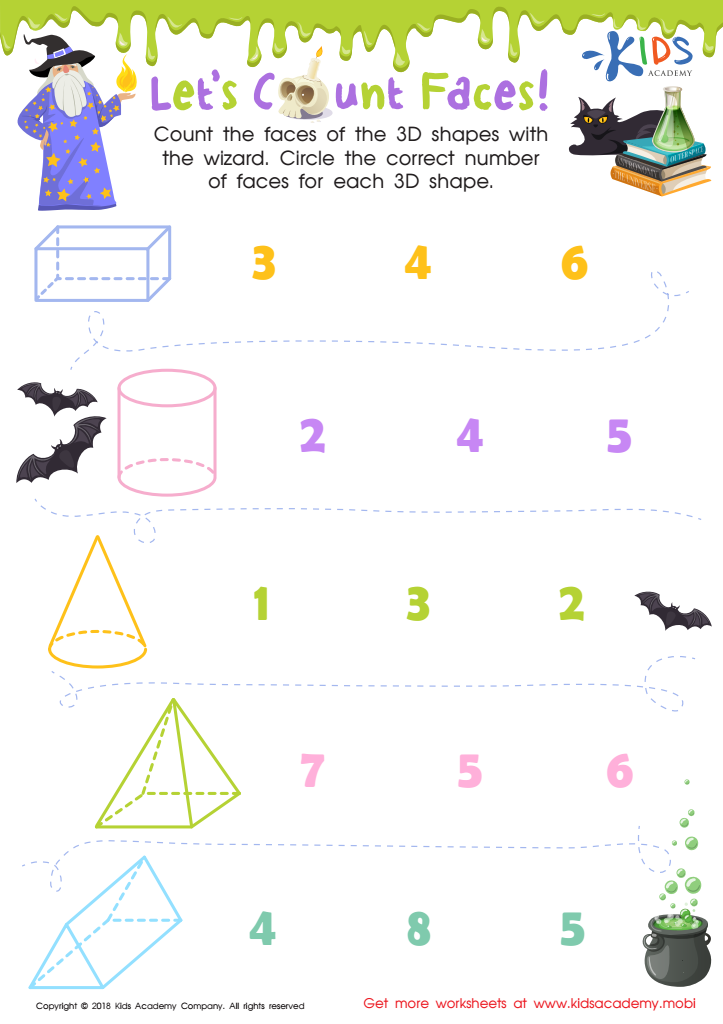
Let's Count Faces! Worksheet
Help the wizard count the faces of 3D shapes! Ask your kids to identify the shapes before beginning, then have them circle the correct number of faces. Enjoy this fun wizard-themed worksheet with your kids!
 Assign to My Students
Let's Count Faces! Worksheet
Worksheet
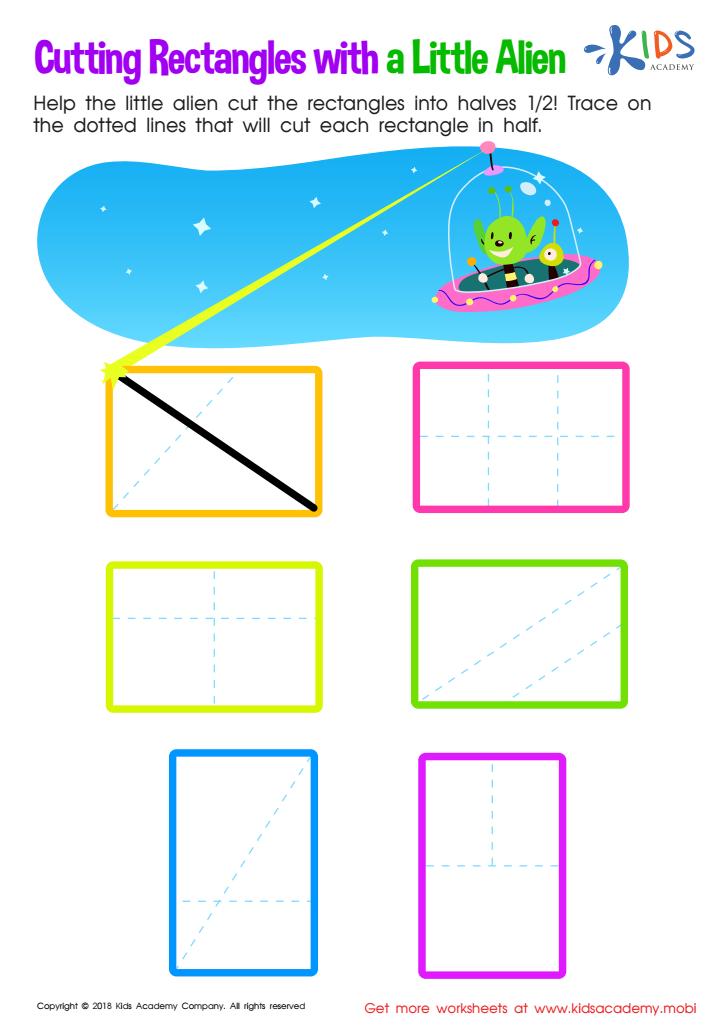
Cutting Rectangles with Alien Worksheet
If your students are interested in aliens and otherworldly events, they'll love this exercise! It requires them to help a small alien cut rectangles into halves (½). They must trace the dotted lines to accurately cut each rectangle.
Cutting Rectangles with Alien Worksheet
Worksheet
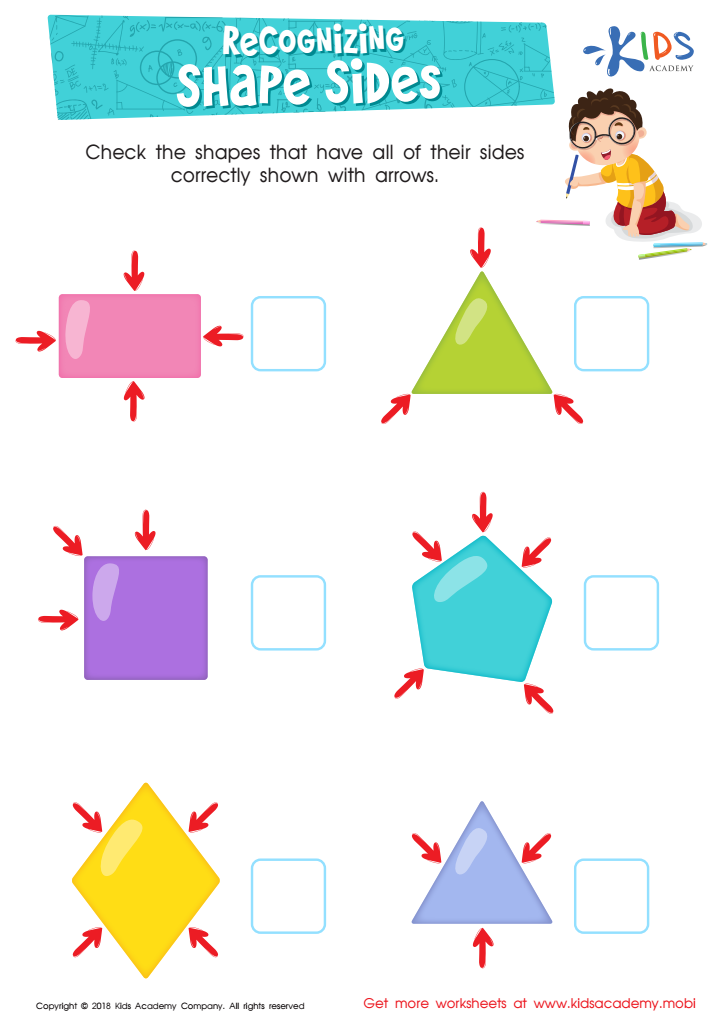
Recognizing Shape Sides Worksheet
This exercise will help your child recognize shape sides. Go over the difference between sides and angles first, then have them check the shapes with arrows to show the sides. They'll quickly get the hang of it and find it much easier after completing the colorful worksheet.
Recognizing Shape Sides Worksheet
Worksheet
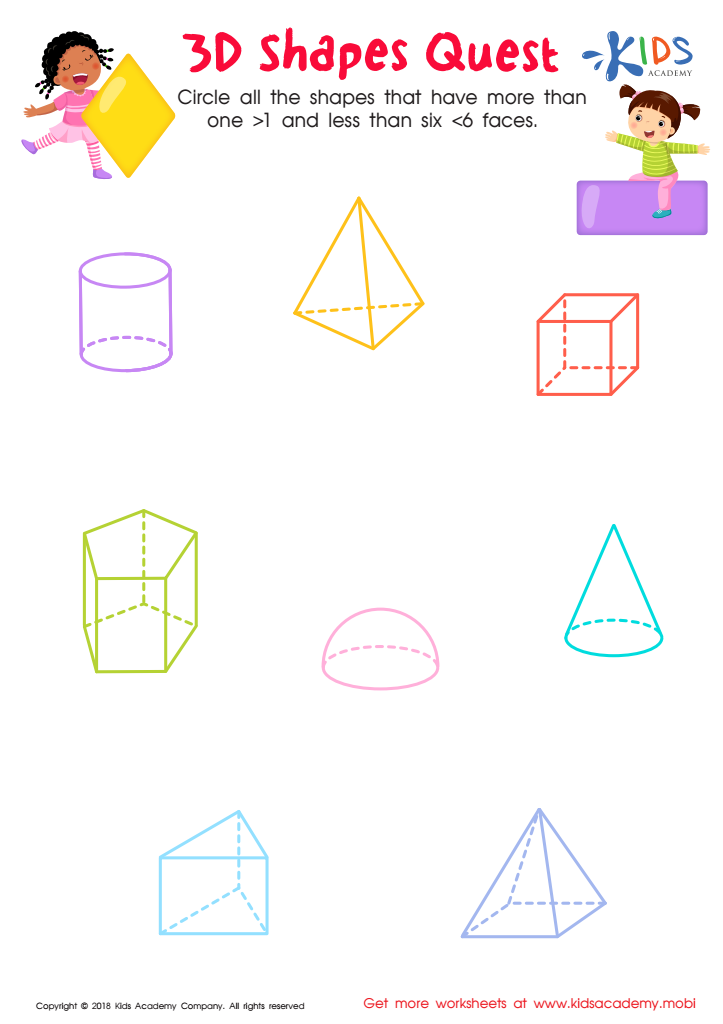
3D Shapes Quest Worksheet
Ask your child if they know what faces of shapes are. If not, explain that faces are flat surfaces on shapes. Ask what a square and rectangle have in common - both have four faces. Your child's task is to circle shapes with more than 1 and less than 6 faces in this exercise.
3D Shapes Quest Worksheet
Worksheet
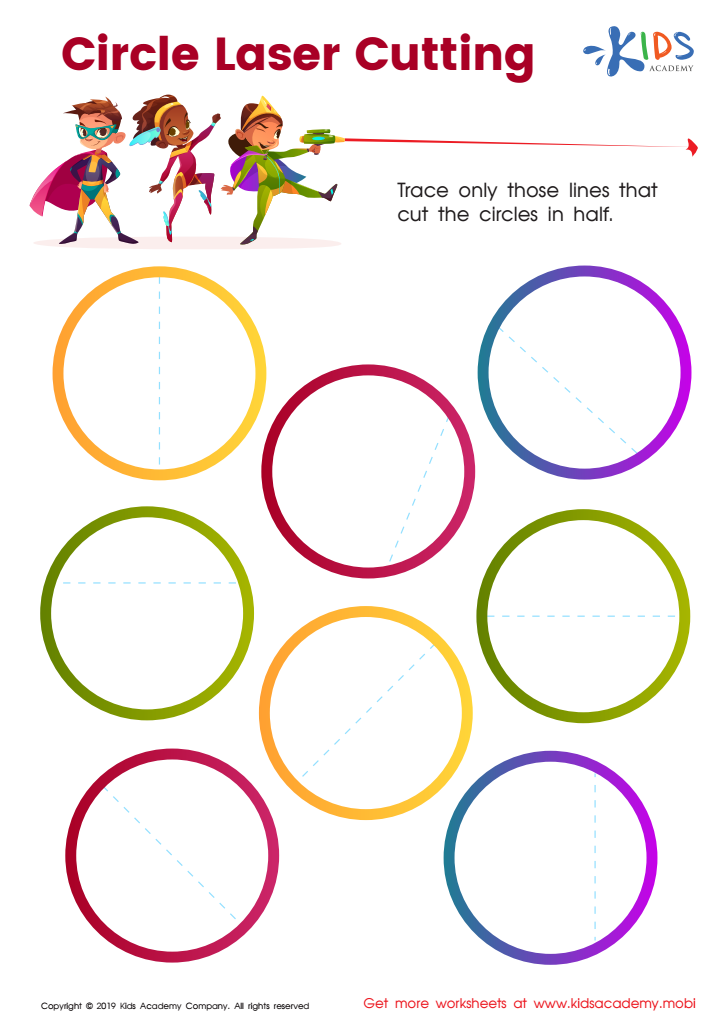
Circle Laser Cutting Worksheet
Encourage your kids to learn geometry! Remind them that when shapes are cut into two equal parts, they are called halves. Have them look at the circles in the worksheet, and trace the lines that cut the circles in half. Geometry is an essential part of education, and although it may not be exciting, it's a valuable skill to have.
Circle Laser Cutting Worksheet
Worksheet
Join Kids Academy for Free
Who is primarily going to use this learning content?






Shape recognition is a foundational skill in Grade 2 math that plays a crucial role in children's cognitive and mathematical development. Parents and teachers should care about this concept for several reasons.
First, understanding shapes fosters spatial awareness, which is essential for problem-solving in various real-life situations, such as navigating spaces and constructing objects. Mastering shape recognition helps children grasp geometry's fundamental principles, laying the groundwork for more advanced math concepts in later grades.
Second, shape recognition nurtures critical thinking and pattern recognition skills. By identifying, comparing, and classifying shapes, children develop analytical skills that extend beyond mathematics, influencing reading comprehension and logical reasoning.
Additionally, shape recognition encourages creativity. Engaging with different shapes can inspire children to create artwork or build projects, enhancing their fine motor skills and artistic expression.
Finally, the collaborative learning environment often found in Grade 2 classrooms promotes teamwork as students engage in shape-related activities. This nurtures social skills as they share ideas and solutions.
In essence, fostering shape recognition in Grade 2 not only supports mathematical proficiency but also contributes significantly to a child's overall cognitive development, creativity, and social skills, making it essential for parents and teachers to prioritize.