Online Worksheets for Kids - Page 79
2849 filtered results
Difficulty Level
Grade
Age
-
From - To
Subject
Activity
Standards
Favorites
With answer key
Interactive
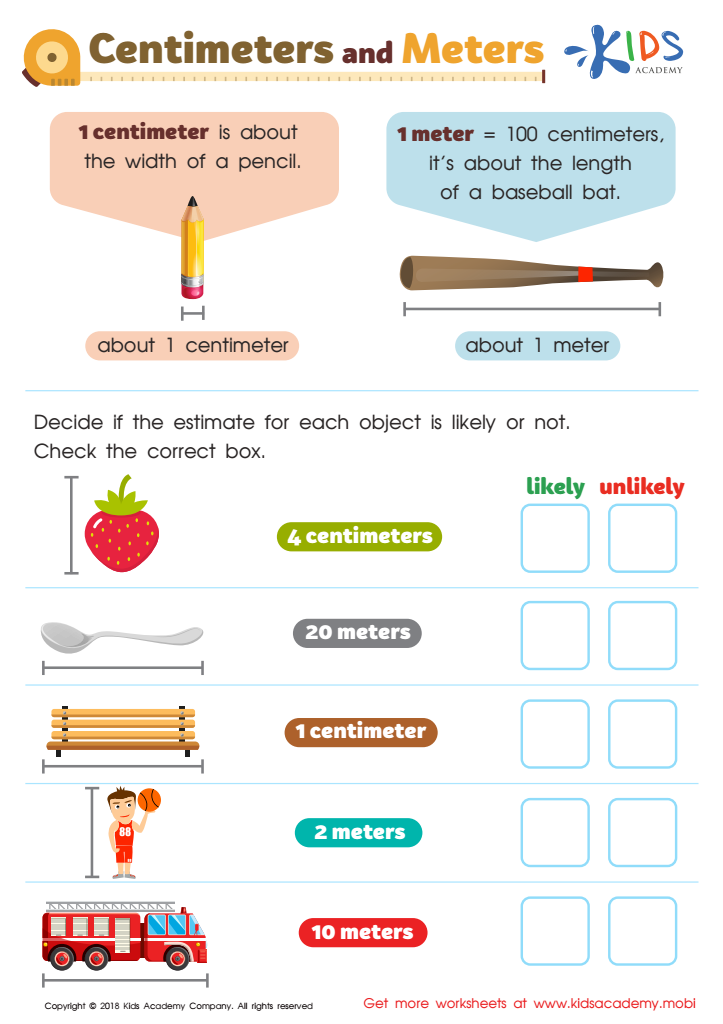
Centimeters and Meters Worksheet
Get a pencil and show your child how wide 1 cm is (about the same width). Then, take a baseball bat and explain that 1 meter is around its entire length. Now your child has an idea of what to picture when hearing cm and m. Look through the worksheet together and show them each object. Ask if the object is likely or unlikely to be the length described.
 Assign to My Students
Centimeters and Meters Worksheet
Worksheet
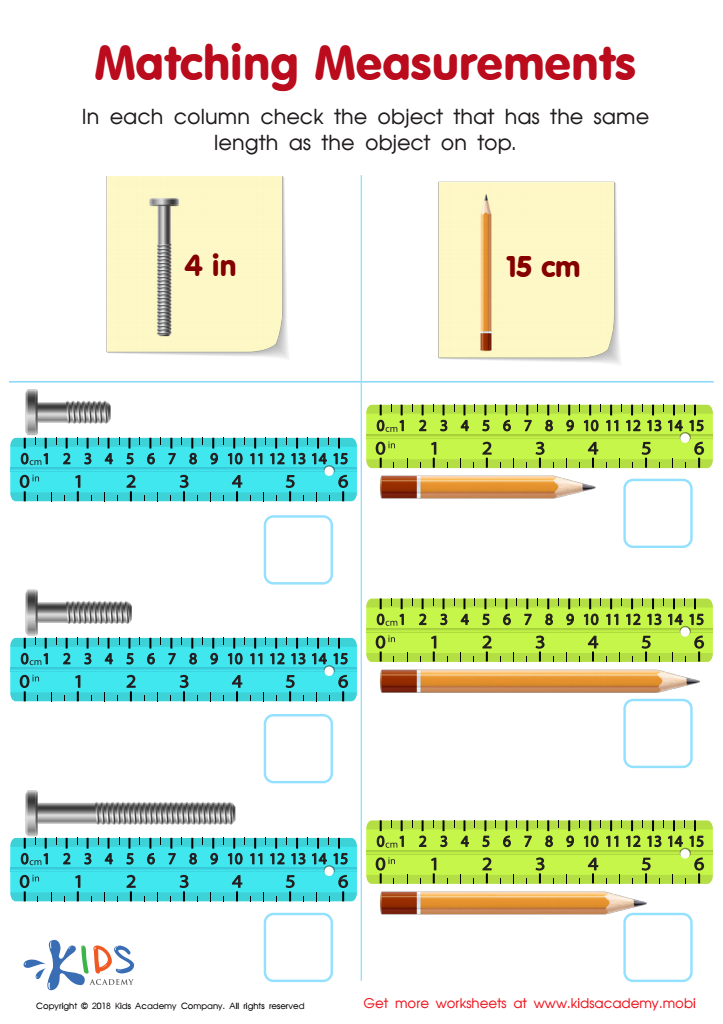
Matching Measurements Worksheet
Get your students to measure different objects with this colorful worksheet. At the top of each column is a prefilled object. Ask them to look at the pictures below each column and identify the objects that are of the same length as the one at the top.
Matching Measurements Worksheet
Worksheet
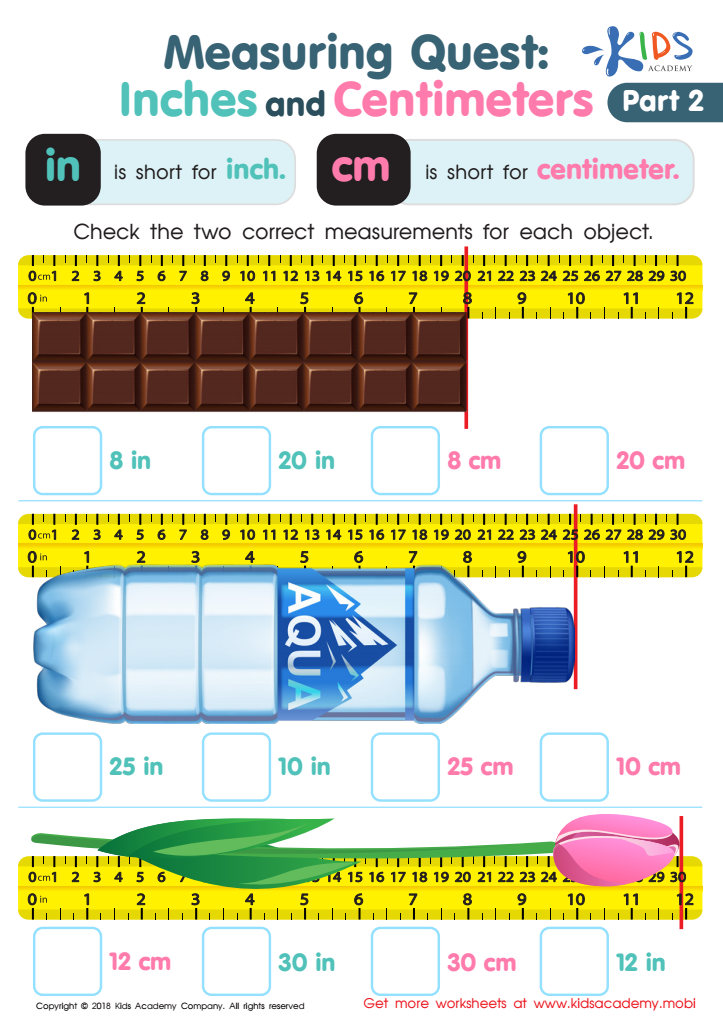
Measuring Quest: Inches and Centimeters - Part 2 Worksheet
This worksheet teaches kids how inches and centimeters measure up. It features rulers with centimeter measurements at the top, and inches at the bottom. Kids must choose the correct measurement for each object among the options provided.
Measuring Quest: Inches and Centimeters - Part 2 Worksheet
Worksheet
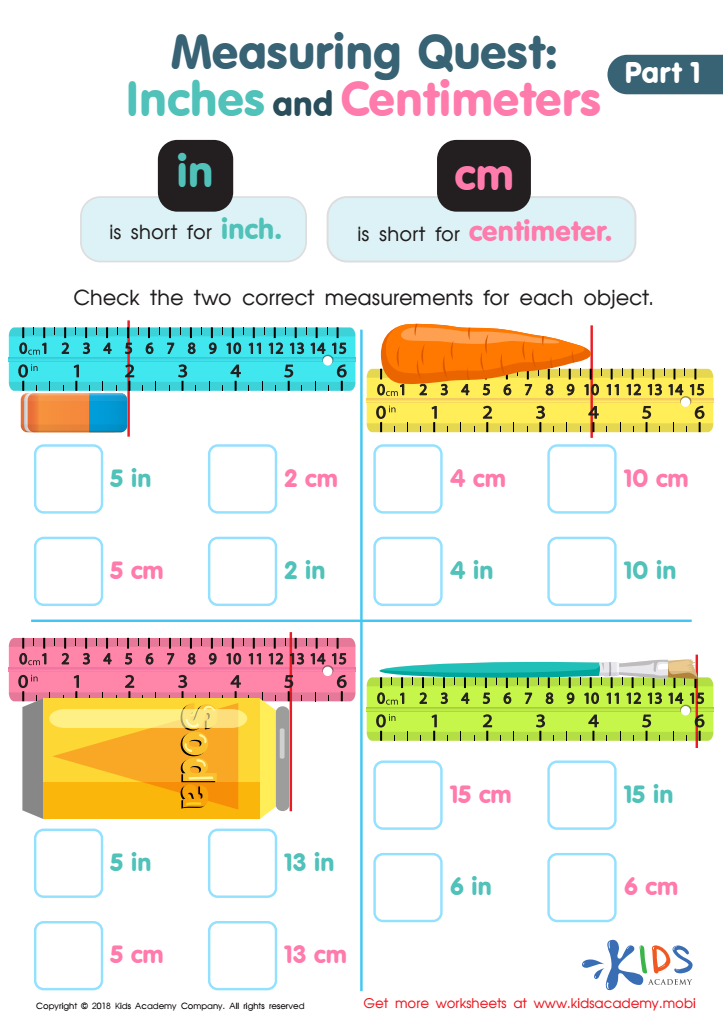
Measuring Quest: Inches and Centimeters Worksheet
Your child will measure items in both inches and centimeters and check the correct measurements from the options given. The metric ruler states 2.5 cm equals 1 inch, and 15 cm equals 6 inches. This worksheet helps ensure accurate measurements, despite the different figures.
Measuring Quest: Inches and Centimeters Worksheet
Worksheet
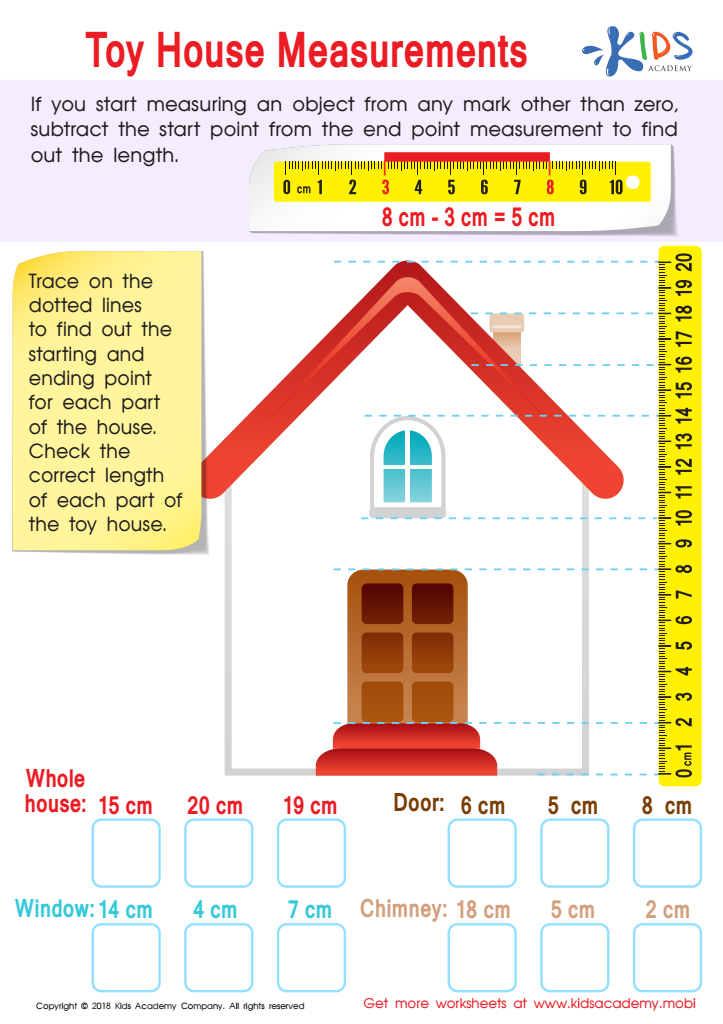
Toy House Measurements Worksheet
This worksheet requires math and measuring skills. When measuring an object from a non-zero starting point, subtract the start point from the end point to get the correct length. Kids must trace the dotted lines to get the right length for each part of the house.
Toy House Measurements Worksheet
Worksheet
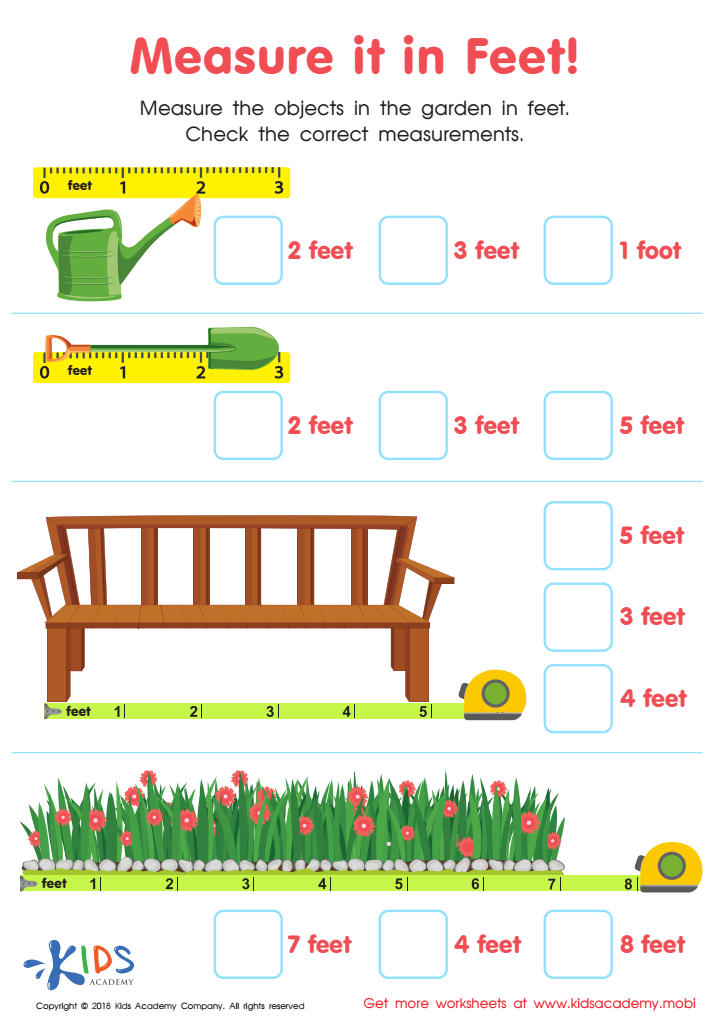
Measure it in Feet Worksheet
Put your kids' measuring skills to the test with this worksheet! Kids will measure garden objects in feet and check the correct measurements from the choices given. Assess how accurately they can measure objects around the house and help them hone those skills.
Measure it in Feet Worksheet
Worksheet
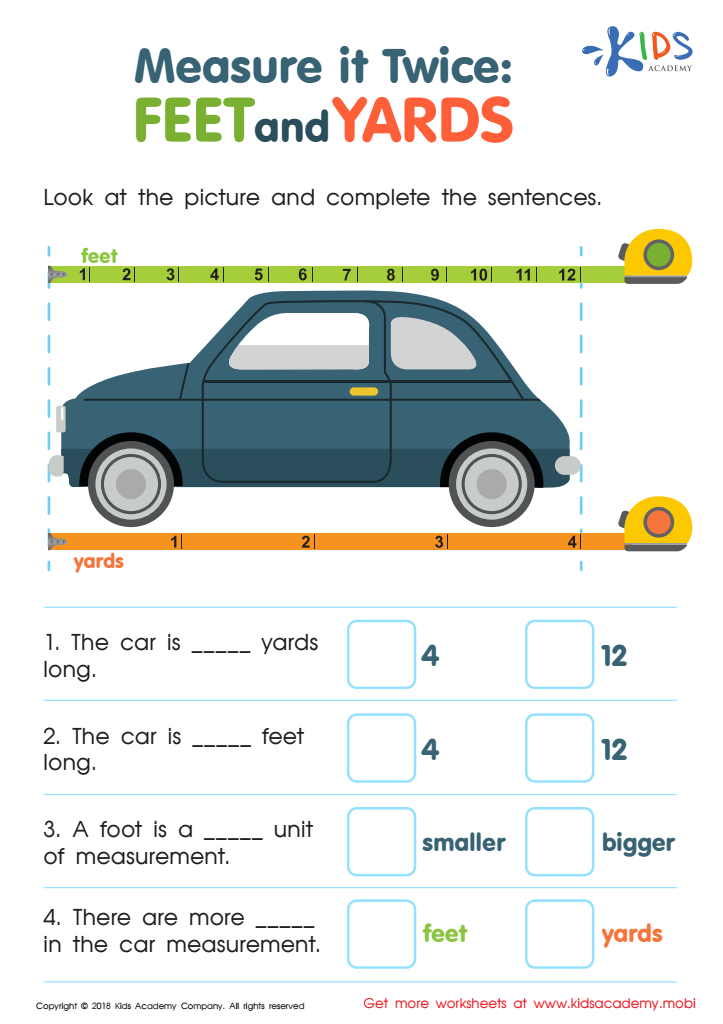
Measure It Twice: Feet and Yards Worksheet
A car is pictured with a metric ruler in feet at the top and a yard ruler at the bottom. Get your child to look at the picture and complete sentences about it; for example, how many yards long is the car? Is a foot a bigger or smaller unit of measurement? It'll teach them that 1 yard is equal to 3 feet.
Measure It Twice: Feet and Yards Worksheet
Worksheet
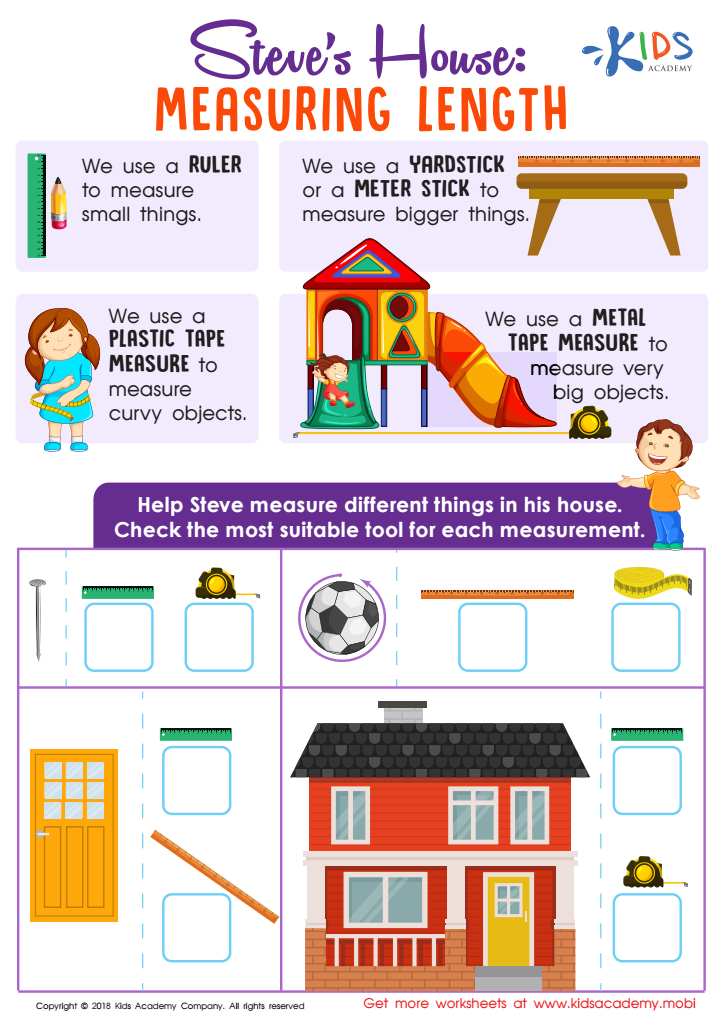
Steve's House: Measuring Length Worksheet
Introduce your kids to the various measuring tools and their uses. Explain how a ruler, plastic tape, yard stick, and metal tape measure are used to measure different objects. Guide them as they help Steve measure things in his home with the correct tool.
Steve's House: Measuring Length Worksheet
Worksheet
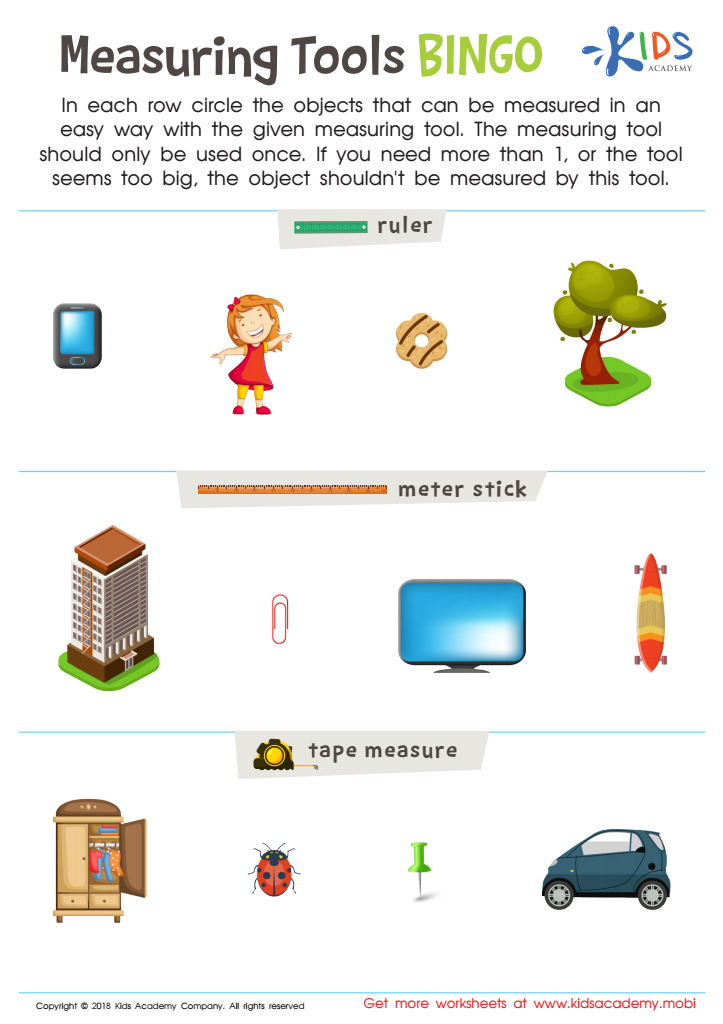
Measuring Tools Bingo Worksheet
Circling the objects that can be measured with the given tool in each row is the task for your child. The tool must be able to accurately measure what's pictured - if it's too large, it's not suitable.
Measuring Tools Bingo Worksheet
Worksheet
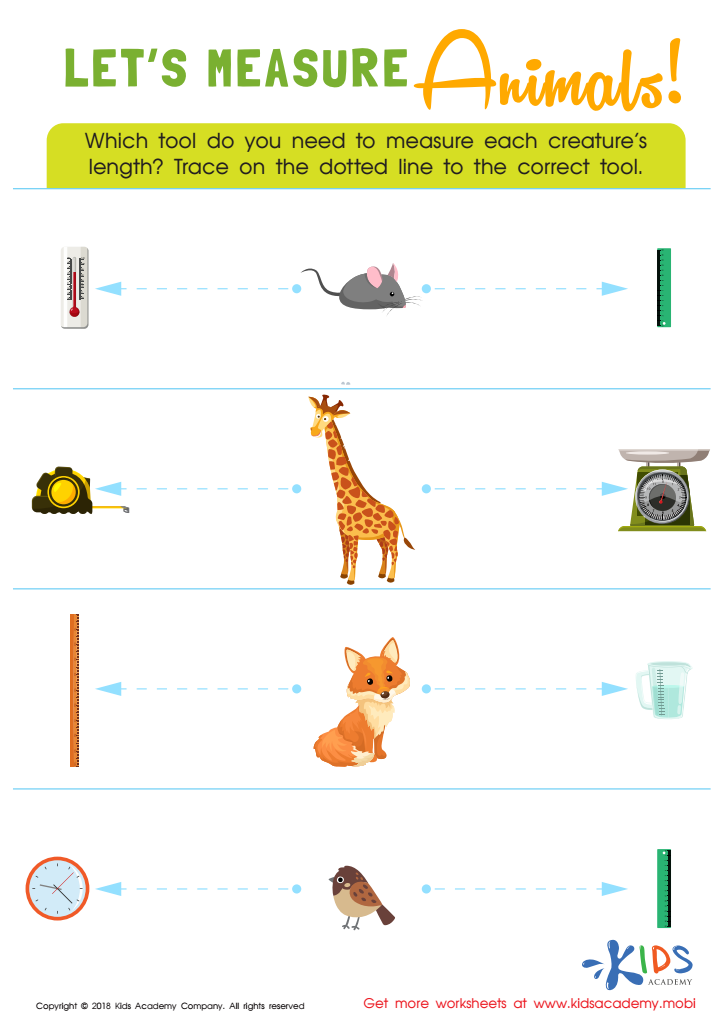
Let's Measure Animals! Worksheet
Have your students measure the length of animals like a mouse, giraffe, fox, and bird using this fun tracing sheet. They must carefully follow the dotted lines to the correct measuring tool, and by the end of the colorful worksheet, they'll know more about measuring and the different tools used.
Let's Measure Animals! Worksheet
Worksheet
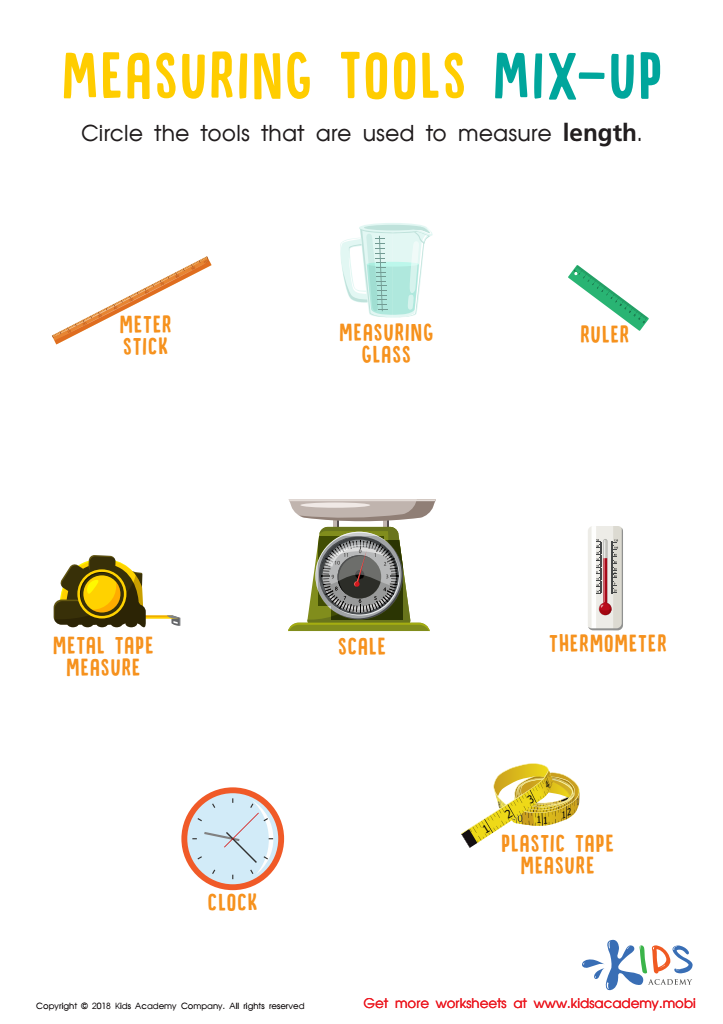
Measuring Tools Mix–up Worksheet
Test your child's knowledge of measuring instruments! In this worksheet, have them identify which items are used for measuring length. Talk through the items with them, then ask them to circle the right answer. Use this PDF to challenge your child and learn more about measuring tools.
Measuring Tools Mix–up Worksheet
Worksheet
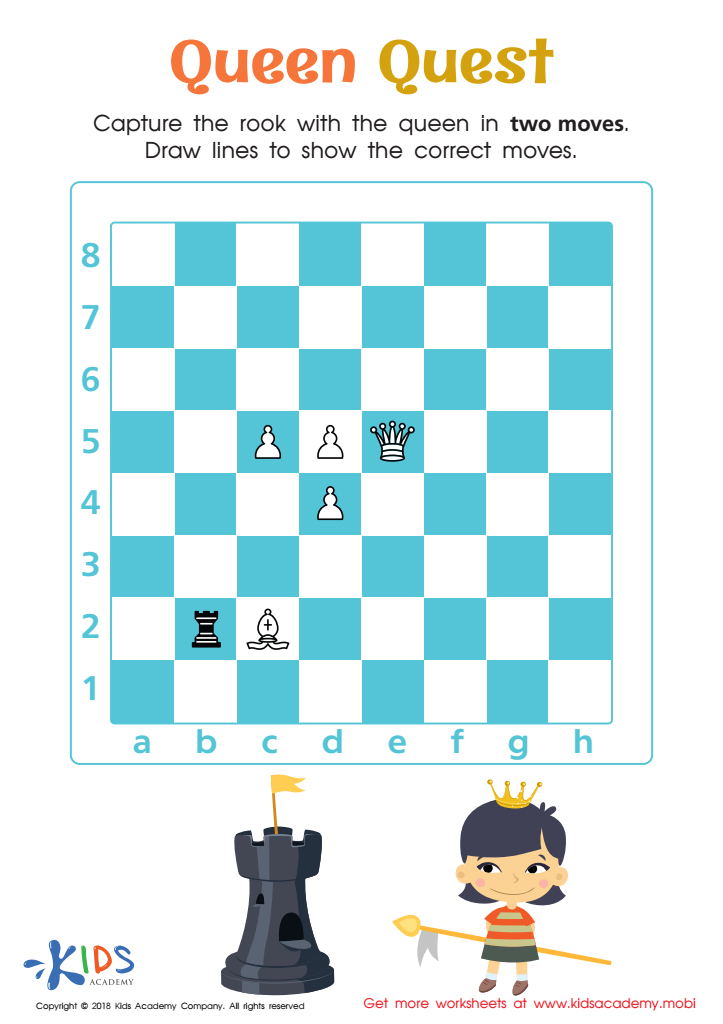
Queen Quest Worksheet
Want to test your child's chess skills? See if they know how the queen, king, knights, rooks, and pawns move. This worksheet challenges your young one to capture a rook with the queen in two moves. Draw lines to show the queen's moves to complete the task.
Queen Quest Worksheet
Worksheet
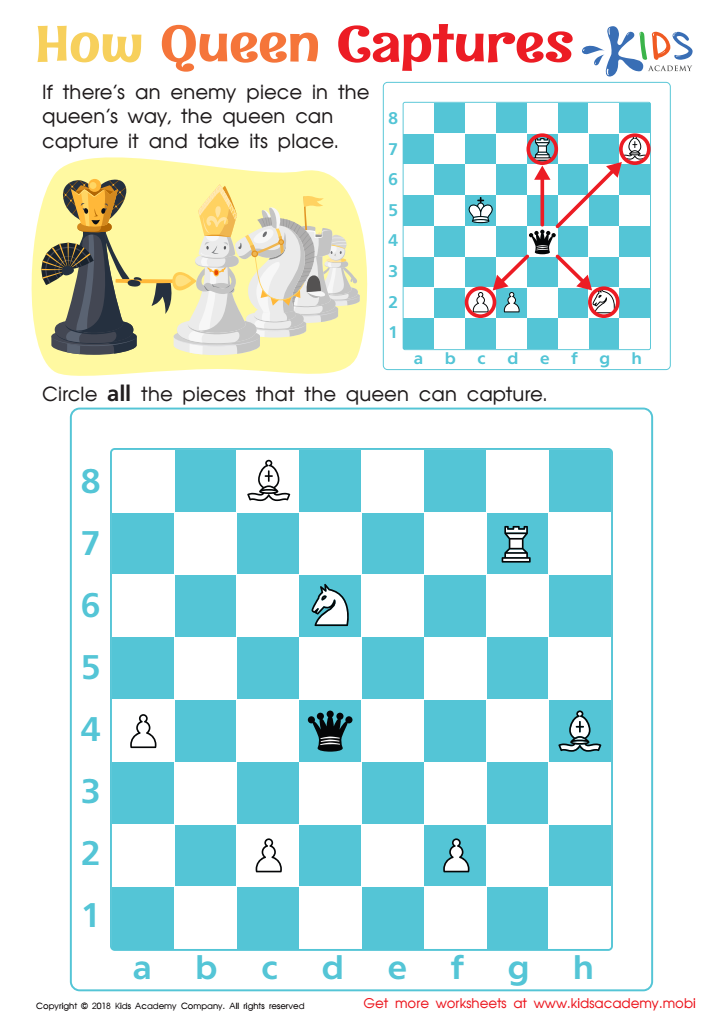
How Queen Captures Worksheet
Chess is a great game for sharpening math skills, strategic thinking, and knowledge of how each piece moves. If your child is interested, introduce them with this worksheet. It demonstrates how the queen can capture opposing pieces, such as another queen, and take their place.
How Queen Captures Worksheet
Worksheet
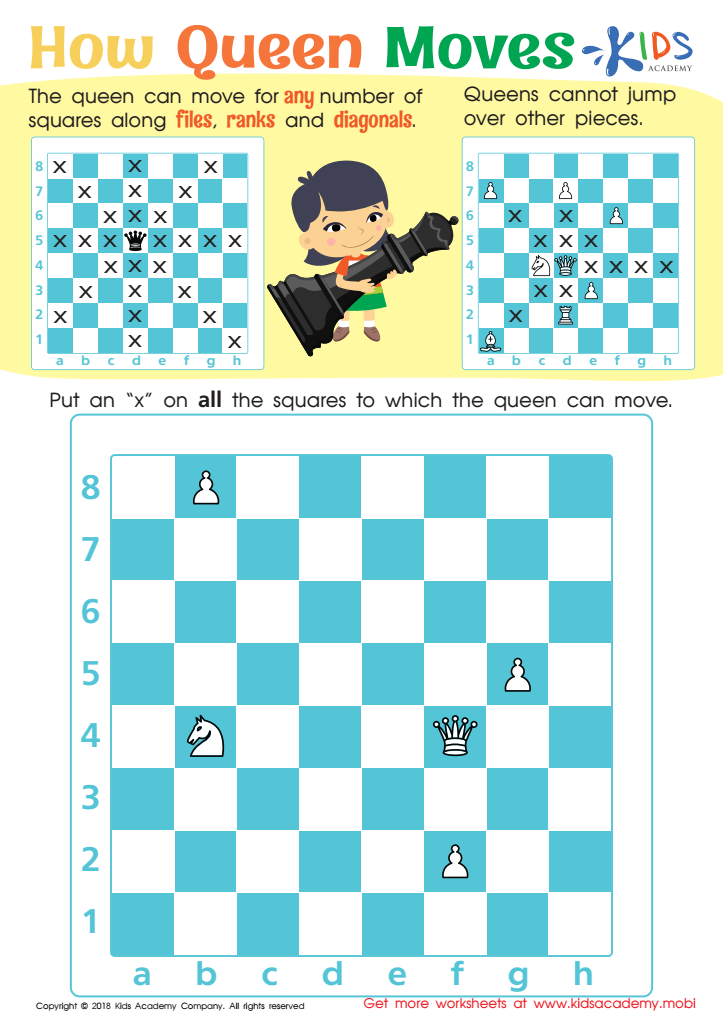
How Queen Moves Worksheet
Introduce your kids to the rules of chess using this worksheet! It shows how a queen can move for any number of squares along files, ranks, and diagonals. Ask them to mark an 'x' on the boxes where the queen can move. This is a great way to have your kids learn the basics of chess.
How Queen Moves Worksheet
Worksheet
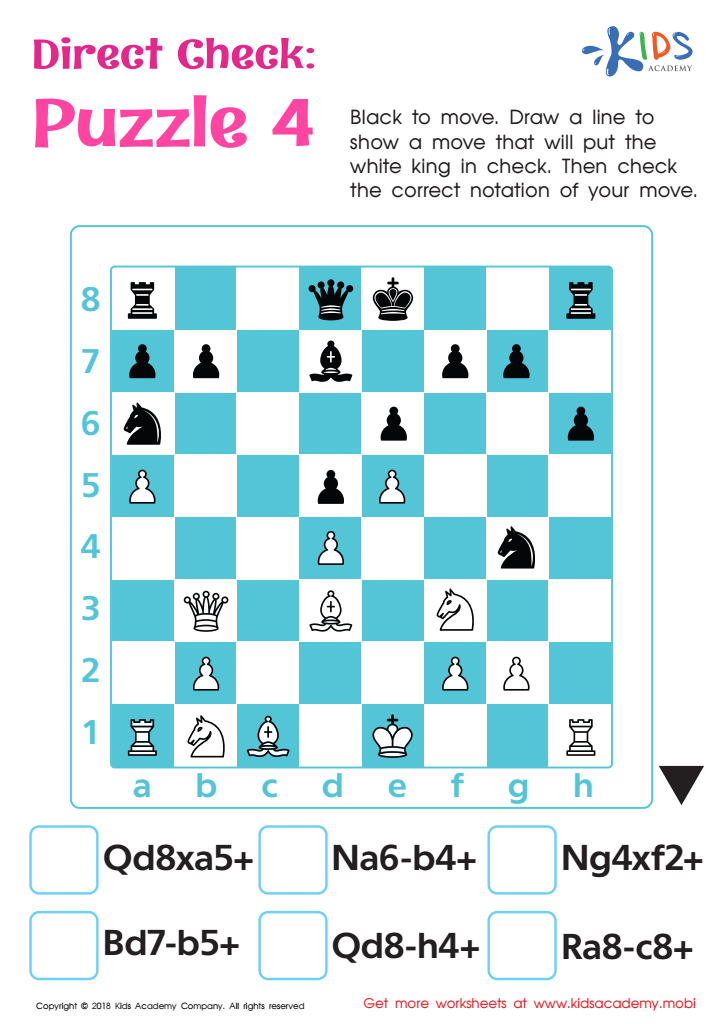
Direct Check: Puzzle 4 Worksheet
Assess your children or students' chess progress with this simple worksheet. They must play as black and draw a line to put the white king in check. Then, review the provided options and circle the correct notation. This will help you gauge their skills and understanding of strategic movements.
Direct Check: Puzzle 4 Worksheet
Worksheet
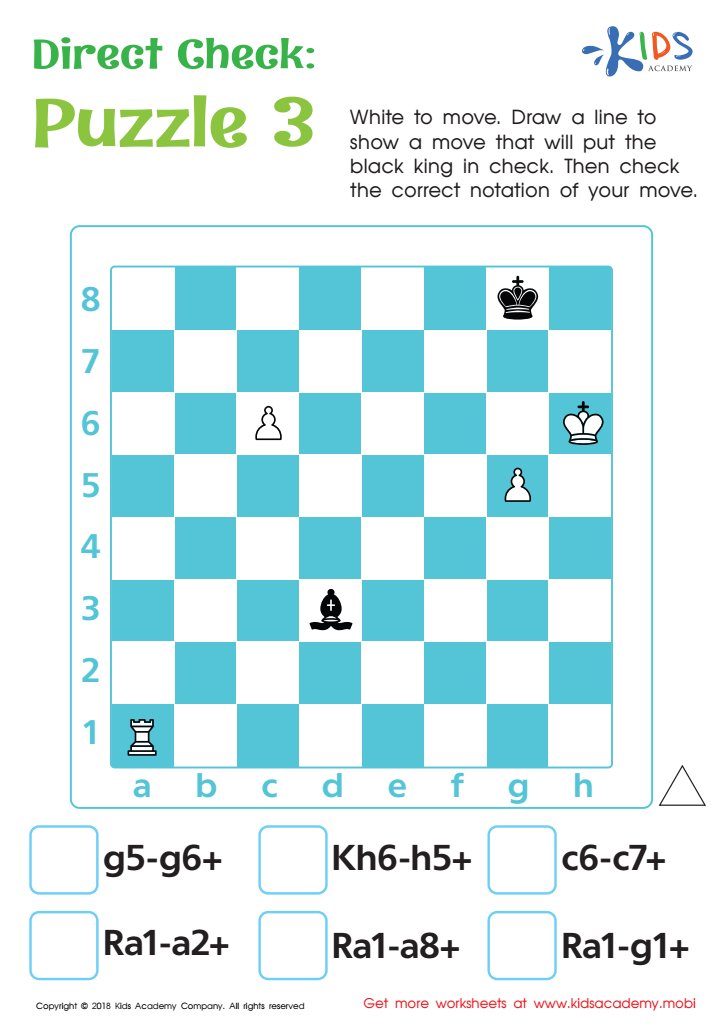
Direct Check: Puzzle 3 Worksheet
Chess is a great way to help your child develop their strategic, mathematical, and thinking skills. Test their understanding with this simple worksheet: they must get the black king in checkmate with white pieces, then select the notation that shows the correct move. See just how much progress they've made!
Direct Check: Puzzle 3 Worksheet
Worksheet
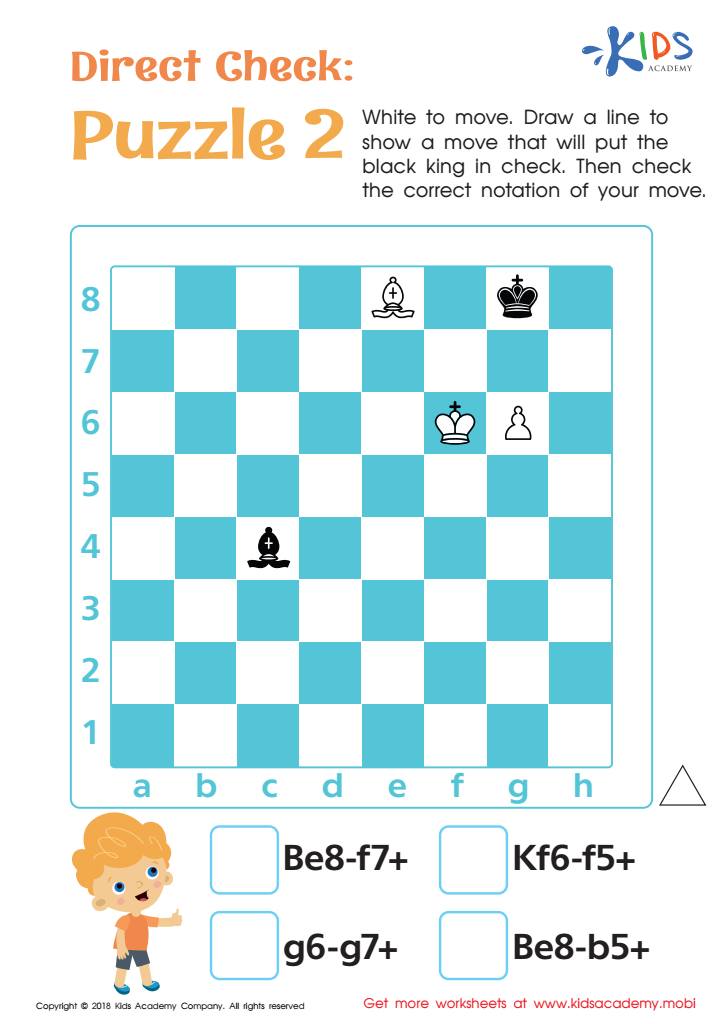
Direct Check: Puzzle 2 Worksheet
Test your kid's chess skills with this worksheet. Help them draw a line to put the black king in checkmate, then check the correct notation from the provided options. This will help them understand the correct notation of each move they make.
Direct Check: Puzzle 2 Worksheet
Worksheet
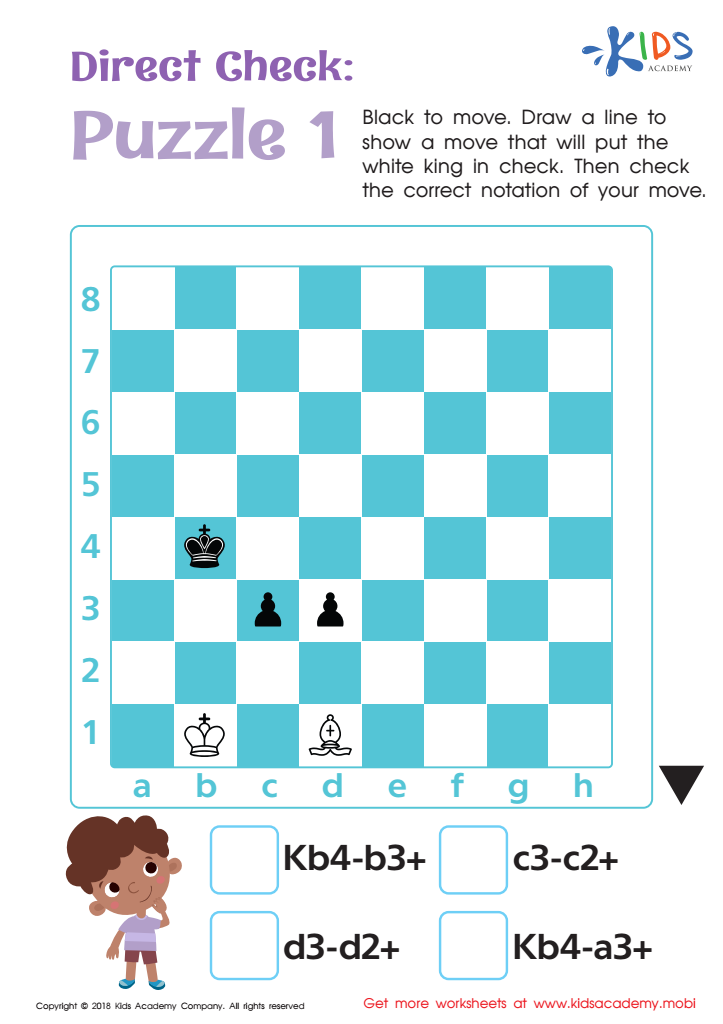
Direct Check: Puzzle 1 Worksheet
Your child can test their chess knowledge with this worksheet. If they've been taking lessons or playing regularly, they'll enjoy connecting the dots to put the white king in checkmate, then checking the correct notation. Challenge their chess skills!
Direct Check: Puzzle 1 Worksheet
Worksheet
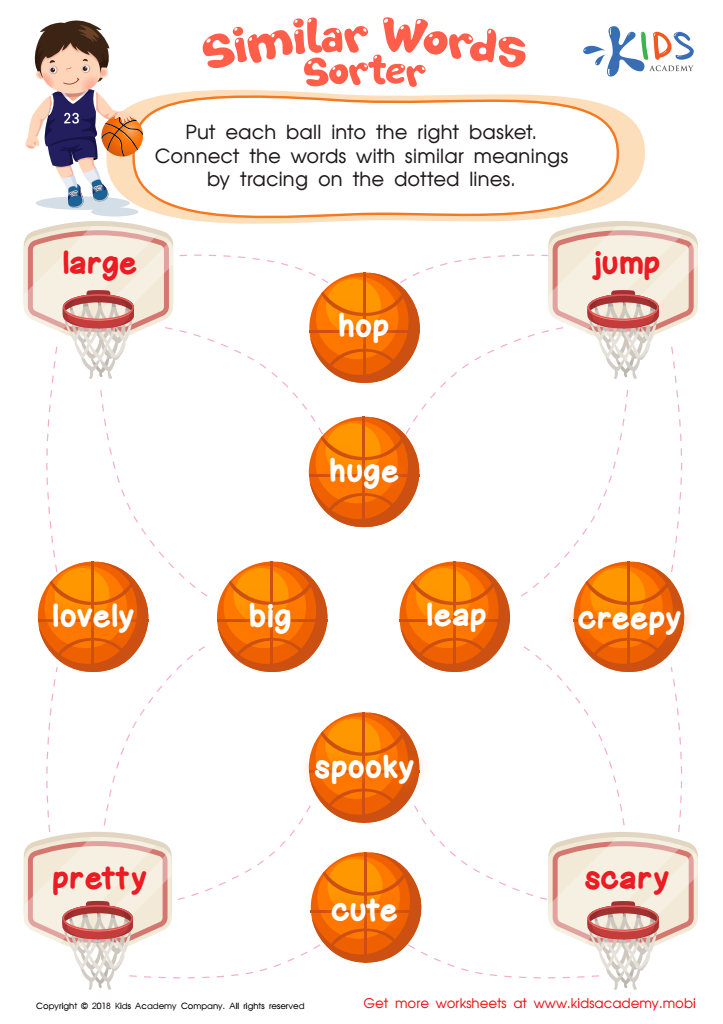
Similar Words Worksheet
Test your child's knowledge of synonyms by having them name five words for "up"! This tracing sheet is a fun way to do it: your child must trace the dotted lines to put each ball in its right basket. To do so, they must know the synonyms and trace them to the correct baskets.
Similar Words Worksheet
Worksheet
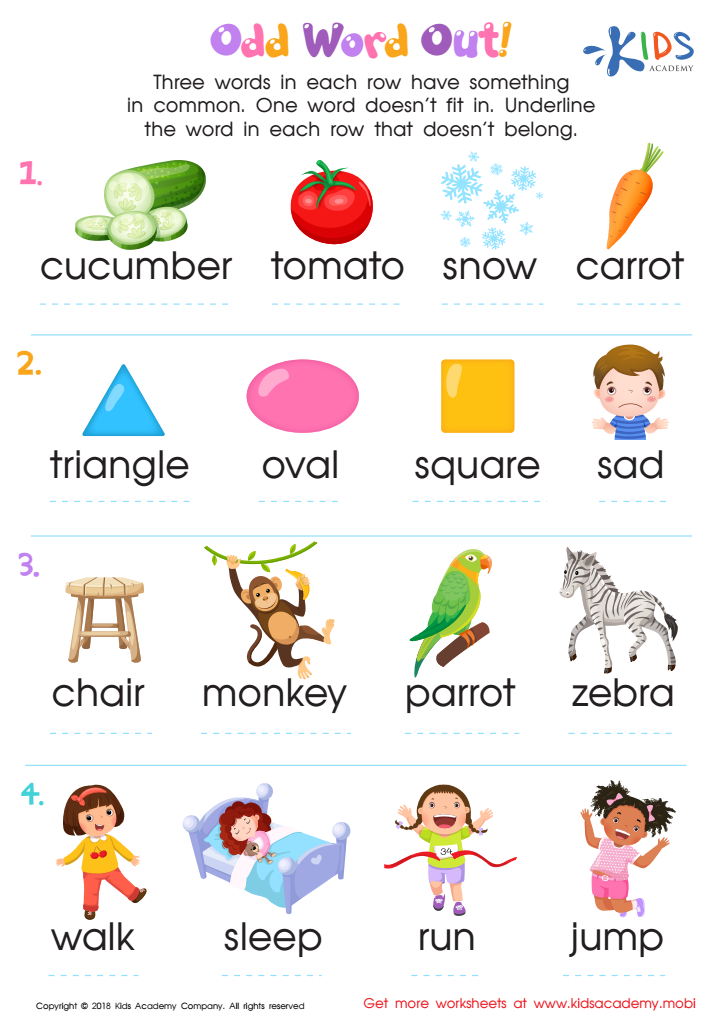
Odd Word Out Worksheet
Ask your child to name all pictures in each row and see if there's something they share. Then, have them identify the odd one out and underline it. Repeat for all words in the rows to help them understand how to identify words.
Odd Word Out Worksheet
Worksheet
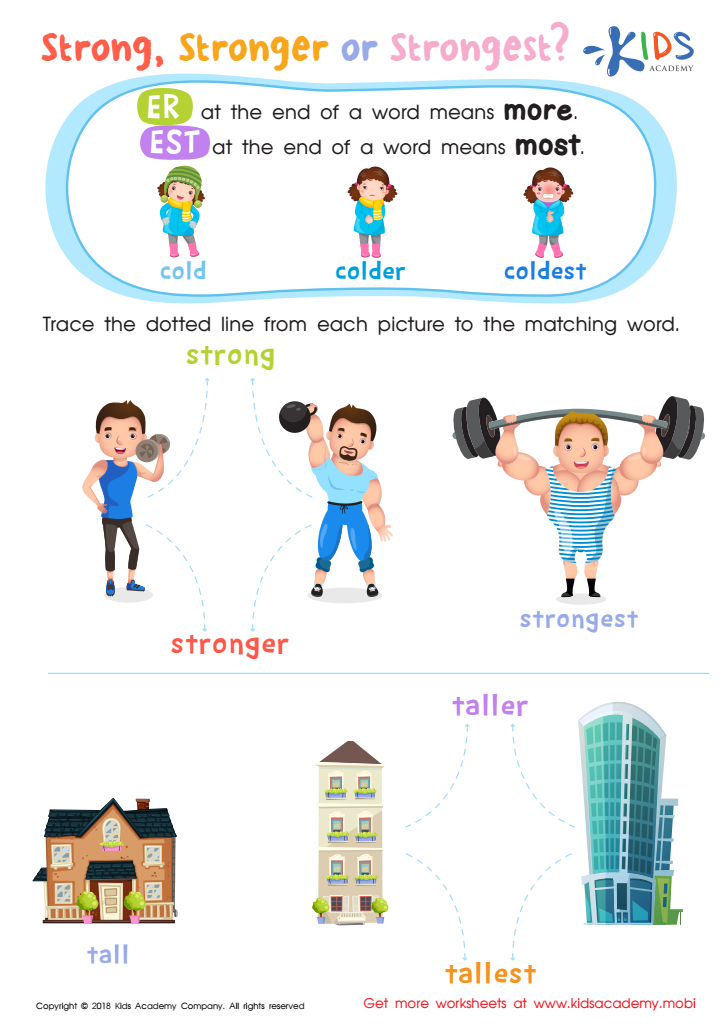
Strong or Stronger? Worksheet
Help your child understand the concept of size gradients with a fun worksheet. Explain to them that adding "-er" to words means "more" and "-est" means "most". Point to the pictures and have your little one trace the dotted line to the corresponding words to learn the concept of highest and lowest.
Strong or Stronger? Worksheet
Worksheet
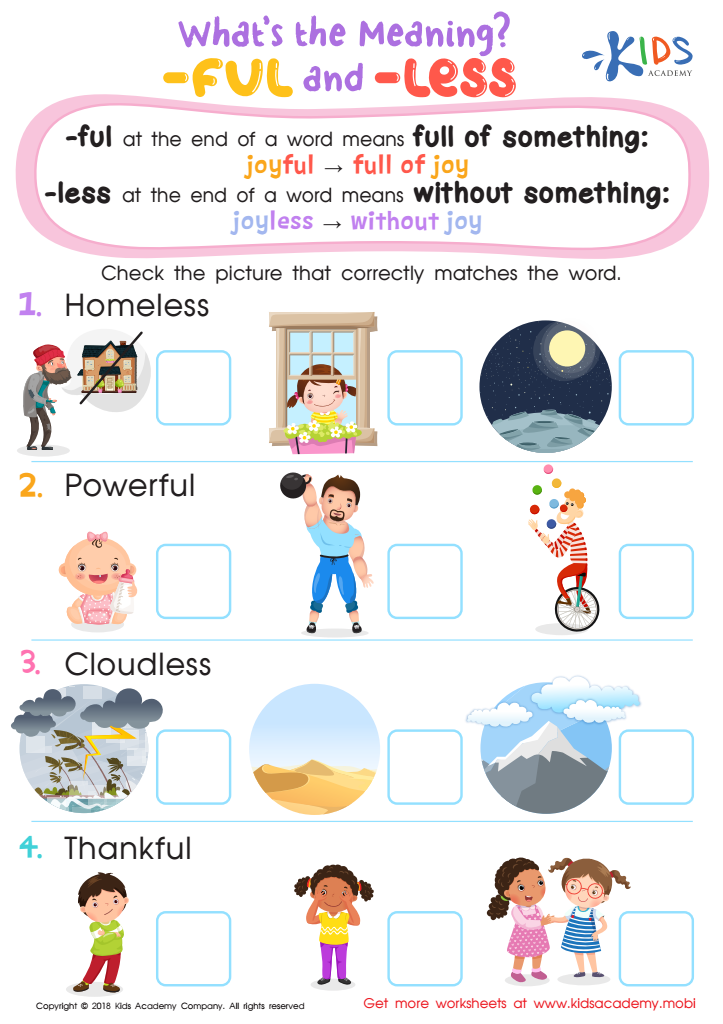
What's the Meaning? Worksheet
Look with your youngster through this colorful worksheet and match the pictures to the words at the top. These words have different meanings due to either a prefix or suffix being added, such as "ful" or "less".
What's the Meaning? Worksheet
Worksheet
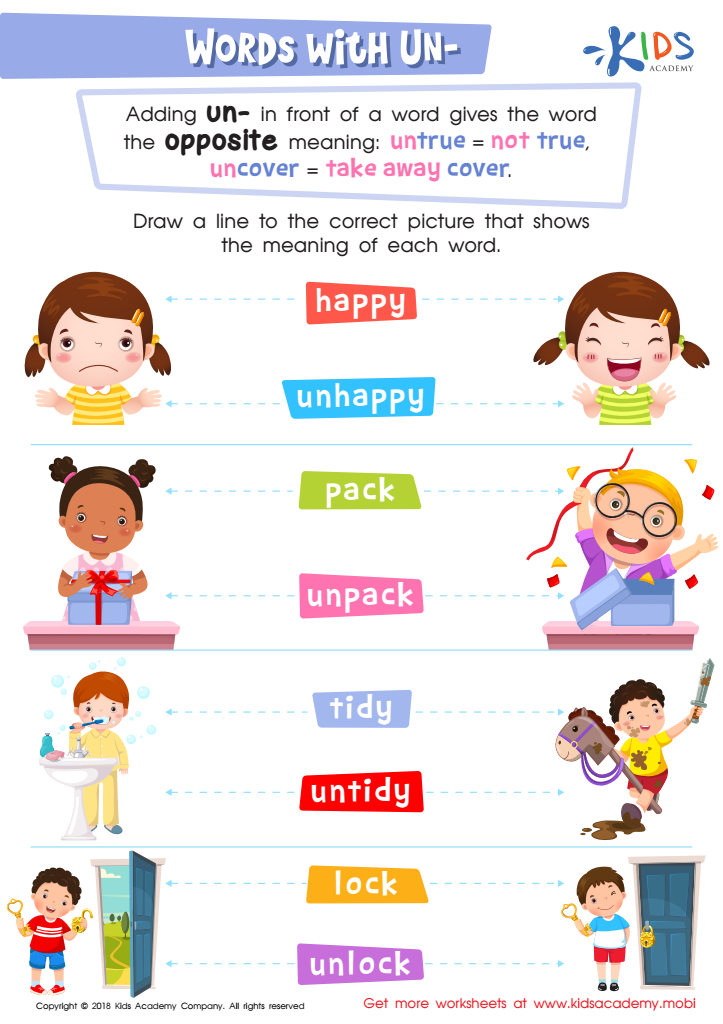
Words with Un– Worksheet
Prefixes can change the meaning of words. Adding "Un-" can give the opposite meaning, like Un-true, Un-happy, and Un-finish. Help your child learn with this worksheet. Draw a line to the picture that shows each word's meaning.
Words with Un– Worksheet
Worksheet
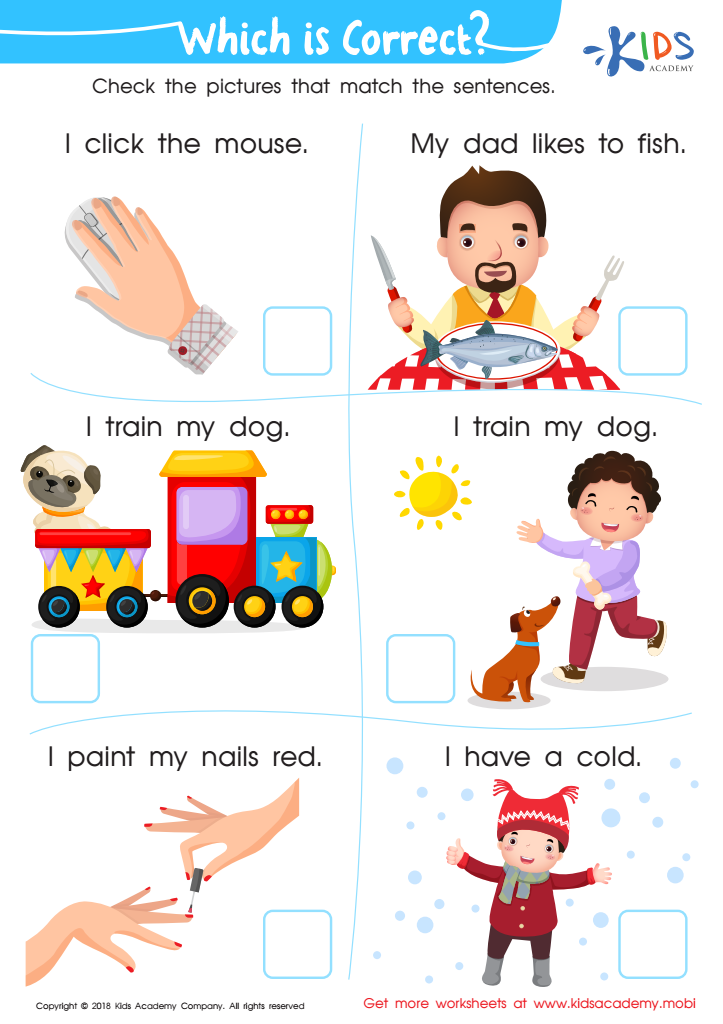
Which Is Correct? Worksheet
Go over the exercise with your students. Ask them to read the sentences and explain what they mean. Check the pictures that correspond to the sentences. For example, what does "My dad likes to fish" mean? Test their understanding with the worksheet.
Which Is Correct? Worksheet
Worksheet
Join Kids Academy for Free
Who is primarily going to use this learning content?