
Connecting the Dots worksheets activities for Ages 3-4
5 filtered results
Difficulty Level
Grade
Age
-
From - To
Subject
Activity
Standards
Unlock a world of fun and learning with our Connecting the Dots worksheets activities! Designed to spark creativity and enhance problem-solving skills, these worksheets are perfect for young learners eager to discover and learn. Each activity is carefully crafted to guide children through a journey of connecting dots, revealing hidden pictures that delight and educate simultaneously. Ideal for developing fine motor skills, attention to detail, and early numeracy understanding, our Connecting the Dots worksheets activities are the perfect addition to any educational toolkit. Dive into a universe of dots and let the adventure of learning begin!
Favorites
With answer key
Interactive
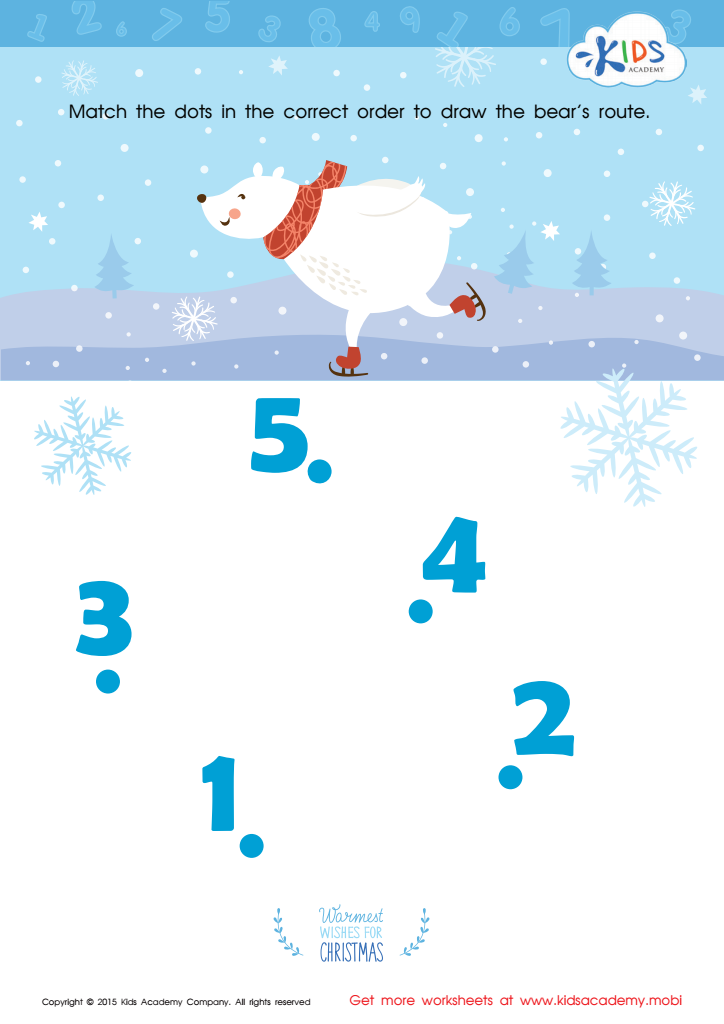
Drawing the Bear's Route by Number Worksheet
This winter-themed math worksheet is perfect for counting practice. Have fun learning and celebrating the season with your kindergartener as they trace and recognize numbers. It also helps develop fine motor muscles. For more fun, check out the math worksheets on Kids Academy.
 Assign to My Students
Drawing the Bear's Route by Number Worksheet
Worksheet
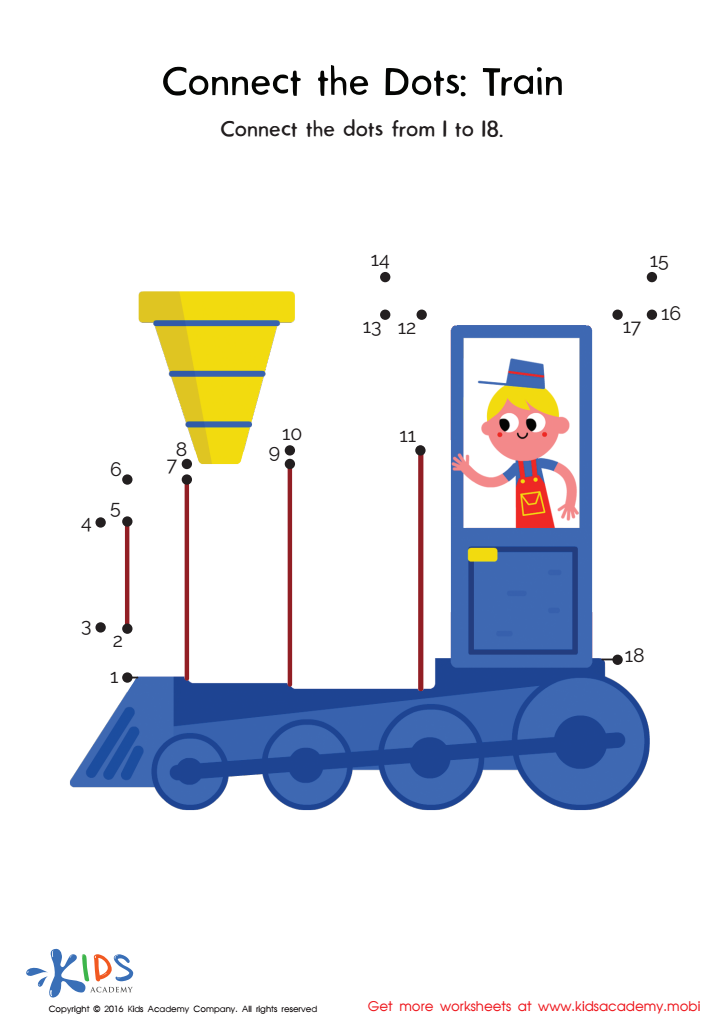
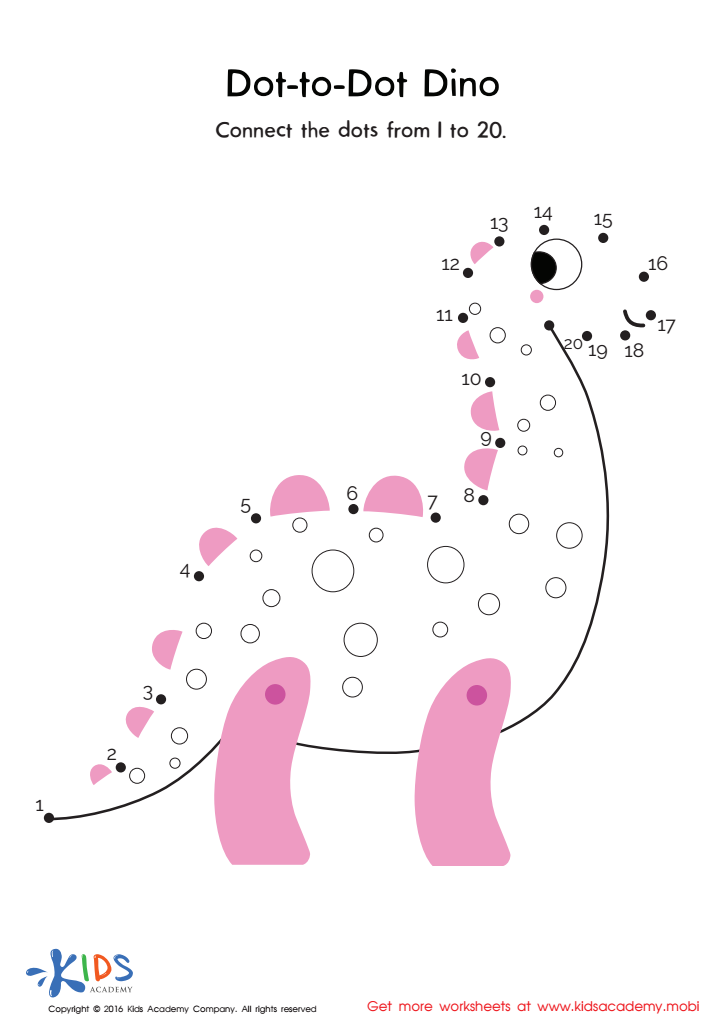
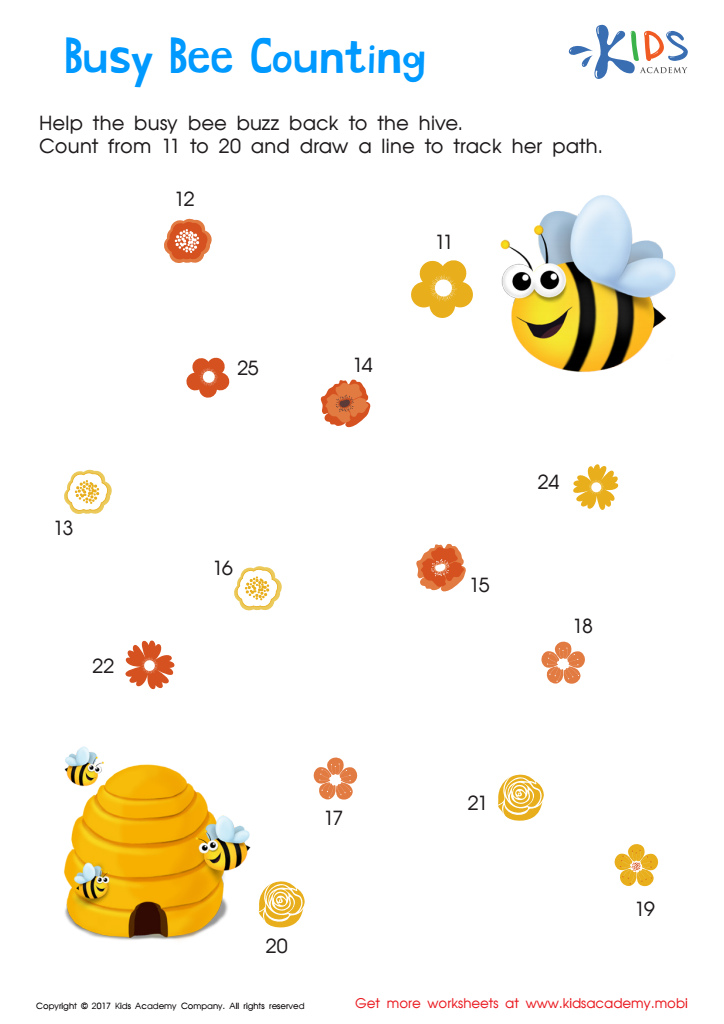
Ordering 11–20: Busy Bee Counting Worksheet
Help your child master counting from 11 to 20 with our connect the dot counting worksheet. Kids will have fun counting, drawing and problem-solving with this vibrant worksheet. With clear directions, adorable pictures and a sense of purpose, your child will develop crucial numeracy skills without even knowing it!
Ordering 11–20: Busy Bee Counting Worksheet
Worksheet
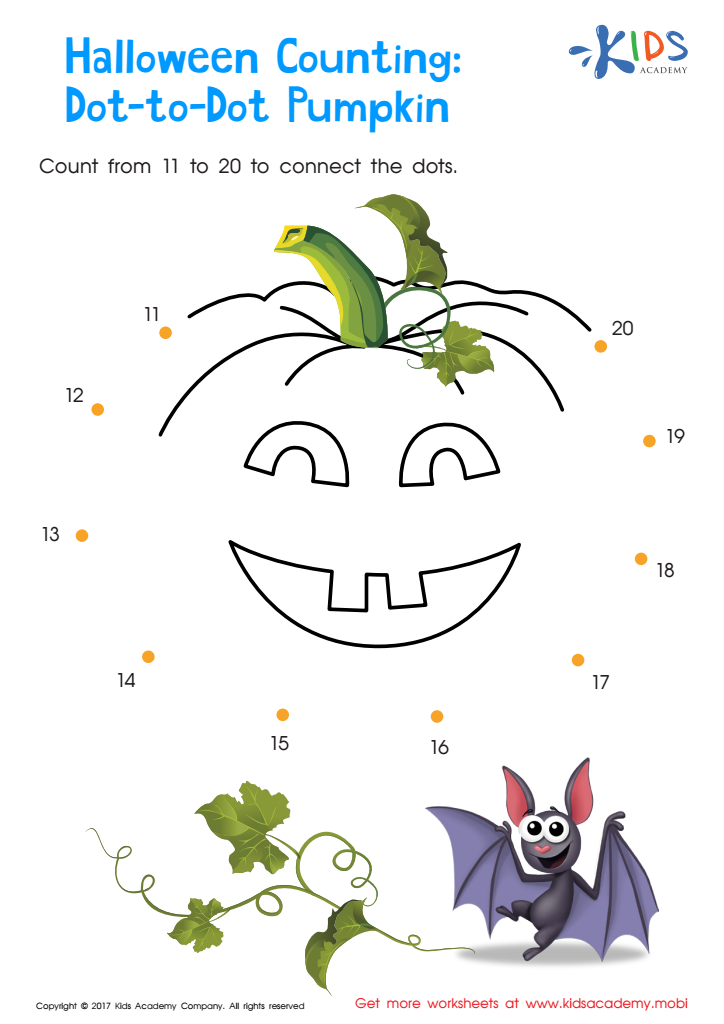
Ordering 11–20: Halloween Counting Worksheet
No matter the time of year, help your child get ready for Halloween with this worksheet. They'll practice counting from 11 to 20, recognizing numbers, and using a pencil to draw. By connecting the dots, they'll create a pumpkin picture, while unknowingly strengthening their early math skills. Print it today for an educational and fun experience!
Ordering 11–20: Halloween Counting Worksheet
Worksheet
Join Kids Academy for Free
Who is primarily going to use this learning content?







Connecting the Dots worksheets activities are a versatile and engaging tool for learners of all ages, offering a plethora of benefits that extend far beyond the simple joy of drawing lines from one number to the next. These activities are designed not only to entertain but also to educate, making them an invaluable resource in both traditional and innovative learning environments.
First and foremost, Connecting the Dots worksheets activities are an excellent way to enhance fine motor skills. As children connect each dot, they practice holding a pencil and controlling its movement with precision. This seemingly simple task is fundamental in developing the skills necessary for handwriting, drawing, and other tasks that require manual dexterity.
Furthermore, these activities are a gateway to improving numerical and alphabetical knowledge. Whether the dots are numbered or lettered, children learn to recognize and sequence numbers and letters in a fun and interactive manner. This hands-on approach to learning solidifies foundational concepts in math and literacy, making it easier for children to grasp more complex ideas as they progress in their education.
Connecting the Dots worksheets activities also foster problem-solving and critical thinking skills. Participants must figure out the correct order to connect the dots, sometimes following complex patterns that challenge their ability to think logically and strategically. This kind of puzzle-solving activity is excellent for developing cognitive skills and enhancing a child's ability to focus and complete tasks.
In addition to the educational benefits, Connecting the Dots worksheets activities offer a creative outlet. Completing a worksheet reveals a hidden picture, providing a sense of accomplishment and stimulating creativity. Children are often delighted by the surprise element of seeing a drawing come to life, motivating them to engage in the activity with enthusiasm.
In conclusion, Connecting the Dots worksheets activities are far more than just a way to pass the time. They are a multifaceted educational tool that promotes fine motor development, numerical and alphabetical learning, problem-solving skills, and creativity. By incorporating these worksheets into educational settings or home learning, caregivers and educators can provide children with a fun and effective way to develop essential skills.








