Mazes worksheets activities for Ages 4-8 - Page 4
74 filtered results
-
From - To
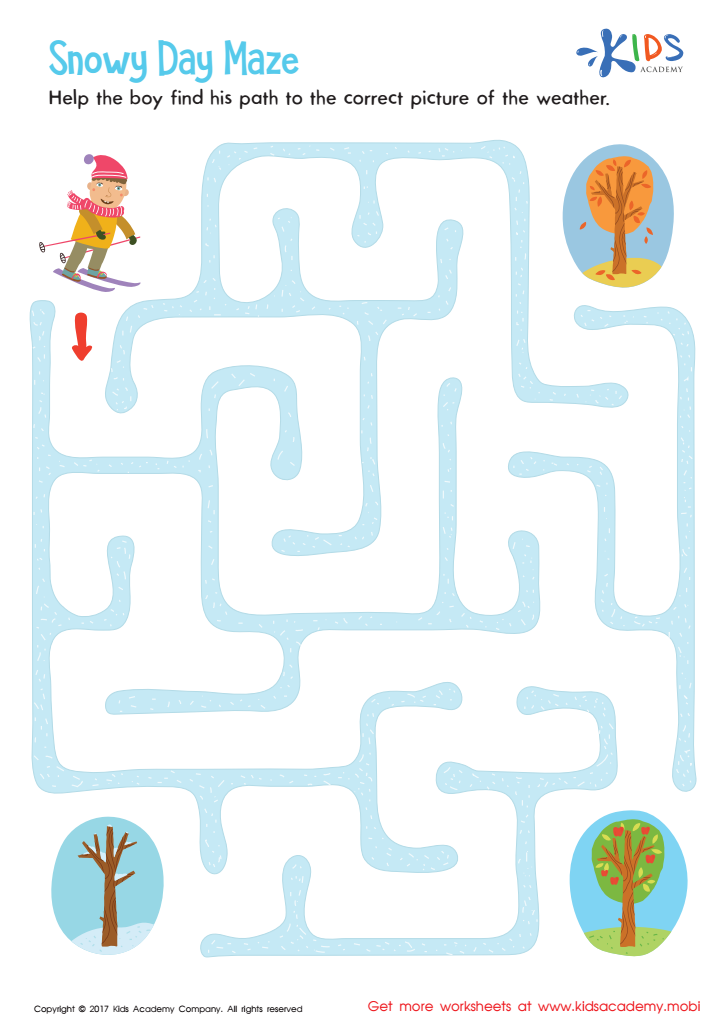
 Assign to My Students
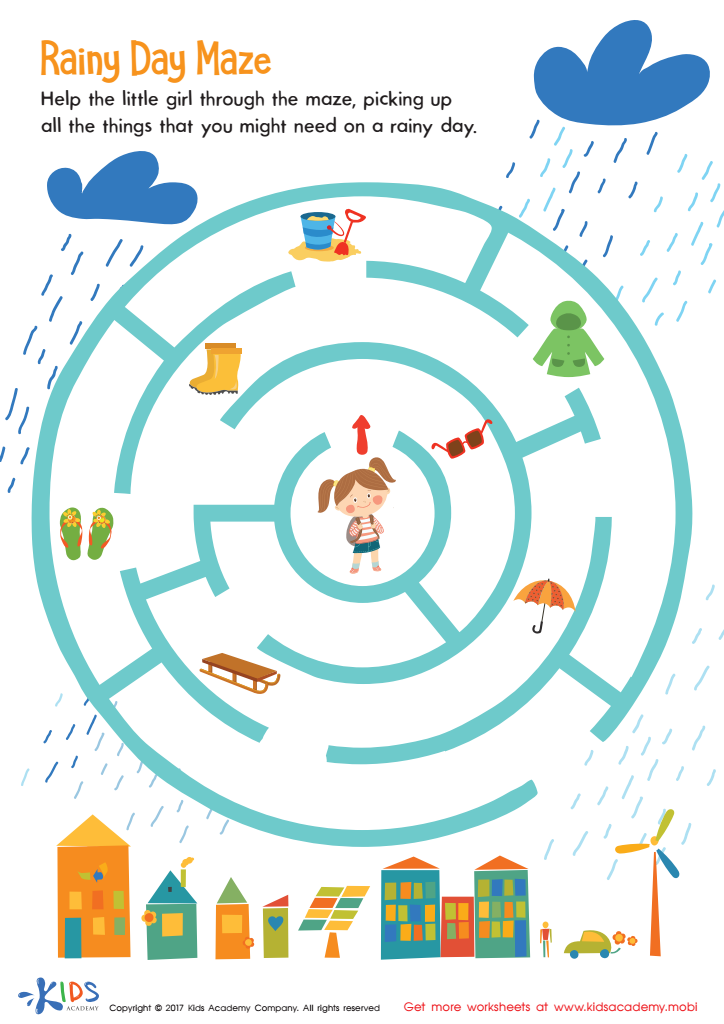
Rainy Day Maze Worksheet








Parents and teachers should certainly care about maze activities for children aged 4-8 due to the multifaceted benefits they provide. Firstly, mazes stimulate cognitive development, helping children enhance their problem-solving and critical-thinking skills. As kids navigate through different pathways, they learn to analyze choices and foresee consequences, which lays the groundwork for more complex reasoning in later years.
Additionally, maze activities promote fine motor skills, as children often work with pencils or markers to trace paths. This not only improves their hand-eye coordination but also prepares them for writing and other dextrous tasks.
Mazes also encourage focus and perseverance. As young learners encounter challenges while trying to find their way, they develop patience and resilience—key attributes for academic success and life in general. Furthermore, these activities often foster enjoyment and engagement, thereby allowing children to associate learning with fun.
Moreover, maze activities can be secretive learning tools that encourage language and math development, as kids narrate their problem-solving steps or keep track of steps taken with counting. All these aspects of maze activities align well with early childhood education goals, making them valuable for holistic development. Consequently, incorporating maze activities into learning can greatly enrich children's foundational skills.








