Filters

90 filtered results

Clear all filters
Favorites
With answer key
Interactive

90 filtered results

Difficulty Level

Grade


Check out this FREE Knowledge Check Trial Lesson for age 4!

Review

Favorites
With answer key
Interactive
  • Knowledge Check
  • 4
  • Interactive
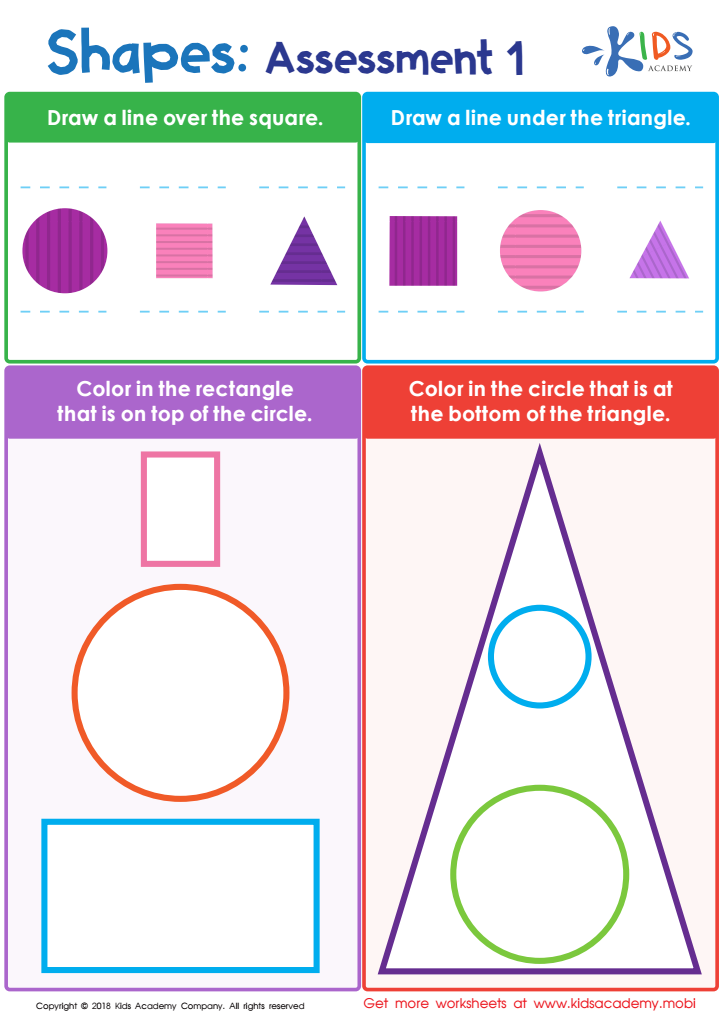
Shapes: Assessment 1 Worksheet

Shapes: Assessment 1 Worksheet

Test your students' understanding of the four basic shapes - circle, square, triangle and rectangle - with this assessment worksheet. Get them to draw a line over or under the shape indicated in the directions to show they can identify it correctly.
Shapes: Assessment 1 Worksheet
Worksheet
Geometry - Assessment 2 Worksheet Preview

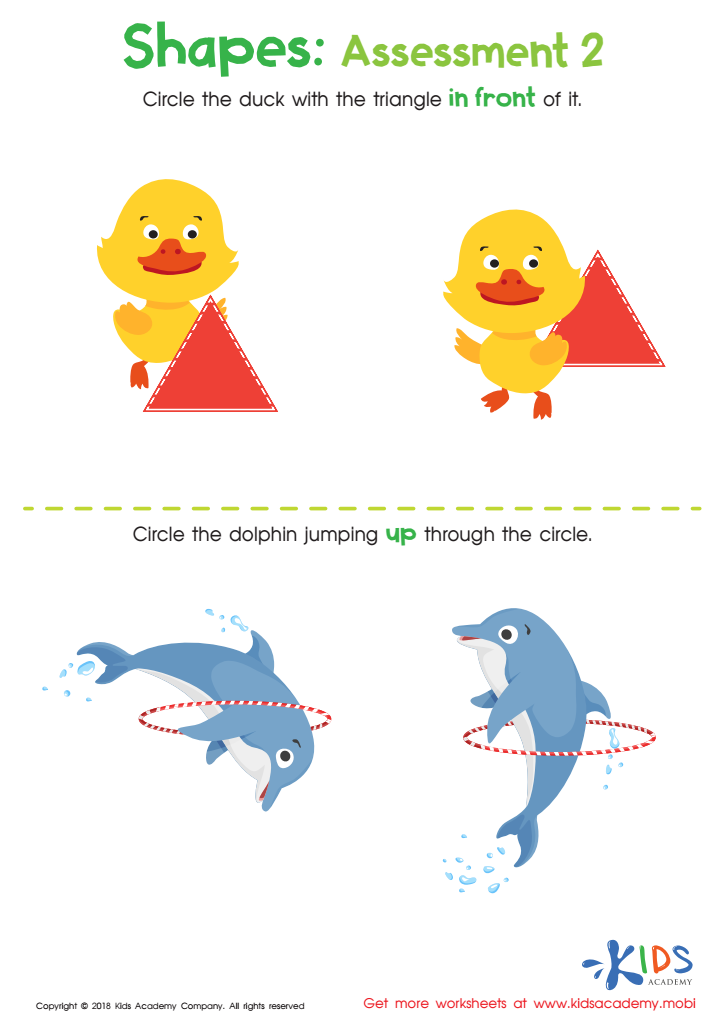
Geometry – Assessment 2 Worksheet

Preschoolers will learn to identify circles and triangles and practice using terms like "in front of" to place objects. This skill is key to further learning and is an important part of development.
Geometry – Assessment 2 Worksheet
Worksheet
Geometry - Assessment 1 Worksheet Preview

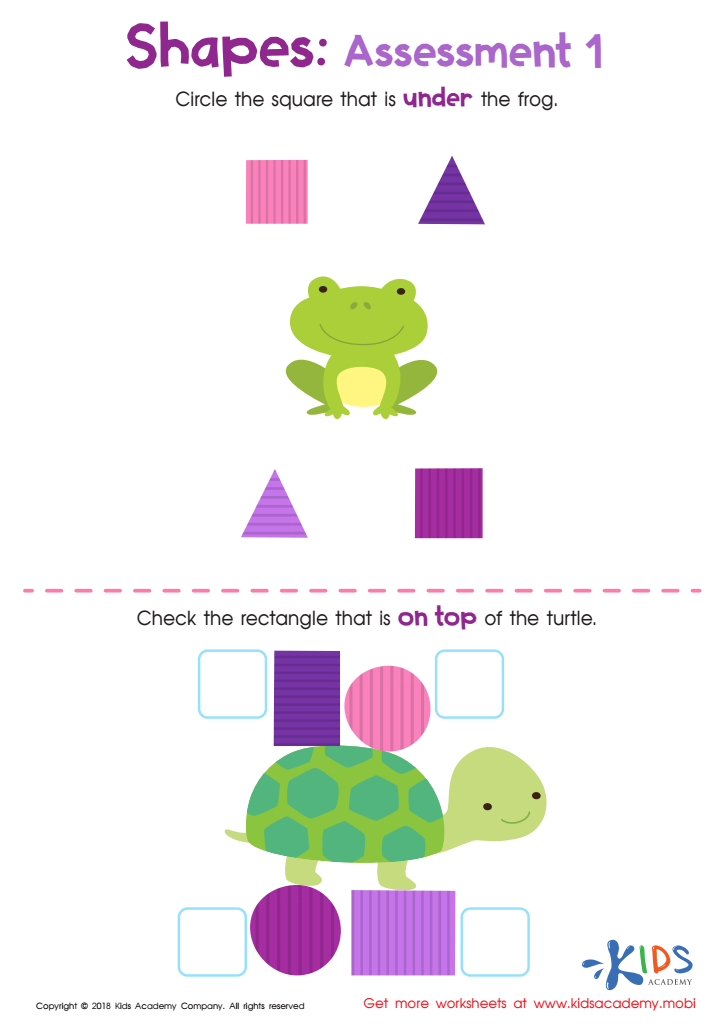
Geometry – Assessment 1 Worksheet

This activity helps preschoolers find shapes "on top of" and "under" animals. They must identify the correct shapes assigned to them. It's a great way to learn geometry and placements of objects.
Geometry – Assessment 1 Worksheet
Worksheet
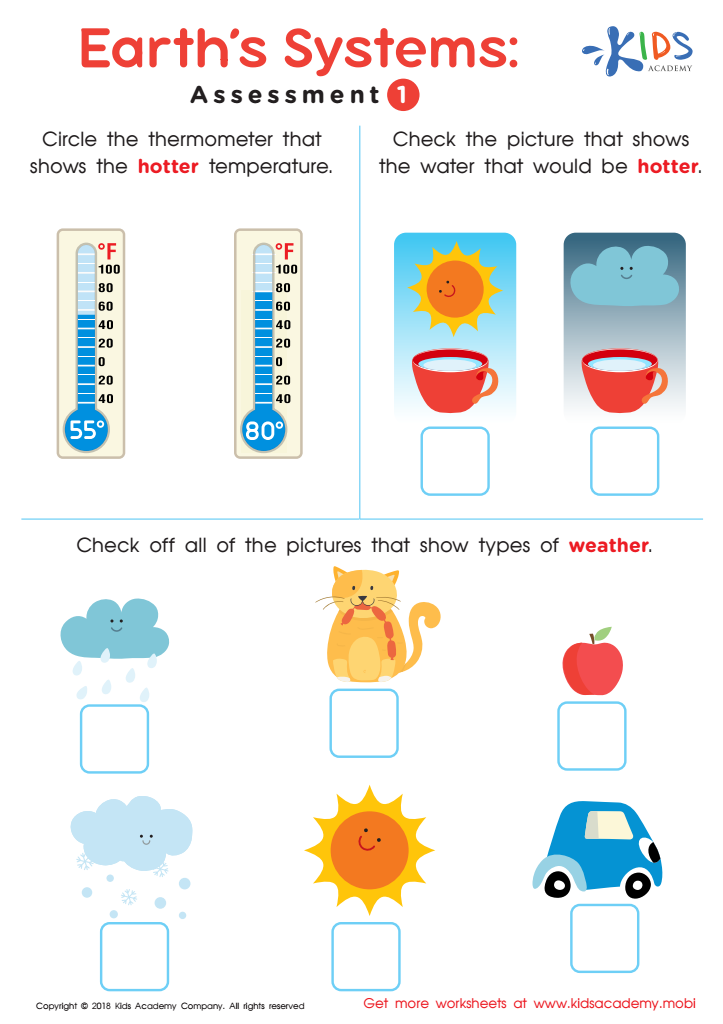
Earth's Systems: Assessment 1

Earth's Systems: Assessment 1

Check your child's knowledge of weather basics with this quick printable worksheet! Using colorful pictures, instruct them to determine which thermometer shows a hotter reading and if water would be warmer in the sun or under clouds. Encourage kids to identify types of weather on the bottom of the page. Assess their readiness to move on!
Earth's Systems: Assessment 1
Worksheet
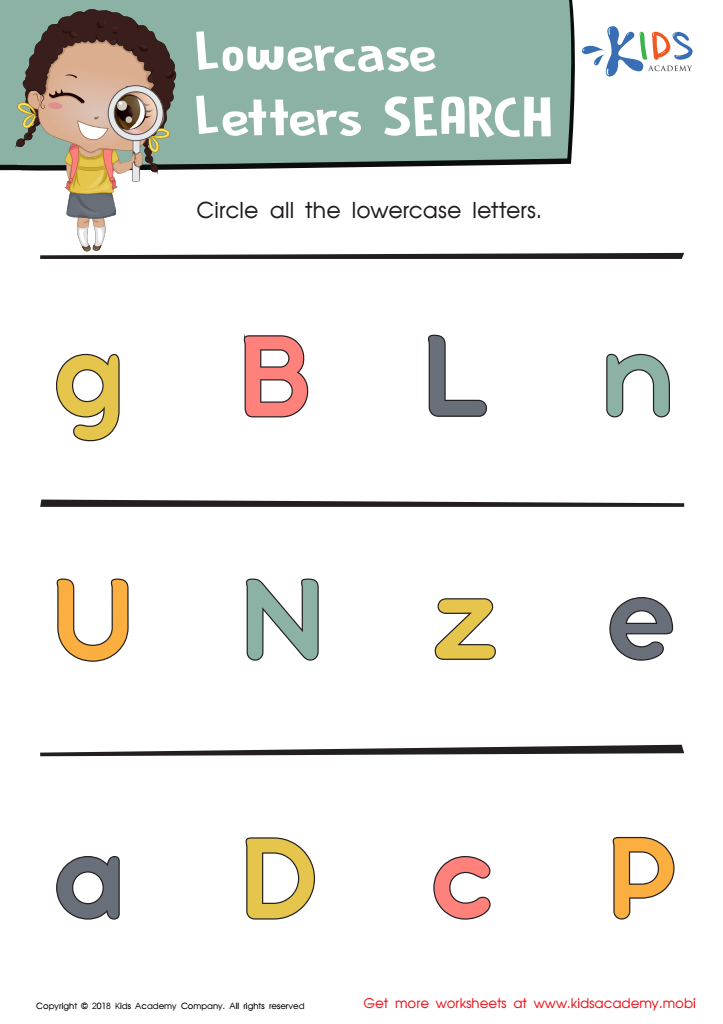
Lowercase Letters Search: Assessment Worksheet

Lowercase Letters Search: Assessment Worksheet

Circle all the lowercase letters in this worksheet. Identify them among a mix of uppercase and lowercase letters. Your child will have fun with this exercise thanks to its bright primary colors. Enjoyment and learning go hand-in-hand!
Lowercase Letters Search: Assessment Worksheet
Worksheet
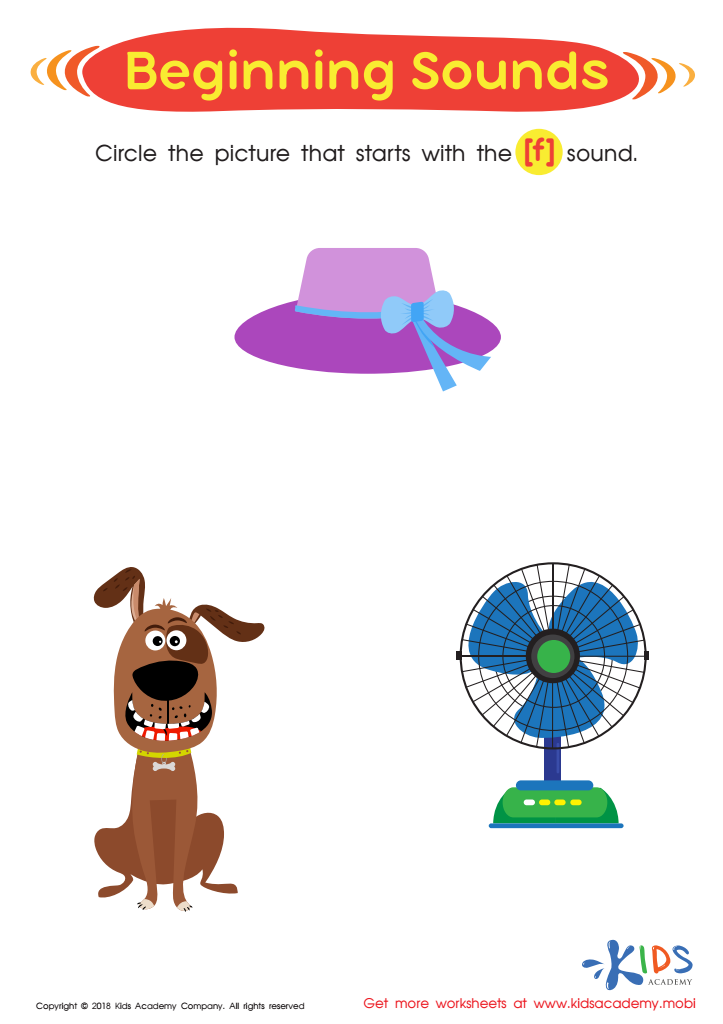
Beginning Sounds Assessment Printable

Beginning Sounds Assessment Printable

Test your child's knowledge of the alphabet. Ask them to recite the whole alphabet and the words for each letter. For example: A for apple, B for boy. Identify objects on this worksheet, then ask your child which one starts with the letter "f" and have them circle it.
Beginning Sounds Assessment Printable
Worksheet
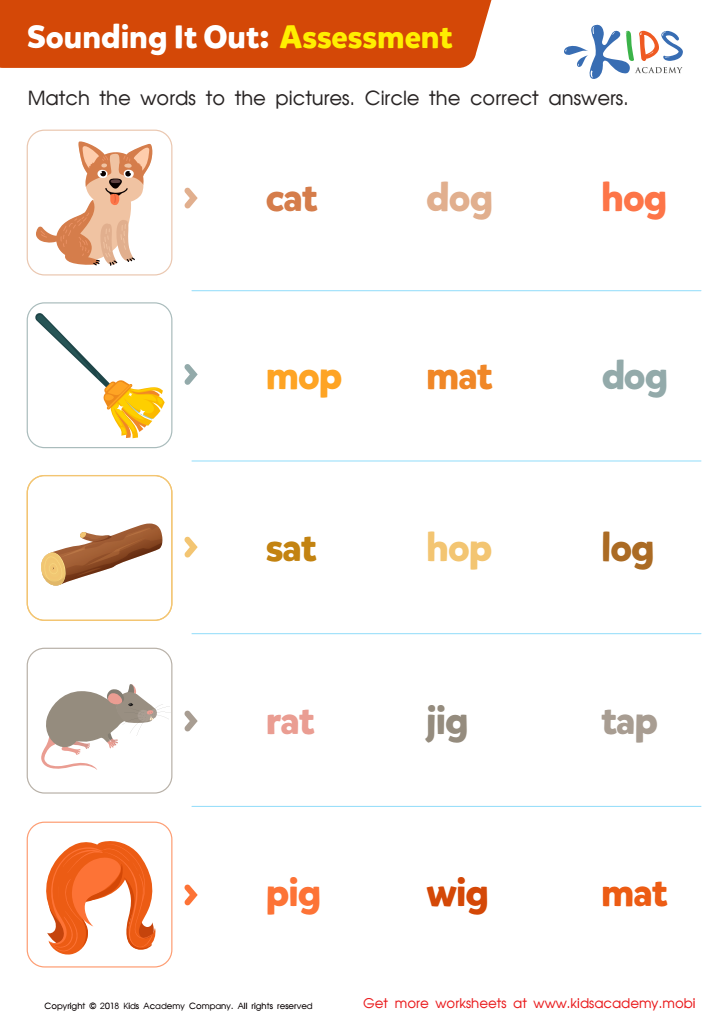
Sounding it Out: Assessment Worksheet

Sounding it Out: Assessment Worksheet

Give your little learner a fun challenge with this downloadable worksheet! With pictures to guide them, have them name the images and then sound out the words in the same row. Be careful though, as they all contain the same amount of similarly sounding letters. Once the correct word has been found, have them circle it!
Sounding it Out: Assessment Worksheet
Worksheet
Rhyming Words: Assessment Worksheet

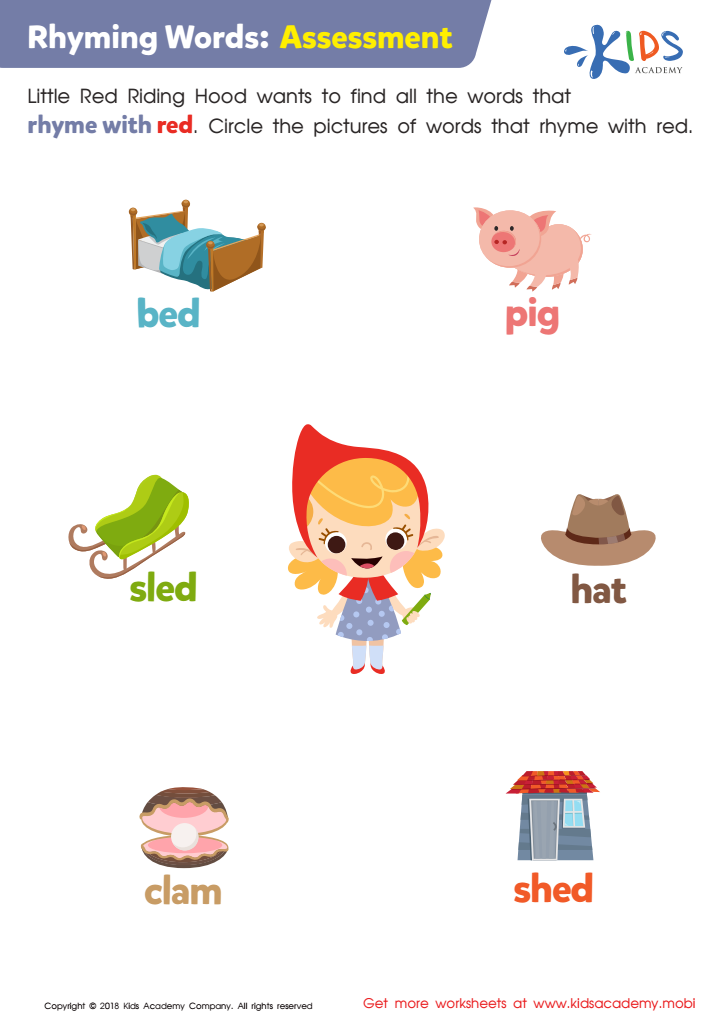
Rhyming Words: Assessment Worksheet

Help Little Red Riding Hood find rhyming words with "red". Download and print this worksheet. Have your child circle the rhyming words and pictures. Get them to say each word out loud and compare it to the word "red". When they're done, review the answers and talk about any words that don't rhyme.
Rhyming Words: Assessment Worksheet
Worksheet
Vowel and Consonant Sounds: Assessment Worksheet

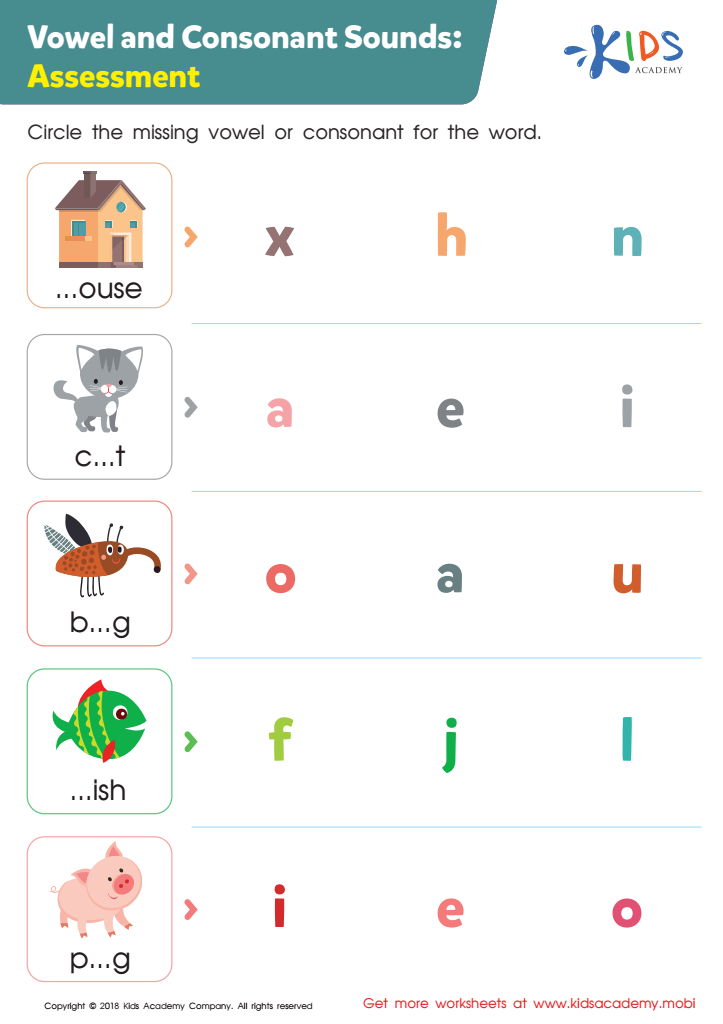
Vowel and Consonant Sounds: Assessment Worksheet

Test young elementary students on vowel and consonant sounds with this friendly phonics assessment worksheet. Get kids to name each image and look at the word underneath. Ask them to sound out the word, then circle the missing letter to complete. This will help assess their knowledge and skills!
Vowel and Consonant Sounds: Assessment Worksheet
Worksheet
Uppercase and Lowercase Letters: Assessment Worksheet

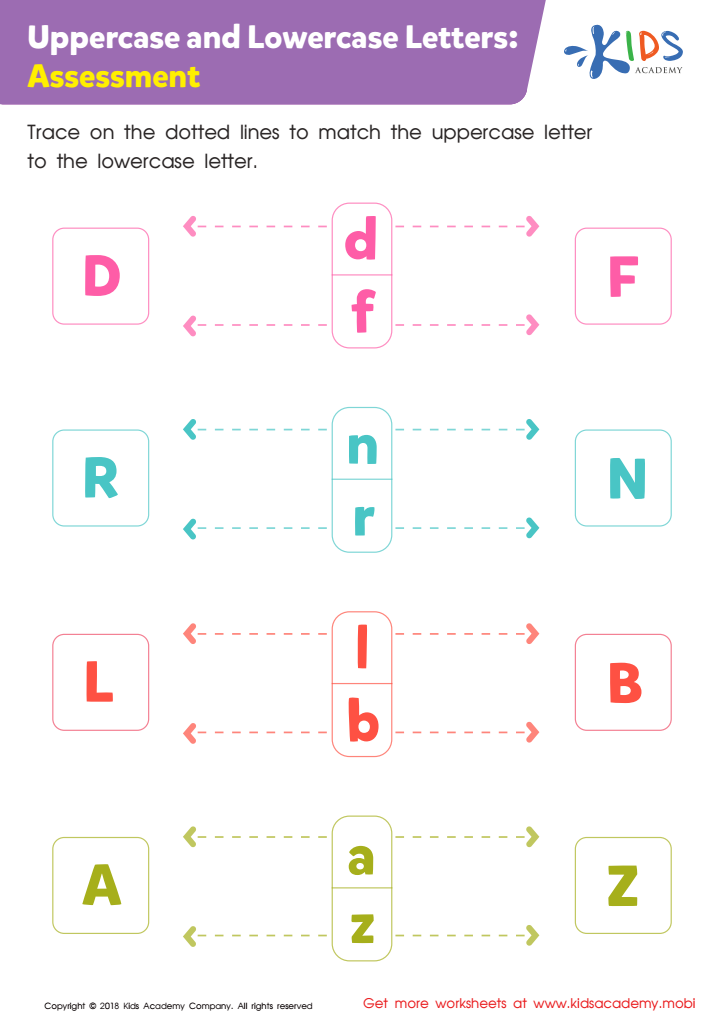
Uppercase and Lowercase Letters: Assessment Worksheet

Assess your child's knowledge of upper- and lowercase letters with this worksheet. Have them trace the dotted lines to match the lowercase letters with their uppercase counterparts. This is a great way to gauge their progress and identify any areas of difficulty. Get a better understanding of your child's capabilities and encourage their development!
Uppercase and Lowercase Letters: Assessment Worksheet
Worksheet
Letters G-L Worksheet Preview

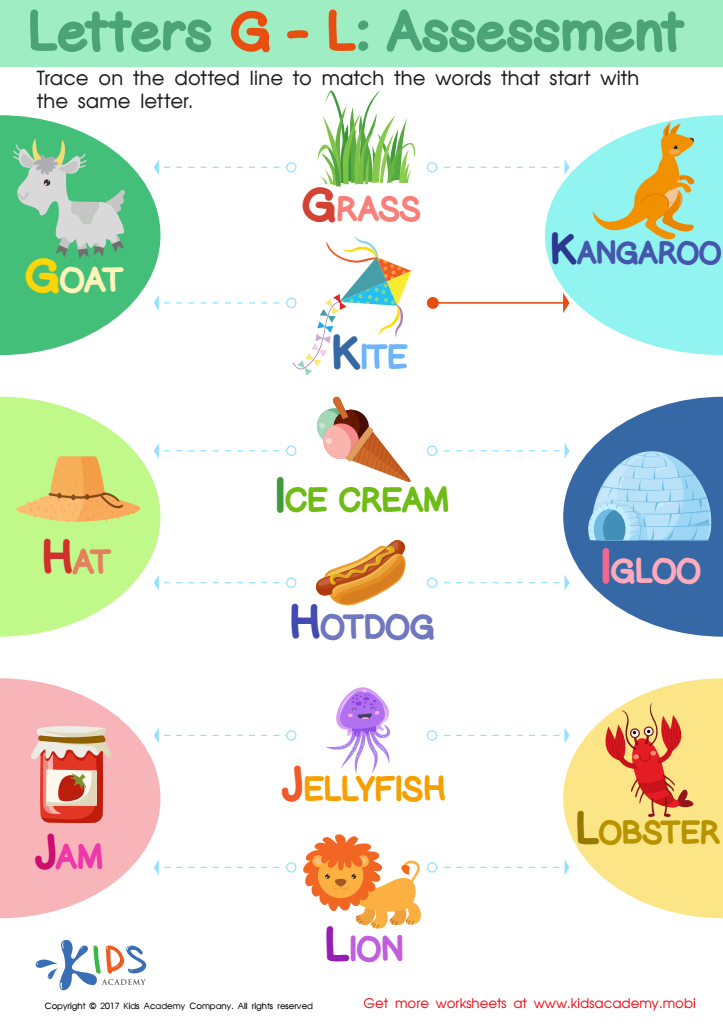
Letters G-L Worksheet

This fun worksheet helps preschoolers develop reading and phonics skills. It gets kids to match G-L words that start with the same letter, making it engaging and educational.
Letters G-L Worksheet
Worksheet
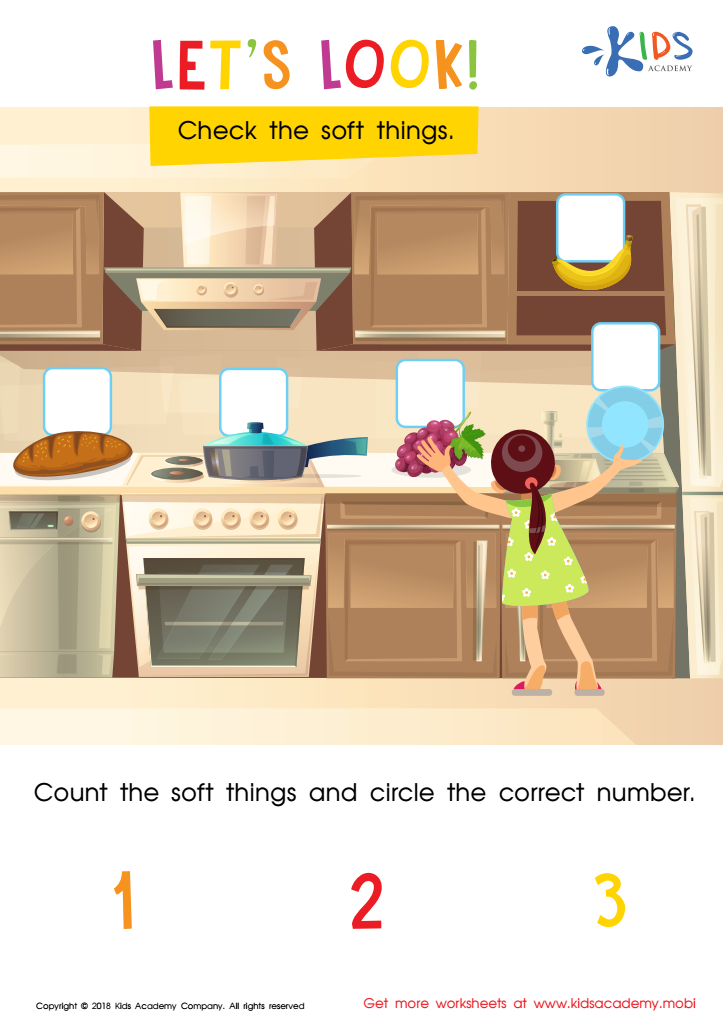
Let's Look! Assessment Worksheet

Let's Look! Assessment Worksheet

Have your child look at the picture in the printout and name the objects. Ask which ones are soft and hard and have them count the soft objects and circle the number. This worksheet will engage your child's thinking and teach them about texture.
Let's Look! Assessment Worksheet
Worksheet
Let's Check! Assessment Worksheet

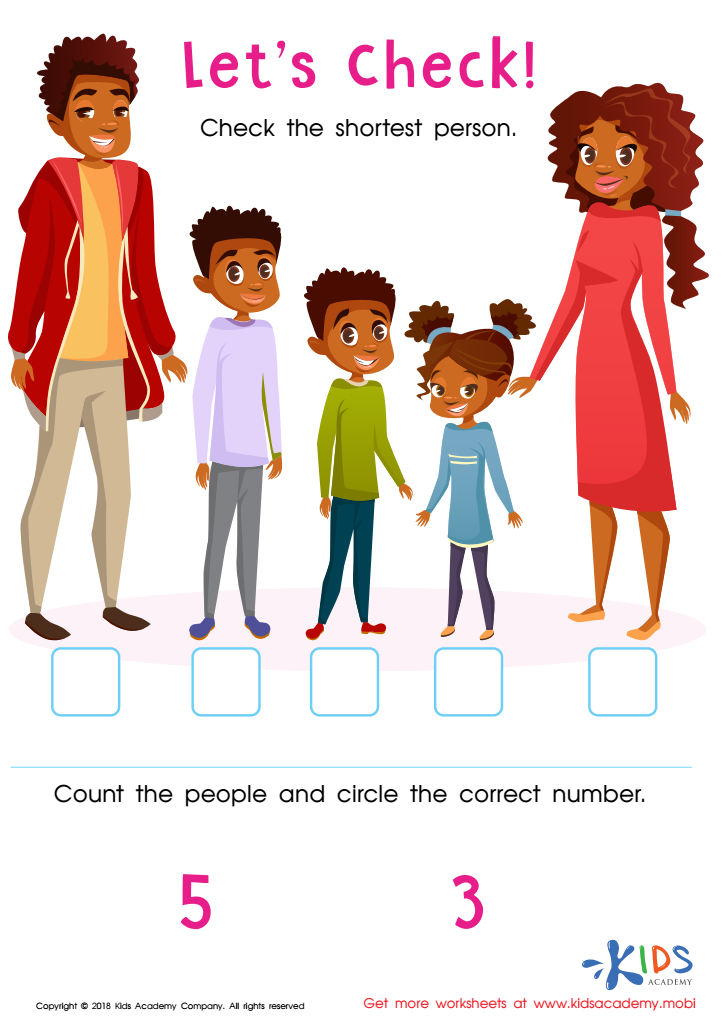
Let's Check! Assessment Worksheet

Check your child's understanding of height with this worksheet. Ask them to sort the objects in order of size and identify the tallest and shortest member of the family in the picture. See if they can correctly arrange the items from tallest to shortest.
Let's Check! Assessment Worksheet
Worksheet
Force and Interactions: Assessment 2 Worksheet

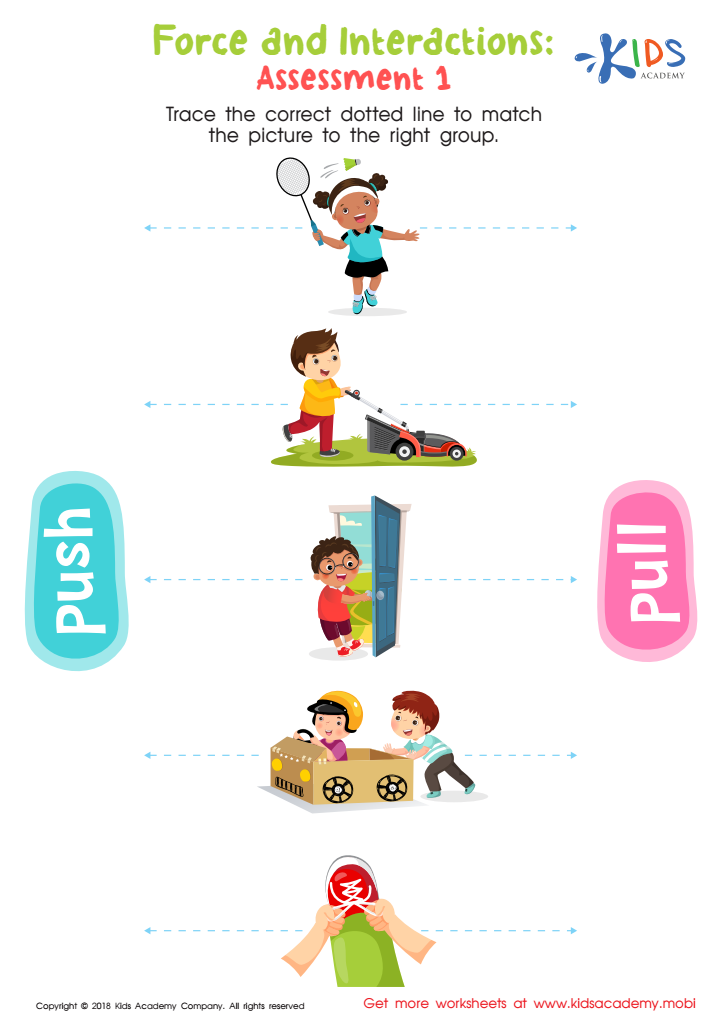
Force and Interactions: Assessment 2 Worksheet

Help your child see the difference between push and pull with this fun worksheet. Ask them to match each picture to the right group. The "push" is on the left and the "pull" is on the right. Assist them in tracing the activities and explain what it is the people are doing.
Force and Interactions: Assessment 2 Worksheet
Worksheet
Force and Interactions: Assessment 1 Worksheet

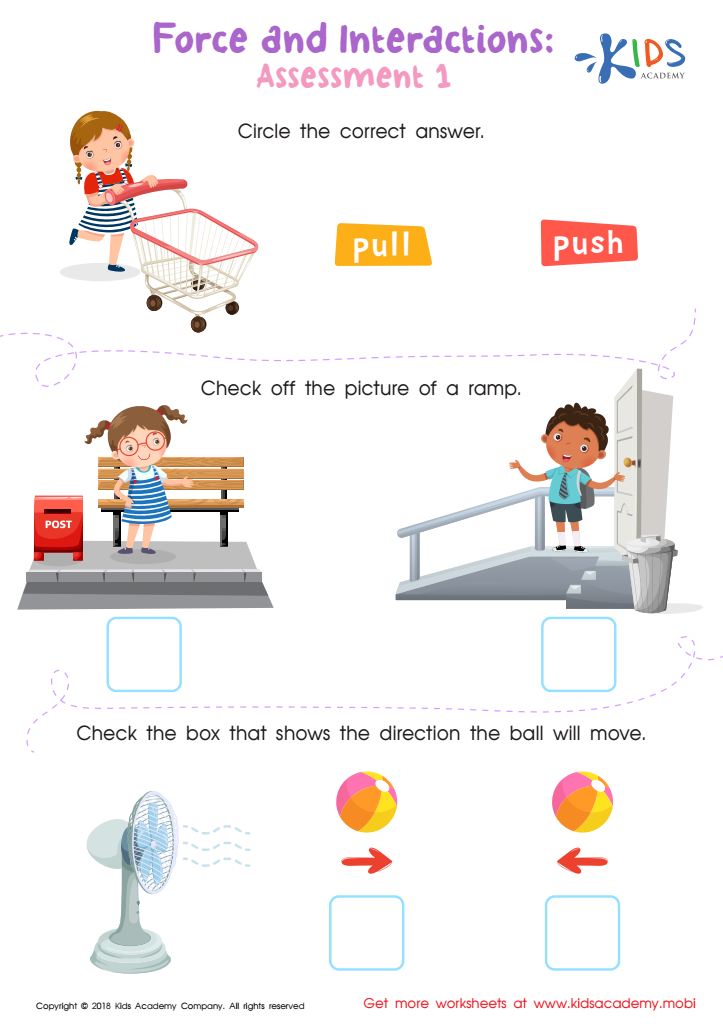
Force and Interactions: Assessment 1 Worksheet

Test your students' knowledge of pushing, pulling, ramps and wind with this worksheet. The first task requires them to identify push or pull pictures. The second asks them to identify a ramp and the third to explain which direction a ball will move when exposed to wind.
Force and Interactions: Assessment 1 Worksheet
Worksheet
Counting: Assessment 5 Worksheet

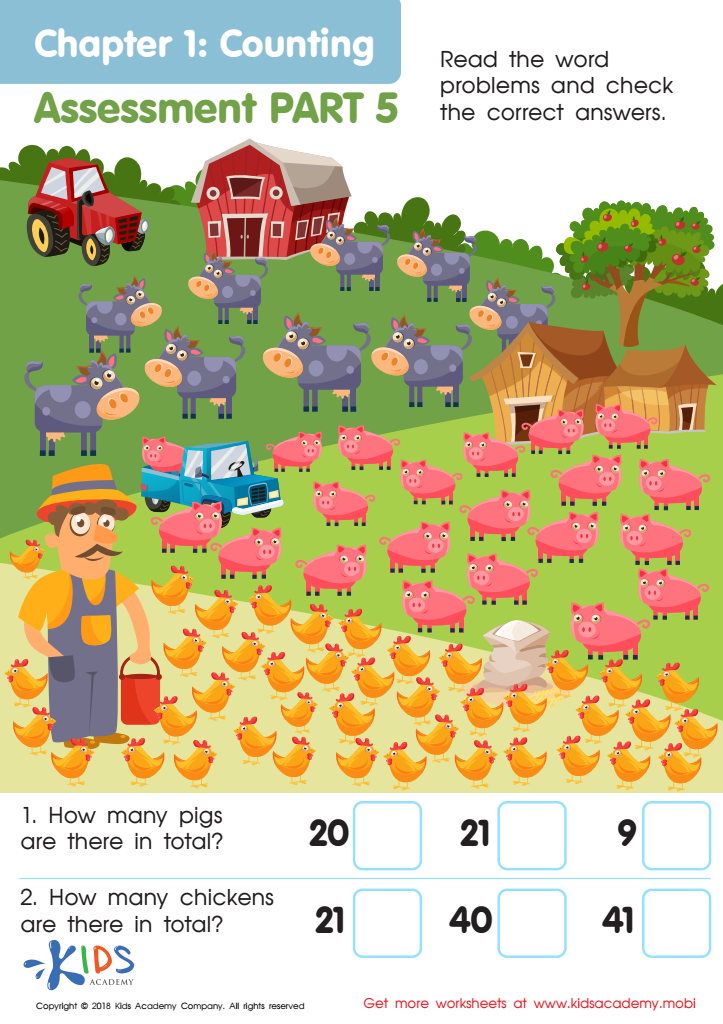
Counting: Assessment 5 Worksheet

Let your kids have fun counting farm animals on this worksheet! Help the farmer count the animals and have your child check the answers to assess their counting skills. Read the word problem at the bottom of the page and count the animals together. It's an entertaining way to practice counting and have a great time!
Counting: Assessment 5 Worksheet
Worksheet
Counting: Assessment 4 Worksheet

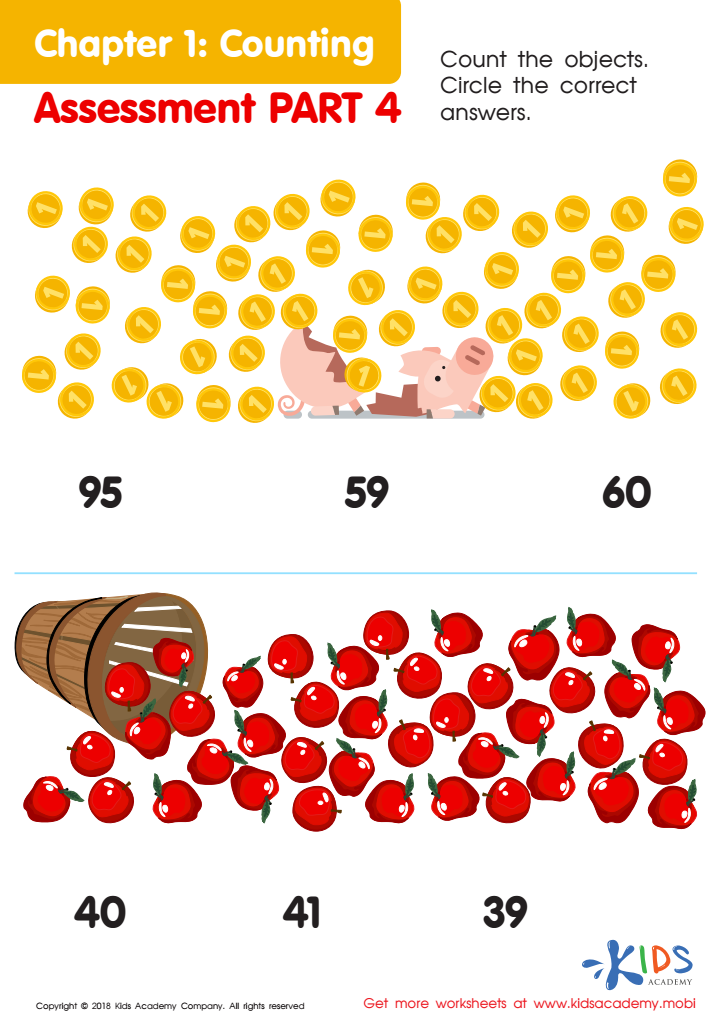
Counting: Assessment 4 Worksheet

Encourage your students to count objects in this colorful worksheet. Ask them to circle the correct answers from the options given. See how much their counting skills have improved with your guidance. Have fun!
Counting: Assessment 4 Worksheet
Worksheet
Counting: Assessment 3 Worksheet


Counting: Assessment 3 Worksheet

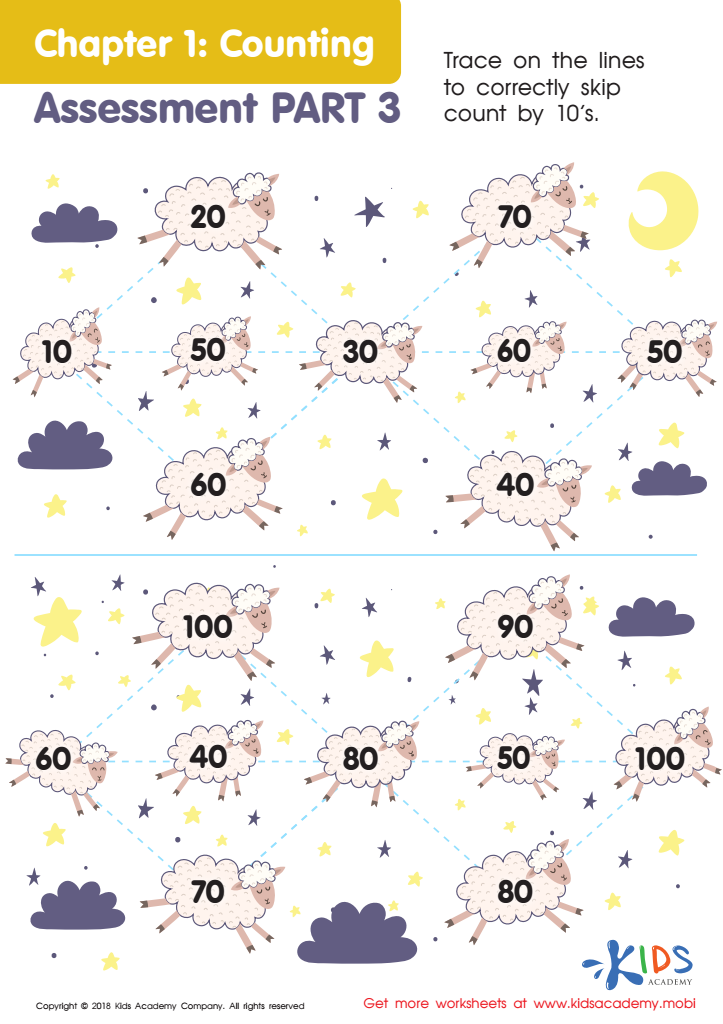
This worksheet is great for assessing your child's counting skills. It's a bit more challenging than the usual 'count to fifty' exercises. Have them trace the lines and skip count by 10's to help them learn counting in tens.
Counting: Assessment 3 Worksheet

Worksheet


... 3 4

Knowledge Check worksheets activities are an invaluable tool in the educational process, serving a multitude of purposes that enhance both teaching and learning experiences. These activities are designed to meticulously evaluate students' understanding of the material covered, ensuring that learning objectives are met efficiently. The benefits of incorporating Knowledge Check worksheets into educational strategies are manifold, making them an indispensable resource for educators and learners alike.

First and foremost, Knowledge Check worksheets activities provide immediate feedback to both students and teachers. This immediate assessment allows learners to identify their strengths and areas for improvement, fostering a self-awareness that is crucial for personal academic development. For teachers, the instant feedback mechanism enables the identification of topics that might need further clarification or additional teaching time, ensuring that no student is left behind.

Moreover, these activities promote active learning. Instead of passively absorbing information, students engage directly with the material through thoughtful completion of the worksheets. This engagement not only reinforces the learning process but also aids in the retention of information, making Knowledge Check worksheets a potent tool for solidifying understanding.

Knowledge Check worksheets activities also cater to diverse learning styles. Whether a student thrives on visual aids, hands-on tasks, or written exercises, worksheets can be tailored to suit various preferences, ensuring that each learner can access the material in a way that best suits their individual learning style. This inclusivity boosts confidence and encourages a more enthusiastic approach to learning.

Additionally, these worksheets are versatile and can be used across different subjects and grade levels. Whether it's mastering complex mathematical formulas, understanding historical events, or exploring scientific concepts, Knowledge Check worksheets activities can be adapted to suit any curriculum area, making them universally applicable.

In conclusion, Knowledge Check worksheets activities are a fundamental component of effective teaching and learning strategies. They not only facilitate a deeper understanding and retention of information but also cater to individual learning needs, making the educational journey more engaging, inclusive, and successful for everyone involved.