Rhyming worksheets activities for 4-Year-Olds
1 filtered results
-
From - To
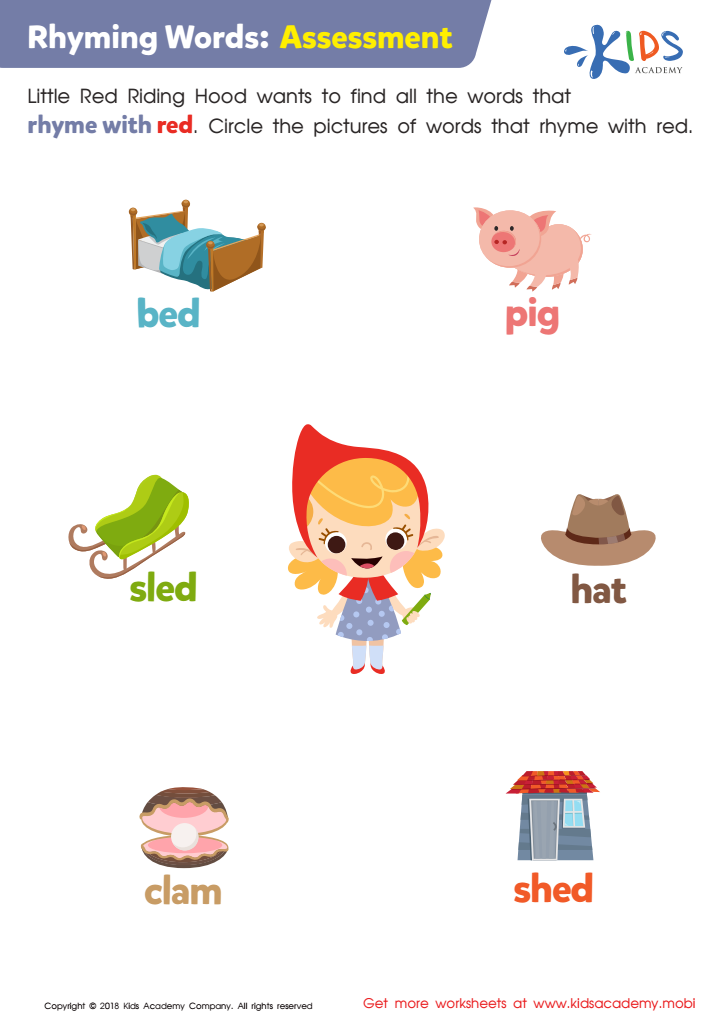
Rhyming Words: Assessment Worksheet
 Assign to My Students







Rhyming worksheets activities are an incredibly valuable tool in the realm of learning and literacy development for a myriad of reasons. These carefully structured exercises not only make learning fun but also foster a deep understanding of language patterns, sound recognition, and vocabulary enhancement. Let's delve into the reasons why rhyming worksheets activities are beneficial and should be incorporated into educational settings and home learning environments.
First and foremost, rhyming worksheets activities aid in phonemic awareness, which is the ability to hear, identify, and manipulate individual sounds—phonemes—in spoken words. This skill is foundational for reading and spelling success. By engaging with rhymes, children develop the ability to discern subtle sound differences and similarities, setting the stage for more advanced reading skills and effective communication.
Moreover, rhyming worksheets activities enhance vocabulary. As children encounter rhymes, they are exposed to a wide range of words, many of which might be new to them. This exposure not only adds to their lexicon but also helps in understanding context and the nuances of language. Through fun and interactive worksheets, children learn new words in a memorable and enjoyable way.
Furthermore, rhyming worksheets activities bolster memory and cognitive development. The repetitive and rhythmic nature of rhymes makes them easier to remember than non-rhyming text. This repetition strengthens memory recall and can improve overall cognitive development. Rhyming also encourages creativity and imagination as children think of words that rhyme, often leading to the creation of whimsical and inventive ideas.
Lastly, the use of rhyming worksheets can greatly improve reading comprehension and fluency. As children become more proficient in recognizing rhyming patterns, they can anticipate word endings, making reading a smoother and more enjoyable experience. This anticipation leads to greater reading confidence, fluency, and a lifelong love for reading.
In conclusion, rhyming worksheets activities are a multifaceted educational tool that supports language development, cognitive skills, and reading abilities. By incorporating these activities into learning environments, educators and parents can provide children with a fun and effective way to enhance their language and literacy skills.








