Matching worksheets activities for 4-Year-Olds - Page 4
75 filtered results
-
From - To
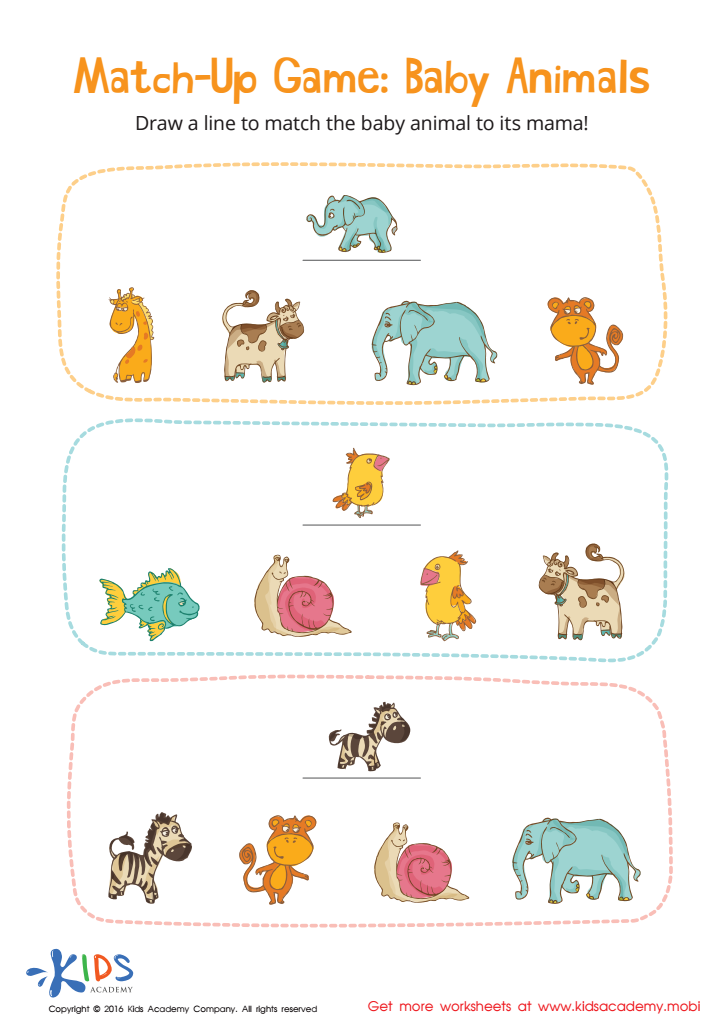
Baby Animals Match-Up Worksheet
 Assign to My Students
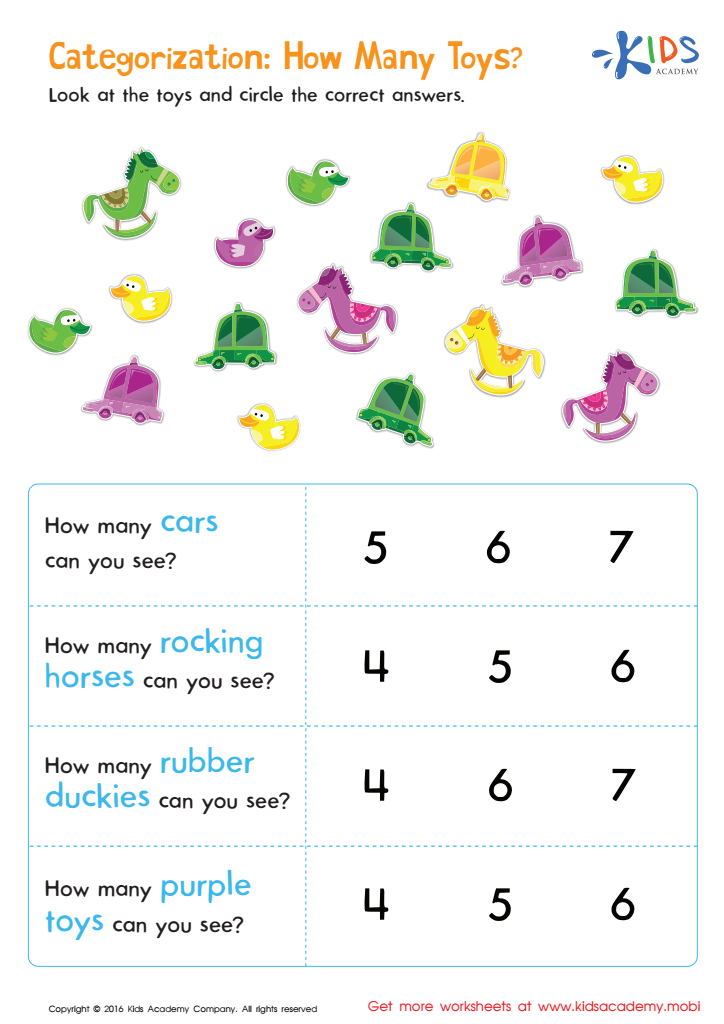
Classifying Toys by Type and Color Sorting Worksheet






Matching worksheets activities are an indispensable tool in educational settings, catering to a wide range of subjects and age groups. These activities are designed with the goal of enhancing various cognitive and learning skills, including memory, observation, and critical thinking. By engaging in matching worksheets activities, learners can experience a hands-on approach to education, making the learning process both interactive and enjoyable.
One of the primary benefits of matching worksheets activities is their ability to improve cognitive development in learners. Through the process of matching related items, students enhance their ability to recognize patterns and relationships between different concepts. This skill is foundational in subjects such as mathematics, language arts, and science, where understanding relationships is key to comprehension and application. Moreover, matching exercises can be tailored to any subject matter, making them a versatile tool in the educator's toolkit.
Furthermore, matching worksheets activities support the development of fine motor skills, especially in younger learners. The act of drawing lines to connect matching items or cutting and pasting pieces to their counterparts requires precision and control, thus promoting hand-eye coordination and dexterity. These activities also foster a sense of accomplishment and confidence as students successfully complete the tasks, encouraging a positive attitude towards learning.
For educators, matching worksheets activities offer the advantage of being easily adaptable to different learning objectives and skill levels. They can serve as an introductory activity to familiarize students with new concepts, a review tool to reinforce learning, or an assessment method to evaluate understanding. Additionally, these activities can be customized to match the interests of the learners, making the educational experience more relevant and engaging for them.
In conclusion, matching worksheets activities are a valuable educational resource. They not only promote cognitive and fine motor skills development but also provide a flexible and enjoyable way for students to engage with learning material. By incorporating these activities into their teaching strategies, educators can enhance the educational experience and foster a deeper understanding of the subject matter among their students.








