Phonics worksheets activities for Ages 5-9 - Page 2
25 filtered results
-
From - To
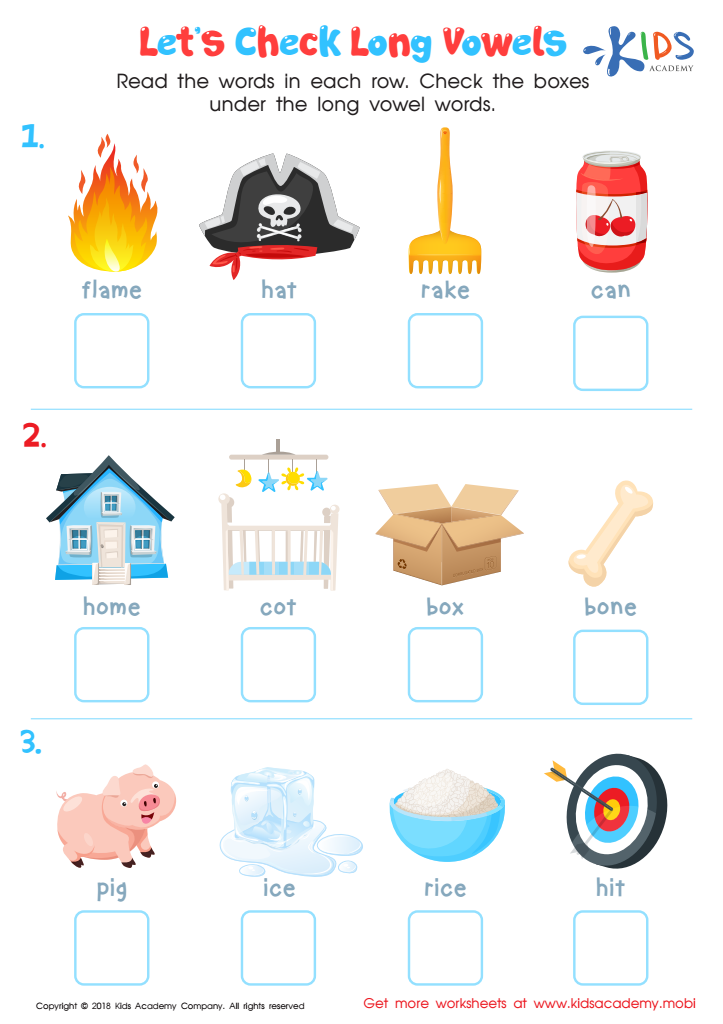
Let's Check Long Vowels: Assessment Worksheet
 Assign to My Students







Phonics activities are crucial for children aged 5-9 as they form the foundation of reading and writing skills. During these formative years, children are developing their phonemic awareness — the ability to hear, identify, and manipulate individual sounds in spoken words. Phonics instruction enables children to link sounds to letters, which is essential for decoding words when reading.
Engaging in phonics activities helps build confidence as kids start to recognize and understand word patterns. This skill not only fosters literacy but also encourages a love for reading, which is vital for lifelong learning. Additionally, phonics activities support vocabulary development, comprehension, and spelling—key areas for academic success across subjects.
Teachers and parents should prioritize phonics because they help children navigate complex language structures, making the transition to more difficult texts smoother. Moreover, early phonics competence can prevent future reading struggles, ensuring children are well-equipped to meet the curriculum demands as they progress through school. By investing time in phonics activities, adults can positively impact children's educational journeys, ensuring they develop strong literacy skills that enhance overall communication and cognitive development. Supporting phonics is a proactive step in nurturing proficient, enthusiastic readers.








