Filters

7 filtered results

Clear all filters
Favorites
With answer key
Interactive

7 filtered results

Difficulty Level

Grade


Discover a world of fun and engaging writing worksheet activities designed specifically for children aged 6-9. Our resources cater to young learners, promoting creativity and enhancing their writing skills through interactive exercises. Each worksheet encourages critical thinking, enabling kids to practice sentence formation, storytelling, and more. The visually appealing designs and age-appropriate prompts make writing enjoyable and accessible. Whether at home or in the classroom, these activities serve as excellent tools for reinforcing foundational writing abilities. Explore our diverse collection to inspire a love for writing and set the stage for academic success! Perfect for parents and teachers alike!

Check out this FREE Writing Trial Lesson for age 6-9!

Question Words

Favorites
With answer key
Interactive
  • Writing
  • 6-9
  • Interactive
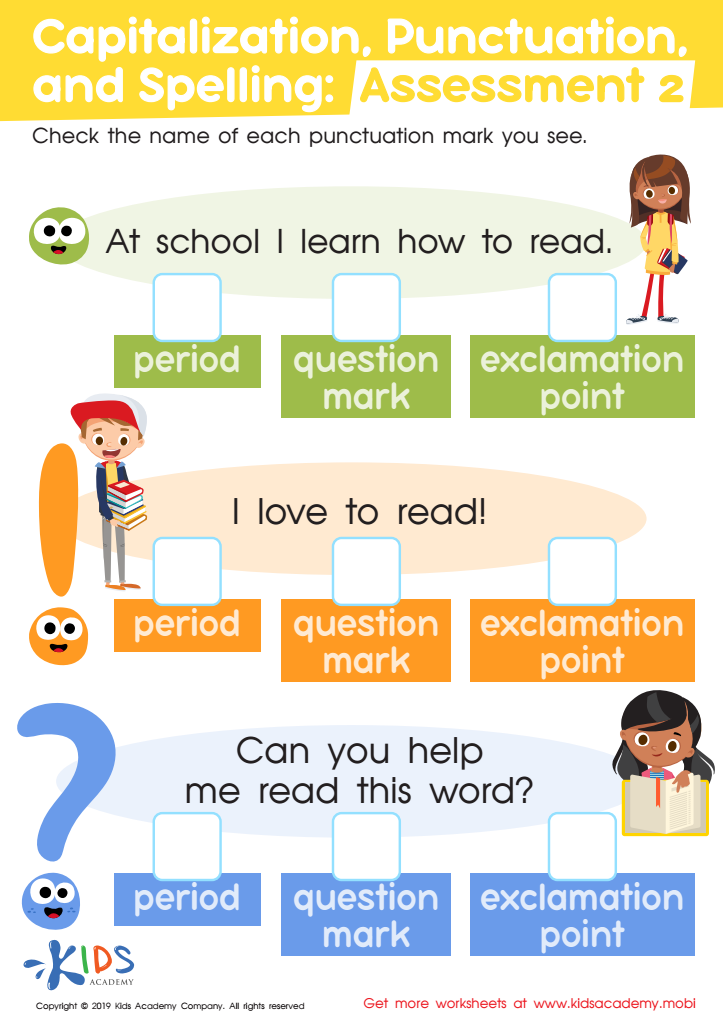
Capitalization. Punctuation. Spelling: Assessment 2 Worksheet

Capitalization. Punctuation. Spelling: Assessment 2 Worksheet

Teach your kids the basics of punctuation. Ask them to name the punctuation marks they know and review a worksheet together. Start with the full stop, question mark and exclamation mark. Show them examples and explain the differences between a comma and semi colon. Teaching proper use of punctuation marks is key to their development.
Capitalization. Punctuation. Spelling: Assessment 2 Worksheet
Worksheet
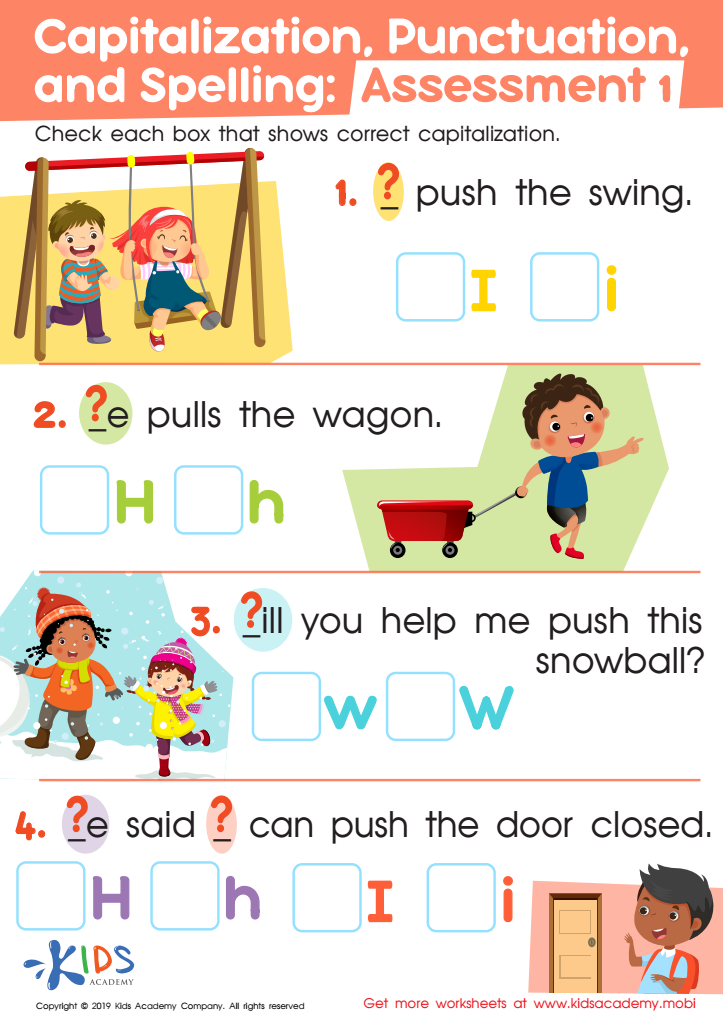
Capitalization. Punctuation. Spelling: Assessment 1 Worksheet

Capitalization. Punctuation. Spelling: Assessment 1 Worksheet

Capitalization is important for a lot of things. Ask your child about the significance of it. Punctuations, like the full stop, comma, question mark, and exclamation mark, are also key. Read each sentence in this worksheet to your child and ask if it has correct capitalization. Help them check the correct sentences.
Capitalization. Punctuation. Spelling: Assessment 1 Worksheet
Worksheet
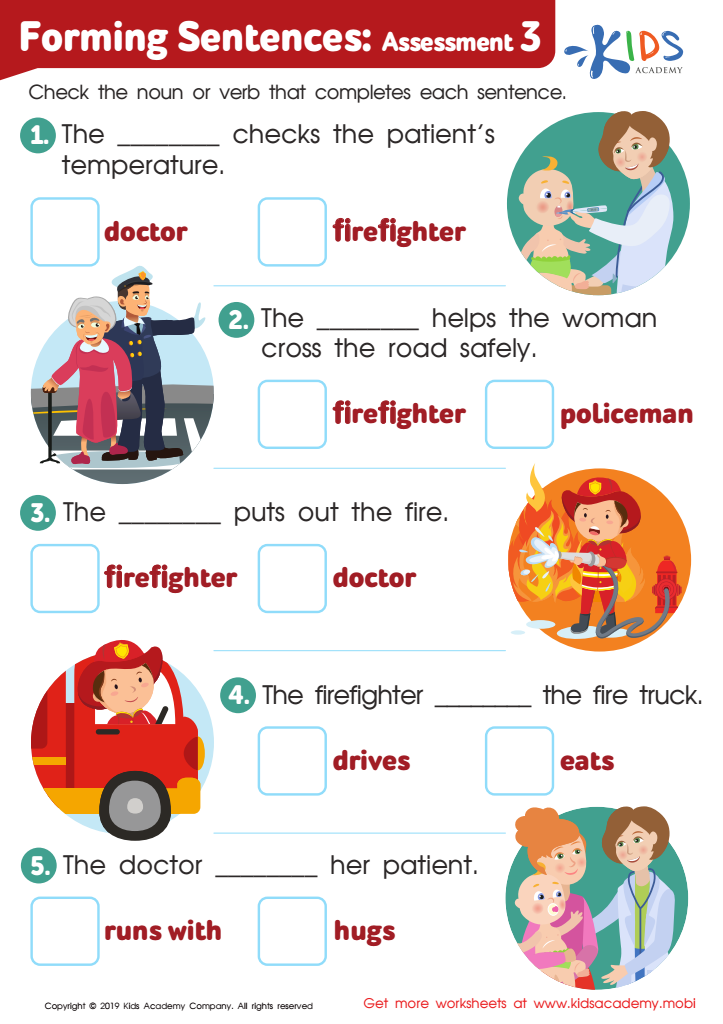
Forming Sentences: Assessment 3 Worksheet

Forming Sentences: Assessment 3 Worksheet

Students must master sentence formation to be successful English learners. After grasping the ABCs and basic words, the next step is to construct sentences using those words. Worksheets like this one can help teach kids how to make sentences; they need to look at the pictures and select the correct noun or verb to complete each sentence.
Forming Sentences: Assessment 3 Worksheet
Worksheet
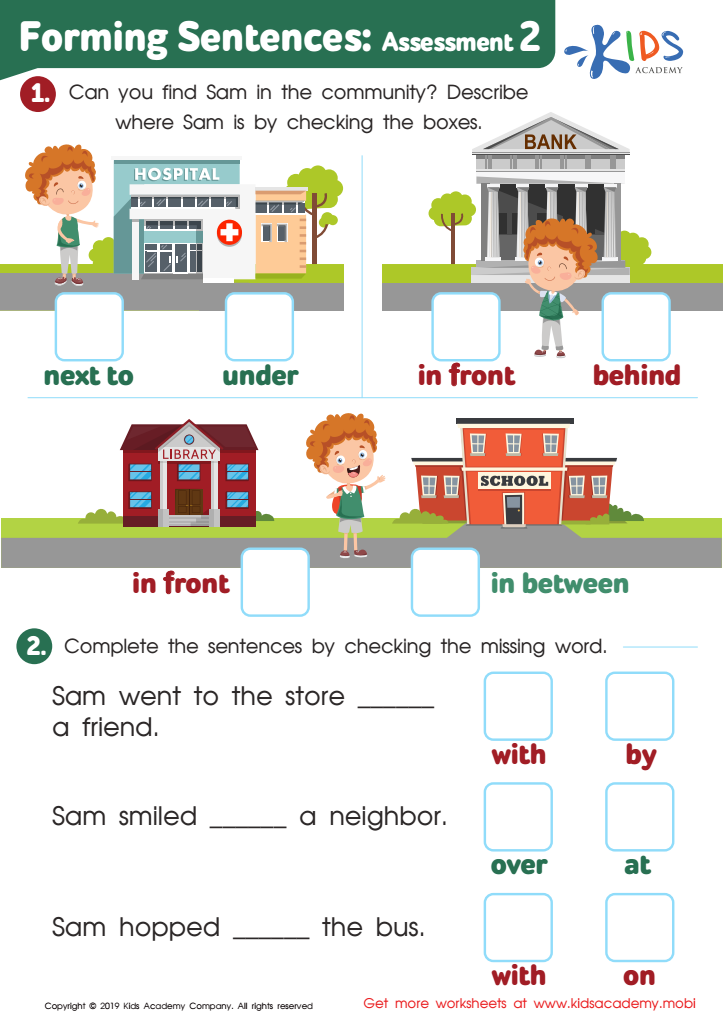
Forming Sentences: Assessment 2 Worksheet

Forming Sentences: Assessment 2 Worksheet

A community is an area with different people, buildings and professionals. Ask students to list buildings in their area, then help find Sam. Describe where he is and check the boxes in the worksheet. At the bottom, help complete the sentences by checking the missing word.
Forming Sentences: Assessment 2 Worksheet
Worksheet
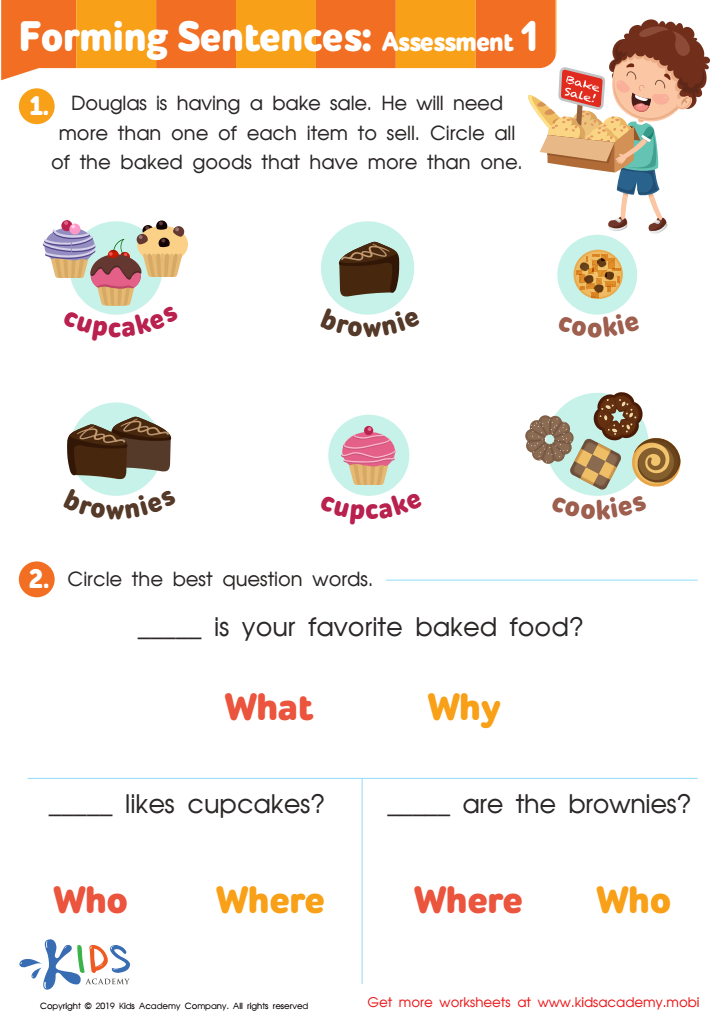
Forming Sentences: Assessment 1 Worksheet

Forming Sentences: Assessment 1 Worksheet

Bake sales are great fun, offering a variety of goodies and treats! Kids also have a chance to make a bit of money. Help your students circle all the yummy baked goods with more than one in this worksheet - Douglas is hosting a bake sale and needs items in bulk!
Forming Sentences: Assessment 1 Worksheet
Worksheet
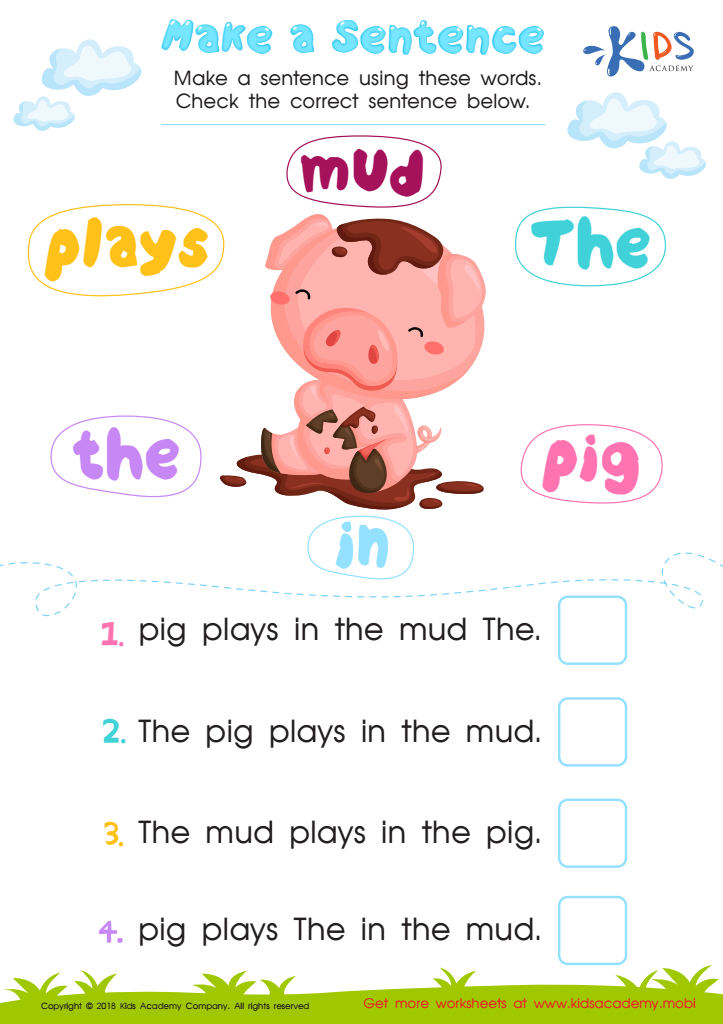
Assessment: Make a Sentence Worksheet

Assessment: Make a Sentence Worksheet

Help your kids identify the animal in the printout. Read the words in the bubbles and then read the four sentences in the options 1 – 4. Ask them to check the box with the correct sentence.
Assessment: Make a Sentence Worksheet
Worksheet
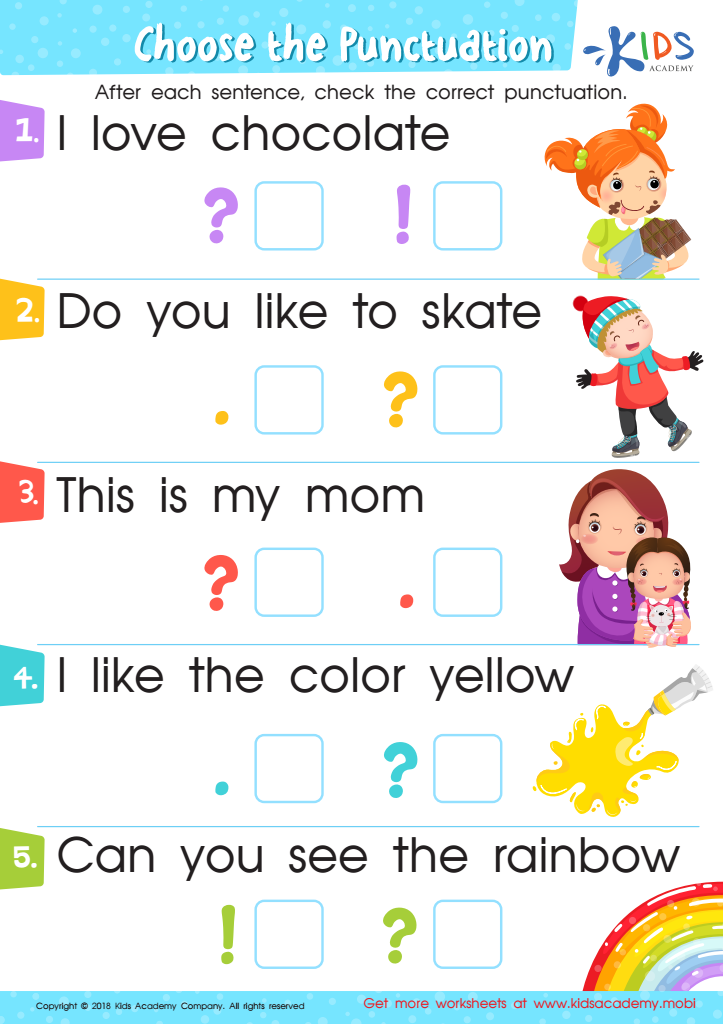
Choose the Punctuation: Assessment Worksheet


Choose the Punctuation: Assessment Worksheet

Does your child know punctuations? Found at the end of words, they signify the tone of the sentence. Ask them which punctuations they use daily. With your little one, look at a worksheet. Read each sentence aloud and ask them to identify the two punctuations given. Instruct them to choose the correct one. 80 words.
Choose the Punctuation: Assessment Worksheet
Worksheet


Writing activities for children aged 6-9 are crucial for several reasons. At this developmental stage, children are beginning to form their identities as writers and establish foundational literacy skills. Engaging in writing allows them to express their thoughts, feelings, and ideas, fostering creativity and imagination. Through activities like storytelling, journaling, and letter writing, children improve their vocabulary, grammar, and sentence structure, which are key components of effective communication.

Additionally, writing helps enhance critical thinking and comprehension skills. As children learn to organize their thoughts and articulate them coherently, they are encouraged to analyze the structure of narratives and understand varying perspectives. This not only supports their academic growth but also prepares them for future communication challenges in both educational and social settings.

Furthermore, writing activities that involve collaboration among peers promote social skills and teamwork. Parents and teachers play a vital role in nurturing a positive writing environment, providing feedback, and celebrating progress. By prioritizing writing activities, they equip children with essential lifelong skills, boost their confidence, and foster a love for learning, which is fundamental for their overall development. Thus, it’s essential for adults in a child's life to actively support and encourage writing at this formative age.