Easy Reading Fiction worksheets activities for Ages 4-9
3 filtered results
-
From - To
Discover our engaging Easy Reading Fiction worksheets designed for children aged 4-9! These fun, interactive activities enhance early literacy skills while fostering a love for reading. Each worksheet features age-appropriate stories that capture children's imaginations, encouraging comprehension and critical thinking. With colorful illustrations and simple prompts, your little ones will read, answer questions, and discuss characters and plot. Ideal for classroom use or at-home learning, our resources cater to diverse learning styles and keep young readers motivated. Explore our variety of activities and watch your child's reading skills flourish as they embark on delightful literary adventures! Start their journey today!
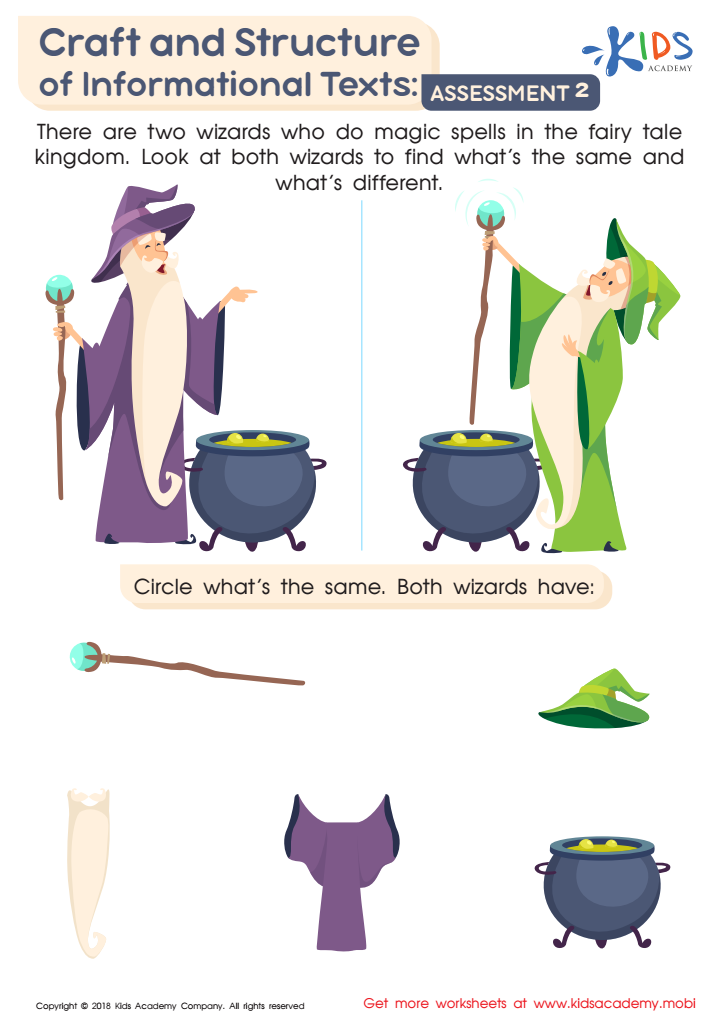
Craft and Structure of Informational Texts: Assessment 2 Worksheet
 Assign to My Students
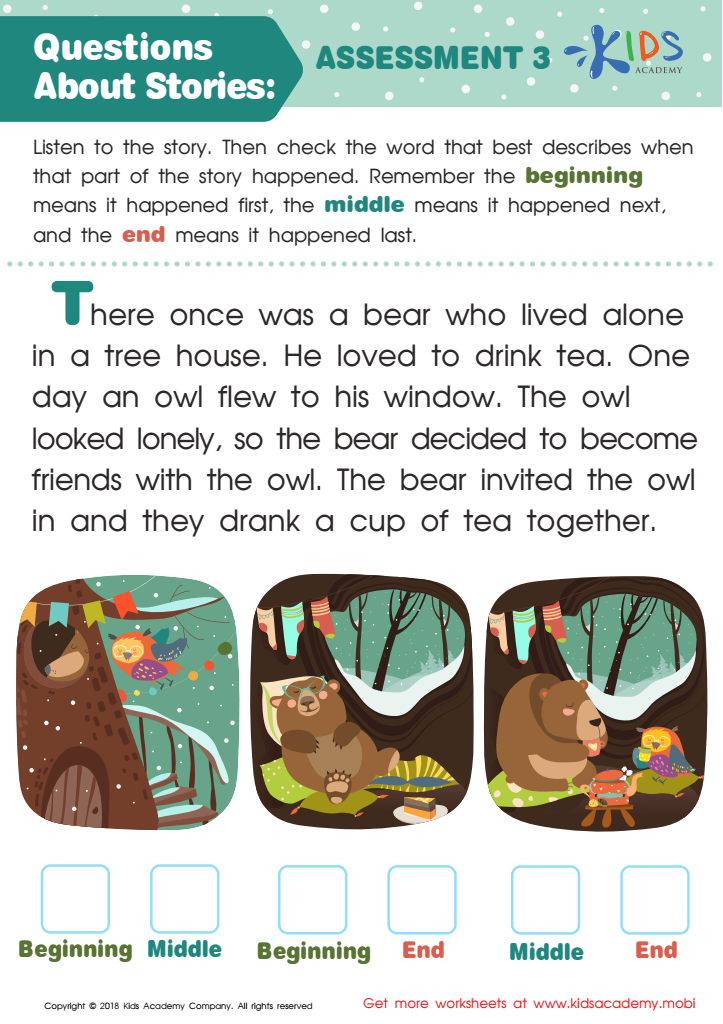
Questions About Stories: Assessment 3 Worksheet
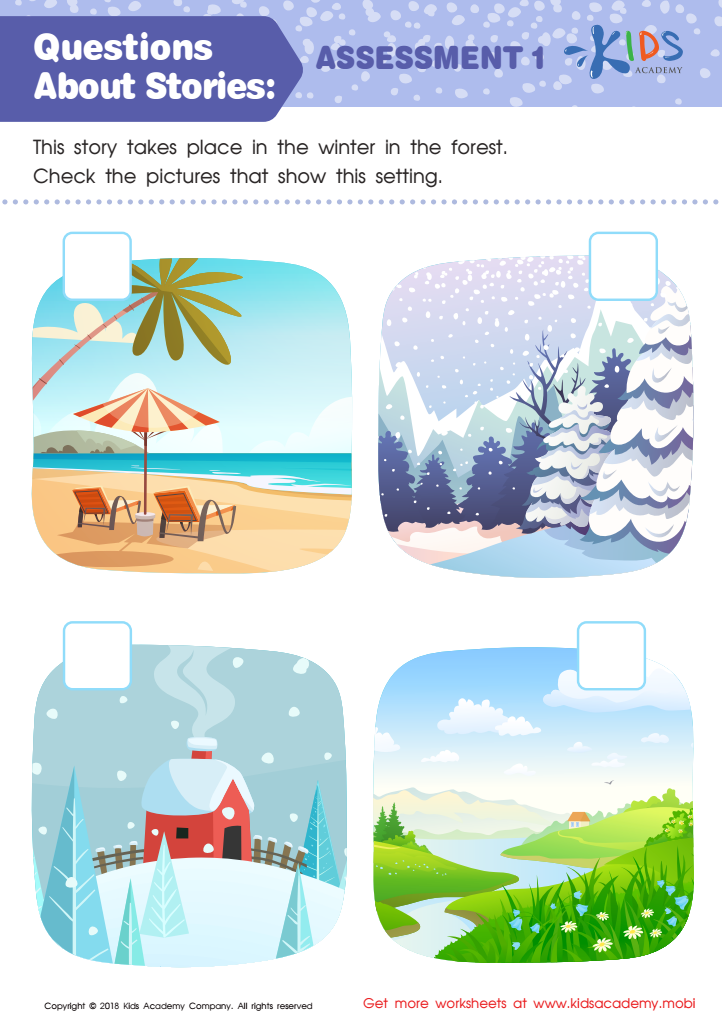
Questions About Stories: Assessment 1 Worksheet








Easy Reading Fiction activities for Ages 4-9 are fundamental for fostering early literacy skills and a love for reading among young learners. At this crucial developmental stage, children are exposed to vocabulary, sentence structure, and narrative comprehension. Engaging, age-appropriate stories captivate their interest, promote imagination, and enhance language skills.
Parents and teachers should prioritize these activities because they aid cognitive development, stimulate critical thinking, and bolster social-emotional skills through relatable characters and scenarios. Reading fiction together encourages discussions about themes, moral lessons, and problem-solving, offering children a deeper understanding of the world around them.
Moreover, such activities can serve as bonding moments between parents and children or between educators and students, creating a supportive environment for learning. Easy Reading Fiction also caters to various learning styles, making it accessible and enjoyable for all. By building strong literacy foundations early, parents and teachers empower children to become confident, enthusiastic readers who are better prepared for their academic futures.
Investing time in Easy Reading Fiction not only supports literacy development but also nurtures a lifelong passion for reading, creativity, and personal expression in young learners.








