Easy Upper & Lowercase Letters worksheets activities for 6-Year-Olds
2 filtered results
-
From - To
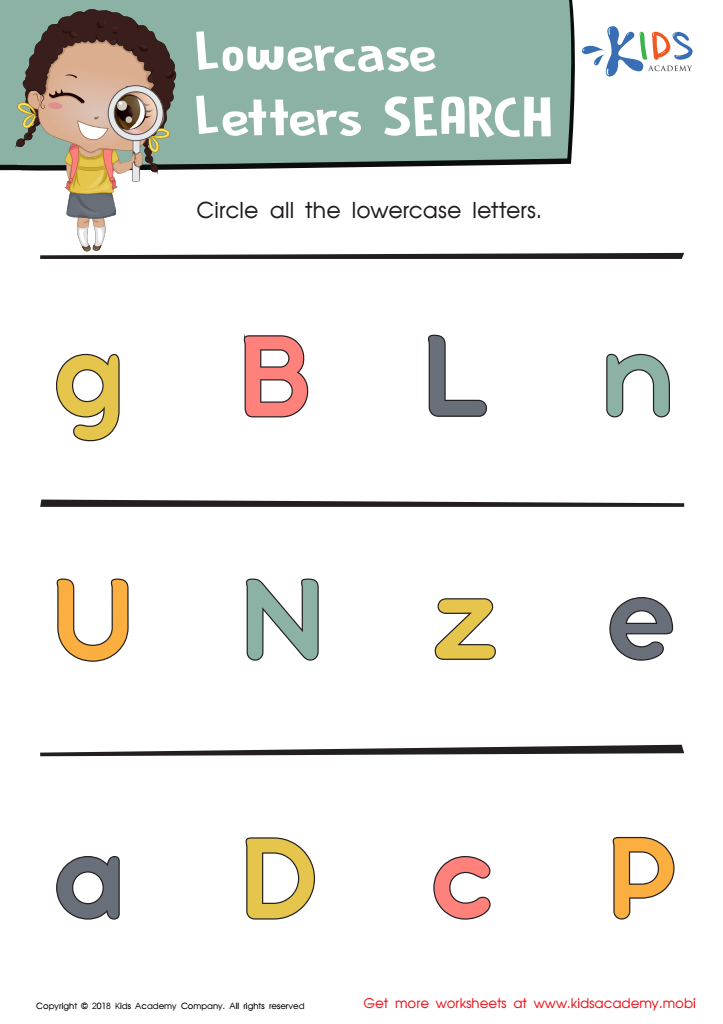
Lowercase Letters Search: Assessment Worksheet
 Assign to My Students
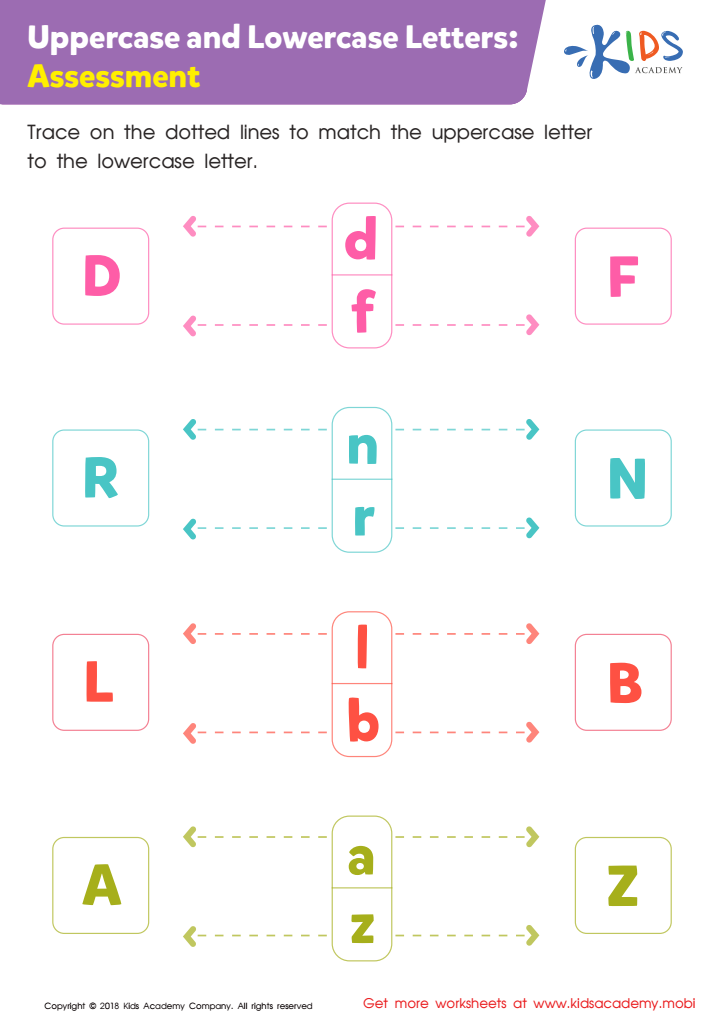
Uppercase and Lowercase Letters: Assessment Worksheet







.jpg)
Easy Upper & Lowercase Letters worksheets activities offer a multitude of benefits for young learners embarking on their literacy journey. These simple yet effective tools are essential in laying the foundational blocks of reading and writing proficiency. Let's delve into why these activities are not just beneficial but crucial for developing literacy skills in children.
Firstly, Easy Upper & Lowercase Letters worksheets facilitate recognition and differentiation skills. Young learners often find it challenging to distinguish between uppercase and lowercase letters, as many of them look significantly different from each other. Through consistent practice with these worksheets, children become adept at identifying letters in both their upper and lower case forms, which is a critical step towards fluent reading and clear writing.
Secondly, these activities enhance fine motor skills. As children trace, write, and color letters on the worksheets, they are simultaneously improving their hand-eye coordination and developing the fine motor skills necessary for clear and efficient handwriting. This aspect cannot be overstated, as good handwriting is not only important for academic success but also for self-esteem and effective communication.
Moreover, Easy Upper & Lowercase Letters worksheets are designed to be engaging and fun. They often incorporate colorful illustrations and themes that spark children’s interest, making the learning process enjoyable rather than a chore. This positive association with learning can foster a lifelong love for reading and writing.
Furthermore, these worksheets activities provide a structured learning environment. They allow for step-by-step progression, enabling children to master the basics before moving on to more complex literacy skills. This structured approach prevents learners from feeling overwhelmed and ensures that foundational concepts are solidified.
In conclusion, Easy Upper & Lowercase Letters worksheets activities play a pivotal role in early literacy education. They not only aid in the recognition and differentiation of letters but also support fine motor development, engage young learners, and provide a structured approach to learning. These worksheets are indispensable tools in nurturing proficient readers and writers.








