Normal Elementary Phonics worksheets activities for Ages 4-5
1 filtered results
-
From - To
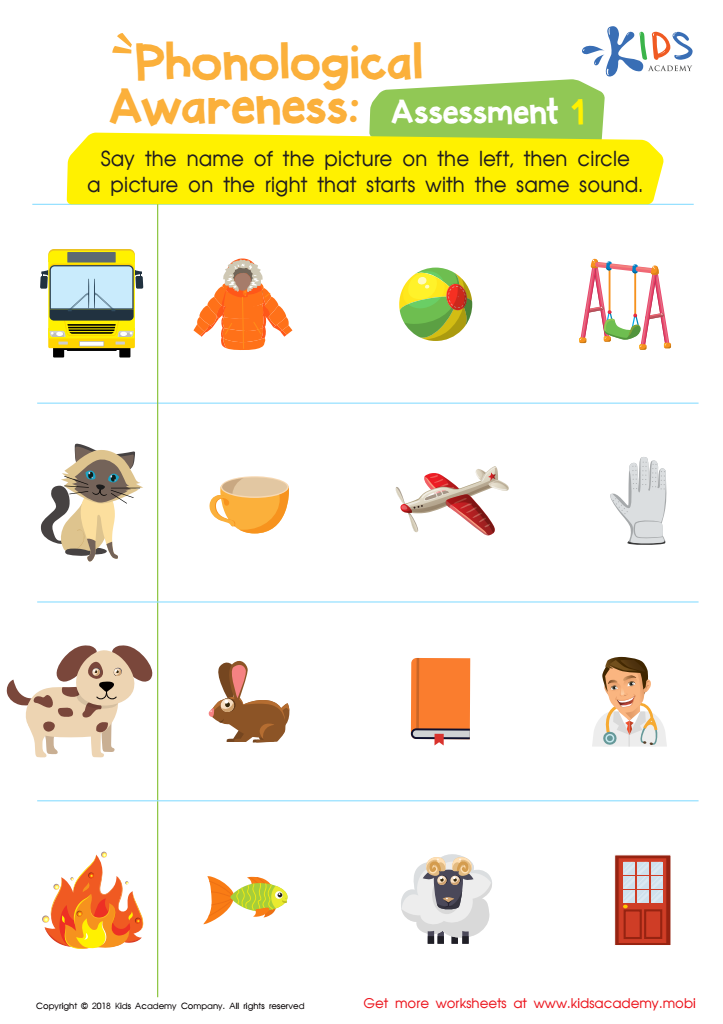
Phonological Awareness: Assessment 1 Worksheet
 Assign to My Students








Normal Elementary Phonics worksheets activities are quintessential tools in the fundamental stages of a child's reading development. These activities, meticulously designed for young learners, play a pivotal role in facilitating the understanding of the relationship between letters and sounds, which is the cornerstone of phonics instruction. Engaging in Normal Elementary Phonics worksheets activities allows students to delve into the intriguing world of sounds, enabling them to decode words, an essential skill in the journey towards becoming proficient readers.
One of the key reasons these worksheets are so useful is their ability to cater to a wide range of learning styles. Whether a child is a visual, auditory, or kinesthetic learner, Normal Elementary Phonics worksheets activities offer a variety of exercises that can suit individual learning preferences. From matching exercises and word finds to fill-in-the-blank and sound identification tasks, these activities make learning to read a dynamic and interactive experience.
Furthermore, these worksheets are meticulously structured to reinforce learning in a stepwise fashion. This incremental approach ensures that children build on their phonemic awareness progressively, mastering one concept at a time. This method not only boosts their confidence but also solidifies their understanding of phonics rules, making the transition to more complex reading tasks smoother.
Another significant benefit of Normal Elementary Phonics worksheets activities is the ease with which they can be integrated into daily learning routines. They can be used in classroom settings, for individual practice, or even at home, providing flexibility for educators and parents alike. This versatility makes it easier to ensure consistent practice, crucial for mastering phonics.
Ultimately, Normal Elementary Phonics worksheets activities are indispensable tools in early literacy education. They not only enhance phonemic awareness and decoding skills but also ignite a passion for reading among young learners. Through these engaging and structured activities, children are equipped with the foundational skills needed to embark on a successful reading journey, setting the stage for lifelong learning and literacy.








