Filters

32 filtered results

Clear all filters
Favorites
With answer key
Interactive

32 filtered results

Difficulty Level

Grade


Check out this FREE Knowledge Check Trial Lesson for age 4-6!

Short and Long Vowel Sort

Favorites
With answer key
Interactive
  • Knowledge Check
  • 4-6
  • Interactive
  • Normal
Sounding it Out: Assessment Worksheet

Sounding it Out: Assessment Worksheet

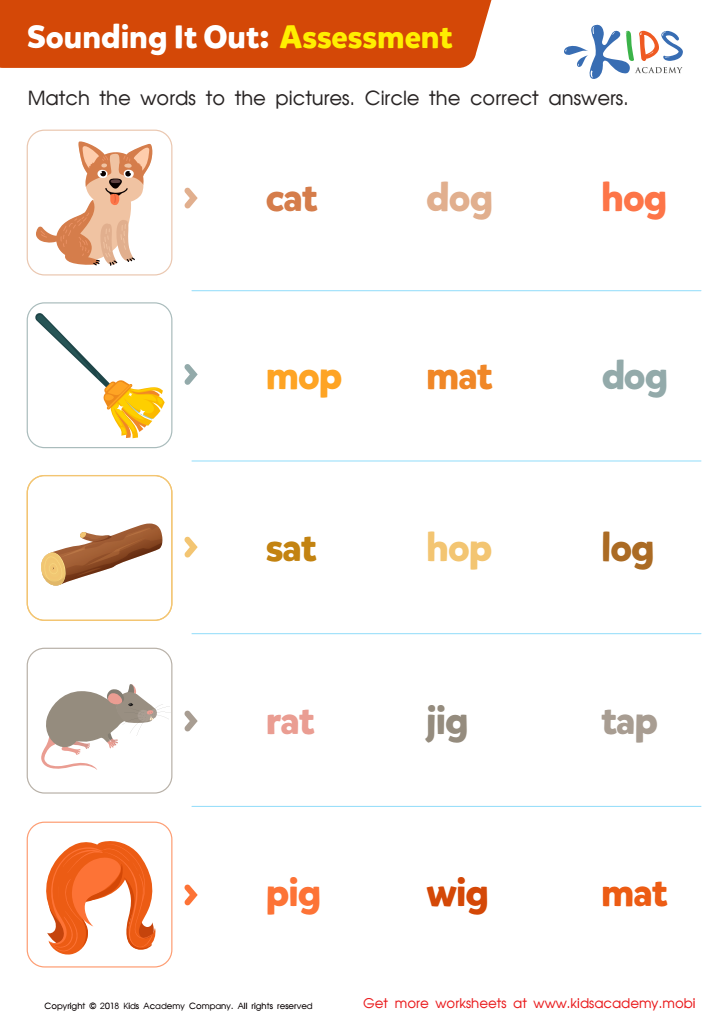
Give your little learner a fun challenge with this downloadable worksheet! With pictures to guide them, have them name the images and then sound out the words in the same row. Be careful though, as they all contain the same amount of similarly sounding letters. Once the correct word has been found, have them circle it!
Sounding it Out: Assessment Worksheet
Worksheet
Rhyming Words: Assessment Worksheet

Rhyming Words: Assessment Worksheet

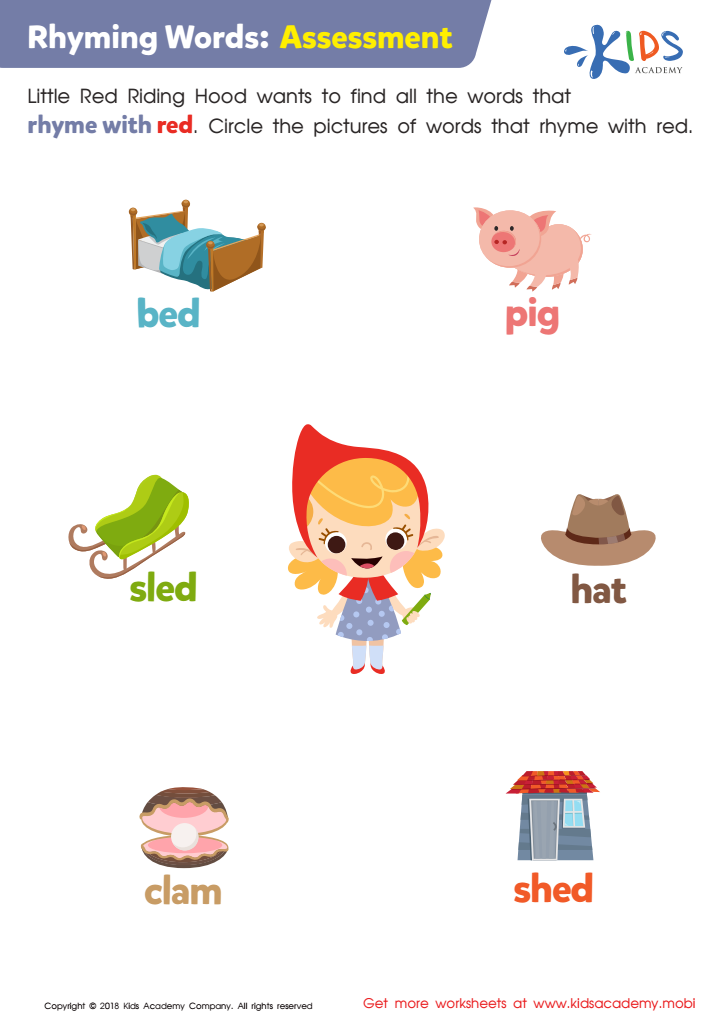
Help Little Red Riding Hood find rhyming words with "red". Download and print this worksheet. Have your child circle the rhyming words and pictures. Get them to say each word out loud and compare it to the word "red". When they're done, review the answers and talk about any words that don't rhyme.
Rhyming Words: Assessment Worksheet
Worksheet
Vowel and Consonant Sounds: Assessment Worksheet

Vowel and Consonant Sounds: Assessment Worksheet

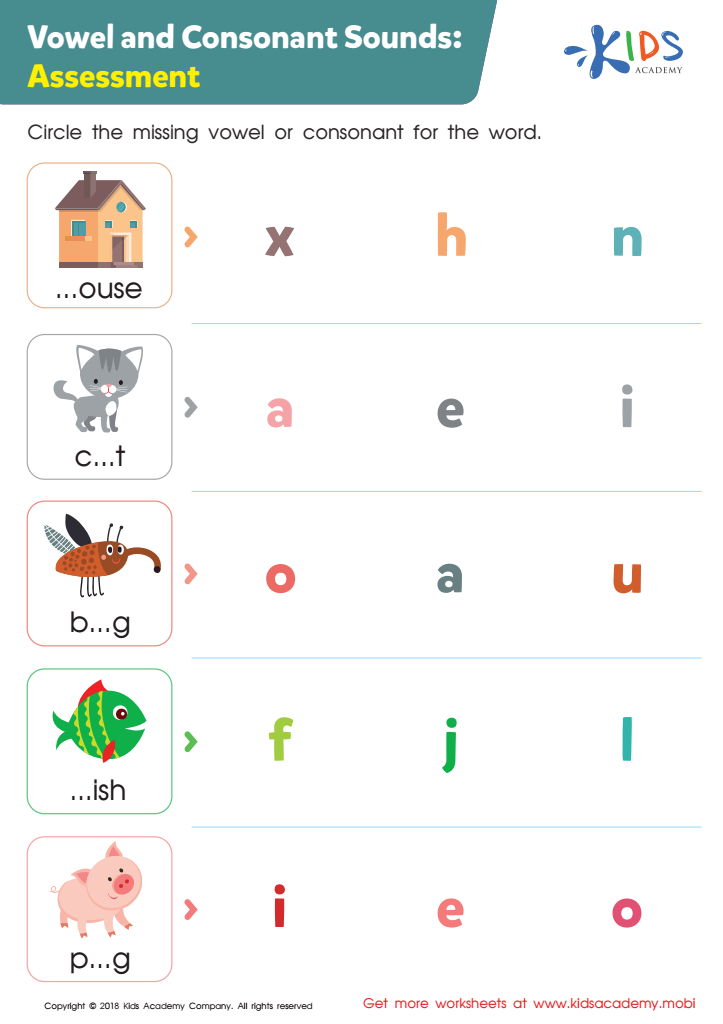
Test young elementary students on vowel and consonant sounds with this friendly phonics assessment worksheet. Get kids to name each image and look at the word underneath. Ask them to sound out the word, then circle the missing letter to complete. This will help assess their knowledge and skills!
Vowel and Consonant Sounds: Assessment Worksheet
Worksheet
Light and Sound: Assessment 2 Worksheet

Light and Sound: Assessment 2 Worksheet

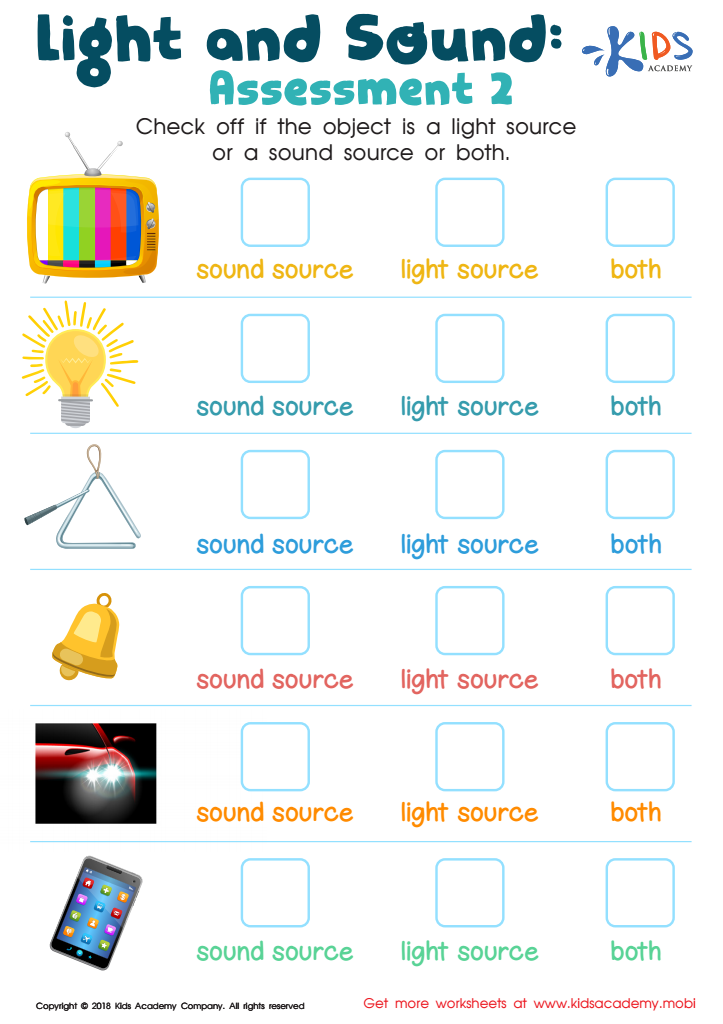
This worksheet introduces your kids to light and sound, with common sources of each. Identify the objects and help them check if it's a light source, a sound source, or both. Colourful and simple, it's a great way to teach your little ones! (80 words)
Light and Sound: Assessment 2 Worksheet
Worksheet
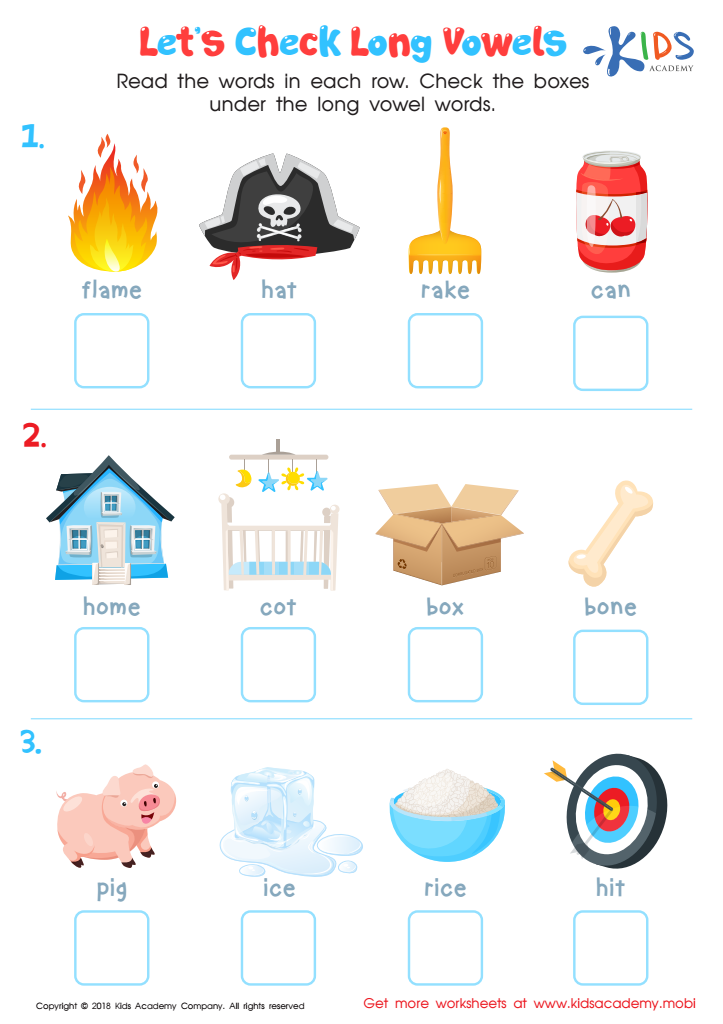
Let's Check Long Vowels: Assessment Worksheet

Let's Check Long Vowels: Assessment Worksheet

This worksheet helps your child identify objects and learn long vowel sounds. Ask them to say the names of the four objects in each row. Then, help them check the boxes to confirm they know the long vowel sounds. This will help them develop their reading skills.
Let's Check Long Vowels: Assessment Worksheet
Worksheet
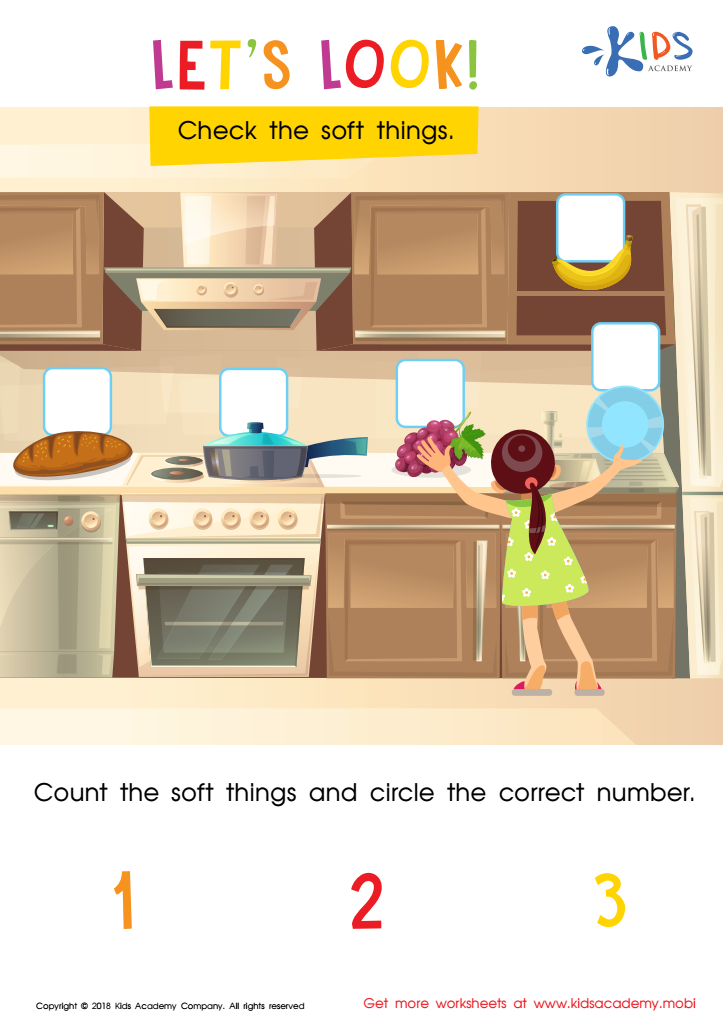
Let's Look! Assessment Worksheet

Let's Look! Assessment Worksheet

Have your child look at the picture in the printout and name the objects. Ask which ones are soft and hard and have them count the soft objects and circle the number. This worksheet will engage your child's thinking and teach them about texture.
Let's Look! Assessment Worksheet
Worksheet
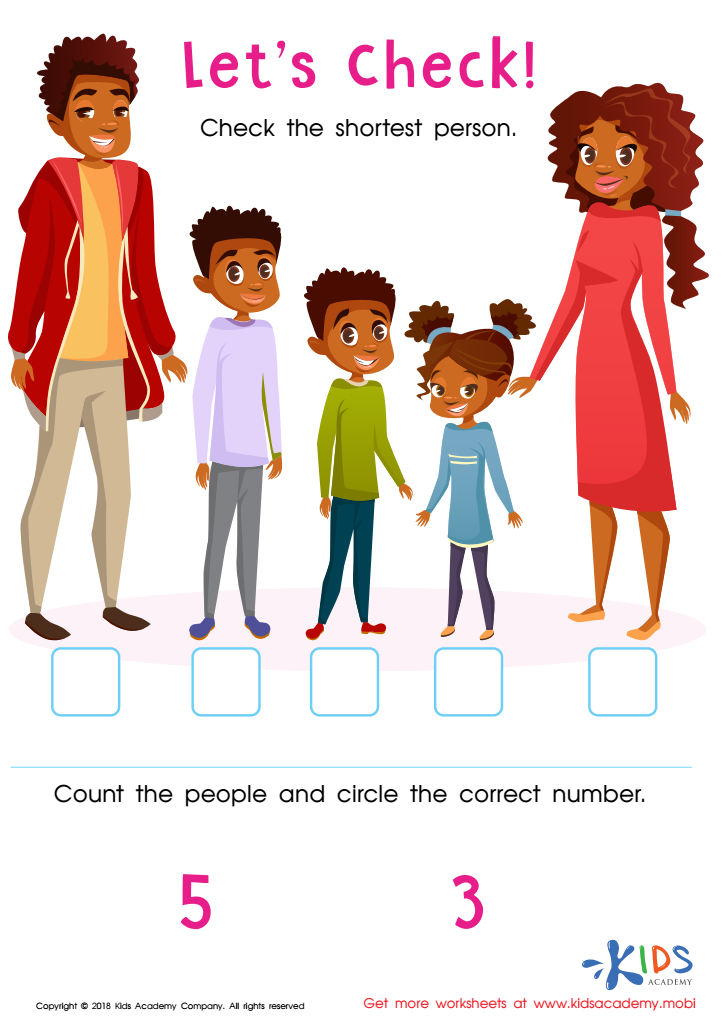
Let's Check! Assessment Worksheet

Let's Check! Assessment Worksheet

Check your child's understanding of height with this worksheet. Ask them to sort the objects in order of size and identify the tallest and shortest member of the family in the picture. See if they can correctly arrange the items from tallest to shortest.
Let's Check! Assessment Worksheet
Worksheet
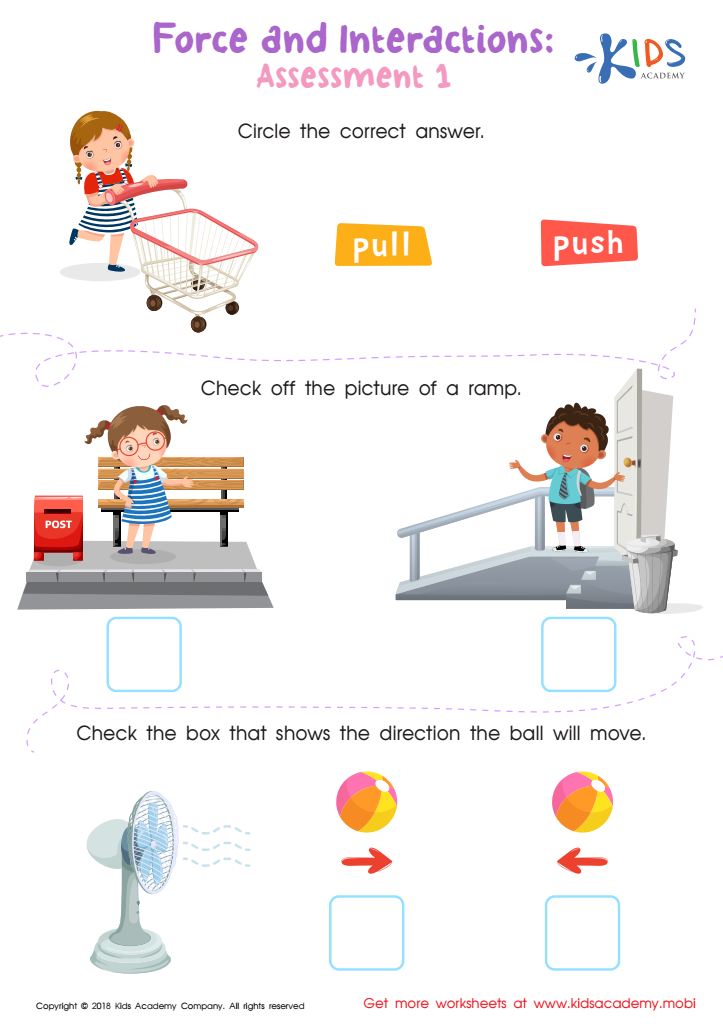
Force and Interactions: Assessment 1 Worksheet


Force and Interactions: Assessment 1 Worksheet

Test your students' knowledge of pushing, pulling, ramps and wind with this worksheet. The first task requires them to identify push or pull pictures. The second asks them to identify a ramp and the third to explain which direction a ball will move when exposed to wind.
Force and Interactions: Assessment 1 Worksheet
Worksheet


Normal Knowledge Check worksheets activities are a quintessential tool in the realm of education, serving as a beacon for both students and educators to gauge understanding, reinforce learning, and foster a deeper connection with the subject matter at hand. These activities are designed with a clear objective: to assess and enhance comprehension in a structured manner, making them an invaluable asset in the educational journey.

Firstly, Normal Knowledge Check worksheets activities are highly effective in reinforcing the learning process. By engaging with the material on multiple levels, students are able to internalize concepts more thoroughly. This repeated exposure to the material not only aids in retention but also builds confidence as learners see their progress reflected in their ability to complete the worksheets successfully.

Furthermore, these activities provide immediate feedback, which is critical for effective learning. As students work through the Normal Knowledge Check worksheets, they can identify areas of misunderstanding or difficulty. This instant recognition allows for timely intervention, either through self-study or under the guidance of an educator, ensuring that misconceptions are addressed promptly before they take root.

Another significant advantage is the versatility of Normal Knowledge Check worksheets activities. They can be tailored to suit a wide range of subjects, learning levels, and educational goals. Whether it's mastering the basics of mathematics, diving into the complexities of language arts, or exploring scientific principles, these worksheets can be customized to meet the diverse needs and interests of learners.

Moreover, these worksheets activities encourage independence and self-directed learning. As students navigate through the questions and challenges posed, they develop critical thinking and problem-solving skills. This autonomy in learning not only prepares them for academic success but also equips them with valuable life skills.

In conclusion, Normal Knowledge Check worksheets activities are a cornerstone of effective learning, offering a structured, interactive, and adaptable approach to education. By fostering comprehension, providing immediate feedback, accommodating diverse learning needs, and encouraging independence, they play a crucial role in helping learners achieve their academic potential.