
Normal Alphabet worksheets activities for Ages 4-6
6 filtered results
Difficulty Level
Grade
Age
-
From - To
Subject
Activity
Standards
Introduce your child to the fascinating world of letters with our Normal Alphabet Worksheets Activities. Designed to captivate and educate young minds, this collection offers a comprehensive approach to learning the alphabet. Each worksheet is crafted to reinforce letter recognition, handwriting skills, and phonetic sounds through engaging tasks and fun exercises. Ideal for preschoolers and kindergarteners, our Normal Alphabet Worksheets Activities provide a solid foundation in literacy. Whether it's tracing, matching, or identifying letters, these activities ensure a joyful learning experience. Unlock the door to reading and writing proficiency with our Normal Alphabet Worksheets today!
Favorites
With answer key
Interactive
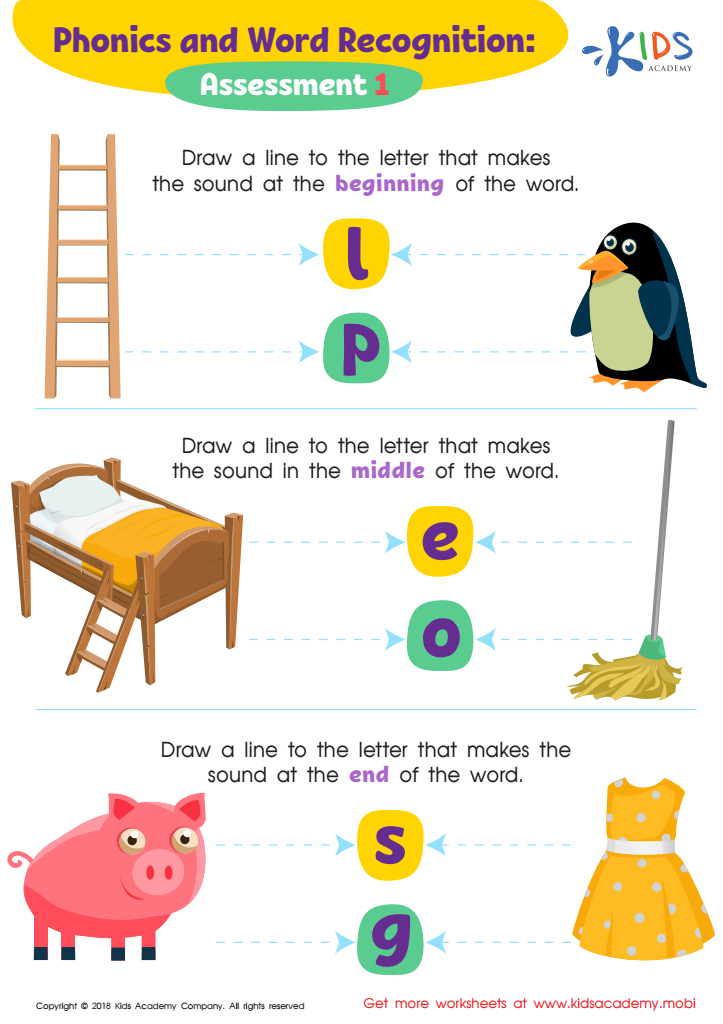
Phonics and Word Recognition: Assessment 1 ELA Worksheet
This fun worksheet tests your child's sound recognition skills for each part of a word. Ask your child to name each image and trace the line to match it with the corresponding letter. Listen for beginning sounds on 1st, middle sounds on 2nd, and ending sounds on 3rd. Encourage learning with this colorful and interactive activity!
 Assign to My Students
Phonics and Word Recognition: Assessment 1 ELA Worksheet
Worksheet
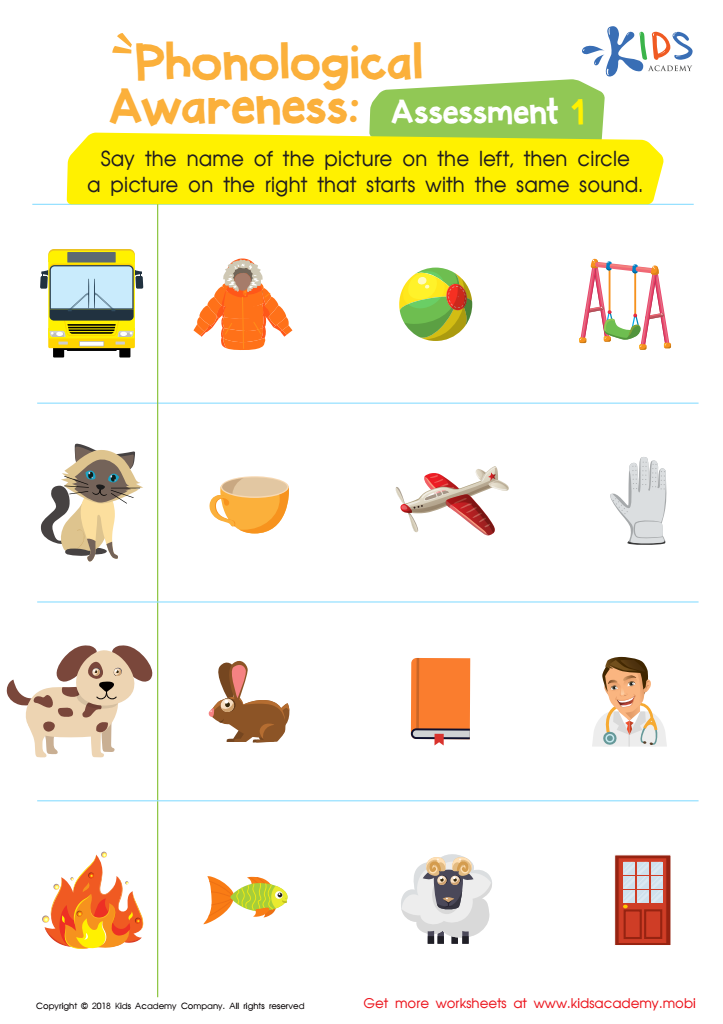
Phonological Awareness: Assessment 1 Worksheet
This worksheet helps kids build key phonics skills for pre-reading. They say each picture name aloud, focusing on the starting sound. Then, they match the sound with an image in the same row. Use as a checkpoint for kindergarten or grade 1 phonics readiness.
Phonological Awareness: Assessment 1 Worksheet
Worksheet
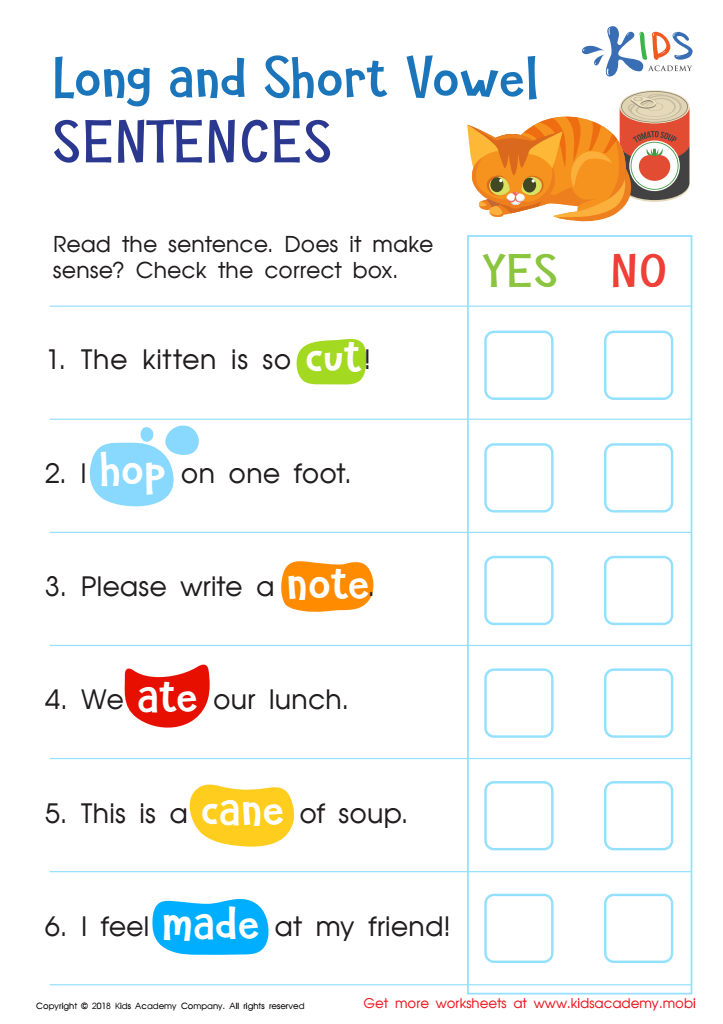
Long and Short Vowel Sentences: Assessment Worksheet
This printable worksheet helps kids practice differentiating between short and long vowel sounds. They'll use context clues to figure out which words make sense in simple sentences. A great way to build reading and writing skills!
Long and Short Vowel Sentences: Assessment Worksheet
Worksheet
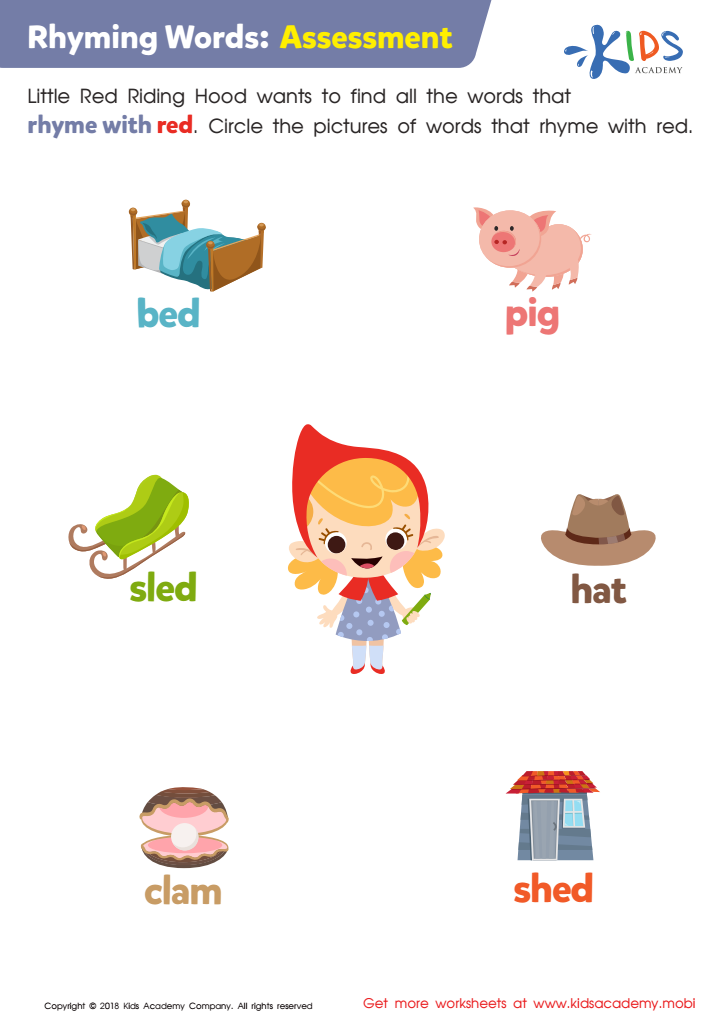
Rhyming Words: Assessment Worksheet
Help Little Red Riding Hood find rhyming words with "red". Download and print this worksheet. Have your child circle the rhyming words and pictures. Get them to say each word out loud and compare it to the word "red". When they're done, review the answers and talk about any words that don't rhyme.
Rhyming Words: Assessment Worksheet
Worksheet
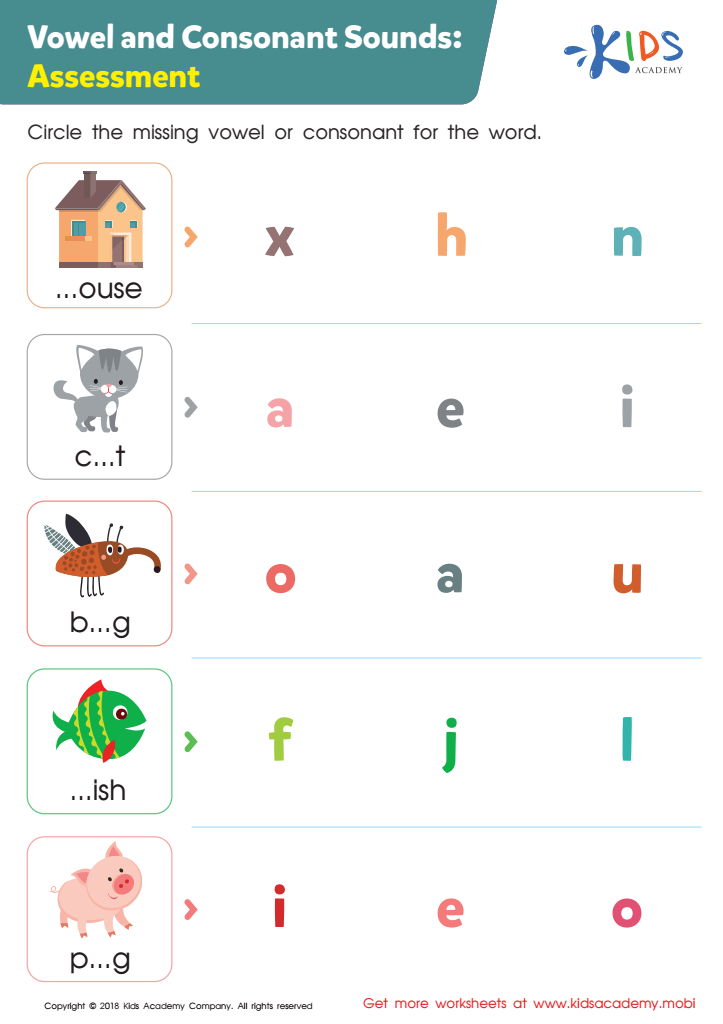
Vowel and Consonant Sounds: Assessment Worksheet
Test young elementary students on vowel and consonant sounds with this friendly phonics assessment worksheet. Get kids to name each image and look at the word underneath. Ask them to sound out the word, then circle the missing letter to complete. This will help assess their knowledge and skills!
Vowel and Consonant Sounds: Assessment Worksheet
Worksheet
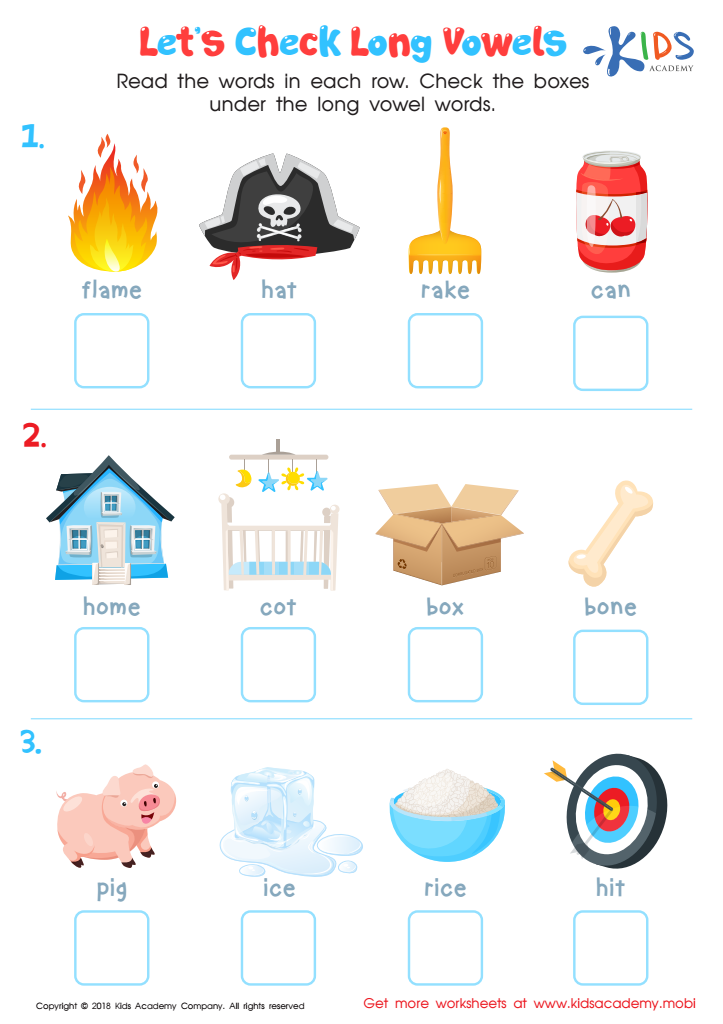
Let's Check Long Vowels: Assessment Worksheet
This worksheet helps your child identify objects and learn long vowel sounds. Ask them to say the names of the four objects in each row. Then, help them check the boxes to confirm they know the long vowel sounds. This will help them develop their reading skills.
Let's Check Long Vowels: Assessment Worksheet
Worksheet
Join Kids Academy for Free
Who is primarily going to use this learning content?






Normal Alphabet worksheets activities are a fundamental cornerstone in the journey of early childhood education. These activities not only serve as the building blocks for literacy and language development but also pave the way for a child's successful future learning experiences. There are several compelling reasons why engaging children in Normal Alphabet worksheets activities is incredibly useful.
First and foremost, these activities enhance letter recognition. As children interact with different letters through a variety of worksheets, they begin to identify and differentiate between the shapes and sounds of each letter. This recognition is crucial for reading and writing fluency. By regularly working with alphabet worksheets, children become familiar with the letters, making it easier for them to transition into reading words and sentences.
Moreover, Normal Alphabet worksheets activities improve fine motor skills. Each time a child traces a letter, colors within a letter-shaped outline, or matches letters to pictures, they are developing their hand-eye coordination and pencil grip. These skills are essential not only for writing but also for other daily activities that require precise hand movements.
These worksheets also promote cognitive development. Through engaging exercises, children learn to follow instructions, recognize patterns, and solve problems. For instance, alphabet worksheets that involve matching letters with objects that start with that letter enhance a child's associative thinking. This cognitive exercise strengthens memory and expands vocabulary, as children learn new words and their meanings.
Furthermore, Normal Alphabet worksheets activities can be incredibly versatile, catering to various learning styles. Whether a child learns best through visual stimuli, hands-on activities, or auditory cues, there's an alphabet worksheet that can meet their needs. This versatility ensures that every child has the opportunity to learn and excel in their unique way.
In conclusion, Normal Alphabet worksheets activities are a critical component of early education. They lay a strong foundation for literacy, fine motor skills, cognitive development, and personalized learning. By incorporating these activities into early learning curricula, educators and parents can significantly enhance a child's ability to read, write, and think critically, setting them up for lifelong learning success.








