Normal Vowels and Consonants worksheets activities for Ages 5-6
1 filtered results
-
From - To
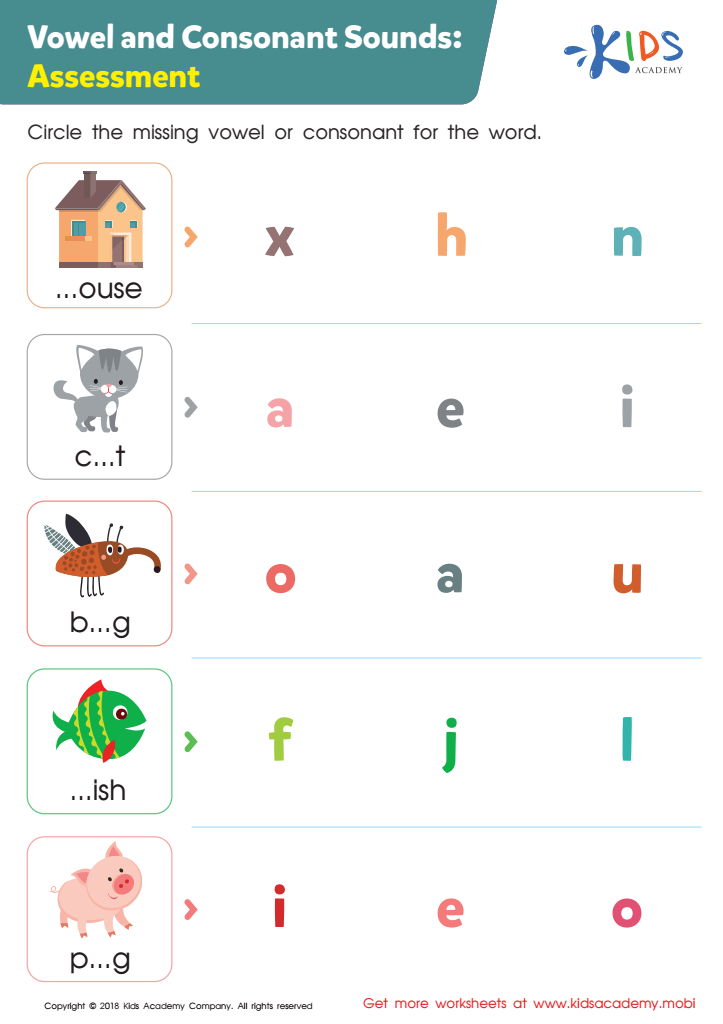
Vowel and Consonant Sounds: Assessment Worksheet
 Assign to My Students


.jpg)





Normal Vowels and Consonants worksheets activities play a crucial role in the foundational stage of language learning. These activities are not just educational tasks; they are the building blocks for developing reading, writing, and comprehension skills. Understanding and mastering the difference between vowels and consonants are critical for learners of all ages, as they form the basis of the English language.
Firstly, Normal Vowels and Consonants worksheets activities are useful because they provide structured learning. These worksheets are meticulously designed to guide learners through the intricacies of the English language in a step-by-step manner. By engaging with these activities, students can gradually understand the roles vowels and consonants play in word formation and pronunciation. This structured approach reduces confusion and enhances clarity, making the learning process more effective and enjoyable.
Moreover, these worksheets offer a variety of activities that cater to different learning styles. Whether a learner prefers visual aids, hands-on practice, or auditory examples, Normal Vowels and Consonants worksheets activities encompass a range of methods to ensure that every student can benefit. This versatility fosters an inclusive learning environment where each student can thrive.
Additionally, practicing with these worksheets reinforces memory retention. Repetition is a key aspect of learning, and through regular engagement with vowels and consonants worksheets, students can solidify their understanding and recall of these fundamental components. This reinforcement is crucial for building a strong foundation upon which more complex language skills can be developed.
Lastly, Normal Vowels and Consonants worksheets activities stimulate cognitive development. They challenge learners to think critically about how letters and sounds interact within words, which enhances problem-solving skills and linguistic awareness.
In conclusion, Normal Vowels and Consonants worksheets activities are not merely academic exercises; they are essential tools that pave the way for language proficiency. By fostering structured learning, accommodating diverse learning styles, reinforcing memory, and stimulating cognitive development, these activities ensure that learners can confidently navigate the complexities of the English language.








