
Patterns Worksheets for Ages 3-7
6 filtered results
Difficulty Level
Grade
Age
-
From - To
Subject
Activity
Standards
Welcome to our Patterns Worksheets for Ages 3-7! These engaging and interactive resources are designed to help young learners develop their pattern recognition skills in a fun and enjoyable way. Our expertly crafted worksheets feature colorful illustrations and diverse activities that cater to various learning styles, making it easy for children to identify and create patterns using shapes, colors, and numbers. Ideal for home or classroom use, these printables are perfect for fostering foundational math skills, enhancing critical thinking, and sparking creativity in early learners. Explore our collection today and watch your child's confidence grow as they master patterns with ease!
Favorites
With answer key
Interactive
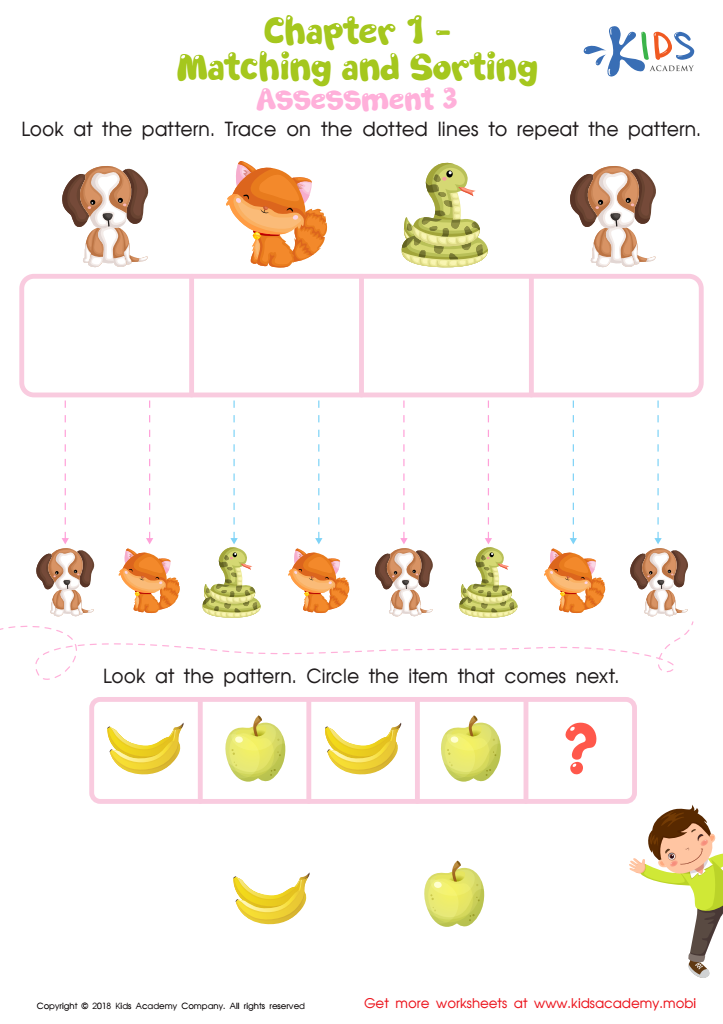
Matching and Sorting for Preschool: Assessment 3 Worksheet
This worksheet helps kids practice and improve pattern recognition and matching skills. Task one: Ask your child to trace the pattern on the dotted lines. Task two: Look at the arrangement of fruits and ask your child to circle the corresponding item in the pattern. With this exercise, your child will gain a better understanding of pattern recognition and matching.
 Assign to My Students
Matching and Sorting for Preschool: Assessment 3 Worksheet
Worksheet
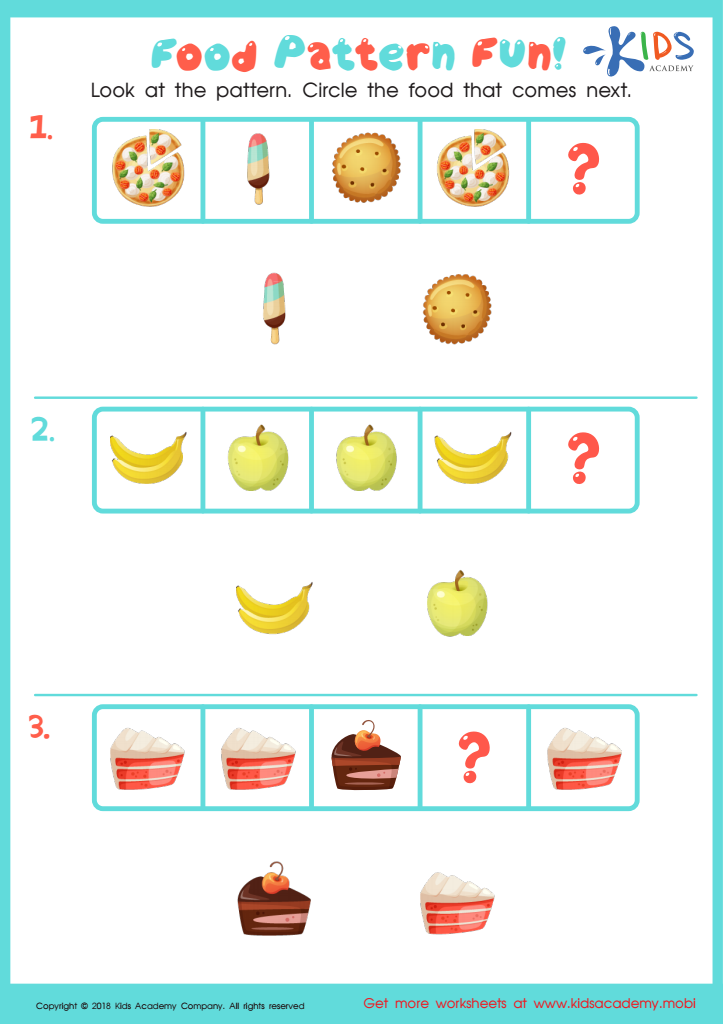
Food Pattern Fun Worksheet
Got kids who love snacks? Get them excited with this fun food pattern worksheet! Ask them to identify the foods in the printout then spot the pattern and circle the next food in each row. It's a great way to get them thinking and have fun at the same time!
Food Pattern Fun Worksheet
Worksheet
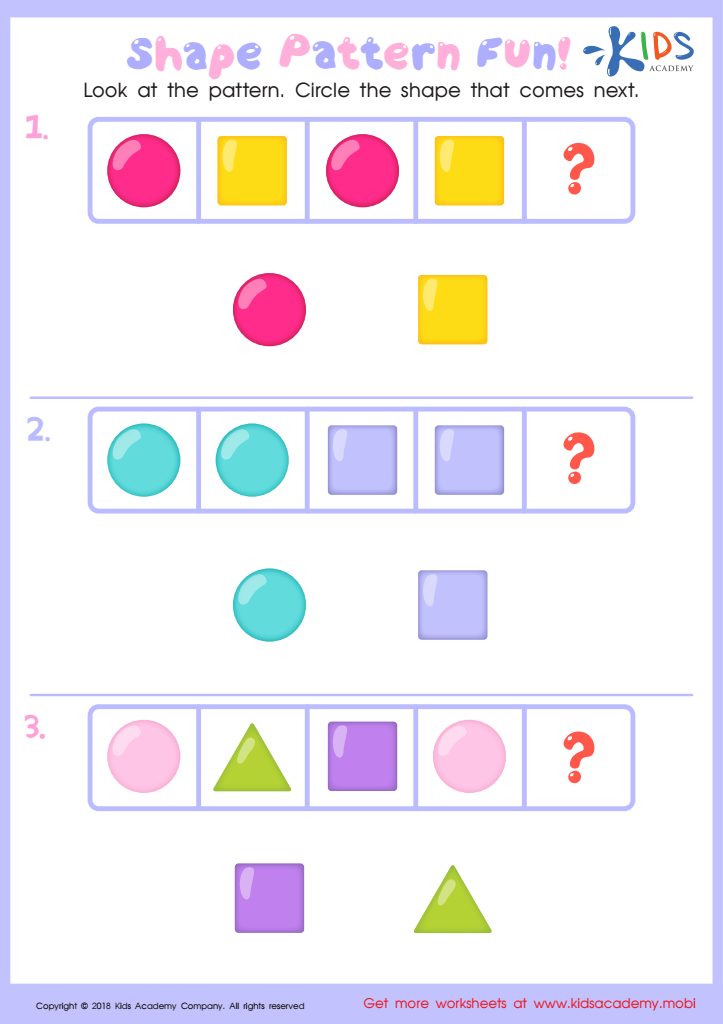
Shape Pattern Fun Worksheet
Challenge your kids to look at the pictures and identify colors, shapes and patterns. Ask them to circle the shapes that follow the sequence. See if they can spot the pattern and stick to it!
Shape Pattern Fun Worksheet
Worksheet
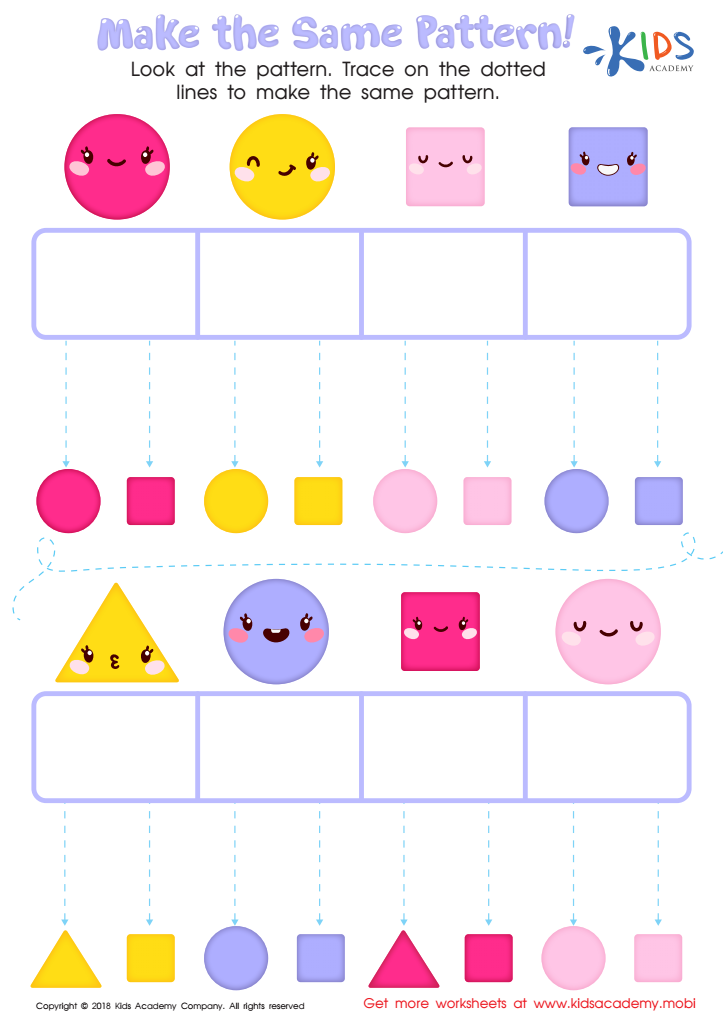
Make the Same Pattern Worksheet
Help your child look at the patterns in the tracing sheet and guide them to trace the dotted lines to match the shapes. This exercise tests their ability to copy pictures correctly, so emphasize the importance of paying attention to the instructions and details.
Make the Same Pattern Worksheet
Worksheet
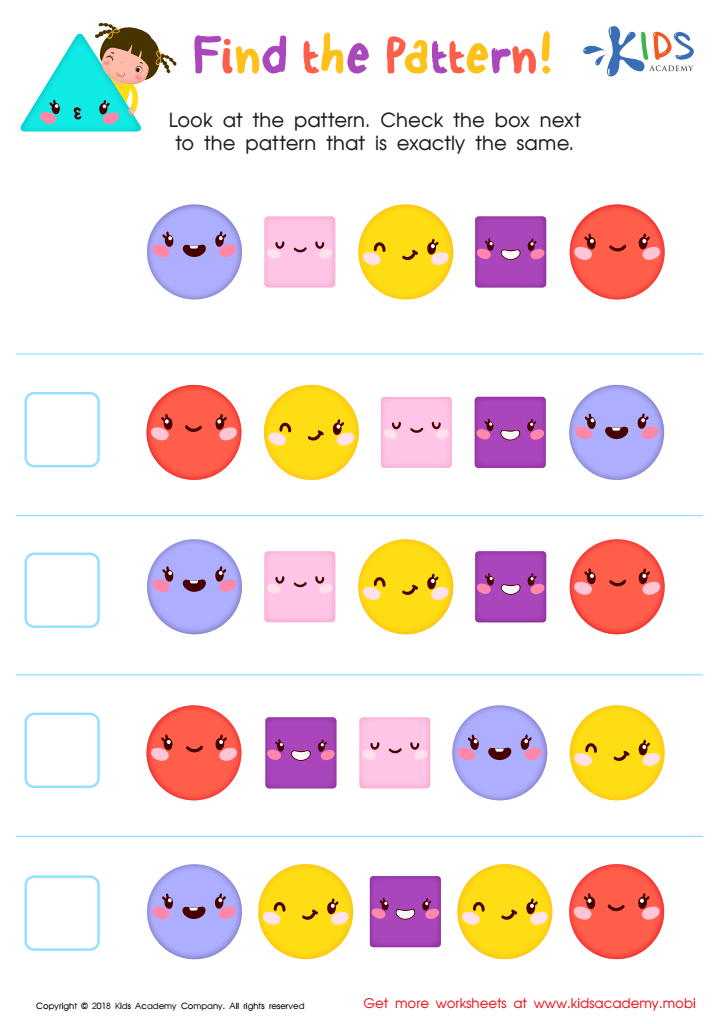
Find the Pattern Worksheet
This colorful pattern worksheet is perfect for testing your kids' pattern recognition. The bright colors will keep them engaged, while they check the box next to the pattern that is the same. Ask your kids to identify the colors used and see how well they can spot similarities!
Find the Pattern Worksheet
Worksheet
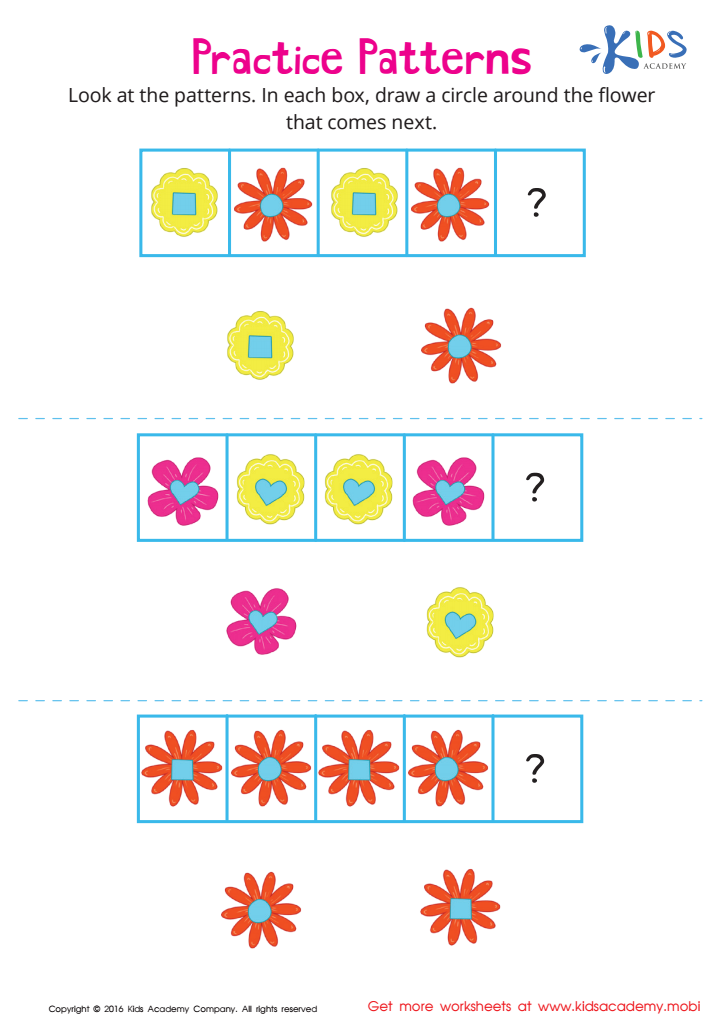
Join Kids Academy for Free
Who is primarily going to use this learning content?







Understanding patterns is fundamental for children aged 3-7, as they lay the groundwork for critical thinking and problem-solving skills. Patterns stimulate cognitive development, enabling young learners to make connections and recognize relationships in various contexts, from mathematics to the natural world.
By teaching children about patterns, parents and teachers help them develop their ability to predict outcomes, an essential skill in logical reasoning and scientific inquiry. Engaging with patterns also enhances observation skills; as children identify repeating sequences in colors, shapes, or sounds, they become more attuned to their surroundings.
Moreover, patterns support early math skills, such as counting and number sense. For instance, recognizing and creating patterns with numbers bolsters addition and subtraction skills. Beyond academics, engaging with patterns fosters creativity in art and music, promoting holistic development.
Additionally, understanding patterns aids in emotional and social growth. Children can discern routines in their everyday lives, leading to a sense of security and stability. By integrating pattern recognition into learning, parents and teachers cultivate confident, curious learners who are better prepared for future educational challenges. Thus, paying attention to patterns during these formative years is crucial for overall development.








